Ambulatory Surgery Center Medical Gas Install in Richmond, VA: A Complete Guide
Medical Testing SolutionsOctober 17, 20265 min read
Share
Building a new ambulatory surgery center (ASC) is a complex undertaking, and the medical gas system is one of its most critical components. A properly designed and installed system is essential for patient safety and regulatory compliance. This guide provides a definitive overview of the medical gas installation process for ASCs in Richmond, VA, from initial design through final verification. You will learn about the key phases, applicable codes, and the importance of partnering with certified professionals to ensure your project's success.
At Medical Testing Solutions, we specialize in ASSE 6010-certified medical gas installations and ASSE 6030 verifications. This guide synthesizes our decades of field experience to help you navigate the process with confidence.
1. The Foundation: Design & Pre-Construction Planning
The success of your medical gas system is determined long before the first pipe is installed. The design phase is paramount.
Sizing and Source Equipment Selection
Your clinical needs dictate the system's design. An architect and mechanical engineer, in consultation with a medical gas specialist, will determine:
Gas Requirements: Which medical gases are needed (e.g., Oxygen, Medical Air, Nitrous Oxide, Vacuum)?
Outlet Locations: Where will each gas be required? This is based on the layout of operating rooms, recovery bays, and procedure rooms.
System Sizing: Calculating the peak demand to size the source equipment (manifolds, air compressors, vacuum pumps) and piping appropriately. Undersizing is a common, costly mistake.
Code Compliance & Engineering Drawings
All design work must adhere to a strict set of codes, primarily NFPA 99, Health Care Facilities Code. Your engineering plans must detail:
Piping layouts and sizing.
Source equipment location and specifications.
Alarm system placement (master, area, and local alarms).
Zone valve box locations.
Why this matters for compliance: NFPA 99 (Chapter 5) is not a suggestion; it's the law for healthcare facilities. A design that fails to meet these standards will not pass the final inspection by the Authority Having Jurisdiction (AHJ), leading to costly delays and rework.
2. Phase 1 Installation: Rough-In
This is where the physical installation begins. ASSE 6010 certified installers are a non-negotiable requirement for this phase.
Piping Installation
Material: All medical gas piping must be ACR (Type L or K) copper, cleaned for oxygen service, and delivered capped and plugged.
Brazing: Joints are created using a process called brazing, with a nitrogen purge flowing through the pipe to prevent oxidation (carbon buildup) inside. This is a critical step outlined in NFPA 99. The installer must be certified to the ASSE 6010 standard.
Labeling: Pipes are labeled with the gas type and direction of flow at specific intervals and at any point where they pass through a wall or ceiling.
An initial pressure test is performed at this stage to check the integrity of the brazed joints before the walls are closed up.
3. Phase 2 Installation: Finishes & Equipment
After drywall and initial finishes are up, the installers return to complete the system.
Source Equipment: Manifolds, compressors, and pumps are set in place and connected.
Alarms: Master and area alarm panels are mounted and wired.
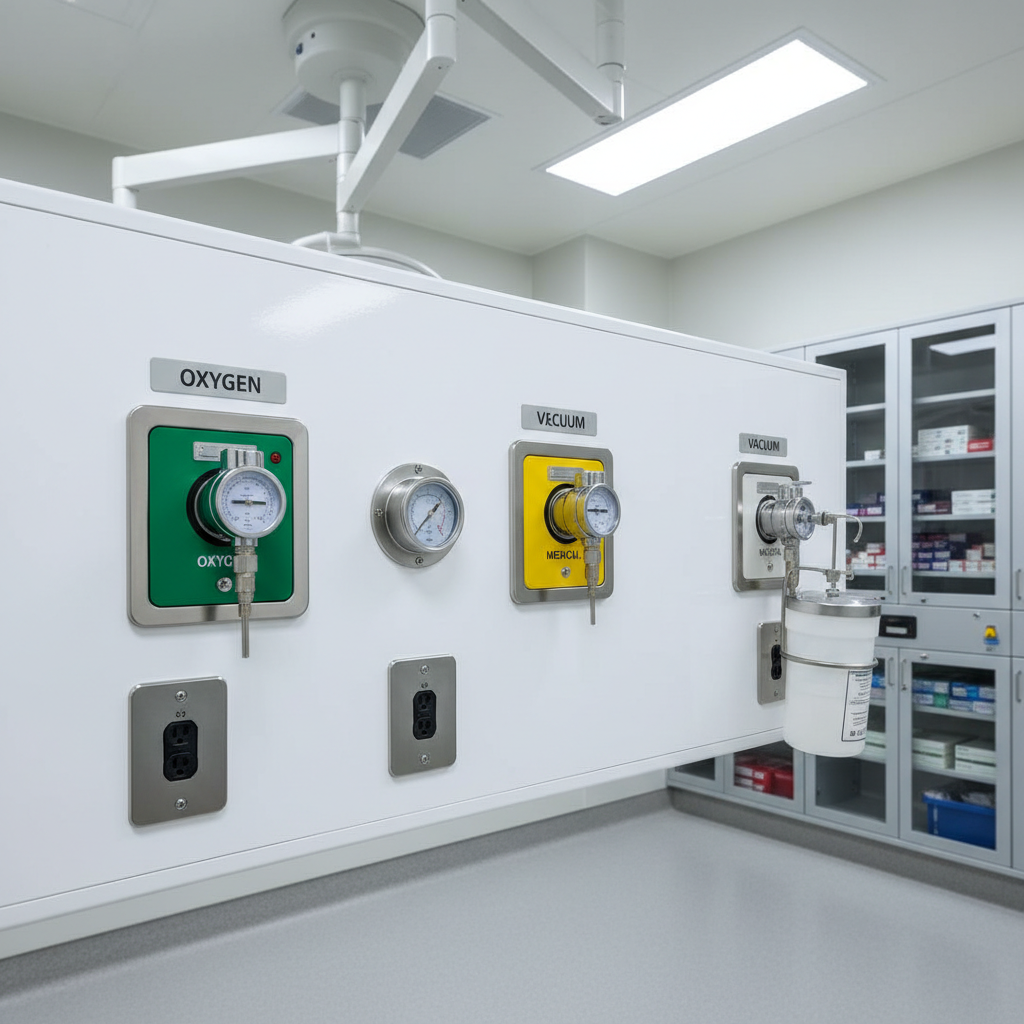
Outlets: Gas-specific outlets (e.g., DISS, Ohmeda) are installed in the walls and connected to the piping system.
Zone Valves: Valve boxes are installed to allow for isolating specific areas of the facility for maintenance or emergencies.
4. The Critical Step: ASSE 6030 Verification
Before any patient use, an independent, third-party verification is required. This is not optional. A verifier, certified to the ASSE 6030 standard, performs a battery of tests to ensure the system is safe and compliant. The verifier cannot be the same company that performed the medical gas installation.
Key tests include:
Purity Test: Ensuring the gas at the outlet is what it's supposed to be (e.g., 99% pure oxygen).
Cross-Connection Test: Verifying that gases have not been mixed up in the system.
Particulate Test: Checking for any debris in the pipes.
Pressure & Flow Tests: Ensuring the system can deliver the required volume and pressure to all outlets.
Alarm Testing: Activating every alarm to ensure it functions correctly.
Upon successful completion, the verifier provides a detailed report that is submitted to the facility and the AHJ.
5. Medical Gas System Component Comparison
Component
NFPA 99 Requirement
Common Brands
Key Consideration
Vacuum Pump
Must maintain required vacuum level under peak load. Sized per calculated demand.
BeaconMedaes, Powerex, Atlas Copco
Type of pump (rotary vane, claw) affects noise, maintenance, and lifecycle cost.
Med Air Compressor
Must be specifically designed for medical air (oil-less, dry). Compliant with NFPA 99.
BeaconMedaes, Powerex, Atlas Copco
Scroll or reciprocating technology. Redundancy (duplex/triplex) is critical.
Manifold
Automatic changeover for high-pressure cylinders. Must have pressure reliefs.
BeaconMedaes, Harris, Genstar
Size based on facility consumption. Digital vs. analog pressure readings.
Area Alarms
Monitor pressure in specific zones. Required for all critical care areas.
BeaconMedaes, Tri-Tech, Amico
Must be visible and audible. Accuracy and reliability are key.
6. AHJ Sign-Off & Ongoing Compliance
The final step before opening is presenting the complete documentation package, including the ASSE 6030 verification report, to the Authority Having Jurisdiction (AHJ) in Richmond. The AHJ is the ultimate gatekeeper and will grant the certificate of occupancy once they are satisfied that all life safety systems, including medical gas, are 100% compliant.
Your responsibility doesn't end there. NFPA 99 requires ongoing maintenance and periodic inspections. Medical Testing Solutions offers comprehensive annual medical gas inspections and maintenance programs to keep your ASC compliant and your patients safe for years to come.
Get Your Richmond ASC Project Started Right
Navigating the complexities of a medical gas installation requires a partner with proven expertise and the right certifications. At Medical Testing Solutions, we provide both ASSE 6010 installation and ASSE 6030 verification services across Virginia. We ensure your system is designed for your needs, installed to the highest standards, and fully compliant with NFPA 99.
Don't leave patient safety to chance. Contact our team today for a comprehensive quote for your Richmond-area ambulatory surgery center project. Call us at (754) 315-1078 or request a quote online to get started.
Frequently Asked Questions
Only technicians holding an ASSE 6010 Medical Gas Systems Installer certification are qualified. Using uncertified plumbers is a violation of code and a major safety risk.
Installation (ASSE 6010) is the physical act of building the system. Verification (ASSE 6030) is the independent, third-party testing that confirms the system was installed correctly and is safe for patient use. The verifier must be from a different company than the installer.
The timeline is highly dependent on the overall construction schedule. The rough-in phase might take 1-3 weeks, with the final trim-out and equipment setting taking another 1-2 weeks. The verification process typically takes 2-4 days.
Brazing copper pipe creates high heat, which causes copper oxide (carbon) to form on the inside of the pipe. This carbon can be blown into the patient's lungs or foul sensitive equipment. Flowing inert nitrogen gas through the pipe during brazing displaces the oxygen and prevents this dangerous oxidation from occurring.
The most common configuration for an ambulatory surgery center includes Oxygen (O2), Medical Vacuum, and Medical Air. Nitrous Oxide (N2O) and Waste Anesthetic Gas Disposal (WAGD) are also common, depending on the types of procedures performed.
Request a quote for your facility
Talk with Medical Testing Solutions about your next inspection, repair or equipment request.