Skip to content
    New: Medical Gas Outlet Retrofit & Rebuild Matrix — cross-reference legacy Chemetron, Ohio Diamond, Puritan-Bennett & more →
    ASSE Certified 24/7
    Medical Gas Service
    Compliance & Standards

    Ambulatory Surgery Center Medical Gas Install in Owensboro KY: Your Complete Guide

    Medical Testing SolutionsOctober 19, 20266 min read
    Share
    Ambulatory Surgery Center Medical Gas Install in Owensboro KY: Your Complete Guide

    Ambulatory Surgery Center Medical Gas Systems: A Foundation for Patient Safety

    Building a new ambulatory surgery center (ASC) in Owensboro, Kentucky, is a major undertaking. Among the most critical systems you will design and install is the medical gas network. A properly installed, tested, and verified medical gas system is not just a regulatory hurdle; it's the lifeblood of your facility, essential for patient safety and successful surgical outcomes. This guide provides a definitive overview of the medical gas installation process for ASCs, from initial design considerations to the final sign-off by the Authority Having Jurisdiction (AHJ).

    We will walk you through the critical phases, including design and engineering based on NFPA 99, the selection of appropriate equipment, the ASSE 6010 installation process, and the mandatory ASSE 6030 verification that ensures your system is safe for patient use. You will learn how partnering with certified professionals like Medical Testing Solutions ensures a compliant, efficient, and reliable installation from the ground up.

    Phase 1: Design & Engineering for NFPA 99 Compliance

    The foundation of a successful medical gas installation is a robust design that adheres strictly to the National Fire Protection Association's NFPA 99, Health Care Facilities Code. For an ASC, the system must be designed as a Category 1 system, as any failure could result in serious injury or death.

    Determining Your Facility's Needs

    • Gas & Vacuum Services: Identify which gases are required (e.g., Oxygen, Medical Air, Nitrous Oxide, Nitrogen) and the number of station outlets needed for each operating room, pre-op bay, and recovery area.
    • Sizing Calculations: Your engineering team must perform detailed calculations to determine pipe sizes, ensuring adequate flow and pressure to the most remote outlet, even under peak demand. This is a critical step governed by Chapter 5 of NFPA 99.
    • Source Equipment: The design must specify the type and size of source equipment, such as bulk oxygen tanks, air compressors, and vacuum pumps. The choice between a manifold and a bulk tank, for example, will depend on your anticipated usage and physical space.

    The Role of a Certified Designer (ASSE 6010)

    A common mistake is to leave medical gas design to a general mechanical engineer. NFPA 99 strongly recommends that systems be designed by those qualified in the field. An ASSE 6010 certified professional understands the unique requirements of medical gas systems and can prevent costly errors and redesigns.

    Why this matters for compliance: A flawed design can lead to catastrophic failures in code compliance, causing significant delays and unexpected costs. The AHJ will scrutinize your design documents, and any deviation from NFPA 99 can halt your project. Engaging a certified designer from the start is your first line of defense.

    Phase 2: Sourcing Compliant Equipment & Materials

    All components of your medical gas system must be cleaned for oxygen service and delivered to the job site capped and sealed. Using standard plumbing-grade copper or fittings is a serious violation that will result in a failed inspection.

    Key Components

    • Piping: All piping must be Type K or L seamless copper tubing (ASTM B819).
    • Fittings: Wrought copper fittings (ASME B16.50) are required.
    • Valves: Zone valve boxes are installed to isolate specific areas of the facility for maintenance or in an emergency. These must be clearly labeled with the rooms they control.
    • Alarms: A master alarm panel (as per NFPA 99, 5.1.9) is required to monitor the status and pressure of all medical gas sources.
    • Outlets: Station outlets must use a gas-specific connection (DISS, for example) to prevent accidental cross-connection.

    Comparison of Source Equipment Brands

    While many brands manufacture compliant equipment, there are differences in features, serviceability, and cost. Medical Testing Solutions can procure and install equipment from all major manufacturers.

    Feature/BrandBeaconMedaesPowerexAmicoAtlas Copco
    Compressor TechOil-less ScrollOil-less ScrollOil-less Scroll/RecipOil-less Scroll/Tooth
    NFPA 99 CompliantYesYesYesYes
    Control PanelAdvanced LCDUser-friendly TouchStandard DigitalAdvanced Digital
    Service NetworkExtensiveExtensiveGoodGlobal
    Typical Lead Time8-12 weeks6-10 weeks6-12 weeks10-14 weeks

    Phase 3: The Installation Process (ASSE 6010)

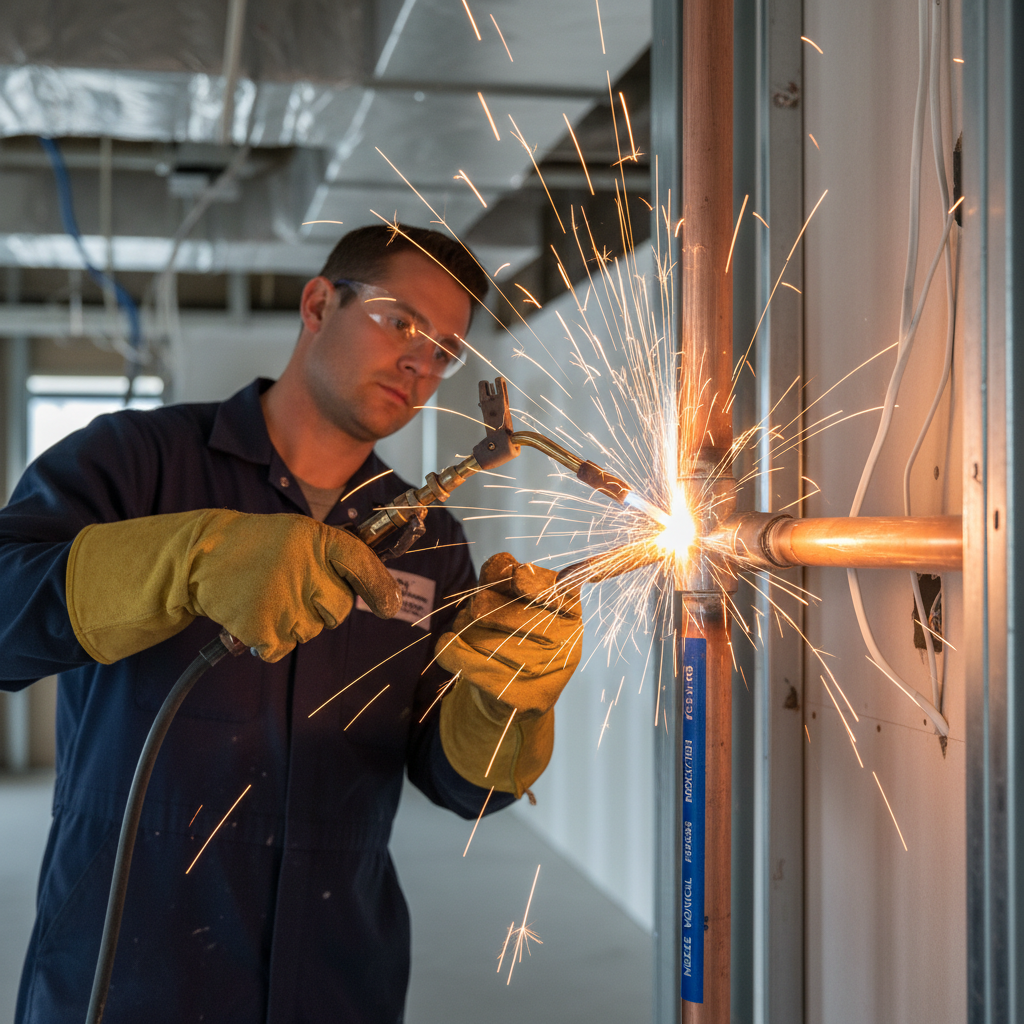
    This phase must be performed by an ASSE 6010 certified installer. These professionals have undergone rigorous training and examination on the specific procedures required for medical gas piping.

    Key Installation Steps:

    1. Receipt & Inspection: All materials are inspected upon arrival to ensure they are clean, undamaged, and certified for medical gas use.
    2. Brazing Technique: Installers use a specific brazing technique with a continuous nitrogen purge (NFPA 99, 5.1.10.11). This prevents the formation of carbonaceous scale (copper oxide) on the interior of the pipe, which could otherwise be dislodged and delivered to a patient's lungs.
    3. Labeling: All piping must be labeled with the gas name and direction of flow at specific intervals and at every valve and wall penetration.
    4. Pressure Testing: Before walls are closed, the installer will perform initial pressure tests to check for leaks.

    Medical Testing Solutions provides ASSE 6010 certified installation services ensuring every joint is brazed to the highest standard, setting the stage for a successful verification.

    Phase 4: System Verification (ASSE 6030)

    After the installation is complete, but before the system is used for patients, a third-party ASSE 6030 certified verifier must test the entire system. This is arguably the most important step in the entire process. The verifier acts as an independent auditor to confirm the system is safe, pure, and functions as designed.

    The Verification Checklist

    The verifier performs a battery of tests outlined in NFPA 99, Chapter 5:

    • Purity Testing: Confirms that the gas being delivered is the correct gas and is free from contaminants.
    • Cross-Connection Test: Ensures that, for example, only oxygen flows from the oxygen outlets.
    • Flow & Pressure Tests: Confirms that every single outlet in the facility delivers the required pressure and flow rate.
    • Alarm Testing: Every alarm condition is simulated to ensure the master and area alarm panels function correctly.

    This is a non-negotiable step for receiving your certificate of occupancy. Learn more about our comprehensive medical gas verification process.

    Phase 5: AHJ Sign-Off & Ongoing Maintenance

    Once the ASSE 6030 verifier provides their report confirming the system meets all NFPA 99 requirements, you can present this documentation to the Authority Having Jurisdiction (AHJ) in Owensboro for final sign-off.

    However, compliance doesn't end at installation. NFPA 99 mandates a regular maintenance and inspection schedule. Partnering with a company like Medical Testing Solutions for annual medical gas inspections and a proactive maintenance plan ensures your ASC remains safe and compliant for years to come.

    Your Partner for Compliant Medical Gas Systems in Owensboro

    From initial design consultation to final verification and ongoing maintenance, Medical Testing Solutions is your single source for ambulatory surgery center medical gas installation in Owensboro, KY. Our ASSE-certified team ensures your project is completed on time, on budget, and in strict accordance with all applicable codes. We provide the peace of mind that comes from knowing your facility's most critical life-support system is built for safety and reliability.

    Ready to start your project? Contact us today for a comprehensive quote for your ASC medical gas needs. Call us at (754) 315-1078 or request a quote online.


    Frequently Asked Questions

    The AHJ can vary but is typically the local building department, fire marshal, or a representative from the state's health department. They have the final say on approving your facility for operation.

    For a new ground-up ASC, the medical gas installation is phased with construction. The rough-in can take 1-3 weeks, with final verification occurring near the end of the project. The entire process from design to sign-off can span several months, aligned with your overall construction timeline.

    No. NFPA 99 (5.1.10.11.10(3)) requires that installers be certified to the ASSE 6010 standard. A standard plumber will not have the required training or certification for brazing with a nitrogen purge, which is critical for patient safety.

    ASSE 6010 is for Installers, who physically build the system. ASSE 6030 is for Verifiers, who perform the final third-party safety and purity testing. ASSE 6040 is for Maintenance Personnel, who are certified to perform ongoing service and repairs on an active medical gas system.

    This article is provided for educational purposes and reflects industry standards as of publication. Always verify against current NFPA 99, CGA, and AHJ requirements. Medical Testing Solutions is ASSE-certified and ready to help — contact us for facility-specific guidance.

    Request a quote for your facility

    Talk with Medical Testing Solutions about your next inspection, repair or equipment request.

    Get a quote in 1 business day

    I agree to receive text messages from Medical Testing Solutions, L.L.C. at the phone number provided, including informational and marketing messages. Consent is not a condition of purchase. Message frequency varies. Message & data rates may apply. Reply STOP to opt out or HELP for help. See our Privacy Policy and Messaging Terms.

    Prefer to talk? Call (754) 315-1078

    Related articles