Skip to content
    New: Medical Gas Outlet Retrofit & Rebuild Matrix — cross-reference legacy Chemetron, Ohio Diamond, Puritan-Bennett & more →
    ASSE Certified 24/7
    Medical Gas Service
    Compliance & Standards

    Ambulatory Surgery Center Medical Gas Install in Newport News VA

    Medical Testing SolutionsOctober 18, 20268 min read
    Share
    Ambulatory Surgery Center Medical Gas Install in Newport News VA

    Ambulatory Surgery Center Medical Gas Install in Newport News, VA: A Complete Guide

    Building a new Ambulatory Surgery Center (ASC) in Newport News, Virginia, is a complex undertaking. Among the most critical systems you will design and install is the medical gas piping network. This system is the lifeblood of your operating rooms, recovery areas, and procedure rooms, delivering essential gases like Oxygen, Medical Air, Nitrous Oxide, and providing crucial suction through the Medical Vacuum system. A compliant, correctly installed system is non-negotiable for patient safety and regulatory approval.

    This guide provides a definitive overview of the entire process for an ASC ground-up medical gas build-out. We will walk you through every phase, from initial design considerations based on NFPA 99 to the final verification by an ASSE 6030 credentialed verifier. You will learn what it takes to ensure your Newport News facility meets all code requirements and is ready for its first patient.

    Understanding the Scope: Medical Gas Systems in an ASC

    An ASC medical gas system is more than just pipes in the wall. It is a comprehensive network regulated by strict codes to ensure patient safety. The system typically includes:

    • Source Equipment: This is the heart of the system. For a Newport News ASC, this usually means a manifold for high-pressure cylinders (for Oxygen, Nitrous Oxide) and a dedicated medical air compressor and vacuum pump. The size and type are dictated by the number of operating rooms and procedure types.
    • Piping Distribution Network: Special de-greased and cleaned copper tubing (ASTM B819) is used to transport the gases from the source to the patient care areas.
    • Zone Valve Boxes: These assemblies allow staff to shut off the flow of gas to a specific area or "zone" of the facility in an emergency without affecting the entire building.
    • Area Alarm Panels: These are required in critical care areas. They provide immediate audible and visual warnings of pressure deviations (high or low) in the gas lines for that zone, as mandated by NFPA 99.
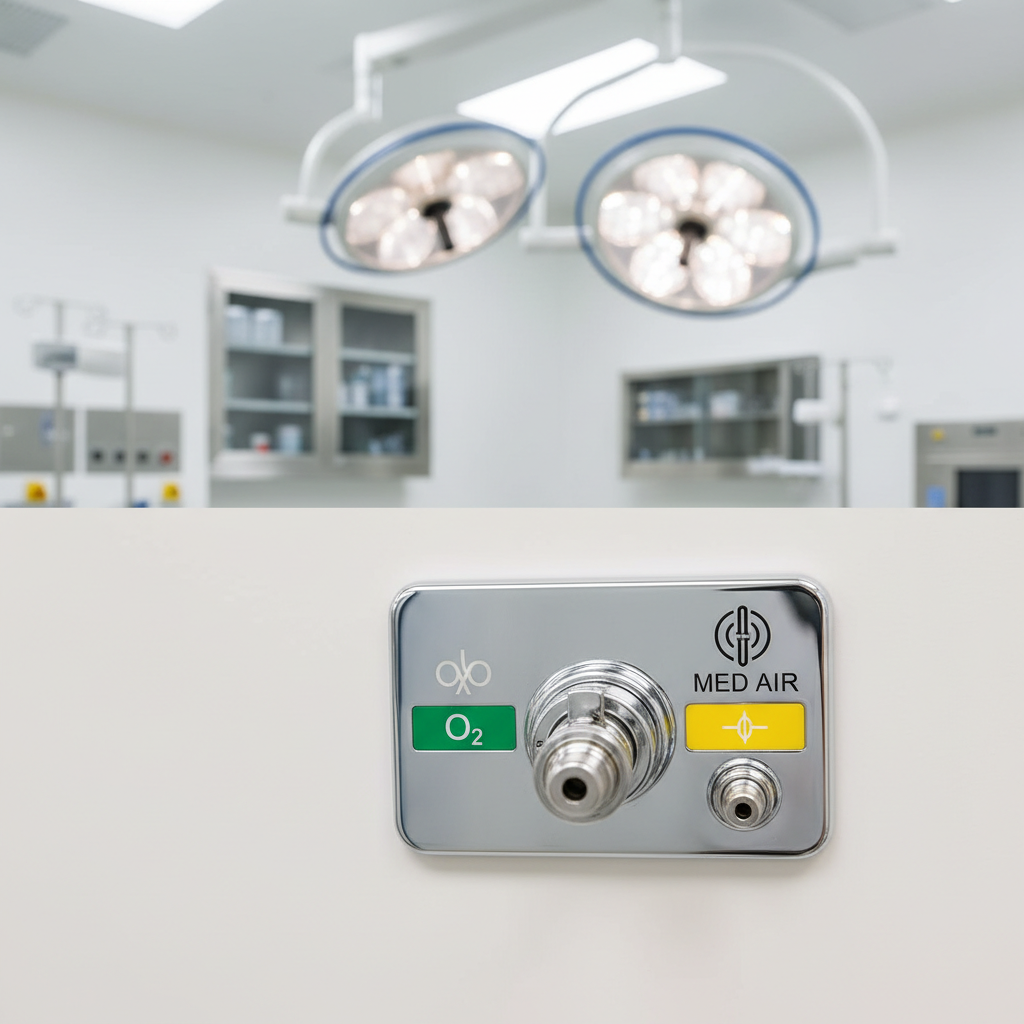
    • Terminal Outlets: These are the connection points in the patient rooms where medical equipment is attached. They are gas-specific (e.g., an Oxygen hose will only connect to an Oxygen outlet) to prevent dangerous cross-connections.

    Why This Matters for Compliance: NFPA 99, the "Health Care Facilities Code," is not just a set of guidelines; it's the law in Virginia. Your local Authority Having Jurisdiction (AHJ) in Newport News will require full compliance before issuing a certificate of occupancy. A failure in any part of the system means a failure to open.

    Phase 1: Design and Engineering - The Blueprint for Safety

    Before a single pipe is installed, a robust design phase is essential. This involves collaboration between architects, engineers, and a certified medical gas specialist, like the team at Medical Testing Solutions. The goal is to create a system that is safe, efficient, and scalable for your ASC's specific needs.

    Key Design Considerations:

    • Facility Layout: The number and type of operating rooms, procedure rooms, and recovery bays directly influence pipe sizing and source equipment capacity.
    • Gas Requirements: Will your ASC perform procedures requiring Nitrous Oxide for sedation? What are the simultaneous use projections for medical air and vacuum? Answering these questions determines the size of your manifolds and the horsepower of your compressors and pumps.
    • Code Compliance: The design must adhere strictly to the latest edition of NFPA 99. This includes requirements for pipe materials, installation practices, alarm locations, and ventilation for storage rooms.
    • Future-Proofing: Consider potential future expansions. It is far more cost-effective to size main distribution lines to accommodate an extra operating room now than to rip out walls and replace them later.

    Our team at MTS often works with architects and general contractors in the Hampton Roads area during this pre-construction phase to ensure the medical gas plans are compliant and practical from the start.

    Phase 2: ASSE 6010 Installation - The Core Construction

    The physical installation of the medical gas piping system must be performed by qualified individuals. This is where ASSE 6010 certification becomes critical.

    An ASSE 6010 Medical Gas Systems Installer is a professional who has been trained and has passed a rigorous examination on the specifics of installing these systems per NFPA 99. They are not standard plumbers; they are specialists.

    Steps in the Installation Process:

    1. Material Handling: All copper tubing and fittings must be kept meticulously clean, capped, and protected from contamination on the job site.
    2. Brazing: All joints in the copper piping must be brazed, not soldered. The brazing process uses a filler metal (BCuP series) and involves purging the inside of the pipe with oil-free, dry nitrogen to prevent the formation of harmful oxides on the interior wall.
    3. Pipe Labeling: Pipes must be labeled with the gas name and direction of flow at specific intervals and at every valve and junction, as required by code.
    4. Source Equipment Placement: Manifolds, compressors, and vacuum pumps are installed in their designated mechanical spaces, with close attention paid to ventilation, electrical, and exhaust requirements.
    5. Outlet and Valve Installation: Zone valve boxes and terminal outlets are installed, ensuring they are properly supported and connected to the piping network.

    Working with a certified installer is your first line of defense against costly construction defects. For a comprehensive overview of this phase, explore our medical gas installation services page.

    Choosing the Right Equipment: Manifolds, Compressors, and Alarms

    Selecting the right equipment is a balance of performance, cost, and compliance. While many brands exist, they all must meet the stringent requirements of NFPA 99. Medical Testing Solutions sells and services a wide range of compliant medical gas equipment.

    Medical Gas Source Comparison Table

    Equipment TypeCommon BrandsKey NFPA 99 RequirementTypical ASC Configuration
    Oxygen ManifoldBeaconMedaes, Amico, OhioFully automatic switchover, pressure regulators, check valvesHigh-pressure cylinder manifold (Primary, Secondary banks)
    Medical Air SourcePowerex, BeaconMedaes, Atlas CopcoMust be "medical" grade, duplexed (two pumps), filtered, dew point monitoredOil-less rotary scroll or reciprocating compressor package
    Medical Vacuum SourcePowerex, Becker, BeaconMedaesMust be duplexed (two pumps), with dual bacterial filters and exhaustOil-less rotary vane or claw vacuum pump package
    Area AlarmsAmico, Tri-Tech, BeaconMedaesAudible and non-cancelable visual indicators for each gasLocated in ORs, recovery rooms, and nurse stations

    Phase 3: ASSE 6030 Verification - The Final Check

    Once the installation is complete, the entire system must be tested and verified before it can be used for patient care. This is the Verification phase, and it absolutely must be performed by a third-party agency, not the company that installed the system.

    The verifier must be credentialed as an ASSE 6030 Medical Gas Verifier.

    Medical Testing Solutions provides independent, third-party medical gas verification services across Virginia. The verifier will perform a battery of tests outlined in NFPA 99, Chapter 5, including:

    • Initial Piping Purge: Purging the lines with nitrogen to remove any debris.
    • Standing Pressure Test: Pressurizing the system to 1.5 times the working pressure to check for leaks.
    • Cross-Connection Test: Ensuring that gas from one system cannot flow into another.
    • Particulate & Purity Analysis: Testing each gas outlet to confirm the gas is the correct type and meets USP purity standards.
    • Alarm Testing: Functionally testing every single alarm point to ensure it activates at the correct pressure setpoints.

    Upon successful completion of all tests, the verifier provides a comprehensive report. This report is the key document you will provide to the Newport News AHJ to get the final sign-off on your medical gas system.

    Maintaining Compliance After Opening

    Your responsibility for the medical gas system doesn't end after you open your doors. Ongoing maintenance and inspection are required to ensure continued safety and compliance.

    • Annual Inspections: NFPA 99 requires periodic inspection of all central supply systems, alarms, and outlets. Our annual medical gas inspections are designed to meet these requirements.
    • Preventive Maintenance: Following the manufacturer's recommended service schedule for compressors, vacuum pumps, and manifolds is crucial to prevent unexpected downtime. MTS offers comprehensive medical gas maintenance services to keep your systems running smoothly.
    • Certification: Keeping your facility's documentation in order is part of the compliance landscape. Learn more about the overall medical gas certification process.

    Your Partner for Compliant Medical Gas Systems in Newport News

    Navigating the complexities of an ambulatory surgery center medical gas installation requires expertise, precision, and a deep understanding of the regulatory landscape. From initial design consultation to final ASSE 6030 verification and ongoing maintenance, Medical Testing Solutions is your trusted partner in Newport News and across Virginia.

    Ensure your project is done right, on time, and on budget. Protect your investment and guarantee patient safety by working with certified professionals.

    Ready to start planning your ASC project? Contact our team today for a free, no-obligation quote.

    Call us at (754) 315-1078 or request a quote online to discuss your medical gas installation needs.


    Frequently Asked Questions

    For a typical 2-3 operating room ASC, the installation phase can take anywhere from 2 to 5 weeks, depending on the construction schedule and coordination with other trades. The final verification process usually takes 2-4 days.

    No. According to NFPA 99, medical gas and vacuum systems must be installed by individuals qualified to ASSE 6010 standards. Using a standard plumber is a code violation and will result in a failed verification.

    Common reasons include leaks in the piping (often from improper brazing), incorrect alarm wiring, or failing the gas purity tests due to contamination during installation. These are all preventable with a qualified installer.

    Costs vary widely based on the size of the facility and the complexity of the systems. A basic system for a small ASC can start in the tens of thousands, while larger, more complex centers can exceed six figures. The best way to determine cost is to get a detailed quote.

    Yes, if your facility uses Nitrous Oxide, you will have a WAGD system. This system must also be verified for proper flow and function to protect your staff from exposure. MTS provides WAGD monitoring and testing.

    This article is provided for educational purposes and reflects industry standards as of publication. Always verify against current NFPA 99, CGA, and AHJ requirements. Medical Testing Solutions is ASSE-certified and ready to help — contact us for facility-specific guidance.

    Request a quote for your facility

    Talk with Medical Testing Solutions about your next inspection, repair or equipment request.

    Get a quote in 1 business day

    I agree to receive text messages from Medical Testing Solutions, L.L.C. at the phone number provided, including informational and marketing messages. Consent is not a condition of purchase. Message frequency varies. Message & data rates may apply. Reply STOP to opt out or HELP for help. See our Privacy Policy and Messaging Terms.

    Prefer to talk? Call (754) 315-1078

    Related articles