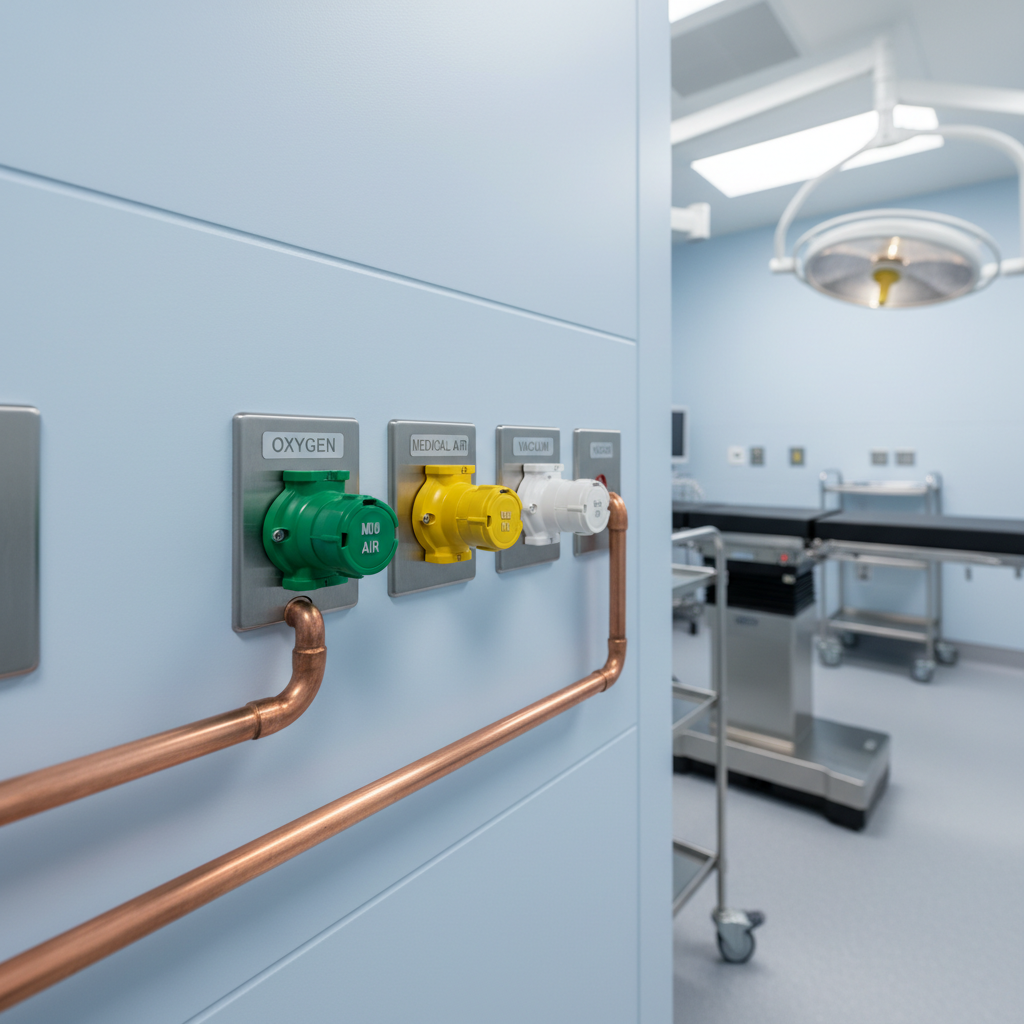
Ambulatory Surgery Center Medical Gas Install in Myrtle Beach, SC
Medical Testing SolutionsOctober 16, 20266 min read
Share
Ambulatory Surgery Center Medical Gas Install in Myrtle Beach, SC: A Complete Guide
Building a new Ambulatory Surgery Center (ASC) in Myrtle Beach, South Carolina, is a complex undertaking. Among the most critical systems you will install is the medical gas pipeline. Proper design, installation, and verification are not just best practices, they are legally mandated requirements essential for patient safety and facility licensure. This guide provides a definitive overview of the ground-up medical gas installation process for ASCs, from initial blueprints to the final sign-off from the Authority Having Jurisdiction (AHJ). We'll cover system design, NFPA 99 compliance, component selection, the roles of ASSE 6010 installers and ASSE 6030 verifiers, and what to expect during the final inspection.
Understanding the Scope: Medical Gases in an ASC
Unlike a major hospital, an ASC typically utilizes a more focused set of medical gases. However, the standards for safety and compliance remain just as stringent. For a typical Myrtle Beach surgery center, your medical gas system will likely include:
Oxygen (O2): The most fundamental medical gas, used for patient respiration.
Medical Air (MA): A purified air supply used for respiratory applications and to power surgical tools.
Nitrous Oxide (N2O): A common analgesic and anesthetic, especially for dental and minor surgical procedures.
Vacuum (VAC): A negative pressure system used for suctioning fluids and waste during procedures.
Waste Anesthetic Gas Disposal (WAGD): A crucial system that actively scavenges and removes exhaled anesthetic gases from the operating room, protecting staff from long-term exposure.
Why this matters for compliance: NFPA 99, the Health Care Facilities Code, is the primary standard governing these systems. It outlines the specific requirements for everything from the copper piping used to the final testing procedures. Failure to comply can result in project delays, costly rework, and the inability to obtain a certificate of occupancy.
Phase 1: Design and Engineering - The Blueprint for Compliance
The foundation of a successful medical gas installation is a robust and compliant design. This phase occurs long before any pipes are laid. It involves a collaborative effort between architects, mechanical engineers, and a certified medical gas specialist.
Key design considerations include:
Source Equipment Sizing: The central supply systems, such as an oxygen manifold, a medical air compressor, and a vacuum pump, must be correctly sized for the ASC's specific needs. This calculation is based on the number of operating rooms, recovery bays, and the types of procedures being performed.
Pipeline Distribution: The design must map out the entire piping network, showing the route from the source equipment to every terminal outlet in patient care areas. This includes specifying pipe sizes to ensure adequate pressure and flow at the point of use.
Zoning and Valves: NFPA 99 requires the system to be divided into distinct zones. Each zone is controlled by a zone valve box, allowing staff to shut off gas flow to a specific area in an emergency without affecting the entire facility. The design must strategically locate these valve boxes for immediate access.
Alarms: A master alarm panel, typically located in an area of continuous surveillance (like a nurse's station), is required to monitor the status of the entire system. Area alarm panels are also required in critical care areas to provide localized alerts. For a deeper look at system requirements, explore our medical gas installation services.
Phase 2: Installation by ASSE 6010 Certified Technicians
Once the design is finalized and approved, the physical installation can begin. This work must be performed by technicians holding an ASSE 6010 Medical Gas Systems Installer certification. This certification ensures the individual has been trained and tested on the specific procedures required by NFPA 99.
Core Installation Steps:
Piping Installation: All medical gas pipelines must be constructed from seamless Type K or L copper tubing, cleaned for oxygen service (ACR/Med). Joints must be brazed, not soldered, using a specific silver alloy (typically BCuP-5) while continuously purging the interior of the pipe with oil-free nitrogen. This nitrogen purge prevents the formation of carbonaceous residue (soot) inside the pipe, which could otherwise be delivered to a patient.
Component Placement: Source equipment (manifolds, pumps, compressors), alarm panels, and terminal outlets are installed according to the design plans.
Labeling: Every pipe, valve, and outlet must be clearly and correctly labeled with the name of the gas it carries. This is a simple but critical step for safety and maintenance.
Working with a qualified team like Medical Testing Solutions ensures that every braze, every connection, and every component is installed in strict accordance with code.
Phase 3: Verification - The ASSE 6030 Inspection
After the installation is complete, but before the walls are closed up, the entire system must be inspected and tested by an independent, third-party ASSE 6030 Medical Gas Systems Verifier. The verifier cannot be an employee of the installing company.
This verification process is a comprehensive series of tests designed to confirm the system's integrity, purity, and proper function. It is the final quality control check before the system is approved for patient use.
Key Verification Tests (per NFPA 99):
Test
Purpose
NFPA 99 Chapter/Section (Typical)
Initial Pressure Test
Checks for leaks in the piping by pressurizing the system with nitrogen.
5.1.12.2.3
Cross-Connection Test
Confirms that each outlet delivers only the gas specified for it.
5.1.12.3.4
Purity Test
Analyzes the gas at each outlet to ensure it meets USP purity standards.
5.1.12.3.8
Particulate Test
Checks for any solid contaminants within the piping system.
5.1.12.3.7
Alarm Testing
Verifies that all master and area alarms function correctly under fault conditions.
5.1.9
This crucial step ensures that the oxygen outlet delivers pure oxygen, the vacuum system provides adequate suction, and all safety systems are operational. You can learn more about this detailed process on our medical gas verification page.
Phase 4: Final AHJ Sign-Off and System Turnover
Once the ASSE 6030 Verifier has completed all tests and certified that the system is fully compliant, they will provide a detailed report. This report is the primary document you will submit to the Authority Having Jurisdiction (AHJ), often the local fire marshal or building inspector in Myrtle Beach, for final approval.
The AHJ relies on the verifier's report as proof of compliance. Upon their sign-off, the medical gas system is officially cleared for use.
At Medical Testing Solutions, we provide a comprehensive turnover package that includes:
The complete ASSE 6030 verification report.
As-built drawings of the installed system.
Manufacturer's literature for all installed components.
A training session for your facility's staff on the proper use and monitoring of the system.
After your facility is operational, ongoing compliance requires periodic checks. Explore our services for annual medical gas inspections to ensure long-term safety and reliability.
Your Partner for Compliant Medical Gas Systems in Myrtle Beach
Installing a medical gas system for a new ambulatory surgery center is a high-stakes process where cutting corners is not an option. From the initial design to the final verification, every step must adhere to the stringent requirements of NFPA 99. Medical Testing Solutions is your ASSE-certified partner in Myrtle Beach, SC, providing both expert medical gas installation and independent medical gas verification services.
Ensure your project is completed on time, on budget, and in full compliance. Contact our team today for a consultation or to request a quote for your ASC project. Call us at (754) 315-1078 to speak with a medical gas specialist.
Frequently Asked Questions
The design is typically a collaboration between the project's architect, mechanical engineer, and a medical gas specialist. The specialist provides the specific expertise on NFPA 99 code requirements and equipment sizing.
NFPA 99 mandates a third-party, independent verifier to avoid conflicts of interest. This ensures an unbiased and thorough inspection of the installer's work, which is critical for patient safety.
For a typical ASC, verification can take anywhere from 2 to 5 days, depending on the size and complexity of the system. It's a meticulous process that cannot be rushed.
If the ASSE 6030 verifier finds any deficiencies (e.g., leaks, cross-connections, purity issues), the installing contractor is required to correct them. The verifier will then re-test the affected parts of the system until they pass.
NFPA 99 requires regular inspections and maintenance of medical gas systems. This includes annual testing of alarms, periodic checks of source equipment, and ongoing monitoring. MTS offers comprehensive medical gas maintenance services to keep your ASC compliant.
Request a quote for your facility
Talk with Medical Testing Solutions about your next inspection, repair or equipment request.