Building a new Ambulatory Surgery Center (ASC) in Louisville is a monumental undertaking. Among the most critical systems you'll install is the medical gas network. A properly designed, installed, and verified medical gas system is not just a utility, it's a life-support system essential for patient safety and procedural efficacy. This guide provides a definitive overview of the ground-up process for an ASC medical gas installation, from initial blueprints to the final Authority Having Jurisdiction (AHJ) sign-off, ensuring your facility is compliant with NFPA 99 and ASSE 6000 standards.
Medical Gas Service
Compliance & Standards
Ambulatory Surgery Center Medical Gas Install in Louisville, KY: A Ground-Up Guide
Medical Testing SolutionsOctober 18, 20265 min read
The Blueprint: Designing a Compliant Medical Gas System
The foundation of a successful installation is a meticulously planned design. This phase involves architects, engineers, and a certified specialist, like the team at Medical Testing Solutions, to map out the entire system based on the specific needs of your ASC.
Determining Your ASC's Gas Requirements
First, we assess which gases are needed and where. A typical ASC may require:
- Oxygen (O2): For patient respiration.
- Medical Air (MedAir): For respiratory applications and powering surgical tools.
- Nitrous Oxide (N2O): For anesthesia and analgesia.
- Vacuum (Vac): For surgical suction and waste anesthetic gas disposal (WAGD).
- Carbon Dioxide (CO2): For insufflation during laparoscopic procedures.
Sizing and Sourcing
Based on the number of operating rooms, procedure rooms, and recovery bays, the system must be sized correctly. This includes calculating pipe diameters to ensure adequate flow and pressure at every terminal. The source equipment, such as oxygen manifolds, medical air compressors, and vacuum pumps, must be selected to meet the peak demand of the facility. All equipment and piping must be medical-grade and compliant with the latest codes.
The Build: ASSE 6010 Certified Installation
Once the design is approved, the physical installation begins. This is not a standard plumbing job. The installation of medical gas piping must be performed by individuals holding an ASSE 6010 Medical Gas Systems Installer certification.
Piping and Brazing
The core of the system is the network of copper piping. Key steps include:
- Piping: All piping must be ACR/Med copper tubing, cleaned for oxygen service.
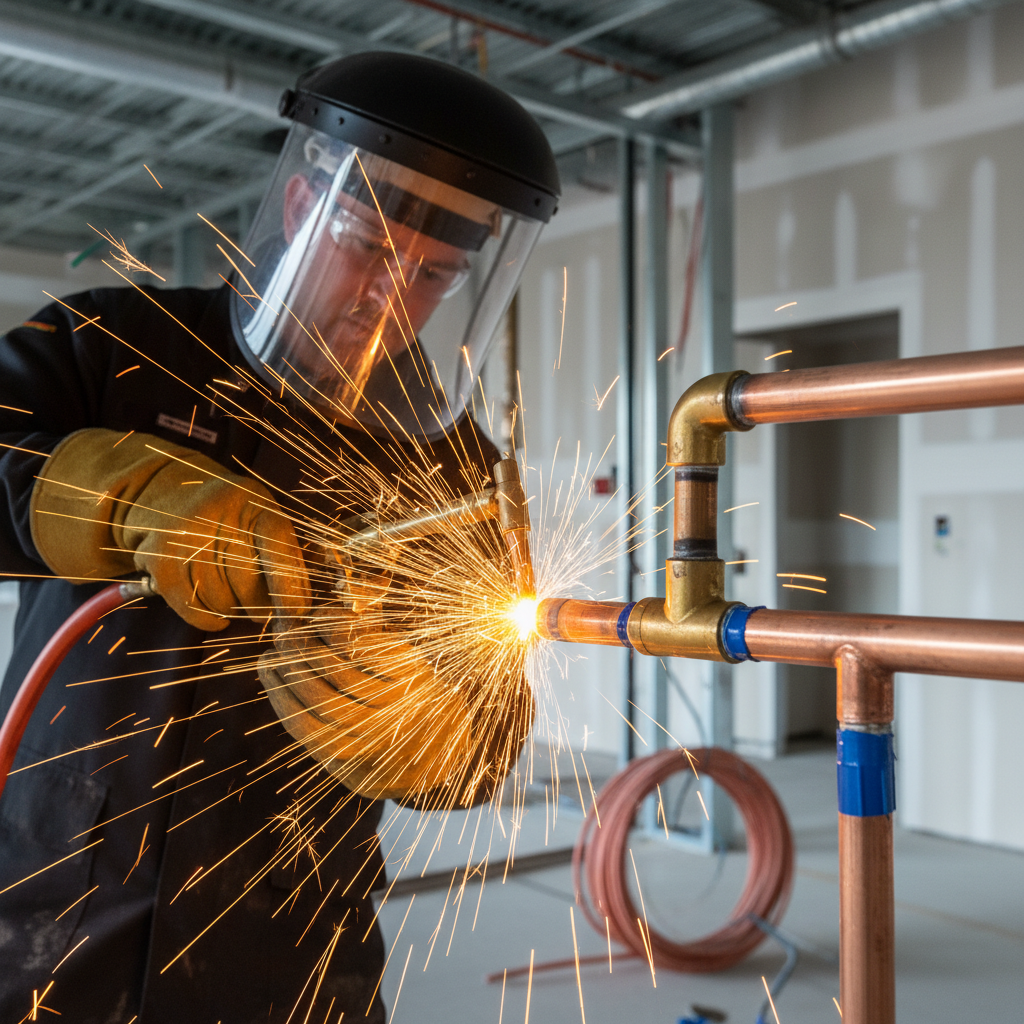
- Brazing: Joints are brazed, not soldered. During brazing, a continuous purge of nitrogen is passed through the pipe to prevent oxidation on the interior surface. This process, governed by NFPA 99, is critical to prevent contaminants from entering the gas stream.
- Labeling: All pipes are meticulously labeled with the gas name and direction of flow at specific intervals.
Why this matters for compliance: NFPA 99 (Health Care Facilities Code) provides explicit requirements for the materials, installation, and testing of medical gas systems. Failure to adhere to these standards, particularly regarding the brazing and purging process (see NFPA 99, Chapter 5), can result in a non-compliant system, project delays, and significant safety risks.
Key Components of an ASC Medical Gas System
Your system is more than just pipes. Several key components are installed to ensure safety and control.
- Source Equipment: Manifolds, compressors, and pumps that supply the gases.
- Zone Valve Boxes: These allow staff to shut off the gas supply to a specific "zone" (e.g., a single operating room) in an emergency without affecting the rest of the facility.
- Area Alarms: These panels monitor the pressure in each zone and provide an audible and visual alarm if the pressure deviates from the normal range.
- Master Alarms: Located in a central area, these monitor the entire system, including the source equipment.
- Outlets/Terminals: Gas-specific outlets (e.g., DISS, Ohmeda) are installed at points of use. These are keyed to prevent accidental cross-connection.
Verification and Testing: The ASSE 6030 Standard
After the physical installation is complete, the entire system must be rigorously tested and verified before it can be used for patient care. This critical process, known as medical gas verification, must be performed by a third-party agency (not the installer) with an ASSE 6030 Medical Gas Verifier certification. Medical Testing Solutions is certified to perform this essential service.
The Verification Checklist
The verifier will conduct a battery of tests outlined in NFPA 99, including:
- Piping Purge Test: Ensuring all debris from construction is removed.
- Standing Pressure Test: Confirming the system is leak-free.
- Cross-Connection Test: Verifying that each outlet delivers only the gas it is supposed to.
- Gas Purity and Concentration Tests: Ensuring the gases meet USP requirements.
- Alarm and Valve Testing: Confirming all safety features are functioning correctly.
Navigating AHJ and Final Sign-Off in Louisville
The final step before your system can be "turned on" is obtaining the approval of the Authority Having Jurisdiction (AHJ). In Louisville, this could be the state health department, a city building inspector, or another regulatory body. The AHJ will review the verifier's report and may conduct their own inspection. A clean, well-documented report from a trusted ASSE 6030 verifier is your key to a smooth and swift approval process.
Comparing Medical Gas Installers: What to Look For
Choosing the right partner for your medical gas installation is crucial. Look for a company that can provide end-to-end service, from design consultation to final verification.
| Feature | Standard Plumber | Certified Med Gas Installer (ASSE 6010) | MTS (Full Service) |
|---|---|---|---|
| Certification | None for Med Gas | ASSE 6010 | ASSE 6010 (Install), 6030 (Verification), 6040 (Maint.) |
| Brazing Process | Soldering | Nitrogen Purge Brazing | Nitrogen Purge Brazing |
| Code Knowledge | General Plumbing | NFPA 99, ASSE 6000 | Deep expertise in NFPA, ASSE, CGA |
| Verification | Cannot Verify | Cannot Verify Own Work | Third-Party ASSE 6030 Verification |
| Service Scope | Installation Only | Installation Only | Design, Install, Verify, Maintain, Certify |
Your Partner for Compliant Medical Gas Systems in Louisville
From the initial design to the final handshake with the AHJ, ensuring a compliant and safe medical gas system is a complex but manageable process. By partnering with certified experts like Medical Testing Solutions, you can be confident that your Louisville ASC will be equipped with a life-sustaining system built to the highest standards of safety and reliability.
Ready to begin your Ambulatory Surgery Center project? Contact the experts at Medical Testing Solutions for a comprehensive quote on your medical gas installation, verification, and certification needs. Call us today at (754) 315-1078 or request a quote online to ensure your project is done right, from the ground up.
Frequently Asked Questions
The timeline varies with project size, but typically the piping installation takes several weeks, followed by a dedicated period for system verification. Planning for this from the start of construction is key.
Only individuals with the appropriate ASSE International 6000 series credentials. Installation requires an ASSE 6010 certification, while system verification requires an ASSE 6030 certification.
Small leaks are common, but the most serious findings involve particulate matter in the lines from improper brazing or incorrect gas concentrations. These can be completely avoided by using a certified and experienced installer.
Unless your plumber holds a current ASSE 6010 certification and has specific experience with medical gas systems, you cannot. This work is highly specialized and falls under different codes and standards than standard plumbing.
Request a quote for your facility
Talk with Medical Testing Solutions about your next inspection, repair or equipment request.