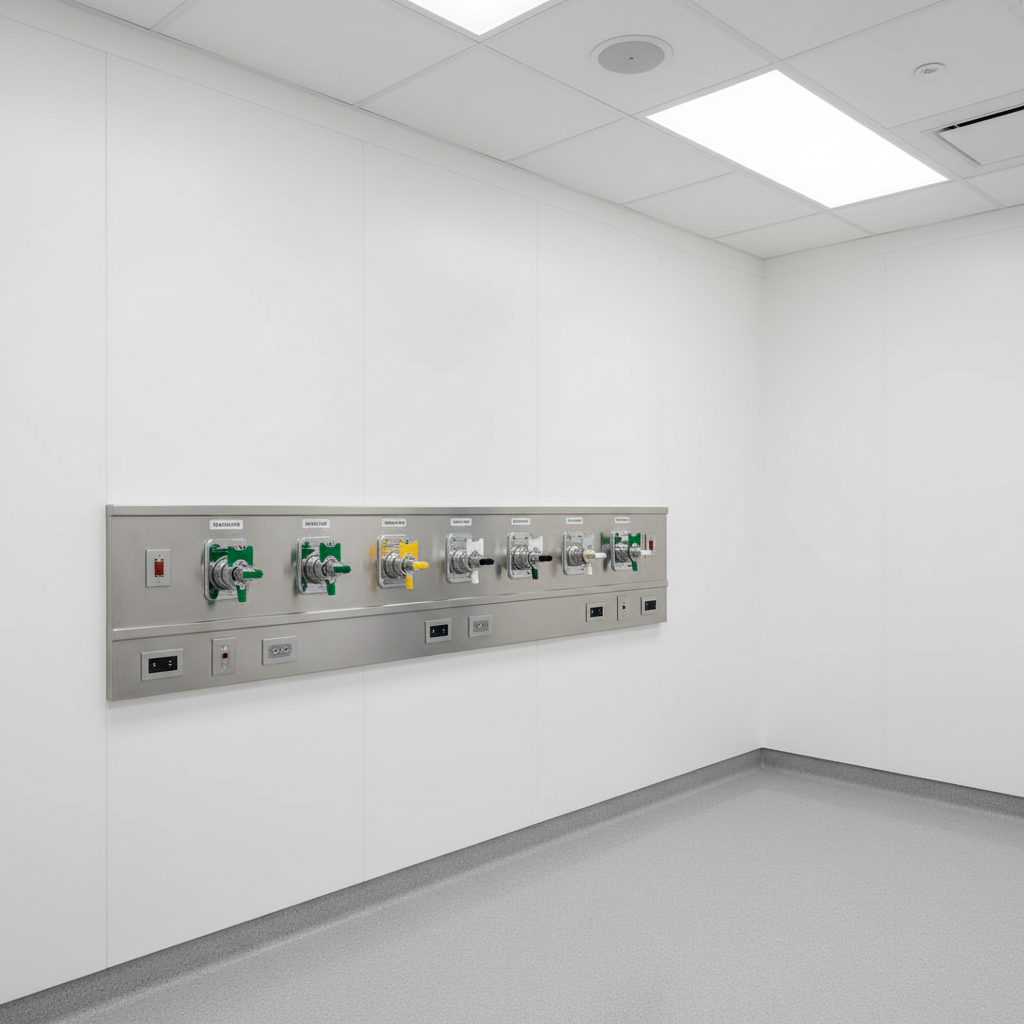
Ambulatory Surgery Center Medical Gas Install in Lexington KY: A Complete Guide
Medical Testing SolutionsOctober 19, 20266 min read
Share
An ambulatory surgery center (ASC) is a modern healthcare facility that provides outpatient surgical care. A critical component of any ASC is its medical gas system, which provides lifesaving gases like oxygen, medical air, and nitrous oxide to operating rooms and recovery areas. A properly designed and installed medical gas system is not just a matter of convenience; it's a matter of patient safety and regulatory compliance. This guide will walk you through every phase of an ambulatory surgery center medical gas installation in Lexington, KY, ensuring your project meets the stringent requirements of NFPA 99 and ASSE International.
From initial design considerations to the final verification and sign-off from the Authority Having Jurisdiction (AHJ), we will cover the essential steps, codes, and best practices. You will learn what it takes to build a safe, reliable, and compliant medical gas system from the ground up, with insights from the certified experts at Medical Testing Solutions.
Designing Your ASC's Medical Gas System: The Foundation of Safety
The design phase is the most critical part of your medical gas installation. A robust design ensures that the system will meet the clinical needs of your surgery center, comply with all relevant codes, and be scalable for future needs. This process involves close collaboration between architects, engineers, and a certified medical gas specialist, like the team at Medical Testing Solutions.
Sizing and Capacity Planning
First, you must determine the specific needs of your facility. This involves:
Number and Type of Operating Rooms: How many ORs will you have? What kind of procedures will be performed?
Gas Outlets: Determine the number and type of medical gas outlets required for each location (e.g., oxygen, medical air, nitrous oxide, vacuum).
Source Equipment Sizing: The central supply systems, such as oxygen manifolds, medical air compressors, and vacuum pumps, must be sized to handle the peak demand of the facility. Under-sizing is a common and dangerous mistake.
NFPA 99 Code Requirements
The National Fire Protection Association (NFPA) 99 Health Care Facilities Code is the primary standard governing medical gas systems in the United States. Your design must adhere to its strict requirements.
Why this matters for compliance: NFPA 99 provides the foundational safety standards for healthcare facilities. Adherence is mandatory and is the first thing an AHJ inspector will verify. Failure to comply can result in costly project delays and put patients at risk.
Key NFPA 99 design considerations include:
Piping Layout: The design must map out the entire piping network, from the source equipment to the patient-use outlets.
Zone Valves: The system must be divided into zones, each controlled by a zone valve box. This allows sections of the system to be isolated for maintenance or in an emergency without shutting down the entire facility.
Alarms: A master alarm system is required to monitor the status and pressure of all medical gases. Area alarms are required for critical care areas.
The Installation Process: From Pipe to Patient
Once the design is finalized and approved, the physical installation can begin. This work must be performed by technicians certified to the ASSE 6010 Medical Gas Systems Installer standard. This certification is a non-negotiable requirement for ensuring a safe and compliant installation.
Step 1: Brazing and Piping Installation
Medical gas piping is typically Type L or K copper, which must be meticulously cleaned for oxygen service. The crucial step here is brazing, the process of joining pipes together.
Nitrogen Purge: During brazing, an inert gas like nitrogen must be continuously purged through the pipe. This displaces oxygen and prevents the formation of carbonaceous oxides on the interior surface of the pipe, which could otherwise be carried into the gas stream and harm patients.
Proper Brazing Technique: Joints must be brazed by a qualified ASSE 6010 installer to ensure they are strong and leak-free.
Step 2: Source Equipment and Outlet Installation
While the piping is being run, the source equipment is installed. This includes:
Manifolds: For gases like oxygen and nitrous oxide, a manifold system with primary and secondary banks of cylinders is installed.
Medical Air Compressors and Vacuum Pumps: These complex systems require careful placement, ventilation, and connection to the main piping network.
Outlets and Inlets: Wall-mounted outlets (for oxygen, air, etc.) and vacuum inlets are installed in their designated locations and connected to the pipework.
Equipment Type
Typical Location
Key NFPA 99 Chapter
Common Brands
Oxygen Manifold
Secured, ventilated room
Chapter 5
BeaconMedaes, Pattons Medical
Medical Air Compressor
Mechanical room, separate from vacuum
Chapter 5
Powerex, Atlas Copco
Medical Vacuum Pump
Mechanical room
Chapter 5
Dekker, Becker
Zone Valve Box
Outside the room/zone it serves
Chapter 5
Tri-Tech Medical, Amico
Master Alarm Panel
Area of continuous surveillance
Chapter 5
Medical Test Solutions, Inc., CHT
Verification and Certification: The Final Hurdle
After the installation is complete, but before the system is used for patient care, it must be rigorously tested and verified by an independent, third-party agency. This process is performed by an inspector certified to the ASSE 6030 Medical Gas Verifier standard. Medical gas verification is a core service offered by Medical Testing Solutions, ensuring an unbiased and accurate assessment of your new system.
Key Verification Tests (per ASSE 6030):
Initial Blowdown: The system is cleaned of any construction debris by blowing high-volume, oil-free nitrogen through the pipes.
Standing Pressure Test: The entire system is pressurized to 1.25 times the working pressure for 24 hours to check for leaks.
Cross-Connection Test: This critical test ensures that the gas intended for a specific outlet is the only gas present.
Purity and Particulate Testing: Gas samples are taken from each outlet to ensure they meet the purity requirements of the United States Pharmacopeia (USP).
Alarm Testing: All master and area alarms are tested to confirm they function correctly.
Once all tests are passed, the ASSE 6030 verifier provides a comprehensive report. This report is the primary document you will present to the Authority Having Jurisdiction (AHJ) for their final inspection and approval to operate.
Partner with Certified Experts for Your Lexington ASC
Installing a medical gas system in an ambulatory surgery center is a complex, code-driven process where there is no room for error. From initial design to final sign-off, every step must be executed by certified professionals to ensure patient safety and regulatory compliance.
Medical Testing Solutions provides comprehensive medical gas certification and installation services across Kentucky. Our ASSE-certified team has the expertise to guide you through your entire ASC project in Lexington, ensuring a compliant, safe, and reliable system.
Ready to start your project? Contact us today for a comprehensive quote or call us at (754) 315-1078 to speak with a medical gas system specialist.
Frequently Asked Questions
For a typical ASC, the medical gas installation process, from pipe rough-in to final verification, can take anywhere from 4 to 8 weeks, depending on the size and complexity of the facility.
Installation must be performed by ASSE 6010 certified installers. Verification must be done by an independent, third-party ASSE 6030 certified verifier. It is a conflict of interest for the same company to both install and verify the system on the same project.
The most common delays stem from poor initial design, failure to use ASSE 6010 certified installers, or failing the final verification tests, which requires costly and time-consuming remediation.
NFPA 99 mandates regular maintenance and testing. This includes annual medical gas inspections of all components, from the source equipment to the patient outlets, to ensure continued safety and performance.
Request a quote for your facility
Talk with Medical Testing Solutions about your next inspection, repair or equipment request.