Ambulatory Surgery Center Medical Gas Install in Greenville SC: A Complete Guide
Building a new ambulatory surgery center (ASC) in Greenville, South Carolina, is a complex undertaking. Among the most critical systems you will design and install is the medical gas network. A properly installed and verified medical gas system is not just a utility; it's a life-support system essential for patient safety and regulatory compliance. From initial blueprints to the final sign-off by the Authority Having Jurisdiction (AHJ), every step must adhere to stringent codes, primarily NFPA 99, the Health Care Facilities Code.
This guide provides a definitive overview for ASC stakeholders, from architects and builders to facility managers, on the complete lifecycle of a medical gas installation in the Greenville area. You will learn the key phases of a ground-up build-out, including design considerations, equipment selection, the crucial roles of ASSE 6010 certified installers and ASSE 6030 verifiers, and the final steps to achieving a fully compliant, patient-ready facility. We'll explore the specific requirements of NFPA 99 and how a certified partner like Medical Testing Solutions ensures your project's success from start to finish.
Phase 1: Design & Engineering Your ASC's Medical Gas System
The foundation of a compliant medical gas system is a robust and intelligent design. This phase involves close collaboration between architects, engineers, and a medical gas specialist. The goal is to create a detailed plan that meets the specific clinical needs of your ASC while adhering strictly to NFPA 99 and local South Carolina building codes.
Sizing and Demand Calculation
Before any pipes are laid, you must accurately calculate the facility's peak demand for each medical gas (e.g., Oxygen, Medical Air, Nitrous Oxide, Vacuum). This involves:
- Number and Type of Operating/Procedure Rooms: How many simultaneous procedures will occur?
- Specialty Needs: Does the ASC have specialties like gastroenterology or plastic surgery that have specific gas requirements?
- Recovery Bay Capacity: Sizing for post-anesthesia care unit (PACU) stations.
- Future Expansion: Planning for potential growth is a cost-effective strategy.
Undersizing the system can lead to pressure drops and inadequate flow, posing a direct risk to patients. Oversizing can lead to unnecessary upfront costs and inefficiencies. A certified specialist can provide accurate demand calculations based on NFPA 99 Annex A guidelines.
Source Equipment Selection
The "source" is the heart of the system. For a Greenville-based ASC, this typically includes:
- Medical Air Source: A medical air compressor system (multiplex, oilless) is the standard. The system must be designed to prevent the introduction of contaminants or liquid and sized to serve the peak calculated demand.
- Oxygen Source: Most ASCs utilize a bulk oxygen cylinder manifold system rather than a large cryogenic tank. The manifold must be configured for the calculated demand and comply with NFPA 99, Chapter 5.
- Vacuum Source: A dedicated medical/surgical vacuum pump system is required. It must be a multiplex system, with each pump capable of handling the entire facility load.
- WAGD System: A Waste Anesthetic Gas Disposal (WAGD) system is mandatory for scavenging expired gases from operating rooms, protecting staff from exposure.
Piping Layout and Zone Valve Placement
The design must map out the entire piping network, from the source equipment to the patient-use station outlets. This includes specifying pipe material (typically Type K/L copper), sizing, and the strategic placement of zone valve boxes. Per NFPA 99, each major area (e.g., each operating room, the recovery area) must be isolatable with a zone valve box, allowing for targeted shutdowns during maintenance or emergencies without affecting the entire facility.
Why this matters for compliance: NFPA 99 (Chapter 5) provides detailed requirements for the design and sourcing of medical gas systems. A faulty design is a non-starter and will prevent your facility from ever achieving certification. Proper planning with a certified firm like Medical Testing Solutions prevents costly rework and ensures your design is compliant from day one.
Phase 2: ASSE 6010 Compliant Installation
Once the design is finalized and approved, the physical installation begins. This work must be performed exclusively by technicians holding a current ASSE 6010 Medical Gas Systems Installer certification. This is not just a best practice; it is a mandatory requirement under NFPA 99.
The Installer's Role and Responsibilities
An ASSE 6010 installer is responsible for:
- Brazing: All copper-to-copper connections in the medical gas piping must be brazed. The installer must purge the pipes with oil-free, dry nitrogen during brazing to prevent the formation of toxic internal oxides.
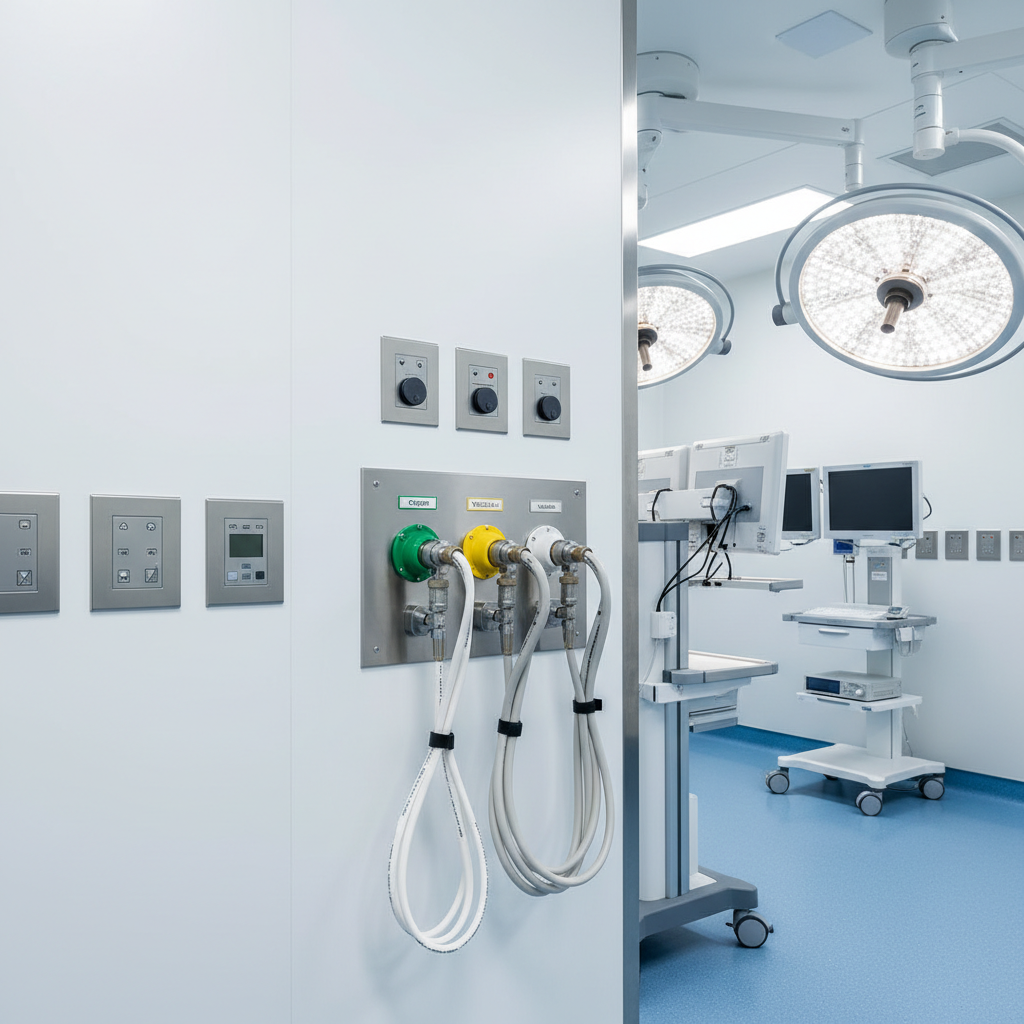
- Component Installation: Correctly installing all components, including source equipment, alarms, valve boxes, and station outlets (e.g., DISS, Ohmeda).
- Labeling: Applying the correct labels for gas type and flow direction at specified intervals along the pipeline.
- Initial Pressure Test: Performing an initial pressure test to check the integrity of the brazed joints before the walls are closed up.
Comparison of Medical Gas Piping Standards
| Standard | Focus Area | Key Requirement for ASCs |
|---|---|---|
| NFPA 99 | Overall System Safety | Governs all aspects of design, installation, testing, and maintenance. Mandatory for healthcare facilities. |
| ASSE 6000 Series | Personnel Certification | ASSE 6010 for Installers, ASSE 6030 for Verifiers. Certification is required by NFPA 99. |
| CGA | Gas Quality & Containers | Provides standards for the purity of medical gases (e.g., CGA G-4.1 for Oxygen) and cylinder handling. |
Using an uncertified plumber or HVAC technician for this work is a serious code violation and will result in a failed verification. Ensure your contractor provides proof of current ASSE 6010 certification for all personnel working on the medical gas system. For complex projects, MTS provides expert medical gas installation services throughout the Southeast.