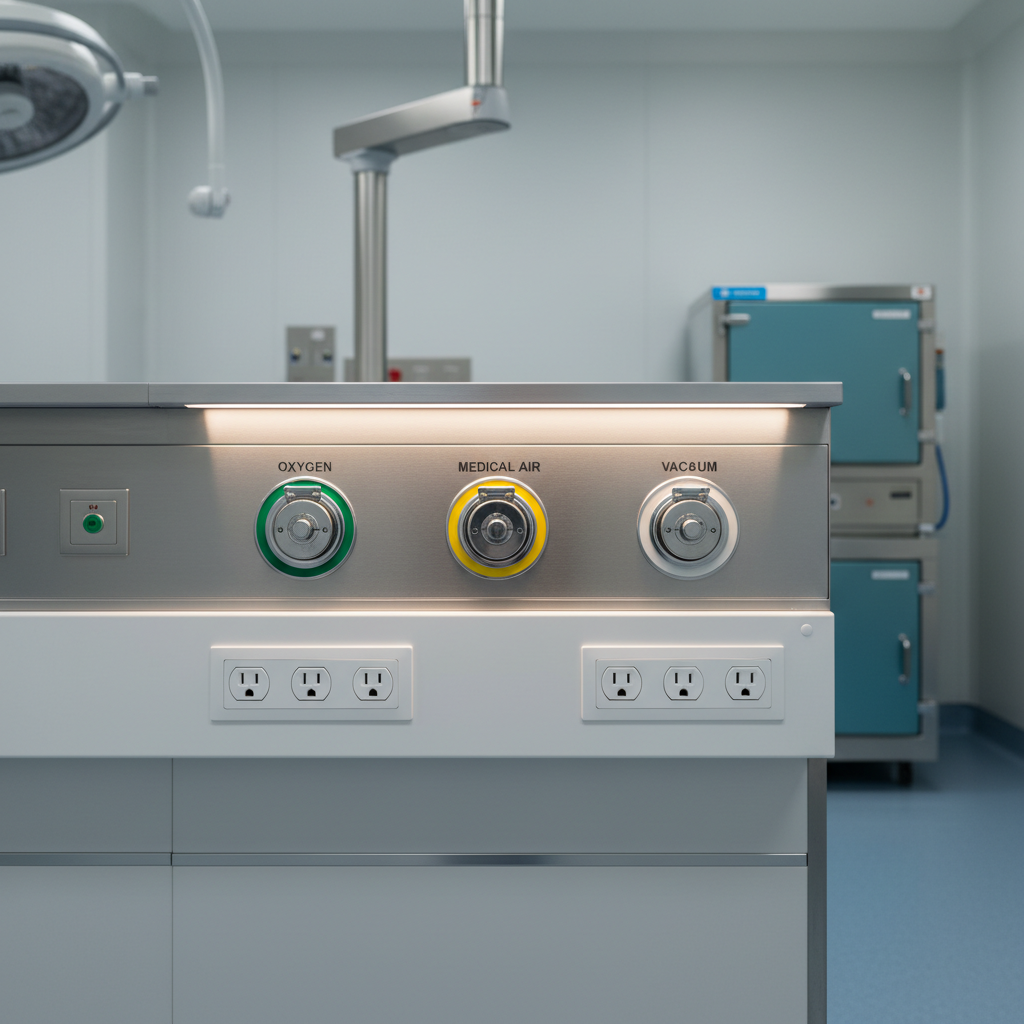
Designing Your ASC''''''s Medical Gas System: From Blueprint to Reality
Building a new ambulatory surgery center (ASC) in Greensboro is a major undertaking. Among the most critical systems you''''''ll install is the medical gas pipeline. A properly designed and installed system is non-negotiable for patient safety and regulatory compliance. This guide walks you through the entire process, from initial design considerations and code compliance to final verification and Authority Having Jurisdiction (AHJ) sign-off. We''''''ll cover the key phases of an ASSE 6010-compliant installation, ensuring your facility is ready for its first patient.
Getting the design right from the start is the single most important factor in a successful medical gas installation. A poorly planned system can lead to costly change orders, project delays, and significant compliance headaches. At Medical Testing Solutions, our process begins with a deep dive into your facility''''''s specific needs.
Sizing and Source Equipment
The first step is determining the clinical needs of your ASC. How many operating rooms, recovery bays, and procedure rooms will you have? What types of procedures will be performed? The answers dictate the required flow rates and gas types (e.g., Oxygen, Medical Air, Nitrous Oxide, Vacuum).
- Oxygen (O2): Typically supplied by a bulk liquid oxygen tank or high-pressure manifolds.
- Medical Air (MA): Generated on-site by a dedicated medical air compressor and dryer system, compliant with NFPA 99.
- Nitrous Oxide (N2O): Used for anesthesia, supplied by high-pressure cylinders on a manifold.
- Vacuum (VAC): A surgical vacuum system is essential for waste anesthetic gas disposal (WAGD) and suction. Sizing depends on the number of simultaneous users.
- Instrument Air (IA): If required for surgical tools, this is supplied by a separate compressor system to avoid contamination of the medical air supply.
Based on these needs, we calculate the peak demand to correctly size the source equipment. An undersized system can''''''t provide adequate pressure and flow, while an oversized one is an unnecessary capital expense.
NFPA 99 Code Compliance
NFPA 99, Health Care Facilities Code, is the foundational text for medical gas systems. Compliance is mandatory. For an ASC, your system will be classified as a Category 1 system, as a failure is likely to cause major injury or death to patients or caregivers.
Why this matters for compliance: NFPA 99 dictates everything from pipe material and joint brazing procedures to alarm panel requirements and final verification protocols. Adhering to the code, specifically chapters 4 and 5, is not optional; it''''''s the benchmark the AHJ will use to approve your facility for occupancy.
Key NFPA 99 requirements include:
- Piping: All piping must be hard-drawn seamless medical gas tubing (ASTM B819), cleaned, and capped for oxygen service.
- Brazing: All joints must be brazed by an ASSE 6010 certified installer. During the brazing process, the pipe must be continuously purged with oil-free, dry nitrogen to prevent oxidation inside the pipe.
- Alarms: Master and area alarm panels are required to provide immediate auditory and visual indication of system pressure and vacuum level changes.
- Valves: Zone valves must be installed to isolate specific areas of the facility for maintenance or in case of an emergency.
The ASSE 6010 Installation Process
An ASSE 6010 Certified Medical Gas Systems Installer is required for all installation work. This certification ensures the installer has been trained, tested, and credentialed to build these life-support systems safely and correctly.
The process follows a strict sequence:
- Rough-In: After the facility is framed, our certified technicians run the copper piping from the source equipment location to the designated outlet locations in each room.
- Brazing & Purging: Every joint is brazed under a nitrogen purge, as required by NFPA 99. This is a meticulous process that prevents the formation of copper oxides inside the pipe, which could otherwise be dislodged and harm patients.
- Standing Pressure Test: Before the walls are closed up, the entire piping system is pressurized with nitrogen to 150 psi (or 1.25x the working pressure). The pressure is monitored for 24 hours to ensure there are absolutely no leaks.
- Outlet and Component Installation: Once walls are finished, terminal outlets (e.g., DISS, Ohmeda), zone valve boxes, and alarm panels are installed.
Medical Testing Solutions provides end-to-end medical gas installation services, from the initial design to the final connection, all performed by ASSE 6010 certified personnel.
Equipment Comparison: Manifolds vs. Bulk Tanks
For your primary oxygen supply, you''''''ll choose between a high-pressure manifold and a bulk cryogenic tank. The choice depends on consumption, available space, and budget.
| Feature | High-Pressure Manifold | Bulk Liquid Tank |
|---|---|---|
| Footprint | Smaller, can be located indoors or outdoors | Larger, requires a dedicated outdoor concrete pad |
| Capacity | Lower; best for smaller ASCs with lower O2 usage | Higher; best for larger facilities or high-consumption specialties |
| Upfront Cost | Lower | Higher |
| Long-Term Cost | Higher cost per cubic foot of gas | Lower cost per cubic foot of gas |
| Logistics | Requires frequent cylinder changes | Requires less frequent tanker truck refills |
For most new ASCs in Greensboro, a high-pressure manifold is often the more practical and cost-effective solution unless surgical caseloads are exceptionally high.