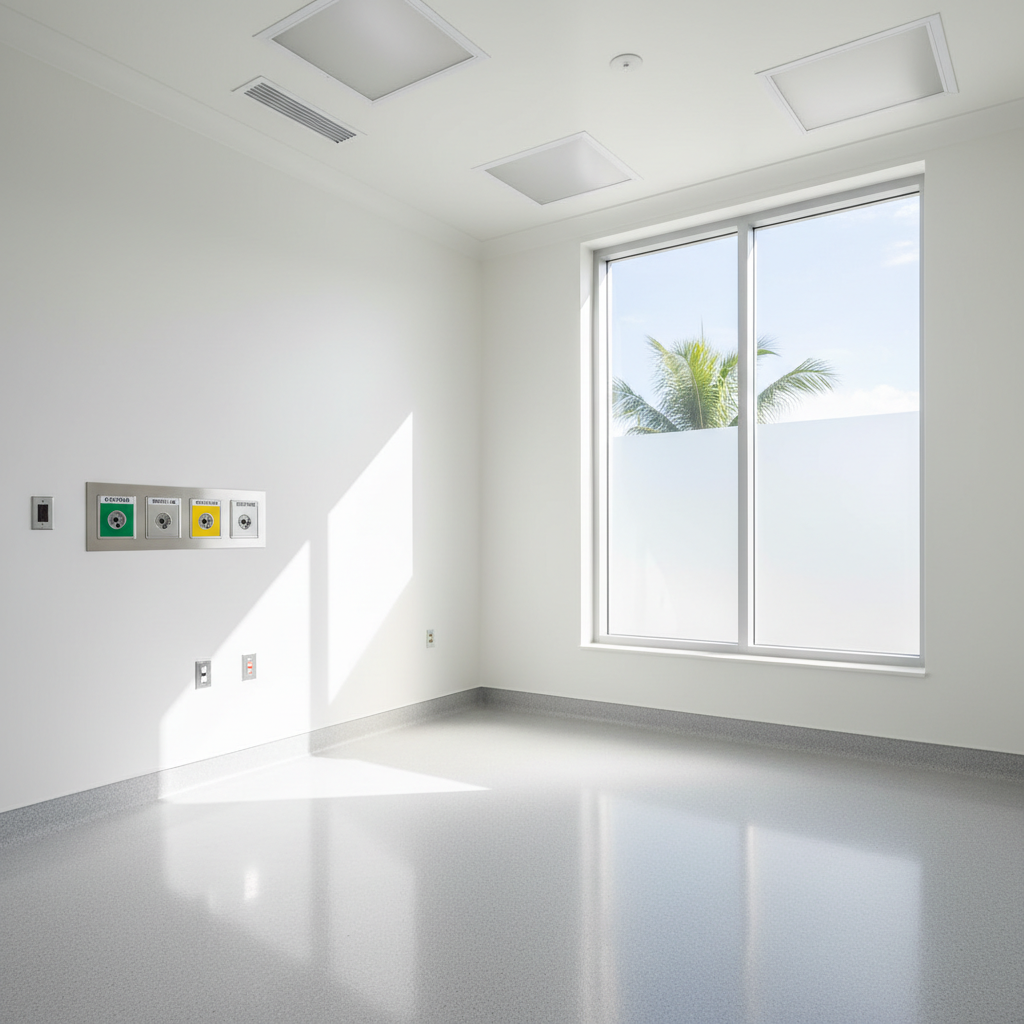
Ambulatory Surgery Center Medical Gas Install in Fort Lauderdale, FL: A Complete Guide
Medical Testing SolutionsJune 19, 20267 min read
Share
Building a new Ambulatory Surgery Center (ASC) is a complex undertaking, and the design and installation of your medical gas system is one of the most critical, life-sustaining components. A compliant, properly installed system is non-negotiable for patient safety and regulatory approval. For project managers and administrators in South Florida, navigating this process involves understanding not only the national codes like NFPA 99 but also Florida-specific requirements from the Agency for Health Care Administration (AHCA).
This definitive guide walks you through the entire process for an ambulatory surgery center medical gas install in Fort Lauderdale. We'll cover the essential phases from design and planning, through installation and final verification, ensuring you are prepared for your Accreditation and Health Department (AHJ) sign-offs. We'll also highlight how leveraging a local, Fort Lauderdale-based team can significantly reduce costs and project timelines.
The Critical Role of Medical Gas Systems in ASCs
A medical gas system is the circulatory system of a healthcare facility. It delivers life-supporting and surgical gases from a central source to patient care areas, operating rooms, and recovery bays. In a modern ASC, these systems are essential for anesthesia, patient respiration, and powering surgical tools. A typical ASC system includes:
Oxygen (O2): For patient respiration and anesthesia.
Medical Air: For patient respiration and to power pneumatic surgical equipment.
Nitrous Oxide (N2O): For analgesia and anesthesia.
Vacuum: To remove fluids and surgical waste from the patient site.
Waste Anesthetic Gas Disposal (WAGD): To safely remove exhaled anesthetic gases from the operating room, protecting staff.
Phase 1: Planning & Design – The Blueprint for a Compliant System
Proper planning is the most crucial phase. Mistakes made here are the most expensive and time-consuming to fix later. This phase involves mapping out the facility's needs, selecting the right source equipment, and designing a piping network that is safe, efficient, and compliant from day one.
Sizing, Scoping, and Code Consultation
The first step is a detailed assessment of your ASC’s specific needs. How many operating rooms, pre-op bays, and recovery beds will you have? What types of procedures will be performed? The answers determine the required flow rates and the size of your source equipment. During this phase, your design team must consult the latest editions of:
NFPA 99, Health Care Facilities Code: The foundational code for all medical gas systems in the United States.
FGI Guidelines for Design and Construction of Outpatient Facilities: Provides specific architectural and design standards for ASCs.
Engaging a certified expert like Medical Testing Solutions early in this process ensures your architectural drawings and specifications are fully compliant before construction begins, preventing costly change orders.
Sourcing Strategy: Manifolds vs. Bulk Systems
Your ASC will need a central source for each gas. For oxygen, the most common options are high-pressure manifolds with cylinders or a bulk cryogenic tank. For medical air and vacuum, dedicated compressor and pump systems are the standard. The choice depends on your anticipated usage, available space, and budget.
Phase 2: Installation by ASSE 6010 Certified Technicians
Once the design is finalized, the physical installation begins. All medical gas piping must be installed by certified ASSE 6010 installation technicians. This certification is a requirement under NFPA 99 and ensures that the individuals building your life-support system are qualified to do so.
Key installation steps include:
Piping Installation: Medical-grade, cleaned, and capped copper piping (Type K or L) is routed from the source equipment to the points of use.
Brazing: All joints in the copper piping must be brazed, a high-temperature joining process that creates a permanent, leak-free seal. During this process, a continuous purge of nitrogen gas is passed through the pipes to prevent oxidation inside, per NFPA 99 (Chapter 5).
Component Installation: This includes installing critical components like zone valve boxes for emergency isolation, area alarms to monitor pressure, and the outlets/inlets in each room.
Navigating Florida-Specific Requirements: The Fort Lauderdale Advantage
While NFPA 99 provides the national standard, ASCs in Florida have additional layers of regulation to satisfy, primarily from the Agency for Health Care Administration (AHCA). This is where local expertise becomes a significant advantage.
As a company headquartered right here in Fort Lauderdale at 501 East Las Olas Blvd, Ste 300, Fort Lauderdale, FL 33301, Medical Testing Solutions provides an unmatched level of local service. For our Florida clients, this means:
No Travel Costs: No charges for airfare, lodging, or per-diem. This alone can save you 10–25% on your project costs compared to out-of-state firms.
Rapid Mobilization: Our South Florida crews can be on-site quickly for consultations, installations, and emergency service. This is especially critical for post-hurricane re-verification.
Local AHCA Expertise: We have extensive experience with AHCA requirements, including satisfying OPS Form 3110 and the codes outlined in Chapter 59A of the Florida Administrative Code. We ensure your verification reports have everything AHCA needs for licensure.
Hurricane season in South Florida presents a unique challenge. NFPA 99 section 5.1.12 requires that the system be re-verified by an ASSE 6030 verifier after any loss of pressure or damage, a common occurrence after a major storm. Our local presence allows for same-day dispatch to get your facility tested and back in service faster than anyone.
Why this matters for compliance: Failing to meet Florida's AHCA standards or Joint Commission (TJC) requirements for annual testing can delay your facility's opening, result in costly fines, and put patients at risk. Your verification documentation is a key part of your licensure packet.
Medical Gas Source Equipment Comparison for ASCs
Equipment Type
Best For
Typical Cost
Footprint
Key Consideration
High-Pressure Manifold
Low to medium volume ASCs
$$
Small to Medium
Requires regular cylinder changes.
Cryogenic Bulk Tank
High volume ASCs or hospitals
$$$$
Large (outdoor pad)
Eliminates cylinder swaps; requires long-term gas contract.
Medical Air Compressor
Virtually all facilities
$$$
Medium
Must be NFPA 99-compliant (e.g., scroll or oil-less).
Medical Vacuum Pump
Virtually all facilities
$$$
Medium
Sizing is critical to meet surgical demand.
Phase 3: Independent ASSE 6030 Verification and AHJ Sign-Off
After the installation is 100% complete, but before the walls are closed, the system must be tested by a third-party ASSE 6030 certified verifier. This is a crucial, independent step to ensure the system was installed correctly and is safe for patient use. The verifier cannot be an employee of the installation company.
Medical Testing Solutions provides comprehensive medical gas systems verification to confirm your new system is compliant and safe. The verification process is a battery of two dozen tests, including:
Initial Pressure Testing: Ensuring the piping has no leaks.
Cross-Connection Testing: Confirming that a gas outlet for oxygen only delivers oxygen, for example.
Particulate and Purity Testing: Verifying that the gas delivered is clean and meets USP medical-grade standards.
Alarm Testing: Ensuring that all master and area alarms function correctly.
Upon successful completion, the verifier provides a detailed report. This report is submitted to the AHJ (like the local fire marshal or building department) and AHCA to obtain your certificate of occupancy and facility license.
Your responsibility doesn't end after the initial sign-off. The Joint Commission and NFPA 99 mandate that all medical gas systems undergo a comprehensive inspection every year. Scheduling annual medical gas inspections ensures you remain compliant and that your system remains safe. This includes functional tests of all alarms, outlets, and source equipment.
Your Partner for Compliant ASC Construction in Fort Lauderdale
Building out a new ambulatory surgery center is a major investment. Ensuring your medical gas system is designed, installed, and verified correctly is critical to a successful launch. As a local Fort Lauderdale company with deep expertise in Florida's unique regulatory environment, Medical Testing Solutions is your ideal partner.
Don't risk delays or budget overruns by using an out-of-state firm. Get the local advantage. Call our Fort Lauderdale office today at +1 (754) 315-1078 for a no-obligation consultation or request a comprehensive quote online to get your project started on the right foot.
'''
Frequently Asked Questions
For a typical 2-3 operating room ASC, the installation phase can take anywhere from 2 to 6 weeks, depending on the project's complexity and coordination with other trades. The final verification process usually takes 2-4 days.
The main costs are design/engineering fees, materials (copper piping, outlets, alarms), source equipment (compressors, manifolds), labor for the ASSE 6010 installers, and the fee for the independent ASSE 6030 verifier.
NFPA 99 and Florida regulations require that the system be checked by an independent, certified third party to eliminate conflicts of interest and provide an unbiased confirmation of safety and compliance before the system is used for patient care.
An ASSE 6010 is a certified professional who physically builds and brazes the system. An ASSE 6030 is a certified verifier who inspects and tests the finished system to ensure it was built correctly and is safe and compliant. They are two separate and distinct roles.
We provide expert consultation on design and offer both ASSE 6010 installation and ASSE 6030 verification services. Per NFPA 99, the same company cannot both install and verify the same project, to ensure unbiased testing. We can serve as either your installer or your verifier, providing a seamless, expert experience either way.
Most of our Florida clients save between 10% and 25% on verification and testing services. By eliminating travel fees, lodging, and per-diem costs that out-of-state firms charge, you get a significant cost advantage without sacrificing expertise.
Request a quote for your facility
Talk with Medical Testing Solutions about your next inspection, repair or equipment request.