Skip to content
    New: Medical Gas Outlet Retrofit & Rebuild Matrix — cross-reference legacy Chemetron, Ohio Diamond, Puritan-Bennett & more →
    ASSE Certified 24/7
    Medical Gas Service
    Compliance & Standards

    Ambulatory Surgery Center Medical Gas Install in Florence, SC

    Medical Testing SolutionsOctober 17, 20266 min read
    Share
    Ambulatory Surgery Center Medical Gas Install in Florence, SC

    Planning Your ASC Medical Gas System in Florence, SC: An Overview

    Building a new ambulatory surgery center (ASC) is a complex undertaking, and the medical gas system is one of its most critical components. A properly designed and installed system is a life-sustaining utility, essential for patient safety and regulatory compliance. For ASCs in Florence, South Carolina, this means adhering to a stringent set of codes and standards, primarily NFPA 99 (Health Care Facilities Code). This guide walks you through the entire lifecycle of an ASC medical gas installation, from initial design considerations to the final inspection and verification, ensuring your project meets all requirements for a successful AHJ (Authority Having Jurisdiction) sign-off.

    At Medical Testing Solutions (MTS), our ASSE 6010 certified installers and ASSE 6030 verifiers provide end-to-end support for facilities across South Carolina. We understand that a compliant installation is non-negotiable. This post will detail the design process, piping requirements, source equipment selection, and the critical verification steps needed to get your ASC operational.

    Step 1: Design & Engineering - The Blueprint for Compliance

    The foundation of a successful medical gas installation is a meticulously planned design. This phase involves architects, engineers, and a certified medical gas specialist to ensure the system is sized correctly, piped efficiently, and meets the specific needs of your facility. Key considerations during the design phase include:

    • Facility Assessment: Determining the types of procedures your ASC will perform dictates the required gases (e.g., Oxygen, Medical Air, Nitrous Oxide, Vacuum) and the number and placement of station outlets in operating rooms, pre-op, and recovery areas.
    • Load Calculation: An engineer must calculate the peak demand for each gas to correctly size the source equipment (manifolds, air compressors, vacuum pumps) and piping network. Undersizing can lead to pressure drops and system failure, while oversizing results in unnecessary capital costs.
    • Code Compliance Review: The design must explicitly follow NFPA 99, the ASSE 6000 series, and local building codes. Your design prints should be reviewed and stamped by a qualified engineer.

    Why this matters for compliance: NFPA 99, Chapter 5, outlines the specific requirements for piped medical gas and vacuum systems. A flawed design guarantees a failed inspection. Engaging a certified specialist early ensures the plans align with code before a single pipe is installed, saving significant time and money.

    Step 2: Source Equipment and Piping Installation

    Once the design is finalized, the physical installation begins. This work must be performed by installers credentialed to ASSE Standard 6010, the qualification for Medical Gas Systems Installers.

    Source Equipment

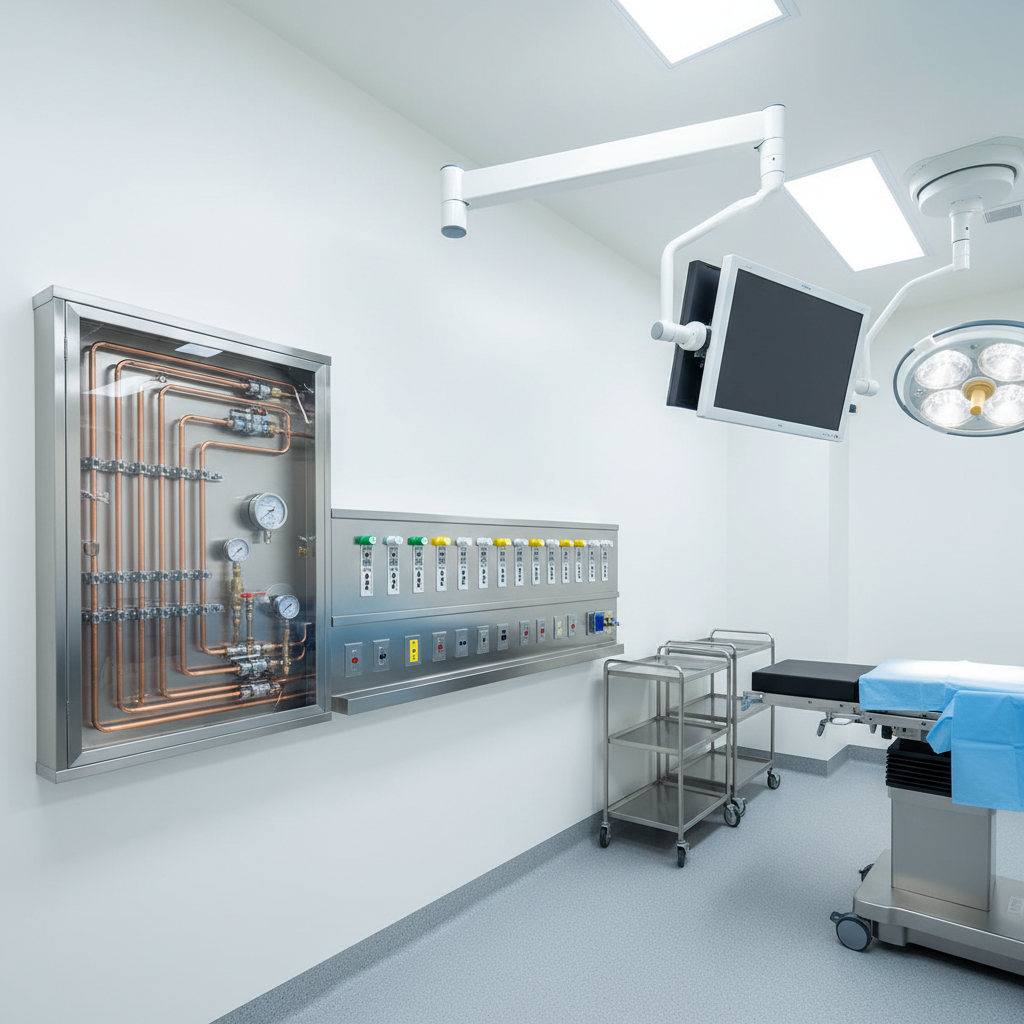
    The "source" is the heart of your system. For a typical ASC, this includes:

    • Oxygen Manifold: A high-pressure cylinder system (primary and secondary banks) that reduces O2 to a working pressure of 50-55 psi.
    • Medical Air Compressor: A dedicated, oil-free compressor system with dryers and filters to produce clean, dry medical air. Unlike instrument air, medical air is a patient-administered drug.
    • Vacuum Pump: A dedicated pump (typically a duplex system) to create the suction needed for surgical procedures.
    • Master Alarms: A central panel that monitors the status and pressure of all gas systems, providing audible and visual alerts for any issues, as required by NFPA 99.

    Piping Network

    The distribution network is just as critical as the source. All piping must be:

    • Type K or L Copper: Cleaned for oxygen service and clearly labeled.
    • Brazed, Not Soldered: All joints must be brazed using a specific silver alloy (BCuP) while purging the interior with nitrogen to prevent oxidation. This process is a core competency of an ASSE 6010 installer.
    • Properly Zoned: The system is segregated into zones using zone valve boxes. This allows sections of the facility to be isolated for maintenance or in an emergency without shutting down the entire ASC.

    Medical Testing Solutions offers a full range of source equipment and our certified technicians ensure every component is installed to exacting standards.

    Step 3: The Critical Role of a Third-Party Verifier (ASSE 6030)

    After the installation is complete, but before the walls are closed, the entire system must be inspected and tested by a third-party verifier. This individual must be credentialed to ASSE Standard 6030 (Medical Gas Systems Verifier) and cannot be an employee of the installing company. This independent verification is a crucial step for AHJ sign-off and patient safety.

    The verifier performs a battery of tests outlined in NFPA 99, Chapter 5, including:

    • Piping Purge & Particulate Test: Ensuring the piping is free of debris.
    • Standing Pressure Test: Pressurizing the system to check for leaks.
    • Cross-Connection Test: Confirming that each outlet delivers only the specified gas.
    • Gas Purity and Concentration Test: Verifying that the gases meet USP requirements.
    • Alarm Testing: Ensuring all local and master alarms function correctly.

    This rigorous medical gas verification process is the ultimate quality check. The verifier produces a detailed report that becomes part of the facility's permanent compliance record.

    Comparison of Key Medical Gas Codes & Standards

    Navigating the web of standards can be confusing. This table breaks down the most important ones for an ASC installation.

    StandardGovernsKey Requirement for ASCs
    NFPA 99Overall design, installation, and testing of medical gas systems.The primary code adopted into law. Chapter 5 is mandatory reading for any facility manager or installer.
    ASSE 6010Professional Qualifications for Medical Gas Systems Installers.Personnel installing the system must hold this credential.
    ASSE 6030Professional Qualifications for Medical Gas Systems Verifiers.The individual performing final testing must hold this credential and be independent of the installer.
    CGA ManualsCompressed Gas Association standards for handling and storage of gases.Provides detailed guidance on cylinder safety, manifold design, and gas characteristics referenced by NFPA 99.

    Post-Installation: Maintenance and Annual Inspections

    A medical gas system is not a "set it and forget it" utility. Ongoing maintenance and inspections are required to ensure continued compliance and patient safety.

    • Annual Inspections: NFPA 99 mandates that all ASCs have their medical gas systems inspected annually by a qualified professional. This includes checking source equipment, alarm function, and outlet performance. Annual medical gas inspections are a core service we provide to facilities throughout the Southeast.
    • Preventive Maintenance: Regular maintenance, as specified by the equipment manufacturer, is essential for the longevity and reliability of compressors, pumps, and manifolds. Medical Testing Solutions provides comprehensive medical gas maintenance services to keep your systems running smoothly.

    Finalizing Your Project and AHJ Sign-Off

    The final step is presenting the complete package to the Authority Having Jurisdiction for your certificate of occupancy. This package should include:

    1. The stamped engineering designs.
    2. The installer's ASSE 6010 credentials.
    3. The independent verifier's ASSE 6030 credentials.
    4. The final, signed verification report confirming the system is 100% compliant with NFPA 99.

    With this documentation, the AHJ can be confident that the medical gas system is safe and ready for patient use.

    Get Your Florence ASC Project Started

    Installing a medical gas system for an ambulatory surgery center in Florence is a high-stakes project that demands expertise and adherence to strict codes. From initial design to final verification and ongoing maintenance, every step must be executed flawlessly.

    If you are planning a new build or a renovation, trust the ASSE-certified experts at Medical Testing Solutions. We provide turn-key installation, rigorous third-party verification, and comprehensive maintenance programs to ensure your facility is safe, compliant, and always ready for patient care.

    Contact us today for a free consultation and quote for your project. Call us at (754) 315-1078 or request a quote online.

    Frequently Asked Questions

    Only individuals holding an ASSE 6010 credential for Medical Gas Systems Installers are qualified. This is a mandatory requirement under NFPA 99.

    No. NFPA 99 requires that the system be verified by a third-party agency. The verifier must hold an ASSE 6030 credential and cannot be an employee of the installation company to ensure an unbiased assessment.

    After the initial verification, NFPA 99 requires all medical gas systems to be inspected annually. This includes checking source equipment, alarms, and a sampling of outlets throughout the facility.

    The most common piped gases are Oxygen (O2), Medical Air (MedAir), and a Medical Vacuum system. Depending on the procedures offered, some ASCs may also have Nitrous Oxide (N2O) or Instrument Air.

    Medical air is a patient-administered drug and must be pure, free of oil, and have a specific dew point. Instrument air is a pneumatic utility used to power surgical tools and has different pressure and quality requirements. They must be supplied by separate, dedicated compressors.

    Brazing temperatures are high enough to cause the inside of the copper pipe to oxidize, creating black, flaky cupric oxide. If this debris gets into the gas stream, it can harm patients or damage equipment. Purging with inert nitrogen gas displaces the oxygen, preventing this oxidation from forming.

    This article is provided for educational purposes and reflects industry standards as of publication. Always verify against current NFPA 99, CGA, and AHJ requirements. Medical Testing Solutions is ASSE-certified and ready to help — contact us for facility-specific guidance.

    Request a quote for your facility

    Talk with Medical Testing Solutions about your next inspection, repair or equipment request.

    Get a quote in 1 business day

    I agree to receive text messages from Medical Testing Solutions, L.L.C. at the phone number provided, including informational and marketing messages. Consent is not a condition of purchase. Message frequency varies. Message & data rates may apply. Reply STOP to opt out or HELP for help. See our Privacy Policy and Messaging Terms.

    Prefer to talk? Call (754) 315-1078

    Related articles