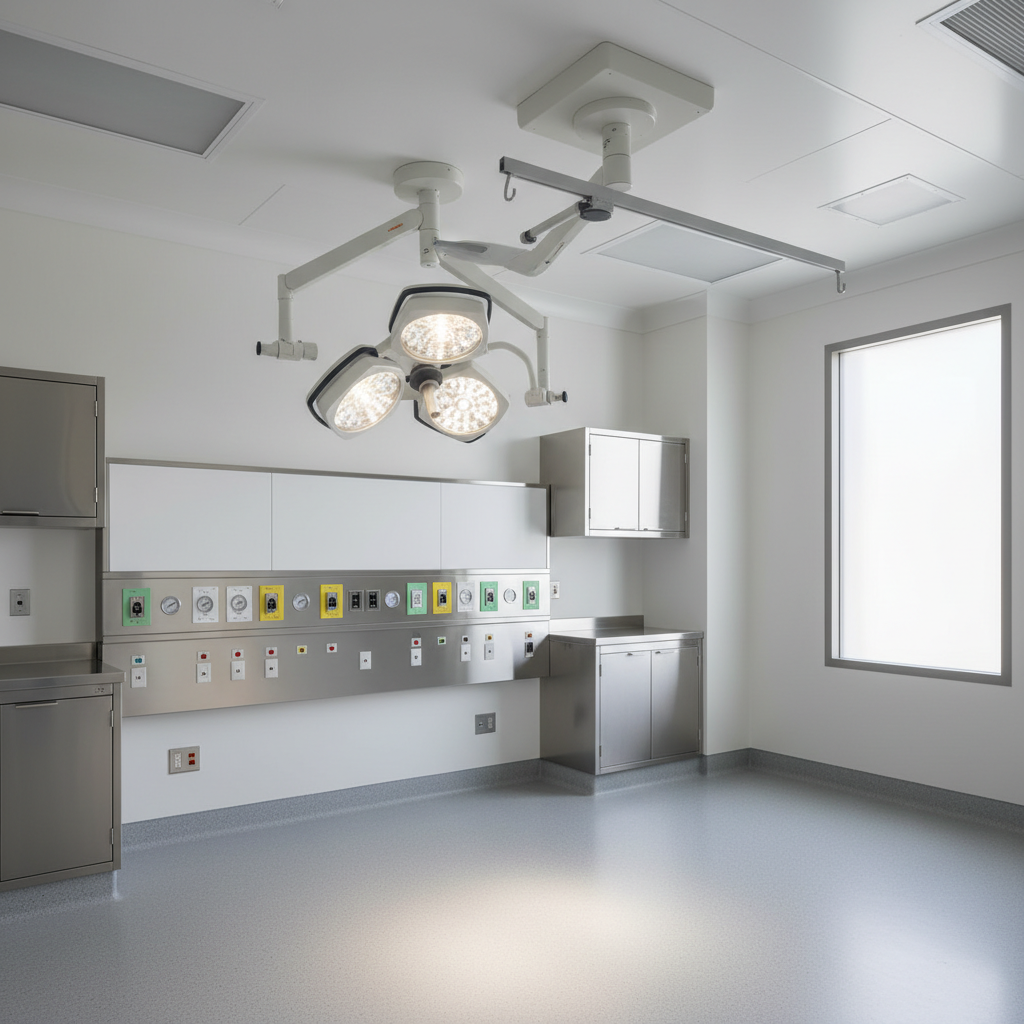
Ambulatory Surgery Center Medical Gas Install in Fayetteville, NC
Medical Testing SolutionsOctober 15, 20266 min read
Share
Planning Your ASC Medical Gas System in Fayetteville, NC
Constructing a new ambulatory surgery center (ASC) is a complex undertaking, and the medical gas system is one of its most critical components. A compliant, reliable medical gas pipeline is the lifeblood of your facility, essential for patient safety and surgical procedures. For any ground-up ASC build-out in Fayetteville, North Carolina, your medical gas installation must adhere to a strict set of codes and standards, primarily the National Fire Protection Association's NFPA 99, Health Care Facilities Code.
This guide provides a definitive overview for ASC developers, architects, and administrators, detailing the entire process from initial design and equipment selection to final verification and obtaining your certificate of occupancy. We will explore the roles of ASSE 6010-certified installers and ASSE 6030-certified verifiers, break down system components, and explain how a partnership with a certified expert like Medical Testing Solutions ensures your project in Fayetteville is a success.
Designing for Compliance: NFPA 99 and Your ASC
Before a single pipe is installed, a robust design phase is crucial. This is where you'll make fundamental decisions about your facility's medical gas needs based on the types of procedures you'll offer. The design must be mapped out by a qualified professional and will serve as the blueprint for the entire installation.
Key Design Considerations:
Gas & Vacuum Requirements: Determine which medical gases are needed (e.g., Oxygen, Medical Air, Nitrous Oxide, Nitrogen) and the required vacuum capacity. This is directly tied to the number of operating rooms, recovery bays, and procedure rooms.
Source Equipment: Select the appropriate source equipment. This includes manifolds for high-pressure cylinders, medical air compressors, and vacuum pumps. The size and type will depend on your calculated peak demand.
Alarm Systems: NFPA 99 mandates master and area alarm panels. These systems provide immediate notification of changes in pressure or system status, which is critical for patient safety. The design must specify their locations and the zones they will monitor.
Pipeline Distribution: The layout of the copper piping is meticulously planned to ensure efficient and safe delivery of gases from the source equipment to the patient-use terminals in operating rooms and recovery areas.
Why this matters for compliance: A properly documented design is the first step reviewed by the Authority Having Jurisdiction (AHJ) in Fayetteville. NFPA 99 (Chapter 5) outlines specific requirements for the design, installation, and testing of medical gas systems. Failing to meet these at the design stage leads to costly delays and revisions.
Core Components of an ASC Medical Gas System
A medical gas system is more than just pipes in the wall. It's an integrated network of source equipment, distribution piping, and patient-use terminals. Here's a breakdown of the typical components for a new ASC installation.
Component
Function
NFPA 99 Reference
Common Brands
Source Manifold
Regulates & delivers gas from high-pressure cylinders.
5.1.3.4
BeaconMedaes, Amico, Tri-Tech
Medical Air Compressor
Provides oil-free, dry medical air.
5.1.3.5
Powerex, Atlas Copco, BeaconMedaes
Medical Vacuum Pump
Creates suction for surgical procedures.
5.1.3.6
Dekker, Busch, Powerex
Alarm Panels
Monitor system pressure & status.
5.1.9
BeaconMedaes, Amico, Tri-Tech
Zone Valve Boxes
Isolate sections of the pipeline for maintenance.
5.1.4.6
Amico, BeaconMedaes, Ohio Medical
Outlets/Terminals
Patient connection points for gases & vacuum.
5.1.5
Amico, Chemetron, Ohmeda
The Installation Process: ASSE 6010 Certification is Mandatory
Once the design is approved, the installation phase begins. It is a code requirement that the installation of medical gas and vacuum systems is performed by technicians who hold a current ASSE 6010 Certified Medical Gas Systems Installer credential. This is not negotiable and is a critical point of verification for the AHJ.
Key Installation Steps:
Rough-In: Copper piping (Type K or L, cleaned for oxygen service) is installed within the walls, connecting the source equipment location to the planned outlet locations.
Brazing: All joints in the copper pipeline must be brazed with a specific silver-brazing alloy. During this process, the pipe must be continuously purged with oil-free nitrogen to prevent oxidation inside the pipe.
Component Installation: Zone valve boxes, area alarms, and outlet rough-in assemblies are installed.
Source Equipment Placement: Manifolds, compressors, and vacuum pumps are installed in their dedicated, properly ventilated rooms.
At Medical Testing Solutions, our team includes ASSE 6010 certified installers who have extensive experience with ASC projects in North Carolina, ensuring every braze and connection is up to code.
Verification and Certification: The ASSE 6030 Final Check
After the installation is complete, but before the walls are closed up and the system is used for patient care, a rigorous verification process must be conducted. This critical step must be performed by a third-party agency, independent of the installer, employing ASSE 6030 Certified Medical Gas Systems Verifiers.
The verification process confirms the system's safety and integrity. It involves a battery of tests to ensure there are no cross-connections, the pressures are correct, the gas purity is maintained, and the alarms function as designed. You can learn more about this in-depth process on our medical gas verification services page.
The Verifier Will Test For:
Correct gas concentration at each outlet
System and outlet pressure
Flow rates
Alarm panel function (master and area)
Absence of leaks or cross-connections
System purity and dew point
Only after the verifier signs off on the entire system can you proceed toward final inspection with the local AHJ and receive your certificate to operate.
Why Choose Medical Testing Solutions for Your Fayetteville ASC?
For a project as critical as an ASC ground-up build, you need a partner with proven expertise. Medical Testing Solutions is not just a vendor; we are an ASSE-certified company providing a complete, end-to-end solution. We offer:
Expert Consultation: Guiding you through the design and compliance landscape.
Certified Installation & Verification: Our teams hold the necessary ASSE 6010 and ASSE 6030 credentials required by NFPA 99.
Navigating the complexities of a medical gas installation requires expertise. Don't risk delays or compliance failures. The team at Medical Testing Solutions has the experience and certifications to ensure your Fayetteville ambulatory surgery center is built right, from the ground up.
Contact us today to discuss your project. Request a quote online or call us at (754) 315-1078 to speak with a medical gas system specialist.
Frequently Asked Questions
Only technicians holding a current ASSE 6010 Medical Gas Systems Installer certification are qualified and permitted by code (NFPA 99) to perform the installation.
An ASSE 6010 Installer physically builds the system. An ASSE 6030 Verifier is a third-party agent who tests and certifies that the completed installation is safe, correct, and compliant before it can be used for patient care.
For a typical ASC, verification can take 2-4 days, depending on the size and complexity of the system. It is a comprehensive process that cannot be rushed.
If a verifier finds issues, they will provide a detailed report of deficiencies. The original installer must then make the necessary corrections, and the verifier will re-test those specific items until they pass.
Request a quote for your facility
Talk with Medical Testing Solutions about your next inspection, repair or equipment request.