Ambulatory Surgery Center Medical Gas Install Durham NC: Your Definitive Guide
Building a new ambulatory surgery center (ASC) in Durham, North Carolina, is a complex undertaking. Among the most critical systems you will install is the medical gas network. This system is the lifeblood of your facility, delivering essential gases like oxygen, medical air, and nitrous oxide to operating rooms and recovery areas. A properly executed installation is not just a matter of functionality, it's a fundamental requirement for patient safety and regulatory compliance. This guide provides a start-to-finish overview of the medical gas installation process for an ASC, from initial design to final sign-off, ensuring your facility meets all necessary standards.
1. The Foundation: Design & Pre-Construction Planning
The success of your medical gas installation hinges on meticulous planning long before the first pipe is placed. This phase involves collaborating with architects, engineers, and a certified medical gas specialist, like the team at Medical Testing Solutions, to create a system that is safe, efficient, and compliant.
Key considerations during the design phase include:
- Facility Layout: The architectural plans of the ASC will determine the routing of the pipelines, the location of terminal outlets in each room, and the placement of the source equipment (e.g., oxygen manifold, medical air compressor).
- Gas & Modality Needs: What procedures will your ASC perform? This dictates the types and quantities of medical gases required. A facility focused on surgical procedures will have different needs than one specializing in endoscopy or pain management. You must map out which gases are needed in operating rooms, pre-op bays, and recovery rooms (PACU).
- Sizing the System: The system must be appropriately sized to meet the peak demand of your facility. An undersized system can lead to pressure drops and inadequate gas flow, posing a significant patient safety risk. This calculation is a critical step performed by a qualified engineer or medical gas installation specialist.
- Code Compliance: All design and planning must strictly adhere to the latest edition of the National Fire Protection Association's standard, NFPA 99, Health Care Facilities Code. This is the primary code governing medical gas systems in the United States.
Why this matters for compliance: A flawed design can lead to costly change orders, construction delays, and, most critically, a system that is incapable of passing the final verification and gaining approval from the Authority Having Jurisdiction (AHJ). Starting with a compliant design is non-negotiable.
2. Sourcing Compliant Equipment & Materials
Once the design is finalized, the next step is to procure all the necessary components for your medical gas system. Every single component, from the large source equipment down to the smallest fitting, must be compliant and intended for medical gas use.
Core Components of an ASC Medical Gas System:
- Source Equipment: This includes the main supply systems. For an ASC, this typically means a high-pressure oxygen manifold, a medical air compressor and dryer system, and potentially a nitrous oxide manifold. All must be compliant with NFPA 99.
- Piping & Fittings: All piping used for medical gas distribution must be Type K or L seamless copper tubing, cleaned for oxygen service by the manufacturer. It must be identified with the appropriate labels (e.g., "OXYGEN," "MEDICAL AIR") along its entire length.
- Valves & Zone Valve Boxes: Zone valve boxes are required to isolate different areas of the facility in case of an emergency or for maintenance. These allow staff to shut off gas flow to a specific operating room or wing without affecting the entire building.
- Alarms: A robust master and area alarm system is required by NFPA 99. These panels monitor the pressure and status of the entire medical gas network, providing immediate audible and visual warnings of any issues.
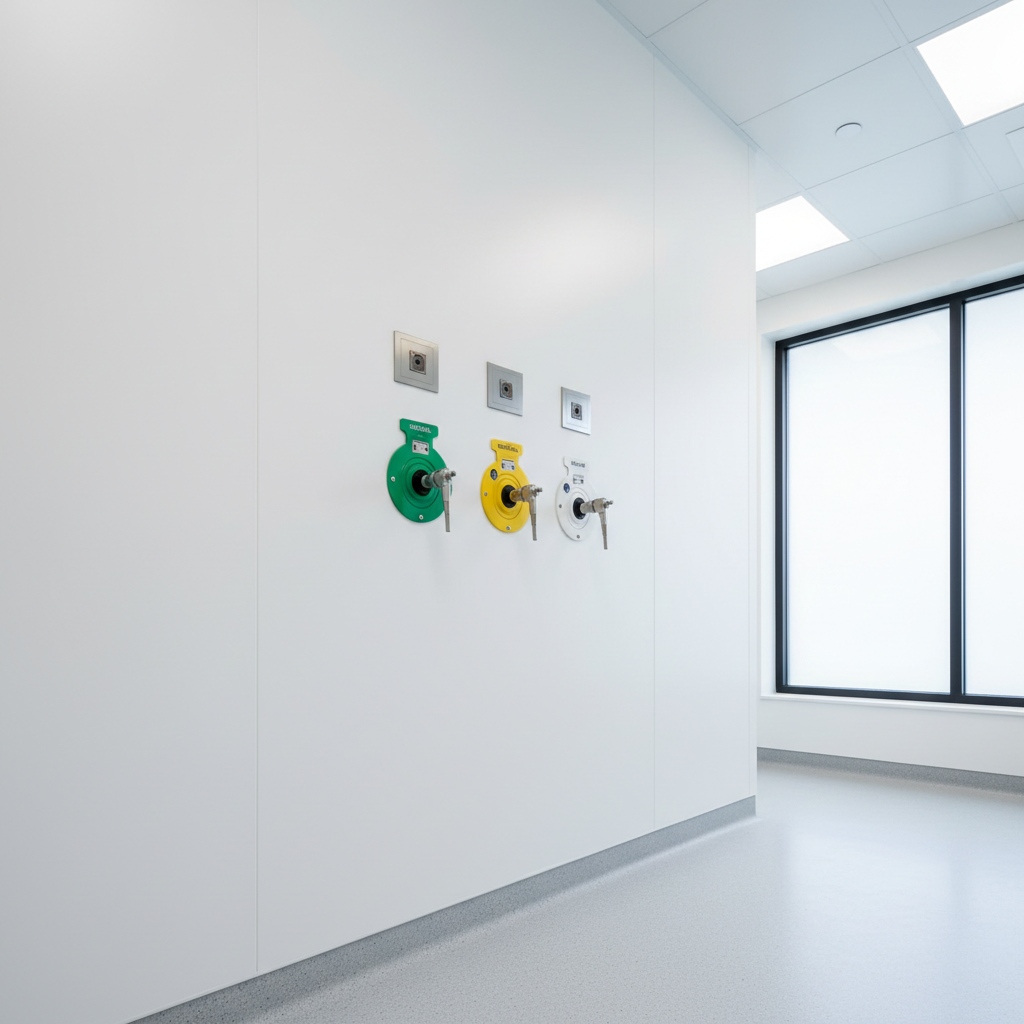
- Outlets & Inlets: Terminal outlets are the connection points in patient care areas. They must be gas-specific, preventing the accidental connection of the wrong equipment. For example, you cannot connect an oxygen flowmeter to a medical air outlet.
At Medical Testing Solutions, we not only design and install these systems but can also source all the necessary medical gas equipment to ensure full compliance from a single, trusted partner.
3. The Installation Process: ASSE 6010 Certification is Key
The physical installation of the medical gas pipeline is performed by brazers and installers who must hold a current ASSE 6010 Medical Gas Systems Installer certification. This certification ensures that the technicians have been trained and tested on the specific procedures required for medical gas systems, which are far more stringent than standard plumbing.
Key stages of the installation include:
- Piping Rough-in: Certified installers run the copper piping from the source equipment location to all the planned outlet points throughout the facility.
- Brazing: All joints in the copper pipeline must be brazed, not soldered. During the brazing process, a continuous purge of dry, oil-free nitrogen must be maintained through the pipe. This "nitrogen purge" prevents the formation of carbonaceous deposits (soot) on the inside of the pipe, which could otherwise be blown into a patient's lungs.
- Labeling: All pipes are meticulously labeled with the gas name and direction of flow, as per NFPA 99 requirements.
- Component Installation: Zone valve boxes, alarm panels, and source equipment are installed and connected to the pipeline network.
4. Verification & Testing: The ASSE 6030 Verifier's Role
After the installation is complete, but before the walls are closed up, the entire system must be rigorously tested and verified by an independent third-party. This process is performed by a technician holding an ASSE 6030 Medical Gas Systems Verifier certification. This verification is a comprehensive process designed to ensure the system is safe, pure, and operating correctly.
Why this matters for compliance: The final medical gas verification report is a legal document required by the AHJ (e.g., the local fire marshal, building inspector, or state health department) before your ASC can receive its Certificate of Occupancy. Without a passing verification report from a certified 6030 verifier, you cannot open your facility.
The verification process includes dozens of individual tests, such as:
- Initial Blowdown: The system is cleaned by blowing high-volume nitrogen through the pipes to remove any particulate matter.
- Standing Pressure Test: The system is pressurized to 150 psi (or 1.5 times the system working pressure) and held for 24 hours to ensure there are no leaks in the pipeline.
- Cross-Connection Test: This critical test ensures that a gas connected to the oxygen system, for example, only comes out of the oxygen outlets and no others.
- Purity & Particulate Testing: Gas samples are taken from each outlet to ensure they meet the purity standards outlined in USP (United States Pharmacopeia). This confirms the gas is not contaminated.
- Alarm Testing: Every alarm function is tested to ensure it activates under the correct fault conditions.
Comparison of Key Medical Gas Standards
| Standard | Governs | Who It Applies To | Key Requirement for ASCs |
|---|---|---|---|
| NFPA 99 | Overall design, installation, and operation of medical gas systems. | Facility Owners, Engineers, Installers, Verifiers | The primary, overarching code for safety. Defines requirements for source equipment, pipelines, alarms, and testing. |
| ASSE 6010 | Credentialing for Medical Gas System Installers. | Plumbers, Pipefitters | Personnel brazing and installing the pipeline must hold this certification. |
| ASSE 6030 | Credentialing for Medical Gas System Verifiers. | Third-Party Testing Agents | The individual who performs the final testing and provides the sign-off report must hold this certification. |
| ASSE 6040 | Credentialing for Medical Gas System Maintenance Personnel. | Hospital/ASC Maintenance Staff | In-house staff performing routine maintenance on the system should be certified to this standard. |
5. Final AHJ Sign-Off & Ongoing Maintenance
Once the ASSE 6030 Verifier has completed their testing and issued a passing report, that documentation is submitted to the Authority Having Jurisdiction. The AHJ will review the report as part of their final inspection process. Upon approval, your ASC will be one step closer to opening.
However, compliance doesn't end on day one. Medical gas systems require ongoing service and maintenance to remain safe and reliable. This includes periodic re-certification, alarm testing, and source equipment maintenance.
Medical Testing Solutions provides comprehensive annual medical gas inspections and a full suite of medical gas maintenance services to ensure your Durham ASC remains compliant and patient-ready for years to come.