Planning Your ASC Medical Gas System in Chesapeake
Properly designing and installing a medical gas system in a new ambulatory surgery center is a critical undertaking governed by stringent codes, primarily the National Fire Protection Association's NFPA 99, Health Care Facilities Code. A compliant installation is not just a matter of checking boxes; it's a fundamental requirement for patient safety, facility licensure, and operational viability. For a ground-up build in Chesapeake, the process involves detailed planning, certified expertise, and seamless coordination between your architects, builders, and a specialized medical gas partner like Medical Testing Solutions.
Key Design Considerations
- Facility Layout: The architectural plans of your ASC dictate the routing of pipelines, the location of outlets/inlets, zone valve boxes, and the placement of the source equipment.
- Procedure Rooms: The number and type of operating and procedure rooms will determine the required gas services (e.g., Oxygen, Medical Air, Nitrous Oxide, Vacuum) and the number of outlets per room.
- Future Expansion: Prudent design accounts for future growth. Stub-outs for additional procedure rooms or future wings can be incorporated cost-effectively during the initial build.
Medical Gas System Components for an ASC
A comprehensive medical gas system is a network of interconnected components, each playing a vital role. Understanding these parts is crucial for facility managers and clinical staff.
Source Equipment
This is the heart of your medical gas system. For a typical ASC, this includes:
- Oxygen: Usually supplied from a cryogenic bulk tank or high-pressure cylinders.
- Medical Air: Supplied by a dedicated, NFPA 99-compliant compressor system (not the building's standard air compressor).
- Vacuum: A dedicated medical/surgical vacuum pump system.
- Nitrous Oxide: Typically supplied from a high-pressure cylinder manifold.
- WAGD: Waste Anesthetic Gas Disposal systems are required in any location where nitrous oxide or other halogenated agents are administered.
Distribution Network
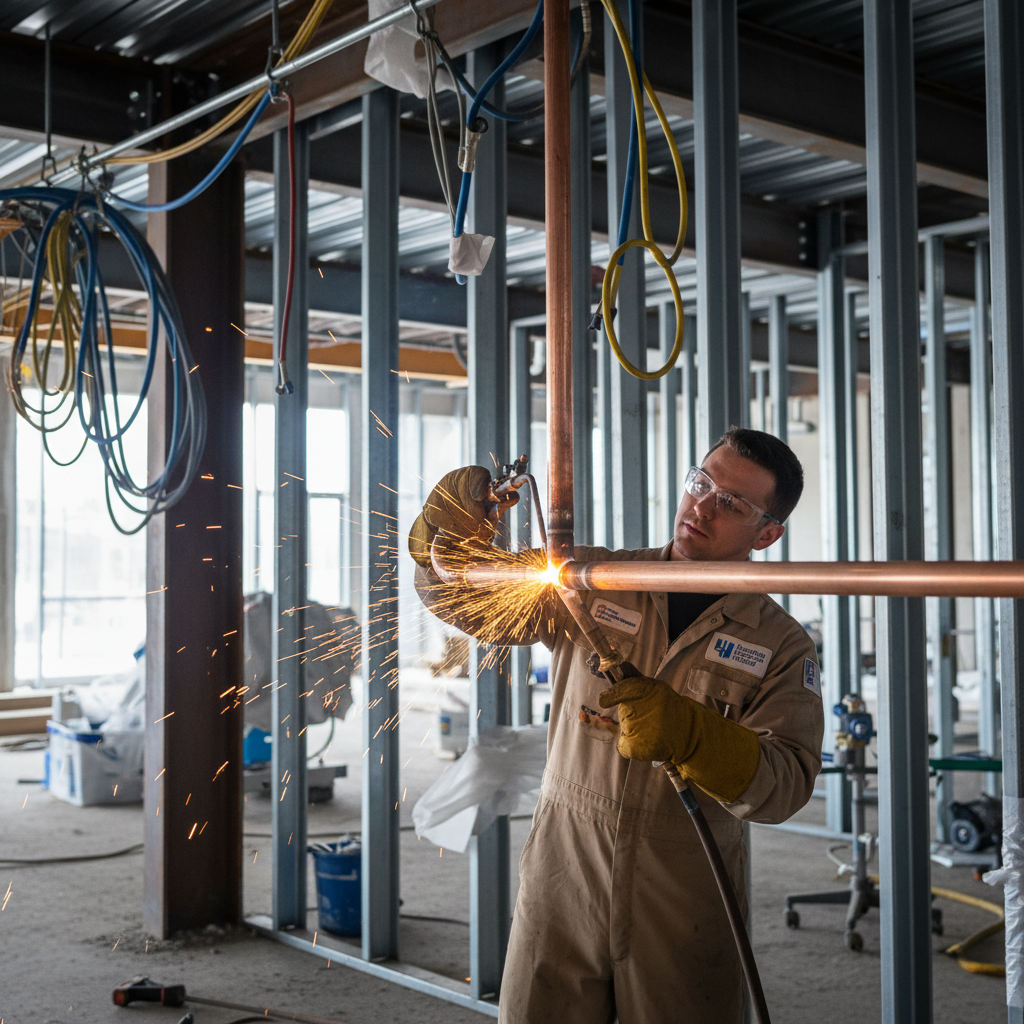
- Piping: All medical gas piping must be Type K or L seamless copper, cleaned for oxygen service (ASTM B819).
- Zone Valves: Sectionalizes the facility, allowing maintenance or emergency shut-offs without disabling the entire ASC.
- Alarms: Master, area, and local alarms are required to provide surveillance of the system's pressure and operational status.
Why this matters for compliance: NFPA 99 (2021 ed.), Chapter 5, provides detailed requirements for the design and installation of medical gas and vacuum systems. Failure to adhere to these standards can result in costly rework, project delays, and denial of occupancy by the Authority Having Jurisdiction (AHJ).
The ASSE 6010 Installation Process
Only individuals holding an ASSE 6010 Medical Gas Systems Installer certification are qualified to install your system. This isn't a suggestion; it's a code requirement.
Step-by-Step Installation Overview
- Pre-Installation Review: The certified installation team from a firm like Medical Testing Solutions will review the architectural designs and approved plans.
- Piping Rough-In: The copper piping is installed, brazed with a continuous nitrogen purge, and properly supported according to code.
- Component Placement: Source equipment, alarms, and outlets are mounted.
- Initial Pressure Test: The system is pressurized to test for leaks before walls are closed.
For a complete breakdown of what's involved, see our guide on medical gas installation.