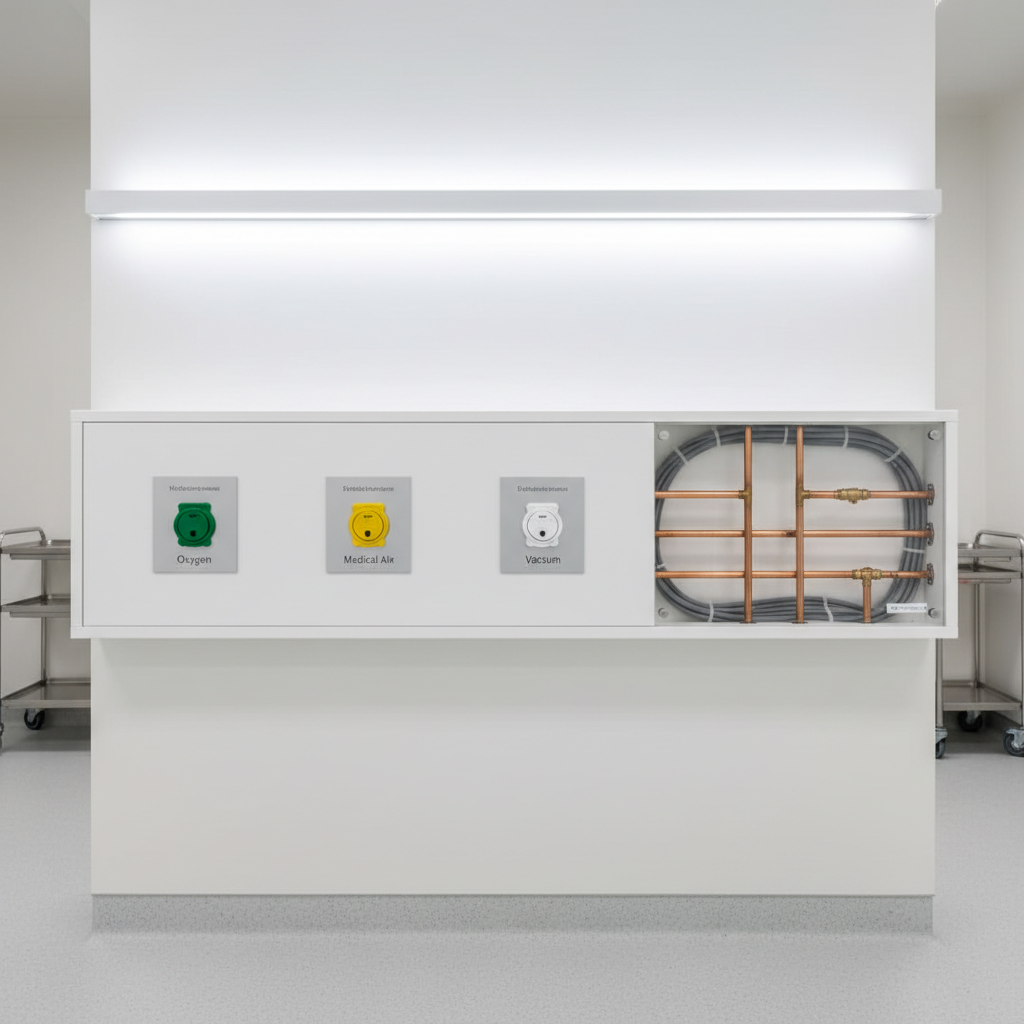
Ambulatory Surgery Center Medical Gas Install in Charlotte, NC: A Start-to-Finish Guide for Compliance and Safety
Building a new Ambulatory Surgery Center (ASC) in Charlotte is a monumental undertaking, with countless details to manage. Among the most critical systems you will install is the medical gas network. Unlike standard plumbing or electrical, these systems deliver life-sustaining gases like Oxygen and Nitrous Oxide, and remove critical waste anesthetic gases (WAGs). A compliant installation is not just a matter of following building codes; it's a fundamental requirement for patient safety and regulatory approval. This guide provides a definitive overview of the ground-up medical gas installation process for ASCs in Charlotte, covering everything from initial design and code compliance to final verification and Authority Having Jurisdiction (AHJ) sign-off.
H1: The Critical Role of NFPA 99 in ASC Medical Gas Design
The foundation of any medical gas system is the National Fire Protection Association's standard, NFPA 99, Health Care Facilities Code. This is the rulebook that governs the design, installation, testing, and maintenance of these systems. For a new ASC build in Charlotte, your architect and engineering team must design the system based on a thorough risk assessment as defined in NFPA 99, Chapter 4.
System Categories and Risk Assessment
NFPA 99 classifies systems into four categories based on the risk to patients if the system fails:
- Category 1: Failure of the system is likely to cause major injury or death. Operating rooms in an ASC fall squarely into this category.
- Category 2: Failure is likely to cause minor injury.
- Category 3: Failure is not likely to cause injury but may cause discomfort.
- Category 4: Failure would have no impact on patient care.
For an ASC, all patient care areas, especially operating and procedure rooms, will require Category 1 systems. This dictates the level of redundancy, monitoring, and materials required. For example, a Category 1 piped gas system requires specific types of valves, alarms, and independent piping that a Category 3 system would not.
Why this matters for compliance: The AHJ in Charlotte will require documentation of your risk assessment. Starting with a compliant, risk-assessed design is the first and most crucial step toward a successful inspection and certification. Skipping this can lead to costly redesigns and delays.
H1: Assembling Your Qualified Team: The ASSE 6000 Series Credentials
You cannot hire a standard plumber for this job. NFPA 99-2018 (5.1.1.4) mandates that the installation, inspection, and verification of medical gas systems be performed by qualified individuals. The American Society of Sanitary Engineering (ASSE) 6000 series provides the nationally recognized credentials for this work.
- ASSE 6010 Certified Installers: These are the credentialed professionals qualified to perform the hands-on brazing and installation of the medical gas piping network. Your mechanical contractor must employ or subcontract installers holding a current ASSE 6010 credential.
- ASSE 6030 Certified Verifiers: This is a third-party, independent professional who performs the final system verification after the installer has completed their work. Medical Testing Solutions provides comprehensive medical gas verification services to ensure your system is compliant and safe.
- ASSE 6040 Certified Maintenance Personnel: While not part of the initial install, having a plan for ongoing maintenance with a certified team is crucial for long-term compliance and safety.
H1: The Medical Gas Installation Process: From Pipe to Patient Outlet
The physical installation is a multi-step process that demands precision and adherence to code. Every joint, valve, and component must be installed correctly to prevent leaks, cross-connections, and contamination.
Piping, Brazing, and Purging
The core of the system is the network of copper piping. All piping must be medical-grade, hard-drawn seamless copper (Type K or L) that has been cleaned for oxygen service by the manufacturer and delivered capped and sealed.
- Cutting and Fitting: Installers cut the pipe to length, ream the ends to remove burrs, and fit them together.
- Brazing with Nitrogen Purge: This is the most critical step. As the installer brazes a joint (a high-temperature soldering process), they must simultaneously purge the inside of the pipe with oil-free, dry nitrogen. This continuous flow of nitrogen displaces oxygen, preventing the formation of carbonaceous oxides on the interior pipe wall. These black, flaky contaminants can otherwise break free, clog the system, and ultimately harm patients.
- Zone and Source Valves: The system is segmented with zone valves, allowing specific areas of the ASC to be isolated for maintenance or in an emergency without shutting down the entire facility. These are housed in valve boxes with gauges and clear labeling.
Source Equipment and Manifolds
Your ASC will have a dedicated, secure room for the source equipment. This typically includes:
- Oxygen Manifold: A high-pressure cylinder bank that serves as the primary or secondary supply of oxygen.
- Medical Air Compressor: A specialized, oil-free compressor system with dryers and filters to produce USP-grade medical air.
- Vacuum Pump: A medical vacuum pump (or multiple pumps for redundancy) to provide suction.
- WAGD Outlet: Waste Anesthetic Gas Disposal system, which removes exhaled anesthetic gases from the operating room.
Proper installation, ventilation, and alarm integration for this equipment are non-negotiable parts of the medical gas installation process.
H1: The Verification Gauntlet: Passing Your ASSE 6030 Inspection
Once the ASSE 6010 installer completes their work and certifies its compliance, the independent ASSE 6030 verifier comes in. This is not a rubber stamp. The verifier, like the team at Medical Testing Solutions, conducts a battery of rigorous tests outlined in NFPA 99 to ensure the system is safe and ready for patient use. Think of it as a top-to-bottom audit before you ever connect a patient.
Key verification tests include:
- Purity and Particulate Tests: Ensuring no cross-connections exist and the gas delivered at each outlet is the correct gas, free of contaminants.
- Pressure Tests: Confirming the system can hold pressure without leaks.
- Alarm Testing: Verifying that all master and area alarms function correctly, signaling high/low pressure or supply changeovers.
- Labeling and Component Checks: Ensuring every outlet, valve, and source component is correctly labeled.
| Test Stage | Installer Responsibility (ASSE 6010) | Verifier Responsibility (ASSE 6030) |
|---|---|---|
| Initial Pressure Test | Pressurize system with nitrogen to 150 psi and check for leaks. | Witness and document the installer's initial pressure tests. |
| Cross-Connection | Certifies no cross-connections were made. | Performs individual gas outlet tests to confirm 100% no cross-connections. |
| Purity/Particulate | Ensures system cleanliness during install. | Takes gas samples at outlets to test for purity (e.g., O2 > 99%) and particulates. |
| Final Tie-In | Makes the final connection to the gas source after verification. | Oversees the final connection and performs a final test of the source gas at the outlets. |
Upon successful completion of all tests, the verifier provides a certified report. This report is the key document you will present to the AHJ for your Certificate of Occupancy.
H1: Final AHJ Sign-Off and Long-Term Maintenance
The final step before you can open your doors is securing the approval of the Authority Having Jurisdiction. In Charlotte, this may be a combination of city building code officials and state health department inspectors. They will review the ASSE 6030 verifier's report and perform their own walkthrough. A clean, well-documented installation and a passing verification report make this final step smooth and predictable.
After opening, your responsibility doesn't end. Regular annual medical gas inspections and a preventative maintenance plan are required to maintain your accreditation and ensure ongoing patient safety.