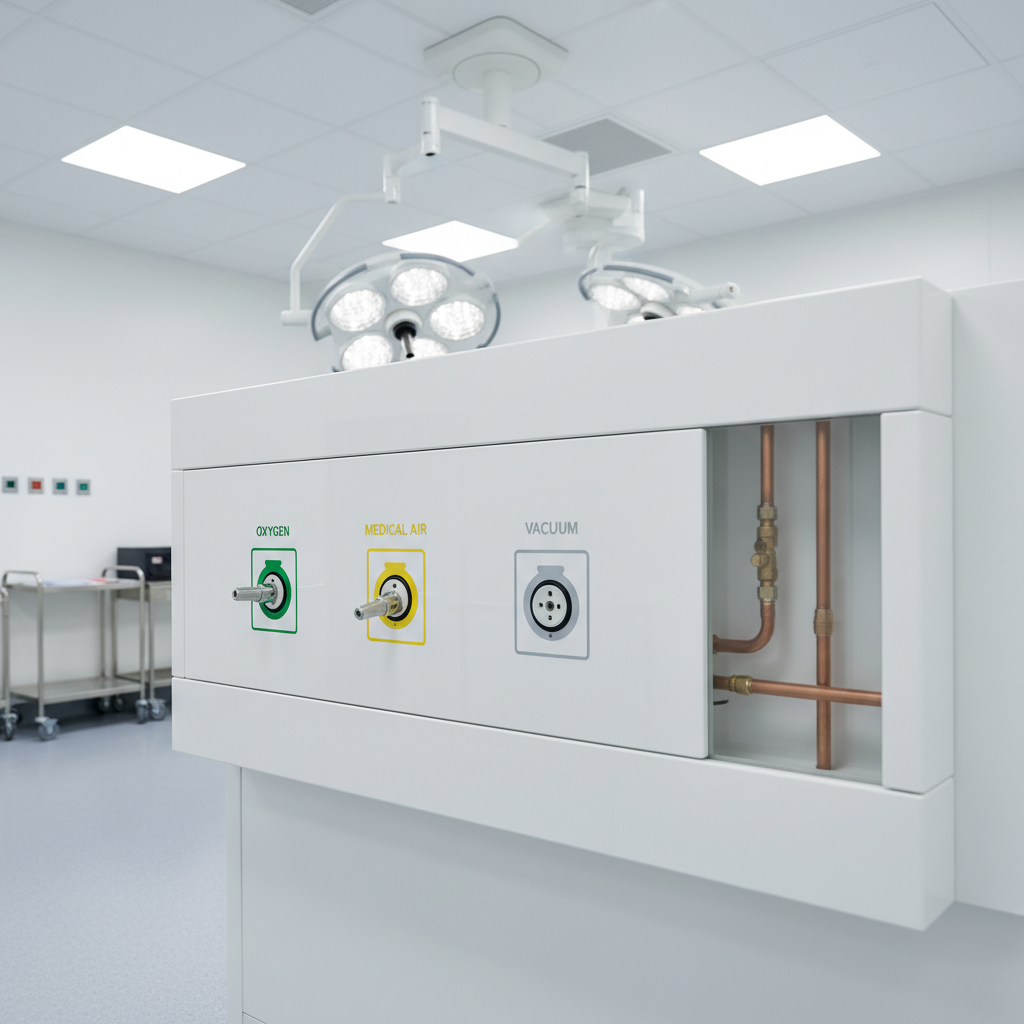
Planning Your ASC Medical Gas System: From Blueprint to Breath
Building a new Ambulatory Surgery Center (ASC) in Asheville is a monumental undertaking. Among the most critical systems you'll design and install is the medical gas network. This intricate system is the lifeblood of your facility, delivering vital gases like oxygen, medical air, and nitrous oxide to operating rooms and recovery areas. A compliant, professionally installed system is non-negotiable for patient safety and regulatory approval. This guide walks you through the entire process of an ambulatory surgery center medical gas install in Asheville, NC, ensuring you meet all NFPA 99 and ASSE 6000 series standards from the ground up.
We'll cover everything from initial design considerations and choosing the right equipment to the stringent requirements for installation and final verification. By the end, you'll understand the critical steps needed to work with a certified partner like Medical Testing Solutions to bring your project to a successful, compliant completion.
Core Components of an ASC Medical Gas System
A compliant medical gas system is more than just pipes in the wall. It's an integrated network of sources, pipelines, and outlets, each governed by strict codes. For an ASC, your system will typically include:
- Source Equipment: This is the heart of the system. It can include high-pressure cylinders, liquid oxygen containers (dewars), or dedicated air compressors and vacuum pumps.
- Manifolds: Automatically switch from the primary to the secondary cylinder bank, ensuring an uninterrupted gas supply.
- Medical Air Compressors: Must be specifically designed for medical use (oil-free, oil-less) to prevent contamination. Per NFPA 99, these must be duplexed.
- Vacuum Pumps: Similar to compressors, these are dedicated to surgical suction and must be robust and reliable.
- Distribution Network: This is the network of copper piping that carries the gases from the source to the patient care areas. All piping must be Type K or L, cleaned for oxygen service, and installed by a certified ASSE 6010 technician.
- Alarms: Master and area alarms are required by NFPA 99 (Chapter 5) to provide audible and visual warnings of system failures, pressure changes, or low reserves.
- Zone Valves: Placed in valve boxes, these allow sections of the facility to be isolated for maintenance or in an emergency without shutting down the entire system.
- Outlets/Terminals: These are the points of use in operating and recovery rooms (e.g., DISS, Ohmeda, Chemetron). They are gas-specific to prevent accidental cross-connection.
The Design Phase: Engineering for Compliance and Safety
Before a single pipe is installed, a detailed design and engineering phase is crucial. This is where you'll work with engineers and a certified installation company to map out the entire system.
Key Design Considerations:
- Facility Layout: The number of operating rooms, procedure rooms, and recovery bays dictates the system's size and complexity.
- Gas Requirements: Determine which gases are needed and at what volume. Will you offer nitrous oxide for sedation? What are the peak demand flow rates for oxygen and medical air?
- Source Equipment Sizing: The manifold and compressor/vacuum systems must be sized to meet the facility's peak demand, plus a reserve capacity as mandated by NFPA 99.
- Pipe Sizing: Pipes must be appropriately sized to maintain pressure and flow rates at the furthest outlets. Undersized pipes can lead to pressure drops and inadequate delivery.
- Future Expansion: Are you planning to add operating rooms in the future? The system should be designed to accommodate future growth without a complete overhaul.
Why this matters for compliance: A poorly designed system will not only fail to meet your clinical needs but will also be flagged by the Authority Having Jurisdiction (AHJ) and the ASSE 6030 verifier. Proper design is the foundation of a compliant medical gas installation.
Installation: The ASSE 6010 Standard of Excellence
The physical installation of the medical gas pipeline is one of the most rigorously controlled aspects of the build. It cannot be performed by a standard plumber or mechanical contractor. It requires a specialized, certified technician.
Who Can Install Medical Gas Systems?
According to NFPA 99, all brazing on medical gas pipelines must be performed by an individual certified to the ASSE 6010 standard. This certification ensures the installer has been trained in:
- Brazing Techniques: Using a nitrogen purge to prevent oxidation inside the pipe.
- System Components: Understanding the function of every valve, alarm, and source.
- NFPA 99 Code: Deep knowledge of the code requirements for installation, testing, and safety.
- Documentation: Properly documenting the installation and testing procedures.
At Medical Testing Solutions, our technicians hold ASSE 6010 certification, ensuring every joint is brazed to the highest standard of quality and compliance.
Installation Best Practices:
- Piping: Use only seamless copper tubing (Type K or L) that has been cleaned for oxygen service.
- Brazing: All joints must be brazed with a nitrogen purge flowing to prevent the formation of copper oxides, which can contaminate the gas stream.
- Labeling: All pipes must be clearly labeled with the gas name and flow direction.
- Support: Pipes must be properly supported and secured to prevent sagging and stress on the joints.