Ambulatory Surgery Center Medical Gas Install in Arlington, VA: A Complete Guide
Medical Testing SolutionsOctober 17, 20265 min read
Share
Planning Your ASC Medical Gas System in Arlington, VA
Constructing a new Ambulatory Surgery Center (ASC) is a complex undertaking, and the medical gas delivery system is one of its most critical components. A properly designed and installed system is fundamental for patient safety, procedural efficacy, and regulatory compliance. For any ASC in Arlington, Virginia, a successful medical gas installation hinges on a deep understanding of national codes, state requirements, and the specific needs of your facility. This guide walks you through the entire lifecycle of an ASC medical gas project, from the initial blueprints to the final sign-off from the Authority Having Jurisdiction (AHJ).
This process involves more than just connecting pipes; it's about creating a lifeline for your patients. It demands meticulous planning, certified expertise, and a forward-thinking approach to system design. We will cover the core phases: Design & Engineering, Installation, and Verification, ensuring you have the knowledge to partner effectively with a certified provider like Medical Testing Solutions.
The Design & Engineering Phase: Blueprint for Compliance
The foundation of a safe and efficient medical gas system is laid long before the first pipe is installed. The design and engineering phase is where critical decisions are made about system type, capacity, and layout, all guided by stringent regulatory codes.
Adhering to NFPA 99 and ASSE 6000 Standards
The National Fire Protection Association (NFPA) 99, "Health Care Facilities Code," is the cornerstone of medical gas system design and installation. For an ASC, your facility will be classified as a Category 1 or Category 2 space, dictating the required system architecture. For example, NFPA 99 (2024 ed.), Chapter 5, outlines the specific requirements for piped gas and vacuum systems, from source equipment to terminal outlets.
Alongside NFPA 99, the ASSE/IAPMO/ANSI 6000 series provides personnel qualifications. Your project requires technicians certified to:
ASSE 6010: Medical Gas Systems Installers
ASSE 6030: Medical Gas Systems Verifiers
Partnering with a company that employs credentialed professionals is non-negotiable for compliance and safety.
Sizing and Source Equipment Selection
Properly sizing your system is crucial. An undersized system can fail under peak load, while an oversized one leads to unnecessary expense. Key considerations include:
Number of Operating Rooms: How many simultaneous procedures will you support?
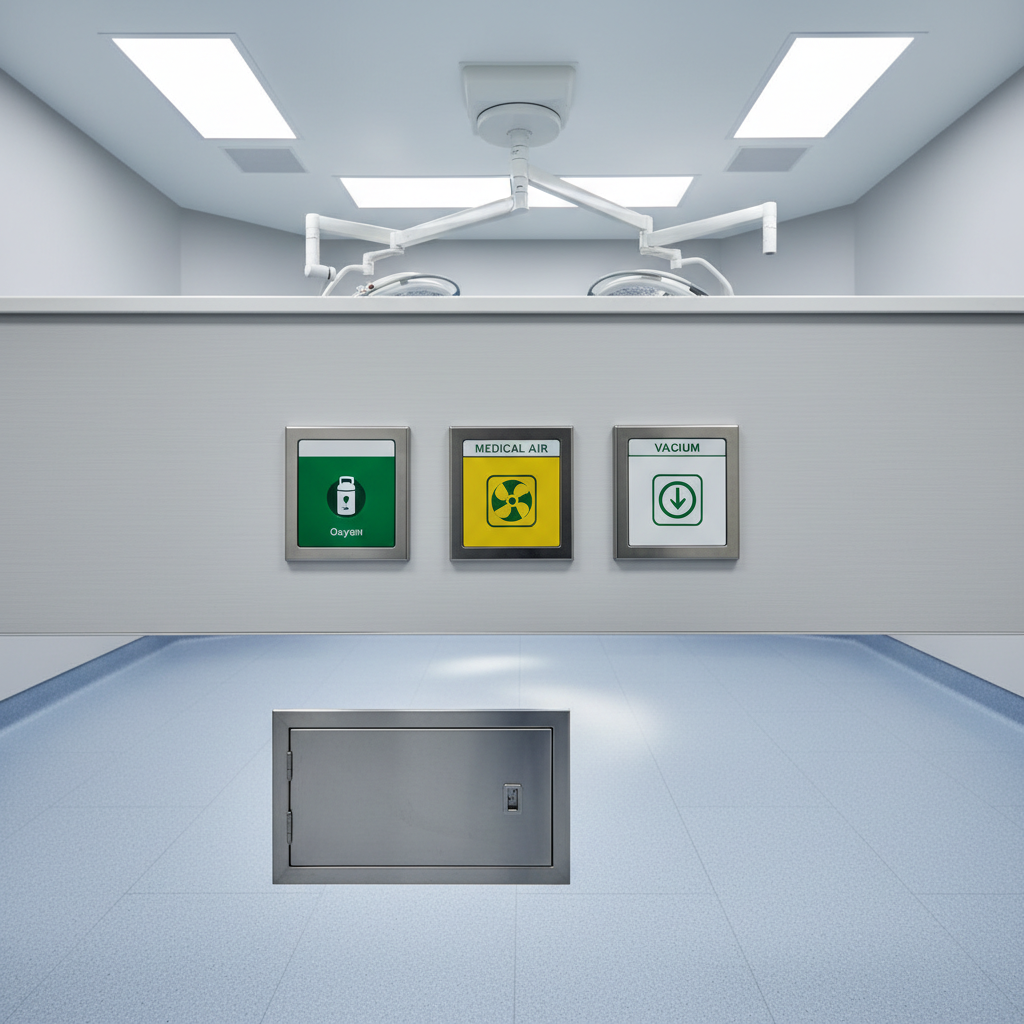
Types of Procedures: What are the typical gas flow requirements (e.g., O2, N2O, Med Air, Vac)?
Future Expansion: Will you add more operating rooms in the future? Planning for future capacity now can save significant costs later.
Source equipment, like manifolds, air compressors, and vacuum pumps, must be selected to meet these calculated demands. Brands like BeaconMedaes, Powerex, and Amico are common, and an experienced installer can help you compare the total cost of ownership.
Why this matters for compliance: The AHJ in Arlington, VA will require documentation proving that the system design, including all calculations and equipment specifications, is compliant with NFPA 99. Failure to provide this can halt your project indefinitely.
The Installation Process: From Blueprint to Reality
With a compliant design in hand, the physical installation begins. This phase requires precision, cleanliness, and constant adherence to code. All work must be performed by ASSE 6010 certified installers.
Key Installation Steps:
Material Inspection: All piping (typically Type K or L copper) and components must be inspected to ensure they are medical-grade, clean, and free of defects.
Piping Rough-in: Pipes are run from the source equipment room to each point of use. Proper supports and labeling are critical.
Brazing and Purging: This is one of the most critical steps. NFPA 99 mandates that all joints must be brazed (not soldered) while an inert gas, typically nitrogen, is purged through the pipe. This prevents the formation of oxides inside the pipe, which could later be delivered to a patient.
Zone Valve and Alarm Placement: Zone valve boxes are installed to isolate specific areas of the facility in an emergency. Master and area alarm panels are wired to monitor system pressure and status, providing audible and visual alerts as required by code.
Outlet Termination: The final outlets (e.g., DISS, Ohmeda, Chemetron) are installed in the ORs, recovery bays, and procedure rooms.
Coordination with Other Trades
A medical gas installer does not work in a vacuum. Constant coordination with electricians, plumbers, and HVAC technicians is essential to avoid conflicts and ensure a smooth construction schedule. Medical Testing Solutions has extensive experience in managing these complex job site logistics for ground-up ASC builds in the Arlington area.
System Verification: The ASSE 6030 Standard
After the last pipe is brazed and every outlet is in place, the system is not yet ready for use. It must undergo a rigorous, independent testing and verification process performed by an ASSE 6030 certified verifier. This step is a final quality control check to ensure the system is safe, pure, and functions exactly as designed.
The verifier must be from a third-party agency, independent of the installer, to ensure unbiased testing. Medical Testing Solutions is qualified to perform both installation and verification, but for a single project, two separate teams would be involved to maintain this crucial independence.
To remove any particulate matter left from construction.
5.1.12.2.1
Initial Pressure Test
To check for leaks in the piping system under pressure.
5.1.12.2.6
Cross-Connection Test
To ensure each gas outlet delivers only the specified gas.
5.1.12.3.3
Piping Purity Test
To verify that the interior of the piping is free of contaminants.
5.1.12.3.7
Gas Concentration Test
To confirm the identity and concentration of the gas at each outlet.
5.1.12.3.8
Alarm System Testing
To verify that all master and area alarms function correctly.
5.1.12.3.5
Final Walk-Through and AHJ Sign-Off
Once the ASSE 6030 verifier has completed their testing, they will provide a comprehensive written report. This report is the key document you will present to the Authority Having Jurisdiction (AHJ) for Arlington, VA. The AHJ, often a representative from the local fire marshal or building department, will perform a final inspection, review the verification report, and, if all is in order, grant the Certificate of Occupancy.
Without a passed verification report from a certified third-party, you will not get this sign-off, and your facility cannot open.
Frequently Asked Questions
This varies with the size and complexity of the center, but a typical ground-up installation can take anywhere from 4 to 12 weeks, not including the initial design and approval phase.
Only professionals holding current ASSE 6010 (Installer) and ASSE 6030 (Verifier) credentials. Always ask for proof of certification.
Oxygen (O2), Medical Air (Med Air), and Vacuum (Suction) are standard. Nitrous Oxide (N2O) and Waste Anesthetic Gas Disposal (WAGD) are also common, depending on the types of anesthesia used. Some procedures may also require Nitrogen (N2) for powering surgical tools.
Installation is the physical construction of the system, performed by an ASSE 6010 installer. Verification is the subsequent testing of the system to ensure it is safe, pure, and code-compliant, performed by an independent ASSE 6030 verifier.
NFPA 99 mandates third-party verification to eliminate conflicts of interest. It ensures that the company checking the work is not the same company that installed it, providing an unbiased assessment of the system's safety and integrity.
Yes. NFPA 99 requires regular inspections and maintenance of medical gas systems. Medical Testing Solutions offers comprehensive annual medical gas inspections and maintenance plans to keep your ASC compliant and safe long after the initial build.
Request a quote for your facility
Talk with Medical Testing Solutions about your next inspection, repair or equipment request.