In the high-stakes environment of a modern healthcare facility, electrical safety is paramount. For clinical staff focusing on patient outcomes, the reliability of electrical power is a given, until it isn't. A sudden power loss to life-sustaining equipment can have catastrophic consequences. This is particularly true in "wet procedure locations," where the presence of fluids introduces a heightened risk of electrical shock. The National Fire Protection Association (NFPA) addresses this risk in its Health Care Facilities Code, NFPA 99. This guide provides a definitive look at the requirements for wet location line isolation monitors, explaining the critical choice between isolated power systems and GFCIs to ensure both patient and staff safety.
Wet Location Line Isolation Monitors: NFPA 99 Rules Explained
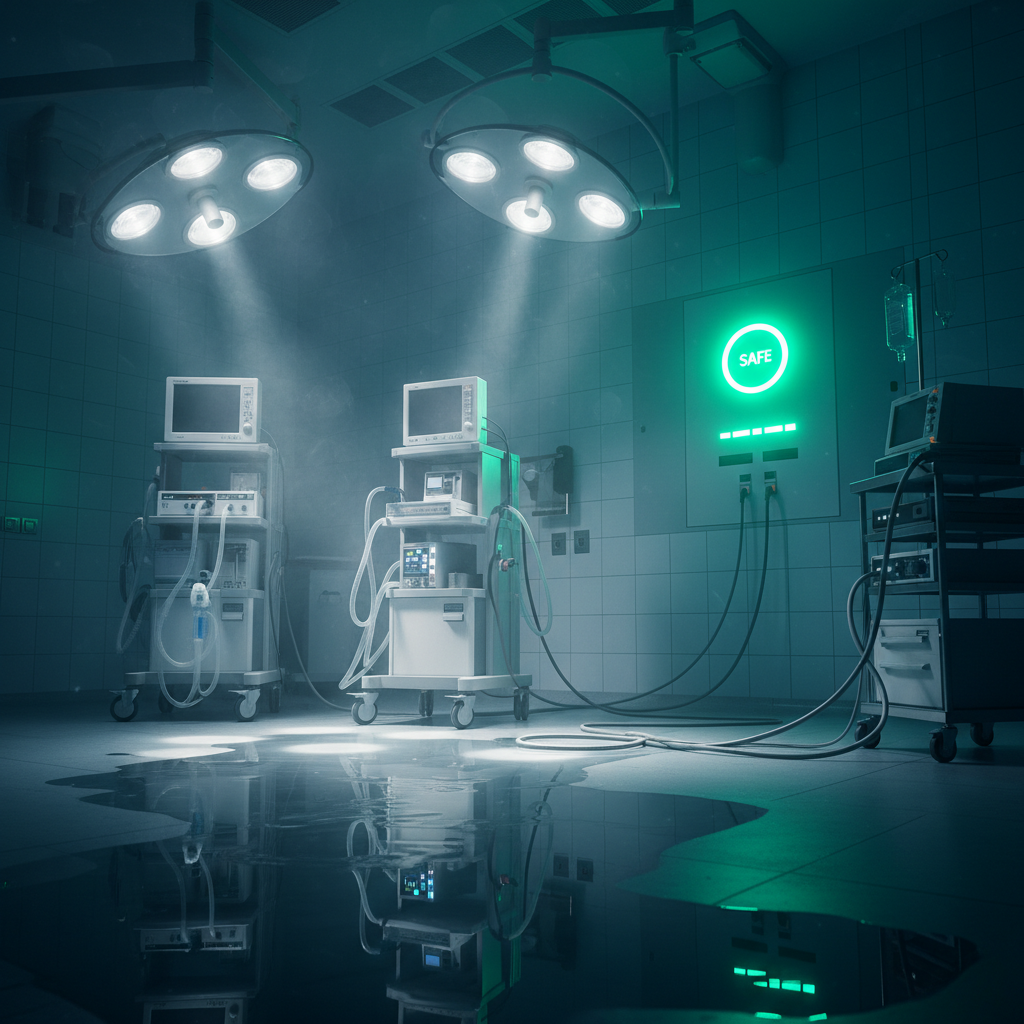
What is a "Wet Procedure Location" According to NFPA 99?
Before diving into the equipment, we must first understand the environment. NFPA 99-2024, section 3.3.178, defines a "Wet Procedure Location" as:
"A room or space in a patient care area where procedures are performed that are normally subject to wet conditions while patients are present, including standing water on the floor or drenching of the work area, either of which is likely to come into contact with the patient or staff."
This designation is not made lightly. It's the responsibility of the health care facility's governing body to formally designate these areas. Examples often include:
- Certain Operating Rooms (especially for trauma, urology, or arthroscopy)
- Cardiac Catheterization Labs
- Burn Units
- Dialysis Stations
Critically, the definition hinges on the procedure, not just the room. If a room is only occasionally used for "wet" procedures, it may still fall under this classification, necessitating specific electrical safeguards.
The Isolated Power System: Your First Line of Defense
At the heart of electrical safety in these critical areas is the Isolated Power System (IPS). Unlike a standard grounded electrical system found in your home or office, an IPS is ungrounded. It consists of two main components:
- An Isolation Transformer: This special transformer electrically isolates the system's conductors from the building's main ground.
- A Line Isolation Monitor (LIM): This device continuously monitors the integrity of the isolated system, measuring its impedance to ground.
Here’s the key benefit: In an isolated system, the first accidental contact between an energized wire and a ground source (like a fluid-covered floor) does not create a dangerous circuit. Instead of tripping a breaker and cutting power, the LIM simply triggers an audible and visual alarm. This alerts staff to the "first fault" condition, giving them time to identify and resolve the issue without a sudden, critical loss of power to life support equipment. For more details on this critical testing, visit our page on line isolation monitor testing and service.
Line Isolation Monitors (LIMs) vs. GFCIs: The Critical Difference
NFPA 99 allows for two types of protection in designated wet procedure locations: an IPS with a LIM, or Ground-Fault Circuit Interrupters (GFCIs). The choice between them is a critical patient safety decision, as their methods of protection are fundamentally different.
| Feature | Line Isolation Monitor (LIM) | Ground-Fault Circuit Interrupter (GFCI) |
|---|---|---|
| System Type | Isolated (Ungrounded) | Conventional Grounded |
| Fault Action | Alarms to warn staff of a fault | Trips and cuts power to the circuit |
| Power Continuity | Maintained during a first fault | Immediately interrupted |
| Primary Use Case | Critical patient care where power continuity is essential | General areas; non-critical equipment |
| NFPA 99 Reference | 6.3.3.2.1 | 6.3.3.2.3 |
Why this matters for compliance: The choice is not merely preferential. While GFCIs protect against shock, they do so by cutting power, an unacceptable outcome for a ventilator or heart-lung machine. An IPS with a LIM protects personnel while prioritizing power continuity, which is the cornerstone of life safety in critical care.
NFPA 99 Code Requirements: When is a LIM Mandatory?
According to NFPA 99-2024 (6.3.3.2), patient bed locations in designated wet procedure locations must be provided with electrical circuits protected by one of the following:
- Isolated Power Systems (IPS) with Line Isolation Monitors.
- Ground-Fault Circuit Interrupters (GFCIs).
The code appears to give an equal choice, but it includes a crucial caveat: GFCIs are permitted only if a risk assessment conducted by the facility determines that power interruption is tolerable for the procedures performed in that space.
For the vast majority of surgical and critical care applications, power interruption is not tolerable. Therefore, an IPS with a LIM becomes the de facto requirement for any procedure involving life support. The expert team at Medical Testing Solutions can assist facilities in conducting these essential risk assessments to ensure the right systems are in place and properly documented for accreditation.
The Role of ASSE 6000 Certification in LIM Systems
Having the right equipment is only half the battle. Proper installation, verification, and maintenance are critical for ensuring these complex systems function as intended. This is where ASSE/IAPMO 6000 certifications become vital.
- ASSE 6010 Installation: An IPS must be installed correctly from the start. Certified installers ensure transformers, LIM panels, and wiring meet all code specifications.
- ASSE 6030 Verification: Before a new or modified system is placed into service, a certified verifier must test and confirm its performance. This includes commissioning the LIM to ensure it alarms at the correct threshold (typically 5 mA).
- Ongoing Maintenance: Regular maintenance and annual medical gas inspections are essential. Over time, cumulative equipment leakage, dust, or damage can compromise the system. Medical Testing Solutions provides a full suite of services, from initial installation support and verification to ongoing maintenance and certification, all performed by ASSE 6000 certified professionals.
Common LIM Issues and Testing Procedures
A properly functioning LIM is silent. Alarms, while important, can be disruptive. Common issues include:
- Nuisance Alarms: Often caused by too much equipment on a single circuit or aging equipment with high leakage current.
- Failed Self-Test: Modern LIMs have a self-test feature; a failure indicates an internal problem.
- Incorrect Alarm Threshold: The LIM must be calibrated to alarm at the total hazard current threshold specified by NFPA 99.
Annual testing by a qualified technician is required to ensure reliability. The procedure generally includes:
- Visual Inspection: Checking for damage to the panel and connected devices.
- Functionality Test: Using the panel’s "push-to-test" feature to verify the alarm.
- Impedance and Hazard Current Measurement: Using specialized equipment to verify the LIM’s readings and alarm trigger point.
Frequently Asked Questions
Request a quote for your facility
Talk with Medical Testing Solutions about your next inspection, repair or equipment request.