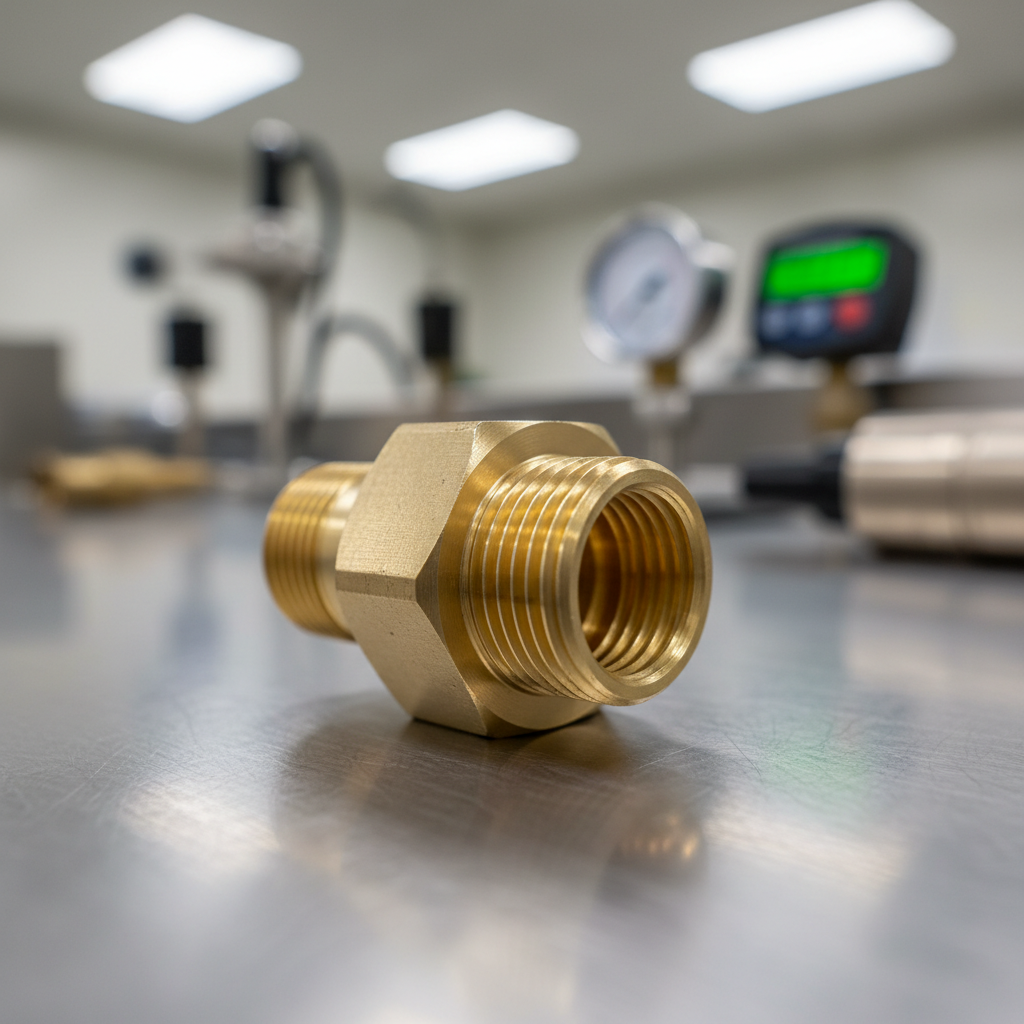
Superior PC 4036 Nut and Nipple Assembly: CGA-540 Guide
Medical Testing SolutionsNovember 10, 202611 min read
Share
You trace a persistent low-level oxygen leak inside a hospital manifold room, running your ultrasonic detector past the header bar until the reading spikes right at a cylinder pigtail connection. When you back off the gland nut, you find the culprit immediately: someone forced an undersized brass fitting into a CGA-540 valve port, marring the internal bullnose seat and stripping the fine threads. A single compromised fitting can shut down an entire bank of reserve cylinders during peak demand, turning what should be a routine cylinder change-out into an urgent maintenance event.
For high-pressure oxygen service up to 3,000 psig, hardware tolerances leave zero margin for error. The Superior PC 4036 nut and nipple assembly serves as an industry-standard brass hardware pairing engineered specifically for CGA-540 connections. Getting the exact metallurgical profile, seating geometry, and threading right preserves both cylinder valves and downstream regulators while maintaining alignment with National Fire Protection Association (NFPA) mandates.
Understanding the Superior PC 4036 Nut and Nipple Assembly
The Superior PC 4036 nut and nipple assembly consists of two precision-machined brass components manufactured to meet Compressed Gas Association (CGA) specifications for high-pressure medical and industrial oxygen service. In the medical gas arena, the assembly forms the mechanical bridge between an oxygen cylinder valve exhibiting a CGA-540 outlet and components such as high-pressure flexible pigtails, rigid copper pig loops, manifold header blocks, or cylinder regulators.
The assembly incorporates a CGA-540 nut alongside a matching bullnose nipple. The nut features 0.903-14 NGO (National Gas Outlet) right-hand external threads designed to mate seamlessly with the internal threading of standard CGA-540 cylinder valves. The accompanying nipple provides a radiused metal-to-metal bullnose seating surface that seals against the internal cone seat of the cylinder valve without requiring a separate soft washer or Teflon tape.
Medical Testing Solutions supplies certified hardware like the PC 4036 to ensure facilities operate with parts specifically designed for severe cyclic loading. High-pressure cylinders cycle through repeated connection and disconnection cycles over their lifespan. When technicians use mismatched or generic brass fittings, the mating surfaces deform quickly, creating microscopic gas pathways that leak costly medical gas and risk high-pressure adiabatic ignition.
CGA-540 Dimensional Standards and Mechanical Specifications
The Compressed Gas Association establishes rigid dimensional standards for gas-specific cylinder valves and connections under pamphlet CGA V-1. Standard CGA-540 exists solely for non-liquefied, non-corrosive oxygen applications. The mechanical tolerances built into the Superior PC 4036 nut and nipple assembly prevent the mechanical interchange of oxygen components with lines carrying flammable, toxic, or inert gases.
Specification Parameter
Value / Engineering Requirement
CGA Fitting Standard
CGA-540 (Medical / Industrial Oxygen)
Connection Thread (Nut)
0.903-14 NGO-RH-EXT
Tailpiece Connection (Nipple)
1/4" NPT Male (typical configuration)
Sealing Method
Radiused Metal-to-Metal Bullnose Seat
Maximum Working Pressure
3,000 psig (207 bar)
Material Composition
High-Tensile Free-Cutting Brass
Gas Compatibility
Oxygen (O2), Medical / Breathing Air
Cleaning Standard
CGA G-4.1 / Cleaned for O2 Service
The 0.903-14 NGO thread specification represents a non-standard engineering profile that prevents unauthorized hardware from threading into oxygen cylinder valves. The nut features right-hand threads, contrasting sharply with the left-hand threads reserved for fuel gases like acetylene or hydrogen (such as CGA-510).
The nipple's internal bore measures accurately to balance flow capacity with structural wall thickness under 3,000 psig working pressures. When torqued into place, the precision curve of the nipple tip engages the valve seat uniformly across a continuous concentric circle. This metal-to-metal contact prevents cold flow or extrusion issues common to elastomeric O-rings subjected to repeated friction during cylinder swaps.
Why Oxygen Service Cleaning Matters for CGA-540 Hardware
Installing an off-the-shelf industrial brass fitting directly into a healthcare facility's oxygen delivery system violates baseline safety codes and creates a severe fire hazard. Any component introduced to oxygen piping or cylinder connections must undergo stringent chemical cleaning to eliminate hydrocarbons, particulate matter, and machining lubricants.
Under rapid valve opening, high-pressure gas compresses violently against downstream restrictions, a phenomenon known as adiabatic compression. If hydrocarbon oils or organic contaminants remain on the internal walls or threads of a nut and nipple assembly, the heat generated by this sudden pressurization can easily surpass the autoignition temperature of the contaminant. This dynamic causes rapid burning or explosive flash fires inside the brass fitting.
Why this matters for compliance: NFPA 99 (Health Care Facilities Code), 2024 edition, Section 5.1.10.1.1 mandates that all piping, valves, fittings, and components in medical gas systems be thoroughly cleaned for oxygen service in accordance with CGA G-4.1 before installation. Using uncleaned components directly invalidates medical gas certifications and creates life-safety risks.
The Superior PC 4036 nut and nipple assembly is pre-cleaned to meet CGA G-4.1 standards. Each unit undergoes vapor degreasing, ultrasonic solvent washes, and strict packaging protocols in sealed poly bags. Technicians handling this hardware during medical gas maintenance services must wear clean, powder-free nitrile gloves and avoid any contact with petroleum-based thread sealants.
Common Manifold and Cylinder Failure Modes in the Field
Field personnel regularly encounter preventable failures involving CGA-540 connections during routine operations. Identifying these failure modes early prevents catastrophic gas loss and protects personnel from blast injuries or high-pressure gas burns.
Galling and Thread Stripping
Brass is a ductile, relatively soft metal chosen specifically for its non-sparking properties and thermal conductivity in oxygen systems. However, brass threads gall easily if cross-threaded or over-torqued. Technicians often reach for large adjustable wrenches to stop a minor hiss, applying excessive leverage that strips the 0.903-14 NGO threads on the valve or the PC 4036 nut. Once the nut threads deform, the connection cannot sustain rated pressure and will fail under load.
Marred Bullnose Seating Surfaces
The spherical radius on the Superior nipple requires a smooth, unblemished finish to create a gas-tight seal. Dropping the pigtail assembly onto concrete floors, banging it against cylinder shoulders, or allowing dirt to settle inside the valve port leaves micro-scratches on the brass bullnose. Once scratched, no amount of tightening will seal the joint; continuous torquing merely ruins the internal seat of the cylinder valve as well.
Contamination from Improper Sealants
Technicians unfamiliar with medical gas piping sometimes apply PTFE pipe tape or liquid pipe dope to the CGA-540 external threads. Thread sealant on a CGA-540 connection serves no sealing function because the seal occurs entirely at the bullnose face, not along the mechanical threads. Shredded Teflon tape fragments travel downstream through the manifold, lodging in regulator orifices or check valves and creating serious system malfunctions.
Cyclic Fatigue on Rigid Pig Loops
When rigid copper pigtails stay connected to header bars without proper strain relief, the repetitive motion of swapping 150-pound cylinders bends the copper near the nipple braze joint. This cyclic fatigue work-hardens the metal, culminating in stress cracks near the back of the nipple. Incorporating flexible high-pressure pigtails with stainless steel armor braiding and properly secured PC 4036 assemblies mitigates this issue entirely.
Installation Guidelines and Torque Best Practices
Achieving a durable, leak-free connection with the Superior PC 4036 requires adherence to standardized mechanical assembly procedures. Rushing high-pressure installations invites leaks and damages capital assets.
Inspect the cylinder valve port using a clean inspection light. Ensure the internal seat lacks debris, burrs, or hydrocarbon residue.
Inspect the PC 4036 nipple bullnose tip for indentations, pitting, or scoring. Replace the assembly immediately if you observe mechanical damage.
Hand-thread the CGA-540 nut into the cylinder valve port. The nut must turn smoothly for at least three to four full revolutions by hand without binding. If resistance occurs, back off and check thread alignment.
Apply an open-end cylinder wrench to bring the nut snug against the valve shoulder. Avoid using pipe wrenches with serrated jaws that chew through the exterior brass flats.
Apply final torque smoothly. Recommended torque for brass-to-brass CGA-540 connections ranges from 25 to 30 lbf-ft (34 to 41 N-m). Never use cheater bars or hammer the wrench handle.
Slowly open the cylinder valve handle a quarter turn to pressurize the assembly, listening for leaks. Check the connection using an oxygen-approved, halide-free leak detection solution such as Snoop, or an ultrasonic detector.
When connecting the nipple's male NPT tailpiece to a pigtail or manifold block, use only oxygen-compatible anaerobic thread sealants (such as LOCTITE 2760 or specific PTFE paste qualified under ASTM G63). Apply the sealant sparingly to the male pipe threads only, leaving the first two threads completely bare to prevent fluid migration into the gas path.
Regulatory Standards: NFPA 99, ASSE, and CGA Mandates
Compliance across healthcare piping networks involves interlocking regional, national, and professional building codes. When engineering teams alter or service manifold connections, several primary standards dictate acceptable practices.
NFPA 99 Chapter 5 establishes the framework for central supply systems. Under Section 5.1.3.5, high-pressure header manifolds must incorporate check valves and gas-specific cylinder connections complying with CGA V-1. The Superior PC 4036 satisfies this requirement, ensuring that only oxygen cylinders can mechanically integrate into an oxygen header bar.
Personnel performing maintenance or installations on these systems must hold verifiable credentials. ASSE Standard 6010 governs installers, ensuring they understand the brazing, purges, and component ratings required for healthcare infrastructure. When completing system modifications, work must be verified by an independent ASSE 6030 professional through formal medical gas verification protocols before the system returns to patient service.
Facilities must also integrate these cylinder banks into their annual medical gas inspections. Testing teams check cylinder manifold switchover banks, pigtail flexibility, header bar anchor points, and connection integrity. Damaged CGA-540 fittings flagged during inspections require immediate replacement with certified parts from an established supplier like Medical Testing Solutions to maintain facility accreditation with The Joint Commission (TJC) or the Centers for Medicare & Medicaid Services (CMS).
Comparing OEM Replacement Assemblies
Procurement teams balancing maintenance budgets often face choices between domestic OEM components, aftermarket reproductions, and low-cost unbranded assemblies. While non-certified imports may appear identical externally, differences in metallurgy and machining tolerances impact system longevity and life safety.
Feature
Superior PC 4036
Western Enterprises / OEM
Unbranded Import Clone
Typical Base Material
CDA 360 Machined Brass
CDA 360 Machined Brass
Cast / Low-Grade Brass
Thread Classification
Class 2A / 2B NGO Spec
Class 2A / 2B NGO Spec
Variable / Loose Pitch
Cleaned for Oxygen (CGA G-4.1)
Factory Certified
Factory Certified
Unverified or Inadequate
Maximum Pressure Rating
3,000 psig
3,000 psig
Often Unrated / 2,000 psi
Seating Face Machining
Precision Radiused CNC
Precision Radiused CNC
Rough Lathe Turning
Traceability Documentation
Lot Traceable
Lot Traceable
None Provided
Unbranded fittings frequently exhibit inconsistent thread pitches that produce binding before the bullnose fully seats against the valve pocket. Technicians misinterpret this premature binding as a tight seal, leaving an unseated face that blows out when pressurized to 2,200 psig.
High-purity brass alloys like CDA 360 offer superior tensile strength and ductility. Lower-grade alloys used in uncertified clones often contain metallurgical impurities or excessive lead, which can crack along grain boundaries under repeated high-pressure hammer effects during fast cylinder change-outs. Choosing certified assemblies sourced through reputable medical component distributors preserves valve life and avoids expensive downtime.
Sourcing and Preventive Maintenance Workflows
Healthcare facility managers, laboratory directors, and gases specialists need standardized workflows for stocking and swapping high-pressure connection hardware. Keeping replacement nut and nipple assemblies on hand minimizes downtime during unexpected manifold failures.
Facilities should establish a rolling inventory of certified hardware through our products catalog, keeping sealed CGA-540 nuts, nipples, check valves, and copper pigtails readily available. Because components remain sealed in protective polybags until the moment of installation, shelf life is virtually indefinite if stored away from extreme heat and airborne contaminants.
During scheduled maintenance intervals, technicians should execute a systematic three-point audit on all manifold drops:
Remove pigtails and visually inspect the bullnose contour on every nipple using oblique task lighting to spot surface scratches.
Check the female threads of the brass nut using a dedicated thread gauge to verify pitch integrity and identify thread stretch.
Confirm that pigtail anti-whip cables are properly anchored to the header framework to prevent violent whipping if an assembly fails.
When you discover damaged or suspect components, retire them immediately. Do not attempt to re-face a deformed brass bullnose with emery cloth or grinding stones in the field. Hand-sanding introduces irregular flats along the sealing arc and deposits abrasive grit directly into the oxygen delivery path.
For clinical operations undergoing infrastructure expansions, hiring qualified teams for medical gas installation guarantees every high-pressure connection aligns with ASSE 6010 guidelines and NFPA 99 criteria. Investing in verified hardware like the Superior PC 4036 protects clinical workflows, ensures medical staff safety, and keeps vital life-support gas systems running reliably.
To order the Superior PC 4036 nut and nipple assembly or schedule professional ASSE-certified testing for your medical gas manifold systems, contact Medical Testing Solutions at (754) 315-1078 or request a quote online.
Frequently Asked Questions
The Superior PC 4036 is an oxygen hardware assembly featuring a CGA-540 nut with 0.903-14 NGO right-hand external threads and a matching radiused bullnose brass nipple, rated for up to 3,000 psig working pressure.
No. CGA-540 fittings utilize a precision-machined metal-to-metal radiused bullnose seat. Applying thread tape or pipe dope can introduce contaminants into the oxygen stream and cause fires or regulator failures.
Yes. NFPA 99 Section 5.1.10.1.1 requires all medical gas components to be cleaned for oxygen service per CGA G-4.1 prior to installation to prevent high-pressure hydrocarbon ignition.
Standard torque for brass-to-brass CGA-540 connections ranges between 25 and 30 lbf-ft. Over-torquing strips brass threads and mars the internal valve seat.
Replace the assembly immediately if the bullnose seat exhibits scratches, dents, or pitting, or if the nut threads bind during hand-tightening. Never attempt to sand or re-machine brass seats in the field.
Request a quote for your facility
Talk with Medical Testing Solutions about your next inspection, repair or equipment request.