Skip to content
    New: Medical Gas Outlet Retrofit & Rebuild Matrix — cross-reference legacy Chemetron, Ohio Diamond, Puritan-Bennett & more →
    ASSE Certified 24/7
    Medical Gas Products
    Compliance & Standards

    Retractable Electrical Receptacle MRI Compatibility: A Guide

    Medical Testing SolutionsOctober 10, 20269 min read
    Share
    Retractable Electrical Receptacle MRI Compatibility: A Guide

    Introduction: The Hidden Dangers of Ferromagnetic Materials in MRI Suites

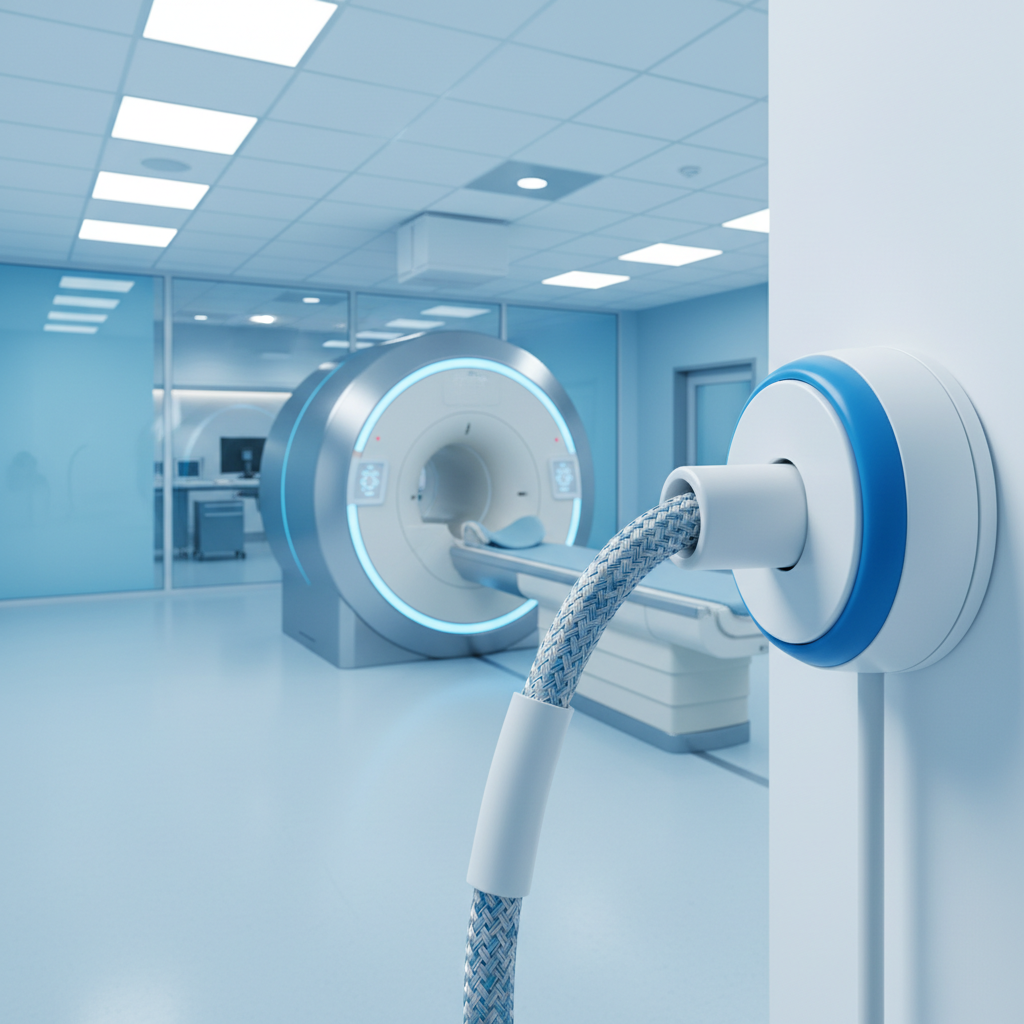
    The magnetic resonance imaging (MRI) suite is one of the most technologically advanced and potentially hazardous areas within a healthcare facility. The powerful magnetic field, essential for diagnostic imaging, can turn seemingly innocuous ferromagnetic objects into dangerous projectiles. This raises a critical question for facility managers and medical gas professionals: is your equipment, specifically items like retractable electrical receptacles, truly MRI compatible? While many components are designed for this environment, a critical and often overlooked part, the retractor cable, may not be. Amico, a major manufacturer, explicitly states its standard stainless steel retractable cable is not MRI compatible due to its ferromagnetic properties. This definitive guide will explore the nuances of retractable electrical receptacle MRI compatibility, explain the risks associated with certain materials, and outline the steps necessary to ensure a safe and compliant MRI environment. We will delve into relevant codes and standards, material science, and the verification processes required to protect patients and staff.

    Understanding MRI Compatibility Zones and Ferromagnetic Risks

    To manage the extreme environment of an MRI suite, the American College of Radiology (ACR) has established four distinct safety zones. Understanding these zones is the first step in mitigating risk.

    • Zone I: This area is freely accessible to the general public and poses no magnetic field hazard. It typically includes the entrance to the MRI facility.
    • Zone II: This is the interface between the publicly accessible Zone I and the strictly controlled Zones III and IV. It's a supervised area where patients and staff are screened for ferromagnetic items.
    • Zone III: Access to this zone is restricted to screened personnel and patients. The magnetic field is strong enough to pose a significant risk, and all equipment brought into this area must be approved as "MR Conditional" or "MR Safe."
    • Zone IV: This is the MRI scanner room itself, where the main magnetic field is located. Only "MR Safe" or essential "MR Conditional" equipment, under constant supervision, is permitted.

    The primary danger in Zones III and IV is the "missile effect," where the magnetic field attracts ferromagnetic objects with tremendous force and speed. Common items like oxygen cylinders, IV poles, and even floor buffers have been pulled into the magnet bore, causing catastrophic damage and severe injury. A retractable electrical receptacle, if not properly specified and installed, presents this exact risk. While the receptacle itself might be made from non-ferrous materials, the steel retractor cable is the weak link.

    Why this matters for compliance: Failure to control access and equipment in MRI zones is a major safety violation and liability risk. It contravenes ACR guidelines and the facility's own safety protocols. Ensuring every single component, down to the cable in a retractor, is non-ferromagnetic is a fundamental tenet of MRI safety.

    The Problem with Stainless Steel in Retractable Receptacles

    At first glance, stainless steel might seem like a safe choice. It's known for its corrosion resistance and durability. However, not all stainless steel is the same. The term "stainless steel" refers to a family of iron-based alloys containing a minimum of 10.5% chromium.

    There are several types, but the two most relevant here are:

    • Austenitic Stainless Steels (e.g., 304, 316): These are generally non-magnetic in their raw, annealed state. However, cold working, the process of strengthening the metal by changing its shape without heat, such as drawing it into a wire for a cable, can induce a phase change in the material, making it weakly ferromagnetic.
    • Ferritic and Martensitic Stainless Steels (e.g., 400 series): These types are inherently magnetic due to their crystalline structure.

    The retractable cables in many standard electrical receptacles are made from cold-worked stainless steel, often from the 300 series. While not as strongly magnetic as pure iron, this induced magnetism is more than sufficient for the powerful electromagnet of an MRI scanner to attract it. This is why manufacturers like Amico explicitly label their standard stainless retractors as "Not MRI Compatible."

    For a retractable receptacle to be truly MRI compatible, it must utilize a non-ferromagnetic material for the cable, such as a synthetic fiber like Kevlar or another non-magnetic alloy. These options are typically more expensive and must be specified at the time of purchase.

    How to Verify MRI Compatibility: Beyond the Spec Sheet

    Simply relying on a product's marketing name is not enough. Due diligence is required to prevent a catastrophic accident. Here are the actionable steps facility managers and installers must take:

    1. Always Request MRI-Specific Cut Sheets: When sourcing equipment for an MRI suite, demand documentation that explicitly states the product is "MR Safe" or "MR Conditional" and specifies the materials of all components.
    2. Physical Magnet Test: The most reliable, on-site test is the simplest. Use a powerful handheld magnet (stronger than a refrigerator magnet) to test the retractor cable before it is installed within Zone III or IV. If there is any attraction, the component is ferromagnetic and must not be used.
    3. Consult with ASSE 6030 Certified Professionals: The final verification of any medical gas or related equipment installation, including in an MRI suite, should be performed by an ASSE 6030 Certified Medical Gas Verifier. At Medical Testing Solutions, our team is certified to perform these crucial checks. A verifier will not only check for code compliance but also understands the unique material requirements for specialized areas like MRI suites. Learn more about our medical gas verification services.
    4. Review Installation Plans: During the design and construction phase, ensure that all equipment specified for the MRI suite is explicitly designated as MRI compatible. This should be a clear line item reviewed by the facility’s safety officer, the clinical engineering team, and your certified medical gas installation team.

    NFPA 99 and Other Relevant Standards

    While NFPA 99, the Health Care Facilities Code, is the primary guide for medical gas and vacuum systems, its guidance on MRI-specific equipment is less direct and more performance-based. It mandates that facilities are responsible for the safety and proper use of all systems.

    • NFPA 99, Chapter 5 (Gas and Vacuum Systems): This chapter outlines requirements for the installation, testing, and maintenance of these systems. While it doesn't call out MRI compatibility for electrical receptacles specifically, it requires that all system components be appropriate for the intended environment.
    • Facility Risk Assessment: The code places a strong emphasis on a facility-led risk assessment. An assessment for an MRI suite must include the projectile risk from ferromagnetic components. This makes the facility directly responsible for vetting every piece of equipment.

    Below is a comparison of materials commonly found in retractable mechanisms and their suitability for MRI environments:

    MaterialFerromagnetic?MRI Suite Compatible?Notes
    Carbon SteelYes (Strongly)NOCommon in generic industrial retractors. Never use.
    400-Series Stainless SteelYesNOFerritic/Martensitic structure is always magnetic.
    Cold-Worked 304/316 StainlessYes (Weakly)NOThe standard cable material. Not for MRI use.
    Annealed 304/316 StainlessNoYesRarely used for cables due to lower tensile strength.
    AluminumNoYesOften used for the housing/receptacle itself.
    Kevlar / Synthetic FiberNoYESAn excellent, albeit more expensive, alternative for the cable.
    BrassNoYesOften used for electrical components.

    The Role of the ASSE 6000 Series Certified Professional

    Ensuring safety in an MRI suite goes beyond just buying the right equipment; it involves proper installation and verification by qualified personnel. This is where the ASSE 6000 series of certifications becomes critical. An ASSE 6010 Certified Medical Gas Systems Installer has the training to understand the unique requirements of different healthcare environments. They are the first line of defense, ensuring that a non-compliant retractable receptacle is never installed in an MRI suite in the first place.

    Following installation, an ASSE 6030 Certified Medical Gas Systems Verifier provides the final, impartial check. Medical Testing Solutions provides these expert medical gas certification services to facilities across the country. A verifier will cross-reference the installed equipment against the project specifications and perform the necessary tests, including magnetic tests, to confirm compatibility. This independent verification is a crucial step in a facility's risk management program.

    Line Isolation Monitors (LIMs) and MRI Suites

    Retractable electrical receptacles in MRI suites are often part of an isolated power system. Because MRI procedures can be considered "wet locations" depending on the use of contrast dyes or other liquids, isolated power panels are used to minimize the risk of electric shock. A key component of these systems is the Line Isolation Monitor (LIM). The LIM continuously monitors the system for potential ground faults and provides an alarm before a dangerous situation can develop.

    It is imperative that the testing and maintenance of these LIMs are performed regularly as per NFPA 99 requirements. A faulty LIM can negate the safety benefits of the entire isolated power system. If your facility uses isolated power in its MRI suite, ensure you have a robust testing schedule in place. For expert assistance, explore our LIM testing services.

    Conclusion: A Non-Negotiable Commitment to Safety

    The question of retractable electrical receptacle MRI compatibility is a perfect example of the extreme attention to detail required to operate a safe MRI suite. While the receptacle housing may be compliant, the standard-issue stainless steel retractor cable is often ferromagnetic and poses a significant projectile risk. Facility managers, installers, and verifiers must be vigilant, moving beyond spec sheets to conduct physical tests and confirm the non-magnetic nature of every component.

    By adhering to ACR guidelines, conducting thorough risk assessments as mandated by NFPA 99, and engaging ASSE 6000 certified professionals for installation and verification, healthcare facilities can prevent catastrophic accidents. Medical Testing Solutions stands as your partner in this process, offering not only a range of compliant medical gas products but also the certified expertise to test, verify, and maintain your critical life safety systems.

    Don't leave MRI safety to chance. To ensure your facility is compliant and your equipment is truly safe, contact our team of experts today for a quote or to schedule an inspection.

    Contact Medical Testing Solutions at (754) 315-1078 or request a quote online.


    Frequently Asked Questions

    Many types of stainless steel, particularly those cold-worked to form a cable, are weakly ferromagnetic. This means they can be attracted by the powerful magnet in an MRI scanner, creating a dangerous projectile risk known as the "missile effect."

    The most reliable on-site method is to use a strong handheld magnet. Bring the magnet close to the cable; if you feel any pull or attraction, the cable is ferromagnetic and not safe for use in an MRI suite (Zone III or IV).

    "MR Safe" items are made of materials that are completely non-magnetic, posing no known hazards. "MR Conditional" items may have some magnetic components but are safe under specific conditions of use (e.g., must be fixed in place, kept beyond a certain distance from the magnet bore).

    Safe alternatives for the retractable cord include non-ferromagnetic materials like synthetic fibers (e.g., Kevlar) or certain non-magnetic metal alloys. These must be specified when ordering equipment for an MRI environment.

    An ASSE 6030 Certified Medical Gas Systems Verifier is qualified to inspect and test the installation of medical gas and related equipment, including verifying material compatibility for specialized areas like MRI suites. This is a service Medical Testing Solutions provides.

    NFPA 99 requires facilities to perform a risk assessment to ensure all equipment is appropriate for its environment. While it doesn't name specific components, this performance-based requirement makes the facility responsible for ensuring every part, including a retractor cable, is non-ferromagnetic to prevent projectile incidents.

    This article is provided for educational purposes and reflects industry standards as of publication. Always verify against current NFPA 99, CGA, and AHJ requirements. Medical Testing Solutions is ASSE-certified and ready to help — contact us for facility-specific guidance.

    Request a quote for your facility

    Talk with Medical Testing Solutions about your next inspection, repair or equipment request.

    Get a quote in 1 business day

    I agree to receive text messages from Medical Testing Solutions, L.L.C. at the phone number provided, including informational and marketing messages. Consent is not a condition of purchase. Message frequency varies. Message & data rates may apply. Reply STOP to opt out or HELP for help. See our Privacy Policy and Messaging Terms.

    Prefer to talk? Call (754) 315-1078

    Related articles