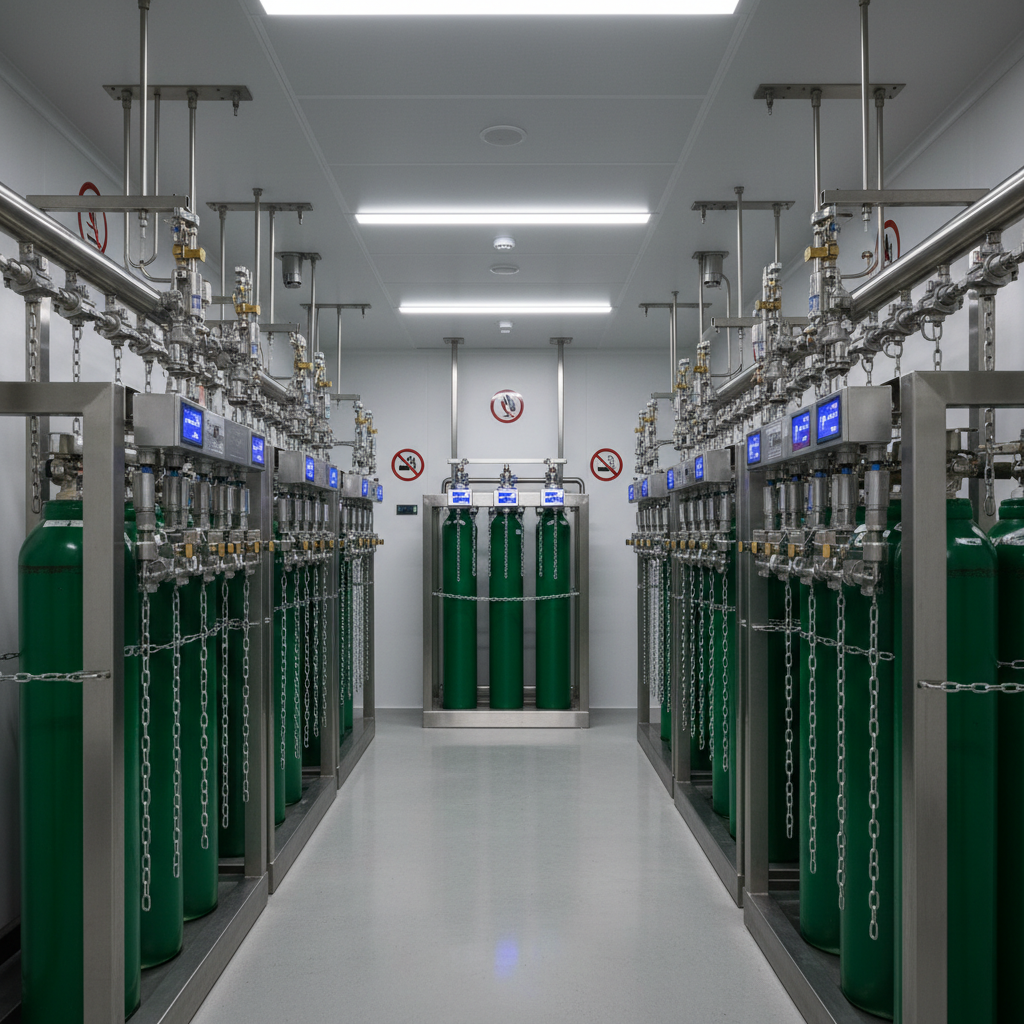
Oxygen Tank Room Inspection Weston FL: NFPA 99 Compliance
Medical Testing SolutionsNovember 2, 202613 min read
Share
Securing medical gas storage areas is one of the most critical life-safety responsibilities for healthcare administrators, facilities engineers, and clinical managers. Whether operating a hospital surgical tower, an ambulatory surgical center, or an outpatient clinic, facilities in Broward County must maintain rigorous compliance for their gas manifold and storage environments. Conducting a comprehensive oxygen tank room inspection in Weston FL requires strict adherence to NFPA 99 Health Care Facilities Code, specifically Chapter 5.1.3.5, as well as CGA (Compressed Gas Association) standards.
Medical gas storage rooms house substantial volumes of oxidizers and high-pressure cylinders. A single code violation, such as improper mechanical ventilation, compromised fire barriers, or unchained cylinders, can lead to immediate AHCA (Agency for Health Care Administration) citations, Joint Commission findings, or catastrophic combustion hazards.
In this comprehensive guide, you will learn the exact NFPA 99 5.1.3.5 physical and mechanical mandates for medical gas storage rooms, regional considerations for Weston and South Florida healthcare systems, common inspection deficiencies, and how Medical Testing Solutions delivers ASSE-certified inspections to keep your facility audit-ready.
What Is NFPA 99 5.1.3.5 and Why Does It Apply to Your Oxygen Room?
NFPA 99 dictates the performance, maintenance, and testing criteria for healthcare gas systems based on risk categories (Category 1 through Category 4). Section 5.1.3.5 specifically addresses the location, physical construction, environmental conditions, and mechanical requirements of central supply system locations and storage areas for positive-pressure medical gases.
In Weston, Florida, healthcare facilities range from major hospital networks near Royal Palm Boulevard to specialized cosmetic and dental surgical suites off Weston Road. Regardless of your building footprint, if you store cylinders containing pure oxygen, nitrous oxide, medical air, carbon dioxide, or bulk liquid oxygen (VIE), Section 5.1.3.5 governs the space where those vessels reside.
Why this matters for compliance: AHCA and Joint Commission surveyors treat medical gas storage as high-risk physical plant zones. Failure to comply with NFPA 99 5.1.3.5 can result in immediate Condition-level deficiencies, halting surgical operations and triggering costly emergency remediations.
| Diagram text |
|, |
| CORE MANDATES OF NFPA 99 SECTION 5.1.3.5 |
| 1. Fire-Resistance Ratings: 1-hour or 2-hour separations (NFPA 220/101) |
| 2. Dedicated Mechanical Ventilation: Continuous negative pressure / CFM |
| 3. Electrical Systems: Class-appropriate fixtures, emergency circuits |
| 4. Secure Cylinder Physical Restraints: Metal racks, chains, collars |
| 5. Environmental Controls: Temperature limits (max 125°F, min 20°F) |
Core Requirements for Medical Gas Storage and Manifold Rooms
When our ASSE 6030 verifiers and ASSE 6040 maintenance technicians evaluate a facility in Weston, we systematically assess five core pillars of physical compliance:
1. Structural and Fire Separation Enclosures
Per NFPA 99 5.1.3.5.1, locations for central supply systems and the storage of positive-pressure gases must meet specific structural ratings:
Indoor Storage Areas: Must be constructed with a minimum 1-hour fire-resistance-rated enclosure if storing less than 3,000 cu ft of nonflammable gas. If total gas capacity equals or exceeds 3,000 cu ft (roughly 12-14 full H-cylinders), the room must feature a 2-hour fire-resistance-rated enclosure.
Doors and Openings: Doors must carry a fire protection rating corresponding to the wall assembly (minimum 45-minute rating for 1-hour walls; 90-minute rating for 2-hour walls) and must be self-closing, latching, and kept clear of obstructions at all times.
Prohibited Materials: Combustible items, cardboard boxes, packing material, oils, and grease are strictly forbidden inside central supply rooms.
2. Dedicated Ventilation Requirements
Ventilation failures represent the most common reason healthcare facilities fail their medical gas audit. Under NFPA 99 5.1.3.5.11:
The storage room must be continuously ventilated to prevent the accumulation of oxygen-enriched or asphyxiating atmospheres.
Mechanical ventilation is mandatory when natural ventilation (direct exterior openings) is unavailable or insufficient.
The system must provide a minimum of one cubic foot per minute per square foot (1 CFM/sq ft) of room area, or a minimum calculated number of air changes per hour (ACH), typically at least 8 to 10 ACH, exhausting directly to the outdoors.
Supply air louvers or grilles must be located within 1 foot (300 mm) of the floor to facilitate proper gas dilution and air sweeping.
The exhaust system must be connected to the facility’s emergency essential electrical system (EES).
3. Electrical and Environmental Safeguards
Oxygen is a vigorous accelerator of combustion. Although medical oxygen itself is not flammable, oxygen-enriched environments drop ignition temperatures drastically:
Electrical switches, lighting, and outlets must comply with NFPA 70 (National Electrical Code).
Heat sources must not exceed 125°F (52°C) inside the enclosure, and rooms housing liquid cylinders must not fall below 20°F (-7°C).
Open-flame devices, unapproved electric heaters, and ignition sources are banned.
Where clinical isolation transformers or isolated power panels are located near gas distribution points, routine line isolation monitor testing must be coordinated to ensure stray leakage currents do not introduce electrical arcing risks.
Comparison: NFPA 99 Requirements by Stored Gas Volume
Understanding your facility's threshold is essential to avoiding structural over-design or under-compliance. Below is a direct comparison of physical plant requirements:
Parameter
Under 3,000 cu. ft. (~1-12 H-Tanks)
Over 3,000 cu. ft. (>12 H-Tanks or Bulk)
Exterior Enclosure / Cage
Fire Wall Rating
1-Hour Fire Barrier (NFPA 220)
2-Hour Fire Barrier
Security fencing (min. 5 ft) or walls
Door Assembly
45-Minute Rated, Self-Closing
90-Minute Rated, Self-Closing
Lockable gate or secure access
Mechanical Exhaust
Required if no natural vents (1 CFM/sq ft)
Continuous dedicated exhaust (1 CFM/sq ft)
Natural ventilation acceptable
Emergency Power
Recommended / Required if EES
Mandatory for exhaust fan on EES
N/A (unless monitored digitally)
Signage
NFPA 704 Diamond + Warning Signs
NFPA 704 + Warning + Restricted Access
Weather-resistant NFPA 704 placards
Cylinder Separation
Full/Empty separation required
Full/Empty + Oxidizer/Inert segregation
Full/Empty + Weather protection
For outpatient surgical facilities in Weston expanding their capacity, transitioning from small bank manifolds to micro-bulk liquid setups often pushes volume over the 3,000 cu ft mark, automatically triggering the requirement for a 2-hour rated fire enclosure. When altering these rooms, facility teams must secure professional medical gas installation services to ensure all piping, bulk heads, and penetrations adhere to ASSE 6010 protocols.
Broward County & Weston Environmental Considerations for Oxygen Storage
Weston’s subtropical climate presents unique engineering and compliance hurdles for medical gas infrastructure that Northern facilities never face:
1. High Ambient Heat and Humidity
South Florida summer temperatures consistently hover in the low 90s, with rooftop and exterior mechanical spaces reaching significantly higher heat indexes. High ambient heat increases vapor pressure inside compressed gas cylinders and accelerates cryogenic boil-off in liquid oxygen vessels. NFPA 99 5.1.3.5.11(1) states storage areas must remain below 125°F. If your Weston facility's tank room ventilation pulls unconditioned, super-heated air across the manifold, heat build-up can challenge relief valves.
2. Hurricane and Wind-Borne Debris Codes
Broward County enforces the High-Velocity Hurricane Zone (HVHZ) provisions of the Florida Building Code. If your medical gas storage includes exterior liquid cryogenic pads or outdoor enclosed tank cages:
Protective chain-link enclosures or canopy structures must be engineered to withstand 170+ mph wind loads.
Tanks, vaporizers, and manifold tie-downs must be seismically and hurricane-anchored with engineer-certified concrete footers.
Exterior piping runs entering the building envelope must be sealed with listed firestops and hurricane-rated penetration collars.
3. AHCA Region 10 Enforcement
The Agency for Health Care Administration (AHCA) inspects hospitals and outpatient surgical centers in Weston with rigorous oversight. AHCA surveyors consistently target:
Expired or missing inspection tags on bulk manifolds.
Unsealed wall penetrations where medical gas line pipes pass into adjacent corridors.
Lack of current, annual third-party testing documentation verifying exhaust fan flow rate (CFM).
Partnering with an experienced team for annual medical gas inspections guarantees you hold verifiable, dated reports signed by credentialed technicians before AHCA inspectors arrive.
Actionable Step-by-Step Checklist for Oxygen Room Inspections
When Medical Testing Solutions performs an oxygen tank room inspection in Weston FL, our ASSE 6030 and 6040 credentialed specialists execute this comprehensive inspection protocol:
| Diagram text |
|, |
| ASSE-CREDENTIALED ROOM AUDIT WORKFLOW |
| [STEP 1] Doorway & Access: Signage, self-closer, swing clearance |
| [STEP 2] Restraint Integrity: Chains, unistrut, floor racks |
| [STEP 3] Inventory Segregation: Full vs. Empty, Oxidizers vs. Gases |
| [STEP 4] Airflow & Exhaust: Anemometer testing of CFM, negative draft |
| [STEP 5] Manifold Inspection: Regulators, pigtails, relief valves |
| [STEP 6] Penetration Inspection: Intumescent firestop collars at piping |
Step 1: Signage and Access Control
Confirm Warning Signage: NFPA 99 requires warning placards on the outside of all doors leading into gas storage areas. Placards must state: "NO SMOKING," "OXYGEN, NO OPEN FLAMES," and display the proper NFPA 704 hazard diamond (Health: 3 or 0 depending on mix; Flammability: 0; Instability: 0; Special: OX).
Verify Door Operation: Test self-closing hardware. The door must close and latch fully without manual intervention from any open position.
Inspect Keycard / Key Access: The room must remain locked to unauthorized personnel at all times.
Step 2: Cylinder Restraints and Physical Protection
Assess Racks and Chains: Per CGA P-1 and NFPA 99 5.1.3.3.2, all cylinders, regardless of size or whether they are full or empty, must be individually secured.
Inspect Restraint Height: Chains or heavy-duty metal bars must secure cylinders around their upper third (above the midpoint). Fabric straps or zip-ties are strict violations.
Check Valve Caps: Protective metal valve caps must be securely hand-tight on all stored cylinders not actively manifolded.
Step 3: Cylinder Segregation and Housekeeping
Full vs. Empty Separation: Dedicated, clearly labeled zones must distinguish "Full" from "Empty" cylinders. Partial cylinders must be managed according to defined facility protocols.
Incompatible Gas Segregation: Oxygen and nitrous oxide (oxidizers) must not be stored adjacent to flammable gases or combustible materials. Maintain at least 20 feet of separation or a 1-hour fire barrier.
Cleanliness Check: Ensure no electrical cords, janitorial carts, cardboard boxes, or employee personal items occupy the space.
Step 4: Ventilation and Mechanical Exhaust Verification
Measure Exhaust Velocity: Using a calibrated thermal anemometer, our verifiers measure the linear airflow and calculate total CFM to verify compliance with the 1 CFM/sq ft minimum threshold.
Confirm Directional Negative Pressure: Verify that air moves inward from surrounding corridors into the storage room, preventing concentrated oxygen leakage into patient zones.
Louver Inspection: Verify supply air louvers are clear of debris and within 12 inches of the floor.
Step 5: Manifold Header and Piping Physical Audit
Inspect Flexible Pigtails: Look for kinked, frayed, or leaking copper or braided stainless steel pigtails connected to manifold headers. Pigtails must be replaced on strict maintenance schedules per manufacturer and NFPA specifications.
Pressure Relief Discharge: Verify that safety relief valves on headers and regulators are piped to the outside atmosphere (NFPA 99 5.1.3.5.6) rather than venting directly into the storage room.
Master Alarm Interfacing: Test pressure switches to verify line drops immediately alert the facility's local and master alarm panels.
Top 5 Deficiencies Found in Weston Oxygen Storage Rooms
During routine evaluations across South Florida facilities, our inspectors routinely uncover avoidable violations. Review these common pitfalls to keep your team proactive:
| Diagram text |
|, |
| 1. Combustible Clutter Stored in Room (Cardboard, Plastics) |
| 2. Defective or Inactive Mechanical Exhaust Systems |
| 3. Unchained / Improperly Restrained Backup Cylinders |
| 4. Missing or Broken Firestop at Wall Pipe Penetrations |
| 5. Unpiped or Incorrectly Vented Pressure Relief Lines |
1. Combustible Clutter Stored in Room
It is exceptionally common to find facility staff using medical gas closets for overflow storage, stashing paper towel boxes, plastic supply bins, or maintenance ladders. Cardboard in an oxygen-enriched environment represents an extreme fire hazard. AHCA will cite this violation immediately during unannounced audits.
2. Defective or Inactive Mechanical Exhaust Systems
Exhaust fans mounted on facility roofs frequently fail unnoticed because staff rarely enter gas rooms for extended periods. When fan belts break or motors burn out, air exchange drops to zero. Routine checks through an ongoing medical gas maintenance service prevent silent ventilation failures from persisting.
3. Unchained or Improperly Restrained Cylinders
Delivery personnel often drop off replacement E-tanks or H-cylinders without securing them in racks, leaving loose tanks freestanding against walls. A knocked-over cylinder with a sheared valve stem instantly becomes an unguided projectile capable of breaching walls.
4. Compromised Firestop Assemblies at Wall Penetrations
When new telecom, electrical, or plumbing lines are added to a facility, contractors often drill through the gas room's fire barriers without applying approved intumescent firestop systems around the penetrations. This destroys the integrity of the required 1-hour or 2-hour rating.
5. Relief Valves Discharging Indoors
High-pressure cryogenic or gaseous manifolds feature relief valves designed to protect regulators from over-pressurization. Discharging these lines inside an enclosed room can cause rapid oxygen displacement or hyper-enrichment, posing an immediate danger to anyone who opens the door.
The Role of ASSE 6000 Certified Professionals in Your Facility
Healthcare facility compliance cannot be handled by general mechanical contractors or standard HVAC technicians. NFPA 99 Section 5.1.14 specifically references the ASSE Series 6000 Professional Qualification Standard, which governs medical gas system personnel.
| Diagram text |
|, |
| ASSE 6000 CREDENTIALS EXPLAINED |
| * ASSE 6010 Installer: Certified to braze, pipe, and construct systems |
| * ASSE 6020 Inspector: Employed by AHJ/agency to audit installations |
| * ASSE 6030 Verifier: Independent expert who tests and signs off rooms |
| * ASSE 6040 Maintenance: Certified to service, repair, and PM systems |
When contracting for an oxygen tank room inspection in Weston FL, your facility must ensure the technician holds an active ASSE 6030 Medical Gas Systems Verifier or ASSE 6040 Maintenance Personnel certification.
At Medical Testing Solutions, our technicians carry dual ASSE 6030 and ASSE 6040 credentials. Whether you require an initial acceptance verification following a surgical center buildout via our medical gas verification service, or annual recertification via our formal medical gas certification program, we provide the documented compliance evidence required by accreditation bodies.
In addition to central manifold rooms, outpatient surgery centers frequently operate ancillary rooms with specialized anesthesia devices. If your facility utilizes dental sedation, our team also provides specialized dental flowmeter repair and calibration to maintain complete compliance across every clinical delivery point.
Schedule Your Oxygen Tank Room Inspection in Weston FL
A compliant medical gas storage room protects your clinical staff, your facility's physical plant, and the vulnerable patients relying on your life-support gas systems. Avoid unexpected AHCA citations and combustion hazards by partnering with South Florida's trusted medical gas authority.
Medical Testing Solutions is headquartered locally in Fort Lauderdale, serving hospital systems, ambulatory surgery centers, and specialty clinics throughout Weston and Broward County. From complete ASSE 6030 verifications to mechanical exhaust audits, manifold repairs, and requesting an inspection quote, our certified specialists ensure your facility maintains uncompromised safety.
Contact our engineering and compliance team today:
Headquarters: 501 E Las Olas Blvd, Ste 300, Fort Lauderdale, FL 33301
Frequently Asked Questions
Under NFPA 99 5.1.3.5.11, dedicated mechanical ventilation for indoor gas storage areas must provide at least one cubic foot per minute per square foot (1 CFM/sq ft) of room floor area, with dedicated exhaust ducted directly to the outside. Supply air louvers must be located within 12 inches of the floor to ensure thorough cross-ventilation, and the exhaust fan must be tied to the emergency power system.
NFPA 99 requires periodic inspection and preventative maintenance of all medical gas central supply systems. While healthcare facility staff should conduct daily and weekly visual checks of cylinder restraints and manifold pressures, an exhaustive, third-party inspection by an ASSE 6030/6040 certified professional must be performed annually. Florida AHCA surveyors mandate complete documentation of these annual inspections.
Yes, full and empty cylinders can reside in the same room, provided they are strictly segregated and clearly designated. NFPA 99 requires physical separation between full and empty containers, with distinct, permanent signage indicating their status. They must not be intermingled in the same storage rack or chain section.
The required rating depends on the total volume of gas stored. If your total positive-pressure medical gas inventory is less than 3,000 cubic feet (standard atmospheric pressure), NFPA 99 allows a 1-hour fire-resistance-rated enclosure. If your total inventory equals or exceeds 3,000 cubic feet (approximately 12 to 14 standard H-cylinders or micro-bulk systems), you must have a 2-hour fire-resistance-rated enclosure.
If an AHCA surveyor discovers code violations—such as non-functioning ventilation, improper firestops, or unchained cylinders—they will issue a Form CMS-2567 Statement of Deficiencies. Depending on severity, this can lead to an Immediate Jeopardy citation, mandatory plans of correction with rapid 10-day turnaround deadlines, or temporary suspension of surgical accreditation until remediated and verified by an ASSE-certified professional.
Request a quote for your facility
Talk with Medical Testing Solutions about your next inspection, repair or equipment request.