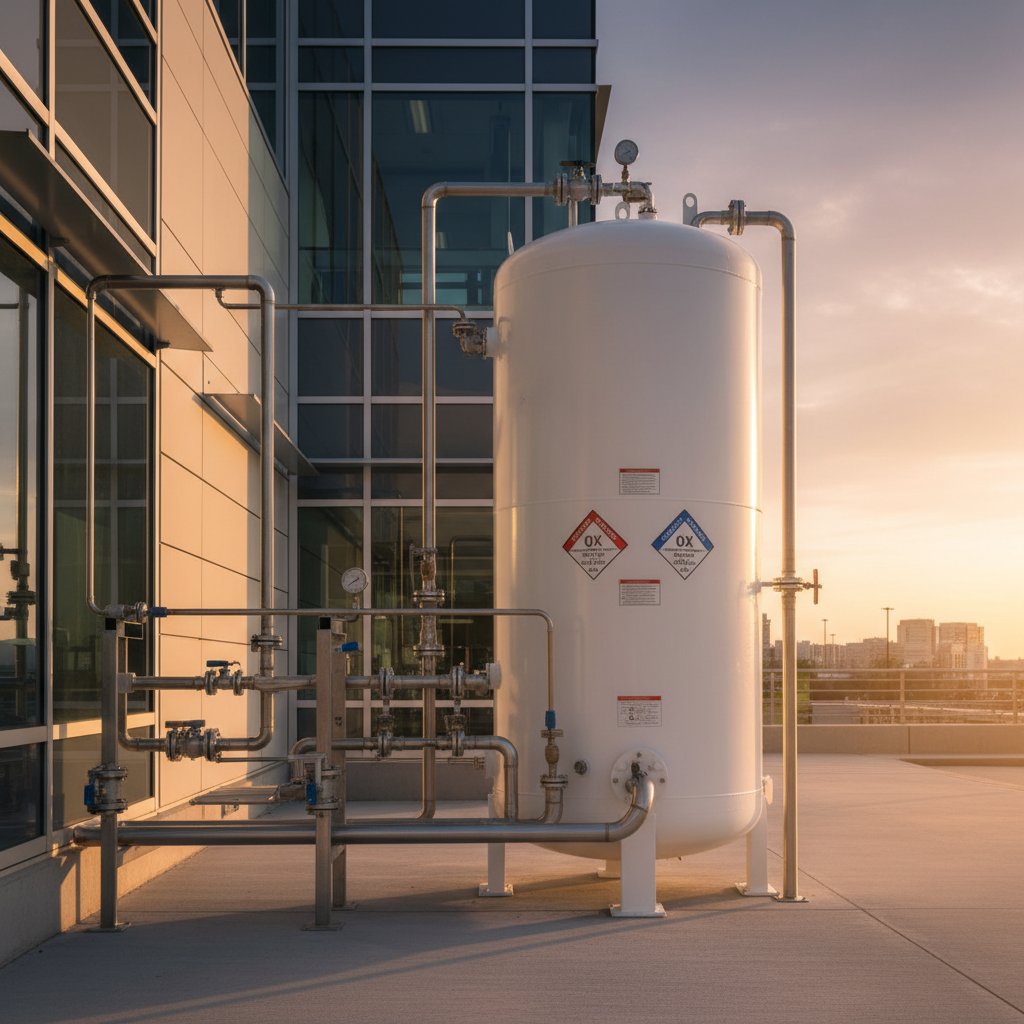
Oxygen Tank Room Inspection in Stuart, FL: A Compliance Guide
Medical Testing SolutionsSeptember 26, 20267 min read
Share
Introduction: Decoding NFPA 99 for Oxygen Tank Room Compliance in Stuart, FL
For any healthcare facility in Stuart, Florida, from hospitals to surgical centers, the safe storage of bulk oxygen is a non-negotiable aspect of patient care and operational safety. Governed by a stringent set of codes, primarily the National Fire Protection Association's NFPA 99, Health Care Facilities Code, ensuring your bulk oxygen storage system is compliant is not just a best practice, it's a legal requirement. A failure to comply can result in costly fines, operational shutdowns, and most critically, a significant risk to patient and staff safety. This guide provides a definitive overview of the requirements for an oxygen tank room inspection, focusing specifically on NFPA 99, 2024 Edition, Chapter 5.1.3.5. You will learn the critical design, location, security, and maintenance checks that an ASSE 6030 certified technician from Medical Testing Solutions performs to keep your facility safe and compliant.
Understanding "Bulk Oxygen Systems" Under NFPA 99
First, what does NFPA 99 consider a "bulk" system? The definition is crucial as it triggers a specific set of rigorous standards. A bulk oxygen system is defined as an assembly of equipment that has a storage capacity of more than 20,000 cubic feet (566 m³) of oxygen (including unconnected reserves on site) at standard temperature and pressure. This typically includes large outdoor cryogenic liquid oxygen tanks but can also apply to high-pressure cylinder banks. If your Stuart facility's system exceeds this threshold, the requirements outlined in NFPA 99 5.1.3.5 are mandatory.
Location and Construction: The First Line of Defense
The physical location and construction of your oxygen tank room or outdoor enclosure are fundamental to safety. An inspector will verify several key aspects based on NFPA 99, Chapter 5.1.3.5.2:
Outdoor Placement: The preferred and most common location is outdoors, either on a concrete pad or in a dedicated, locked enclosure.
Required Distances: The system must be located at specific minimum distances from buildings, public sidewalks, and other combustibles. For instance, a system over 20,000 cubic feet must be at least 50 feet from any building of combustible construction and 10 feet from any public sidewalk.
Surface and Foundation: The storage system must be installed on a noncombustible surface, typically a concrete pad. This prevents fire spread and ensures a stable foundation for the heavy equipment.
Can Bulk Oxygen Be Stored Indoors?
While outdoor placement is standard, NFPA 99 does allow for indoor storage under very strict conditions (5.1.3.5.4). If a bulk system is located indoors, it must be in a dedicated room constructed of noncombustible materials with a fire-resistance rating of at least one hour. The room must also have its own ventilation system that vents directly to the outdoors. These installations are rare due to the complexity and cost, but our medical gas installation team is certified (ASSE 6010) to handle such complex scenarios.
Why this matters for compliance: Improper location is one of the most frequent and serious citations. It significantly increases the risk of a catastrophic event in case of a fire or physical impact. An inspector will use a measuring tape to verify these distances precisely.
Security and Access Control: Preventing Unauthorized Tampering
A bulk oxygen supply represents a significant hazard if tampered with. It's a high-pressure, oxidizing agent that can intensify fires and pose a risk of explosion. An ASSE-certified inspector will meticulously check the security measures in place.
Fencing and Enclosures: Outdoor systems must be secured within a locked enclosure, typically a chain-link fence at least 6 feet high, to prevent unauthorized access.
Signage: Clear, visible signage is mandatory. You must have signs indicating "Oxygen - No Smoking - No Open Flames" and other warnings as required by NFPA and CGA (Compressed Gas Association) standards. The inspector will verify that the signs are legible and placed at all entrances and on the storage unit itself.
Authorized Personnel: Access to the tank room or enclosure must be strictly limited to trained and authorized personnel. This is a procedural check an inspector will verify with facility management.
Electrical and Ignition Source Control
Oxygen is not flammable, but it is a powerful oxidizer that can cause other materials to ignite more readily and burn hotter and faster. Therefore, controlling ignition sources is paramount.
No Smoking or Open Flames: This is the most basic rule. The area within 25 feet of the bulk oxygen system must be designated as a no-smoking and no-open-flame zone.
Electrical Systems: All electrical equipment installed within 15 feet of the bulk tank must be specifically rated for the environment. An inspector will check for proper grounding of the system and ensure there are no unapproved electrical devices, extension cords, or other potential ignition sources nearby.
Combustible Materials: The area around the oxygen tank must be kept clear of combustible materials like weeds, grass, leaves, and flammable liquids (e.g., oil, gasoline). A 15-foot clear zone is generally required.
System Components and Maintenance Checks
Beyond the room itself, the components of the bulk oxygen system are subject to inspection. This is a core part of our comprehensive annual medical gas inspections.
An inspector from Medical Testing Solutions will examine:
Piping and Valves: Checking for leaks, corrosion, or physical damage.
Pressure Relief Valves: Ensuring they are correctly installed, pointed in a safe direction, and have not been tampered with.
Vaporizers: Verifying that they are functioning correctly and are free from ice buildup that could impede performance.
Alarms: Bulk systems are required to have alarm systems that indicate when the primary supply is low and the reserve supply is in use. These alarms must be tested to ensure they report to a location that is monitored 24/7.
NFPA 99 vs. ASSE 6000: A Comparison
It's helpful to understand the relationship between these two key standards.
Standard
Focus
Who It's For
Application in Inspection
NFPA 99
What to do: Sets the minimum safety requirements for the entire medical gas system, from source to patient. It's the "rulebook" for design, installation, and performance.
Healthcare facilities, engineers, designers.
The inspector uses NFPA 99 as the checklist to evaluate safety and compliance.
ASSE 6000 Series
Who can do it: Defines the qualifications and certifications for personnel who install, inspect, maintain, or verify medical gas systems.
Technicians, inspectors, verifiers, instructors.
Your inspector must hold an ASSE 6030 (Verifier) or 6040 (Maintenance) credential to be qualified to perform this work.
Preparing for Your Oxygen Tank Room Inspection
To ensure a smooth inspection process in your Stuart facility, you can take several proactive steps:
Clear the Area: Ensure the area around the tank is free of all combustible materials (grass, weeds, storage).
Check Your Fences: Walk the perimeter of your enclosure. Is the gate locked? Is the fence intact?
Verify Signage: Are all required "No Smoking" and "Oxygen" signs present and clearly visible?
Review Your Logbook: Have your maintenance and delivery logs available for the inspector to review.
Confirm Alarm Function: Know where your alarm panels are located and confirm they are active and monitored.
Of course, the best way to prepare is to partner with a certified provider like Medical Testing Solutions. We not only perform the official medical gas certification and inspection but also offer maintenance services to fix any issues we find, providing a complete compliance solution.
Get a Quote for Your Stuart, FL Inspection
Don't leave the safety of your patients and the compliance of your Stuart-area facility to chance. An oxygen tank room inspection is a critical task that demands certified expertise. The team at Medical Testing Solutions holds the ASSE 6030 and 6010 certifications required to ensure your system meets every NFPA 99 requirement. We provide thorough,-by-the-book inspections and a clear, actionable report.
Contact us today to schedule your inspection and ensure your bulk oxygen system is safe, compliant, and ready to serve your patients. Call us at (754) 315-1078 or request a quote online to get started.
Frequently Asked Questions
A comprehensive inspection of the central supply system by a qualified technician should be performed annually as part of your facility's routine medical gas system maintenance. A full system verification is also required for any new installation or modification to the system.
According to NFPA 99, inspections and maintenance must be performed by qualified, competent individuals. The industry standard for this qualification is an ASSE 6000 series credential, such as an ASSE 6030 Verifier or ASSE 6040 Maintenance Personnel certification.
The primary risk is not that the oxygen itself will explode, but that it will greatly accelerate the combustion of any nearby fuel. A small spark near an oil leak or dry grass in an oxygen-enriched atmosphere can become a large, intense fire almost instantly.
No. The room or enclosure must be for the exclusive use of the oxygen system. Storing other items, especially combustible materials like cardboard boxes or flammable liquids, is a serious violation and safety hazard.
The inspector will provide a detailed report of the deficiencies. Depending on the severity, you may be required to take immediate corrective action. Medical Testing Solutions can provide a quote for and perform the necessary repairs to bring your system back into compliance.
Yes. While we are headquartered in Fort Lauderdale, Medical Testing Solutions provides medical gas services, including inspections, maintenance, and verification, throughout Florida and beyond.
Request a quote for your facility
Talk with Medical Testing Solutions about your next inspection, repair or equipment request.