Healthcare facilities in Plantation, FL, rely on a steady, safe supply of medical oxygen. The heart of this system is often a bulk oxygen storage room. But is yours compliant? According to the National Fire Protection Association (NFPA) 99, Health Care Facilities Code, these critical areas are subject to stringent regulations to ensure the safety of patients, staff, and the public. An oxygen-rich environment poses significant fire risks, making proper system design, installation, and maintenance non-negotiable. This guide will walk you through the essential requirements for an oxygen tank room inspection, covering NFPA 99 5.1.3.5 standards, key safety components, and the inspection process. You will learn what ASSE-certified technicians look for and how to ensure your facility remains safe and compliant.
Oxygen Tank Room Inspection Plantation FL: A Guide to NFPA Compliance
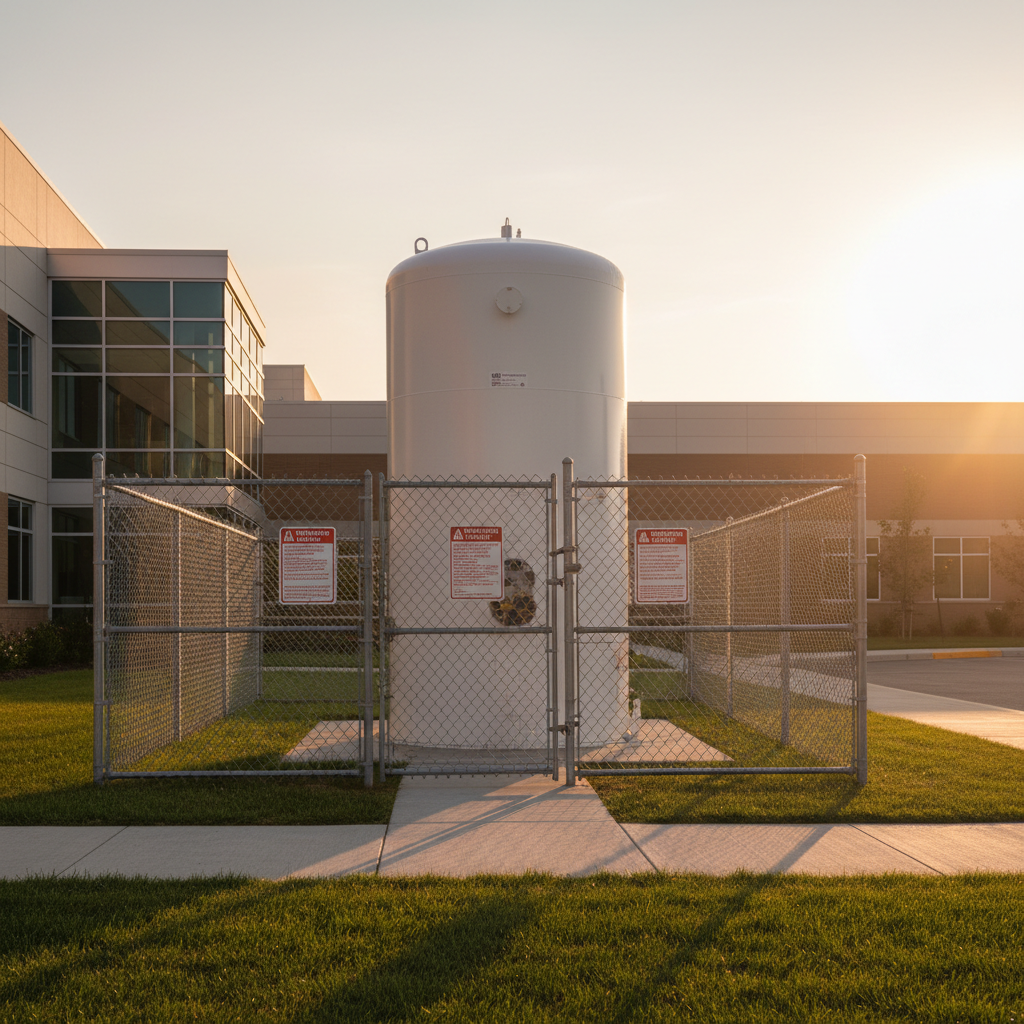
What is a Bulk Oxygen System?
A bulk oxygen system is defined by NFPA 99 as an assembly of equipment, such as oxygen containers, pressure regulators, vaporizers, and manifolds, that has a storage capacity of more than 20,000 cubic feet of oxygen (including reserves) at standard temperature and pressure. These systems are the lifeblood for hospitals, surgery centers, and other large healthcare facilities, providing a continuous supply of medical-grade oxygen to patient rooms, operating theaters, and emergency departments. Given the volume of oxidizing gas stored, these rooms are designated as central supply systems and must adhere to strict safety codes.
Cryogenic Liquid vs. High-Pressure Gas Cylinders
Bulk oxygen is typically stored in one of two forms:
- Cryogenic Liquid Oxygen: Stored at extremely low temperatures (below -297°F or -183°C) in large, vacuum-insulated tanks called dewars. This is the most common method for high-volume users.
- High-Pressure Gas Cylinders: Multiple large cylinders connected to a manifold system. While less common for true bulk storage, facilities may use large banks of H-cylinders as their primary or secondary supply.
Medical Testing Solutions has the expertise to inspect, test, and certify all types of medical oxygen systems, ensuring they meet the highest safety standards.
Why this matters for compliance: NFPA 99 (5.1.3.3) outlines specific location and construction requirements for central supply systems. An inspection verifies that your system, regardless of type, is situated and housed correctly to minimize risk.
Key NFPA 99 Requirements for Oxygen Room Inspections
An oxygen tank room inspection is not a cursory glance. It is a detailed review based on the NFPA 99 Health Care Facilities Code, primarily chapter 5. An ASSE 6030 certified medical gas systems verifier will assess dozens of points to ensure safety and functionality. Here are some of the most critical areas covered during an inspection.
Location and Construction (NFPA 5.1.3.3.2)
The location of your bulk oxygen supply system is the first line of defense against accidents. Inspectors will verify:
- Outdoor Enclosure: Systems must be located outdoors, in a specifically designated and secured area. They cannot be located inside the building.
- Distance Requirements: The system must be placed at specific minimum distances from buildings, public sidewalks, parked vehicles, and areas of public assembly. This is to protect the public and property in case of a leak or system failure.
- Security: The area must be secured with a fence or wall to prevent unauthorized access. Warning signs must be posted, indicating "No Smoking" and "No Open Flames."
System Components and Safety Features
The verifier will meticulously examine the physical components of the oxygen system.
- Pressure Relief Valves: These are critical safety devices designed to vent excess pressure safely. The inspector checks that they are correctly installed, pointed in a safe direction, and have unobstructed outlets.
- Piping and Connections: All piping must be made of materials suitable for oxygen service (e.g., copper type K or L) and properly joined (brazed). The inspector looks for signs of leaks, corrosion, or physical damage.
- Emergency Shutoff Valve (ESOV): A clearly marked and accessible valve must be located to shut off the oxygen supply to the building in an emergency. Its location is critical and must be known by facility staff.
- Alarms and Monitoring: The system must be connected to the facility's master alarm system, as required by NFPA 99. The inspector will verify that alarms for high/low pressure and system changeover are functioning correctly.
Ventilation and Electrical Systems
Proper ventilation and safe electrical components are crucial for mitigating fire risk.
- Ventilation: The enclosure must have adequate natural or mechanical ventilation to prevent the accumulation of oxygen.
- Electrical Devices: All electrical equipment, including lighting and switches, located within the enclosure must be suitable for the environment and meet specific code requirements to prevent ignition sources.
Here is a comparison of some key code requirements:
| Feature | NFPA 99 Requirement | Why It's Important |
|---|---|---|
| Location | Outdoors, secured, specific distances from public areas | Prevents public exposure and reduces property damage risk. |
| Signage | "No Smoking," "No Open Flames," "Medical Oxygen" | Warns personnel and the public of the specific hazards. |
| Piping Material | Cleaned, plugged, and capped Type K or L Copper | Ensures material compatibility with oxygen and prevents contamination. |
| Shutoff Valve | Accessible emergency shutoff valve (ESOV) | Allows for rapid system isolation in an emergency. |
| Alarms | Connected to facility master alarms | Provides immediate notification of system malfunction to facility staff. |
The Annual Inspection Process
For facilities in Plantation and across Florida, maintaining a compliant oxygen storage system requires regular attention. An annual medical gas inspection is a cornerstone of a safe facility management program. During this process, a certified technician will:
- Review Documentation: Examine previous inspection reports, maintenance logs, and system drawings.
- Visual Inspection: Conduct a thorough visual check of all components as described above.
- Operational Tests: Test the function of pressure relief valves, alarm systems, and automatic changeover manifolds.
- Leak Testing: Check all accessible connections for leaks using an oxygen-compatible leak detection fluid.
- Provide a Report: Deliver a detailed report outlining all findings, noting any deficiencies, and providing recommendations for corrective action.
Medical Testing Solutions provides comprehensive inspection services to help you navigate these complex requirements and keep your facility compliant and safe.
Preparing Your Facility for an Inspection
To ensure a smooth and efficient inspection process, facility managers can take a few preparatory steps:
- Clear the Area: Ensure the area around the bulk tank and inside the enclosure is free of clutter, debris, and any combustible materials (e.g., oil, grease, grass).
- Gather Documents: Have all relevant paperwork, including past reports and system manuals, available for the inspector.
- Ensure Access: Make sure the inspector has safe and unrestricted access to the enclosure and all related components.
- Identify Key Personnel: Have a staff member available who is familiar with the system and can answer questions about its operation and history.
Common Inspection Failures and How to Avoid Them
Our certified technicians often find the same issues at different facilities. Being aware of these common pitfalls can help you stay ahead of compliance problems:
- Blocked Relief Valves: Relief valve outlets are often blocked by debris, ice, or improperly stored equipment.
- Combustible Materials Nearby: Oil from vehicles, overgrown vegetation, or improper storage of flammable materials too close to the tank.
- Inadequate Signage: Missing, faded, or incorrect warning signs.
- Corroded or Damaged Piping: Physical damage from vehicles or corrosion due to weather.
- Untrained Staff: Personnel who are unaware of the emergency shutoff valve location or emergency procedures.
Regular medical gas maintenance can prevent many of these issues before they become a deficiency on an official report.
When Do You Need a Full System Verification?
While annual inspections are for existing, operational systems, a full medical gas verification is required under different circumstances. An ASSE 6030 verifier must perform this more in-depth testing whenever:
- A new system is installed.
- An existing system is modified, extended, or repaired.
- The system has been breached for any reason.
This verification ensures that the system not only meets code but is also safe for patient use before being put into service.
Schedule Your Plantation, FL Inspection Today
Ensuring the safety and compliance of your bulk oxygen storage system is a critical responsibility. Don't wait for a surveyor to find a problem. The expert team at Medical Testing Solutions provides ASSE-certified inspections, maintenance, and medical gas certification for healthcare facilities throughout Plantation and South Florida. Our deep understanding of NFPA 99 ensures your facility is safe, compliant, and ready for any survey.
Contact us today to get a quote and schedule your oxygen tank room inspection. Call us at (754) 315-1078 or request a quote online to protect your facility and patients.
Frequently Asked Questions
Request a quote for your facility
Talk with Medical Testing Solutions about your next inspection, repair or equipment request.