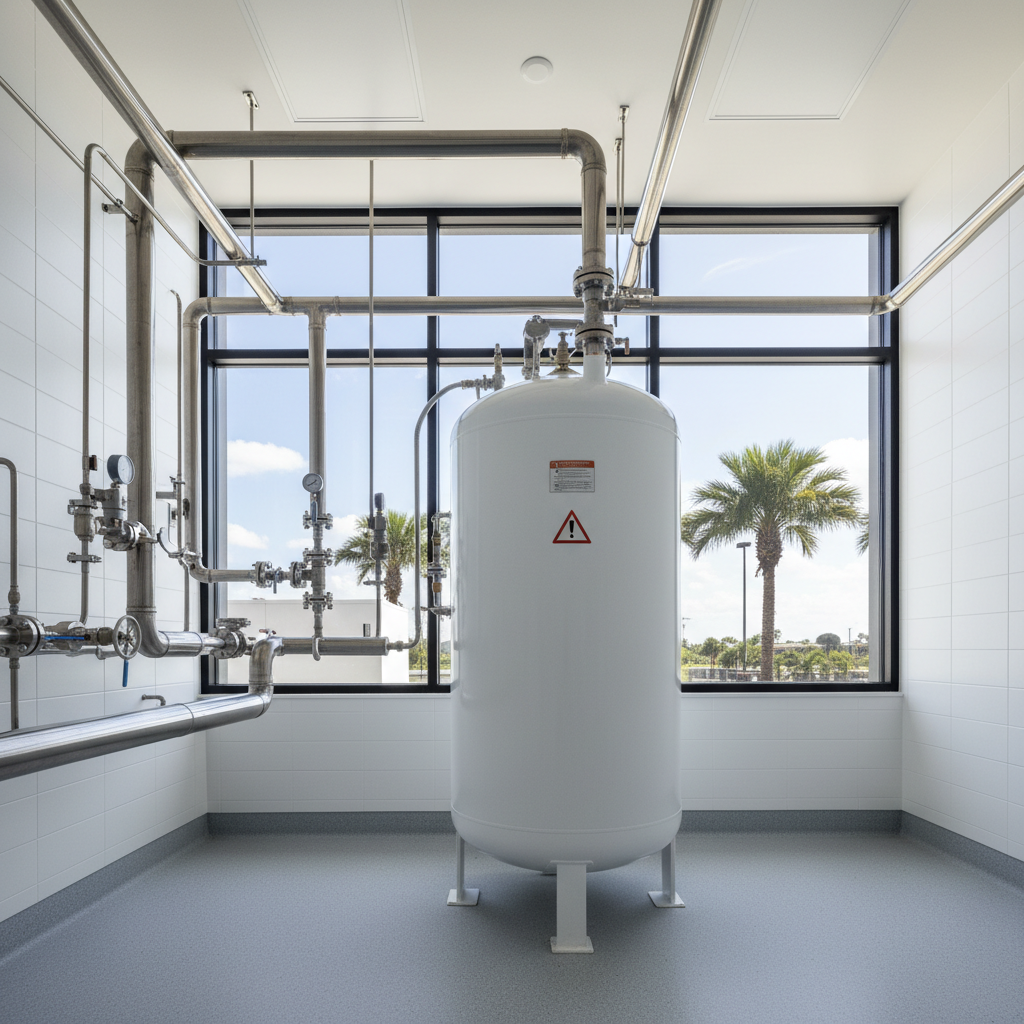
Oxygen Tank Room Inspection in Pembroke Pines, FL: A Guide to NFPA 99 Compliance
Medical Testing SolutionsJune 4, 20267 min read
Share
For any healthcare facility in Pembroke Pines, from a sprawling hospital campus to a specialized surgical center, the bulk oxygen tank room is the heart of the life support system. The continuous, reliable supply of medical-grade oxygen is non-negotiable for patient care. But ensuring this supply is not just a matter of having a full tank; it requires strict adherence to safety and operational standards mandated by law and accrediting bodies. This is where a formal oxygen tank room inspection becomes critical.
This definitive guide will walk you through the essential requirements for an oxygen tank room inspection in Pembroke Pines, Florida. You will learn about the specific NFPA 99 codes that govern these spaces, how they relate to Florida's Agency for Health Care Administration (AHCA) and The Joint Commission (TJC) standards, and what to expect during the inspection process. Most importantly, you'll understand how leveraging a local, Florida-based inspection team can significantly reduce costs while ensuring the highest level of compliance.
The Critical Role of an Oxygen Tank Room in Patient Safety
A bulk oxygen system is defined by NFPA 99 as a supply system with more than 20,000 cubic feet of oxygen. These systems, housed in dedicated enclosures, are complex and carry inherent risks if not properly managed. An inspection isn't just about checking boxes; it's a comprehensive safety audit designed to prevent catastrophic failures. A properly maintained and compliant oxygen storage facility ensures that pressure, flow, and purity are always within safe limits, protecting every patient who relies on that supply.
From the operating rooms at Cleveland Clinic Florida to the patient beds at Memorial Hospital Pembroke, a compliant oxygen system is fundamental. An annual, detailed inspection by a certified professional identifies potential hazards, verifies system performance, and documents compliance, safeguarding patients, staff, and the facility itself.
Decoding NFPA 99 5.1.3.5: The Core of Your Inspection
The National Fire Protection Association (NFPA) 99, Health Care Facilities Code, is the primary standard governing these systems. Specifically, section 5.1.3.5 outlines the detailed requirements for the location and construction of bulk oxygen systems. A qualified inspector will verify compliance with each of these points.
General & Location Requirements
Accessibility: The system must be accessible for maintenance, deliveries, and emergency services.
Separation: It must be located away from public access, flammable materials, and potential ignition sources like oil or grease.
Distance: Strict minimum distance requirements apply, separating the tank from buildings, property lines, and specific hazards.
Outdoor Enclosures (Most Common)
Security: The enclosure must be secured with a locked gate to prevent unauthorized access.
Construction: It should be built from noncombustible materials. A concrete pad is standard.
Ventilation: While open to the air, the location must ensure adequate ventilation to prevent oxygen from accumulating.
Indoor Enclosures
Dedicated Room: If housed indoors, the room must be for the exclusive use of the oxygen system.
Fire Resistance: The room requires a specific fire-resistance rating, typically 1 or 2 hours.
Ventilation: Continuous mechanical ventilation is mandatory to prevent oxygen concentration from exceeding safe levels.
Operating and Warning Signs
Clear Signage: Specific warning signs must be posted, including "No Smoking," "No Open Flames," and "No Trespassing." The name and contact information for the system owner must also be present.
Why this matters for compliance: A facility manager in Pembroke Pines needs to know that a single missing sign or a partially blocked access gate can result in a deficiency finding during a Joint Commission survey. Adherence to NFPA 99 is not optional; it's a core requirement for TJC accreditation and Florida AHCA licensure.
An annual medical gas inspection is a comprehensive process. While your ASSE 6030 certified verifier will conduct a full battery of tests, facility managers can prepare by reviewing these key areas:
Site Security: Is the fence or enclosure intact and the gate locked?
Signage: Are all required NFPA and local warning signs present, legible, and properly located?
Cleanliness: Is the area free of weeds, trash, stored equipment, and any combustible materials (e.g., oil, grease, gasoline)?
System Integrity: Are there any visible signs of damage, corrosion, or leaks on the tank, vaporizer, or piping?
Ventilation: For indoor locations, is the ventilation system operating correctly? For outdoor locations, is airflow unobstructed?
Emergency Information: Is emergency contact information posted and up to date?
Pressure Relief Valves: Are relief valves unobstructed and pointing in a safe direction?
Compliance in the Sunshine State: AHCA, TJC & Hurricane Rules
Florida facilities face a unique regulatory landscape. Beyond NFPA 99, inspections must satisfy state and accreditation requirements, along with planning for severe weather.
Meeting Florida AHCA Requirements
All healthcare facilities in Florida are licensed by the Agency for Health Care Administration (AHCA). Verification and inspection reports, especially those related to new construction or modification, must be meticulously documented to satisfy AHCA's requirements, including OPS Form 3110 and Chapter 59A of the Florida Administrative Code. A verifier familiar with AHCA's specific documentation needs is invaluable.
Navigating Joint Commission (TJC) Audits
During their annual surveys, The Joint Commission will rigorously review a facility's compliance with NFPA 99. They will demand documentation proving that all required inspections and maintenance have been performed by qualified personnel. A complete, well-organized report from an ASSE 6030 verifier is your best defense against a costly finding.
Hurricane Preparedness & Re-Verification
South Florida's hurricane risk adds another layer of complexity. NFPA 99 section 5.1.12 mandates re-testing of the system by a qualified verifier after any loss of source pressure. This includes situations where a system might be damaged during a hurricane. Having a local team is a significant advantage. Headquartered in Fort Lauderdale, Medical Testing Solutions can mobilize crews quickly across South Florida, including Pembroke Pines, Miami, and West Palm Beach, to perform post-storm re-verification, getting your facility back online faster.
Cost Comparison: The Advantage of a Local Florida Verifier
The financial benefits of using a Florida-based company are substantial. Out-of-state verifiers must pass on their travel and lodging costs to you. MTS eliminates these expenses entirely for our Florida clients.
As our headquarters are at 501 East Las Olas Blvd, Fort Lauderdale, FL 33301, our certified technicians can be dispatched to your Pembroke Pines facility without incurring cross-country travel costs. Most of our clients save 10–25% on medical gas verification services.
Estimated Cost Breakdown: MTS vs. Out-of-State
Cost Component
Medical Testing Solutions (Local)
Out-of-State Competitor
Inspection Fee
Standard Rate
Standard Rate
Airfare
$0
$500 - $800
Lodging
$0
$300 - $600
Per-Diem / Meals
$0
$150 - $250
Travel Time
$0
Billed Hourly
Total Savings
-
You save 10-25% with MTS
Why Choose Medical Testing Solutions?
Medical Testing Solutions provides comprehensive medical gas services across Florida. Our ASSE 6030 certified verifiers have deep experience working with facilities like Baptist Health, Broward Health, and others across the state. We understand the specific needs and regulatory pressures of the Florida healthcare market.
By choosing MTS, you are partnering with a local expert committed to your facility's safety and compliance. We provide not only inspections but also equipment, maintenance, and medical gas certification services. Our local presence in Fort Lauderdale means we can provide same-day dispatch for many services in the Pembroke Pines area.
Your Path to Compliance
Ensuring your oxygen tank room is compliant is a continuous process that requires expert attention to detail. Don't leave your facility's safety and accreditation to chance. Partner with a local expert who understands Florida's unique environment.
Ready to ensure your facility is safe and compliant? Contact us today to schedule your oxygen tank room inspection. Call our Fort Lauderdale office directly at +1 (754) 315-1078 for a free quote and discover the benefits of working with Florida's premier medical gas compliance experts.
Frequently Asked Questions
It is a formal audit of a healthcare facility's bulk oxygen storage system and its enclosure to ensure it complies with the safety, operational, and construction standards outlined in NFPA 99, as well as any applicable state (AHCA) and federal regulations.
A complete inspection of the bulk oxygen system by an ASSE 6030 certified verifier should be performed annually as part of your overall medical gas system assessment to meet Joint Commission requirements. More frequent checks may be required based on your facility's policies.
Key requirements cover the room's location, security (fencing and locked gates), construction materials (noncombustible), ventilation, electrical bonding, and mandatory warning signage to prevent ignition and unauthorized access.
Local verifiers, like Medical Testing Solutions based in Fort Lauderdale, eliminate significant costs associated with travel. There are no fees for airfare, hotels, rental cars, or per-diem meals, which can save a facility 10-25% on inspection services anywhere in Florida.
The inspector will provide a detailed report outlining the deficiencies. The facility is then responsible for correcting these issues. The verifier can provide guidance on remediation, and once corrected, a follow-up inspection is performed to document compliance and clear the deficiency.
Request a quote for your facility
Talk with Medical Testing Solutions about your next inspection, repair or equipment request.