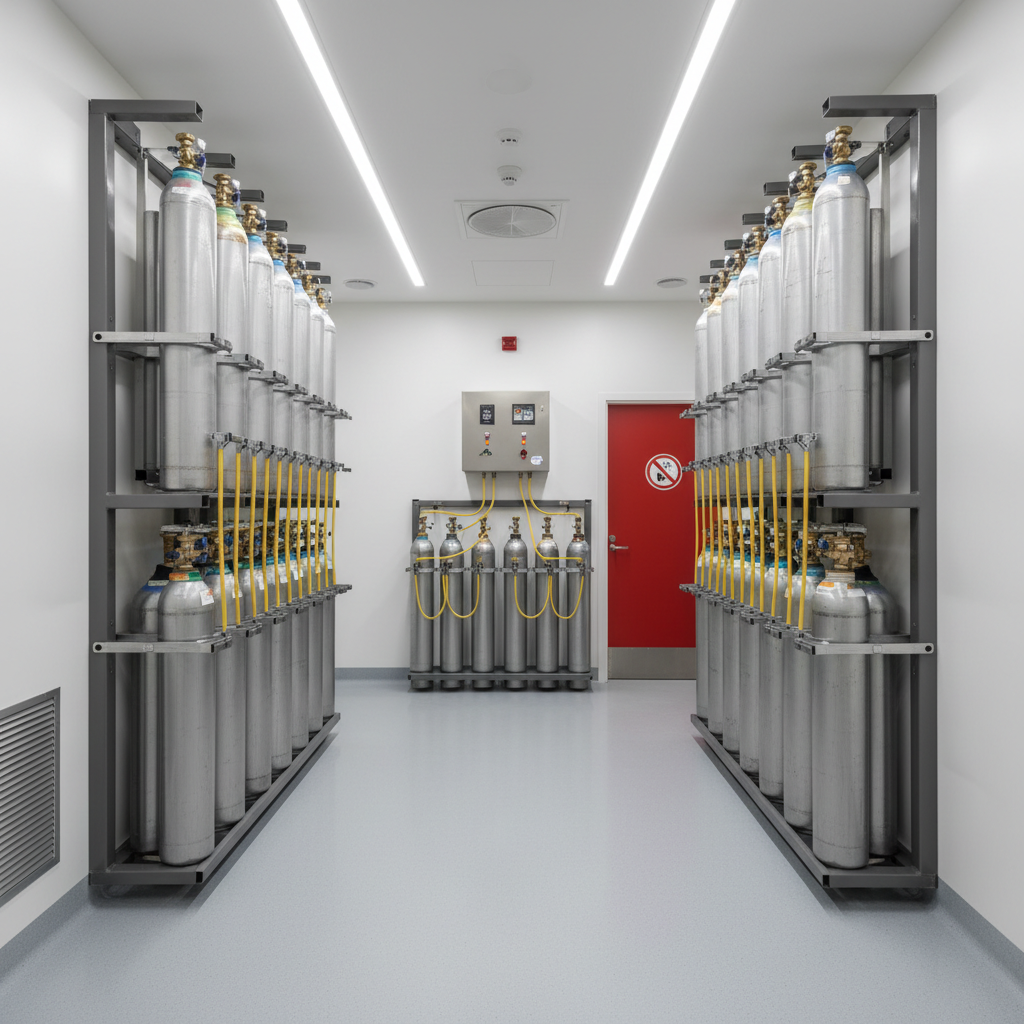
Oxygen Tank Room Inspection Miramar FL: NFPA 99 Compliance Guide
Medical Testing SolutionsNovember 2, 202612 min read
Share
Medical gas storage rooms house volatile, life-critical systems that require rigorous regulatory oversight. For healthcare facilities in Broward County, securing a certified oxygen tank room inspection in Miramar, FL is not merely an administrative checkbox, it is a mandatory life-safety protocol governed by state, local, and national fire codes. Under the National Fire Protection Association (NFPA) 99 Health Care Facilities Code, storage locations for cylinders and bulk cryogenic supply systems must maintain uncompromising standards of ventilation, physical security, electrical classification, and structural fire separation.
Whether your facility operates an acute-care surgical suite near Miramar Town Center, an ambulatory surgery center (ASC), a dental clinic, or a specialized outpatient rehab center, failure to comply with NFPA 99 5.1.3.5 and Florida Administrative Code (FAC) regulations introduces extreme operational, financial, and life-safety risks. In this definitive guide, the ASSE-certified specialists at Medical Testing Solutions outline the exact requirements of bulk and manifold oxygen room compliance, Florida-specific building and fire codes, physical inspection checkpoints, and documentation requirements needed to safeguard your accreditation and maintain zero downtime.
1. Regulatory Framework: NFPA 99, CGA, and Florida Building Codes
Oxygen storage systems do not exist in a regulatory vacuum. When an inspector audits a medical gas room in Miramar, their evaluation draws upon an interconnected web of engineering and life-safety standards:
NFPA 99 (Health Care Facilities Code): Specifically Section 5.1.3.5, which details the physical enclosure, location, electrical infrastructure, ventilation rates, and mechanical safeguarding of central supply systems.
NFPA 55 (Compressed Gases and Cryogenic Fluids Code): Governs bulk cryogenic vessel setbacks, relief discharge piping, pad design, and security perimeter enclosures.
NFPA 101 (Life Safety Code): Enforces egress routes, fire containment ratings, and door hardware specifications for hazardous material containment areas.
Compressed Gas Association (CGA): Pamphlets including CGA M-1 (Guide for Medical Gas Supply Systems at Health Care Facilities), CGA P-18, and CGA V-1 governing cylinder handling, connections, and valve pin-indexing.
Florida Fire Prevention Code (FFPC) & Miramar Local Ordinances: Administered by the Miramar Fire-Rescue Department and Broward County building divisions, adapting national codes alongside strict regional hurricane, wind-load, and humidity factors.
Why this matters for compliance: AHCA (Florida Agency for Health Care Administration) surveyors and Miramar building officials do not accept conditional or provisional excuses for gas storage violations. A single unrated door closer, missing ventilation louver, or unchained cylinder immediately triggers a Class A deficiency, risking facility licensing suspension and Centers for Medicare & Medicaid Services (CMS) decertification.
Facilities must conduct rigorous annual medical gas inspections to catch structural, mechanical, and sensor degradation before municipal or state fire marshals walk the building.
2. Deep Dive: NFPA 99 Section 5.1.3.5 Enclosure and Storage Mandates
Section 5.1.3.5 of NFPA 99 outlines precise architectural and life-safety constraints for any room or enclosure holding medical gas central supply systems (manifolds, liquid cryogenic dewars, or high-pressure cylinder reserves). In Miramar's subtropical climate, these parameters are critical to preventing heat-induced cylinder overpressurization and chemical oxidation hazards.
Fire-Resistance Ratings and Separation
Two-Hour Fire Resistance: If the storage location contains more than 3,000 cubic feet (approx. 12 to 14 high-pressure "H" cylinders) of oxidizers or flammable compressed gases, the room walls, floor, and ceiling must possess a certified 2-hour fire-resistance rating.
One-Hour Fire Resistance: For quantities between 300 and 3,000 cubic feet, the enclosure must provide a minimum 1-hour fire-resistance rating.
Opening Protectives: Door assemblies must match the architectural rating. A 1-hour enclosure requires a 45-minute fire-rated door assembly; a 2-hour enclosure requires an active, certified 90-minute (1.5-hour) fire door. All doors must be self-closing, latching, and kept continuously locked with authorized access control.
Ventilation Dynamics: Mechanical Exhaust vs. Natural Ventilation
NFPA 99 mandates dedicated, non-recirculating ventilation systems for interior gas manifolds and cylinder rooms:
Mechanical Ventilation: Must maintain an ongoing continuous negative pressure relative to adjacent occupied spaces, operating at not less than 1 CFM per square foot of room area, but no less than 50 CFM overall. The exhaust must terminate outdoors at least 10 feet away from any operable windows, doors, or building air intakes, elevated above grade.
Natural Gravity Ventilation: Only permissible when the gas room shares exterior walls and vents directly outside without passing through other interior structural zones. It requires two unclosable louvers (one within 12 inches of the ceiling, one within 12 inches of the floor) sized to provide clear natural draft (typically 72 square inches per 1,000 cubic feet of contained gas).
Electrical Interlocks: Supply and exhaust fans must be connected to the facility's emergency essential electrical system (Life Safety or Equipment branch) to ensure zero drop in airflow during power transitions.
3. Physical Layout, Manifold Configurations, and Cylinder Restraints
Inside the enclosure, housekeeping, storage logistics, and physical safety barriers must meet precise criteria. A comprehensive oxygen tank room inspection in Miramar FL confirms these physical controls:
Cylinder Securing & Segregation
Every high-pressure cylinder (full, in-use, or empty) must be securely restrained against physical upset. In Miramar, seismic/wind-load considerations mean resting cylinders against a wall with a loose chain is a major code violation. Cylinders must be anchored using heavy-duty, powder-coated steel racks, non-combustible wall-mounted strut channels, or individual locking brackets.
Furthermore, gases cannot be intermingled indiscriminately:
Oxidizing gases (Oxygen, Nitrous Oxide) must be separated from flammable gases or combustible materials by at least 20 feet, or by a 5-foot-high, 1-hour fire-rated barrier wall.
Empty vs. Full Separation: Dedicated, clearly designated zones must separate empty cylinders from full inventory. Cylinders awaiting return must still have their protective valve caps threaded on tight.
Electrical and Climate Requirements
Electrical Fixtures: Electrical installations in pure medical oxygen and inert gas supply rooms do not require Class 1, Division 1 explosion-proof fixtures (unless nitrous oxide or volatile anesthetics are compounded there), but they must be protected against physical impact and moisture. Receptacles must be elevated above floor drainage zones.
Temperature Limitations: The room ambient temperature must never exceed 125°F (52°C) or drop below 20°F (-7°C). In Miramar, direct sun exposure on exterior-facing walls can easily drive interior temperatures beyond 125°F without active climate controls or continuous mechanical exhaust, leading to thermal expansion of the liquefied gas and catastrophic rupturing of cylinder safety relief discs.
If your facility is expanding or revamping infrastructure, ensuring compliance during initial installation requires certified ASSE 6010 medical gas installation to avoid costly construction retrofits.
4. Bulk Cryogenic Liquid Oxygen (VIE) Pad Inspections vs. Interior Manifolds
Not every facility uses high-pressure cylinders. High-demand hospitals and massive ambulatory clinics in Broward County utilize bulk Vacuum Insulated Evaporator (VIE) cryogenic liquid systems. Bulk oxygen installations fall squarely under the joint jurisdiction of NFPA 99 Section 5.1.3.5.11 and NFPA 55 Chapter 9.
Concrete Foundations and Non-Combustible Pads
Cryogenic liquid oxygen spills represent an extreme localized fire hazard. Because cryogenic oxygen immediately saturates, freezes, and transforms asphalt or hydrocarbon-laden surfaces into detonation hazards, NFPA 55 demands:
The entire bulk liquid vessel, vaporizers, and tanker delivery staging zone must rest on a monolithic, non-combustible concrete pad extending at least 3 feet beyond the vessel perimeter and 8 feet under the delivery manifold connections.
No asphalt paving may exist within 25 feet of any oxygen transfilling point or storage tank vent relief.
The pad must feature secure engineering to resist South Florida’s high wind-shear and hurricane-force uplift loads.
5. Technical Comparison: Storage Requirements by Facility Type
Not every facility holds the same risk profile. NFPA 99 classifies systems into Risk Categories based on the potential consequence to patient safety (Category 1: loss of life; Category 2: minor injury; Category 3: no impact).
The table below delineates the varying requirements for medical gas storage across facility profiles in Miramar:
Regardless of facility size, establishing an active medical gas maintenance services program guarantees your manifolds switch automatically between service and secondary banks without line-pressure collapse.
6. The 9-Point Oxygen Tank Room Inspection Checklist for Miramar FL
When our ASSE 6030-credentialed technicians perform an on-site audit of your facility, we execute a comprehensive diagnostic inspection. Facility managers can use this 9-point checklist to assess their day-to-day readiness:
When new systems are commissioned or modified, specialized medical gas verification is legally required under ASSE 6030 before any patient receives oxygen from that infrastructure.
7. Common Violations Found in Miramar Facilities (And How to Avoid Them)
During audits across Broward County, our inspection teams frequently identify preventable violations that trigger administrative citations or immediate fire watch mandates:
1. The "Storage Room" Phenomenon
The single most frequent NFPA 99 citation stems from staff treating the oxygen room as an overflow janitorial closet. Storing paper towel cartons, shipping boxes, alcohol wipes, or mop buckets inside the oxygen manifold room introduces direct combustible fuel loads into an oxygen-enriched environment.
The Fix: Remove all non-medical gas equipment instantly. Medical gas rooms must strictly contain medical gas equipment and related piping.
2. Unsealed Riser and Conduit Penetrations
Contractors often run low-voltage alarm wiring, security camera feeds, or plumbing through the 1- or 2-hour rated walls of the medical gas room, leaving gaps around the conduits.
The Fix: Seal all structural penetrations with UL-listed intumescent firestop materials matching the wall's fire rating.
3. Missing Valve Protective Caps
Staff regularly leave high-pressure cylinders unbuckled or without protective valve caps while awaiting inventory rotation. If an unbolted cylinder falls and shears its valve body, it becomes an unguided projectile capable of breaching walls.
The Fix: Enforce a strict protocol: cylinders are either connected to a manifold pigtail or their protective steel caps remain threaded down to the collar.
4. Failed Mechanical Exhaust Fan Belts
Because medical gas rooms are often out-of-the-way, roof-mounted exhaust fans frequently suffer blown fuses or broken drive belts without maintenance noticing, causing zero CFM airflow inside the space.
The Fix: Install airflow differential pressure switches tied to the facility's Building Automation System (BAS) or local visual indicator lights to provide immediate alerts during fan failures.
8. Broward County & Miramar Local Authority Having Jurisdiction (AHJ) Nuances
Navigating compliance in Miramar requires understanding how the local Authority Having Jurisdiction (AHJ) applies the Florida Fire Prevention Code alongside municipal regulations. In South Florida, environmental conditions demand specific operational considerations:
Hurricane Preparedness & Backup Reserves: The Miramar Fire-Rescue Department closely inspects your on-site medical gas contingency plans prior to hurricane season (June 1 through November 30). Category 1 facilities must maintain an uninterrupted backup manifold reserve (typically a secondary high-pressure header) containing adequate cylinder supply to sustain operational baseline needs for 48 to 72 hours should bulk deliveries fail.
Subtropical Humidity & Condensation Mitigation: High humidity levels can cause rapid corrosion on pressure relief valve outlets, steel cylinder skirts, and pigtail connections. Inspection routines must look for galvanic corrosion where brass valves interface with steel manifolds.
Signage Verification: Broward County AHJs require distinct exterior placarding on all doors accessing medical gas storage areas, visible from standard approach corridors.
9. Comprehensive Facility Certification: Beyond the Tank Room
While the oxygen tank room represents the beating heart of your facility's life-support distribution, downstream components require equal scrutiny. A fully compliant facility maintains complete integrity from the manifold header to the terminal wall outlet:
Operating Room Safeguards: Ensure critical areas are equipped with functional isolated power systems. Verify safety margins through scheduled line isolation monitor (LIM) testing to eliminate shock hazards and catastrophic micro-arcing in oxygen-enriched wet procedure rooms.
Sedation Delivery Systems: For specialty dental and surgical clinics using conscious sedation manifolds, balance your tank room checks with comprehensive dental flowmeter repair and calibration to prevent back-pressure errors into the primary piping network.
Facility Accreditations: Maintain continuous records confirming baseline medical gas certification across all zones, terminal outlets, zone valve boxes, and alarm switches.
Partner with Florida’s Leading ASSE Medical Gas Specialists
A compliant medical gas storage room protects your patients, ensures regulatory compliance during AHCA and fire marshal audits, and prevents devastating life-safety events. Medical Testing Solutions (MTS) is Florida’s premier provider of ASSE 6030-certified inspection, verification, and maintenance services. Headquartered locally in Fort Lauderdale, our field engineers provide rapid, comprehensive medical gas testing across Miramar, Broward County, and the entire South Florida region.
Don't wait for a surprise AHJ inspection or an unexpected line failure to discover deficiencies in your bulk supply or cylinder manifold room.
Schedule Your NFPA 99 Oxygen Tank Room Inspection Today:
Headquarters: Medical Testing Solutions, 501 E Las Olas Blvd, Ste 300, Fort Lauderdale, FL 33301
Frequently Asked Questions
Under NFPA 99 Section 5.1.14, medical gas central supply systems and storage enclosures must be tested and inspected at least annually by certified personnel. Facility staff should also perform visual checks of manifold line pressures, cylinder securing, and alarm indicator lamps on a documented routine basis.
If storing between 300 and 3,000 cubic feet of medical gas (approx. 2 to 14 'H' cylinders), the room requires a minimum 1-hour fire-resistance-rated enclosure with a 45-minute self-closing fire door. If total storage exceeds 3,000 cubic feet, the enclosure must possess a 2-hour fire-resistance rating with a 90-minute self-closing fire door.
Yes, full and empty cylinders can reside in the same storage room provided they are physically segregated into clearly marked, designated zones to prevent operational errors during inventory changeovers.
Interior mechanical ventilation systems must operate continuously at a rate of at least 1 CFM per square foot of room floor area, with an absolute minimum of 50 CFM. It must maintain negative pressure relative to adjacent areas and discharge outdoors >=10 feet from doors or air intakes.
No. NFPA 99 explicitly prohibits using medical gas storage locations for general storage. Combustible packaging, cardboard cartons, cleaning chemicals, alcohol-based solutions, and unrelated equipment are strictly banned from oxygen storage enclosures.
Request a quote for your facility
Talk with Medical Testing Solutions about your next inspection, repair or equipment request.