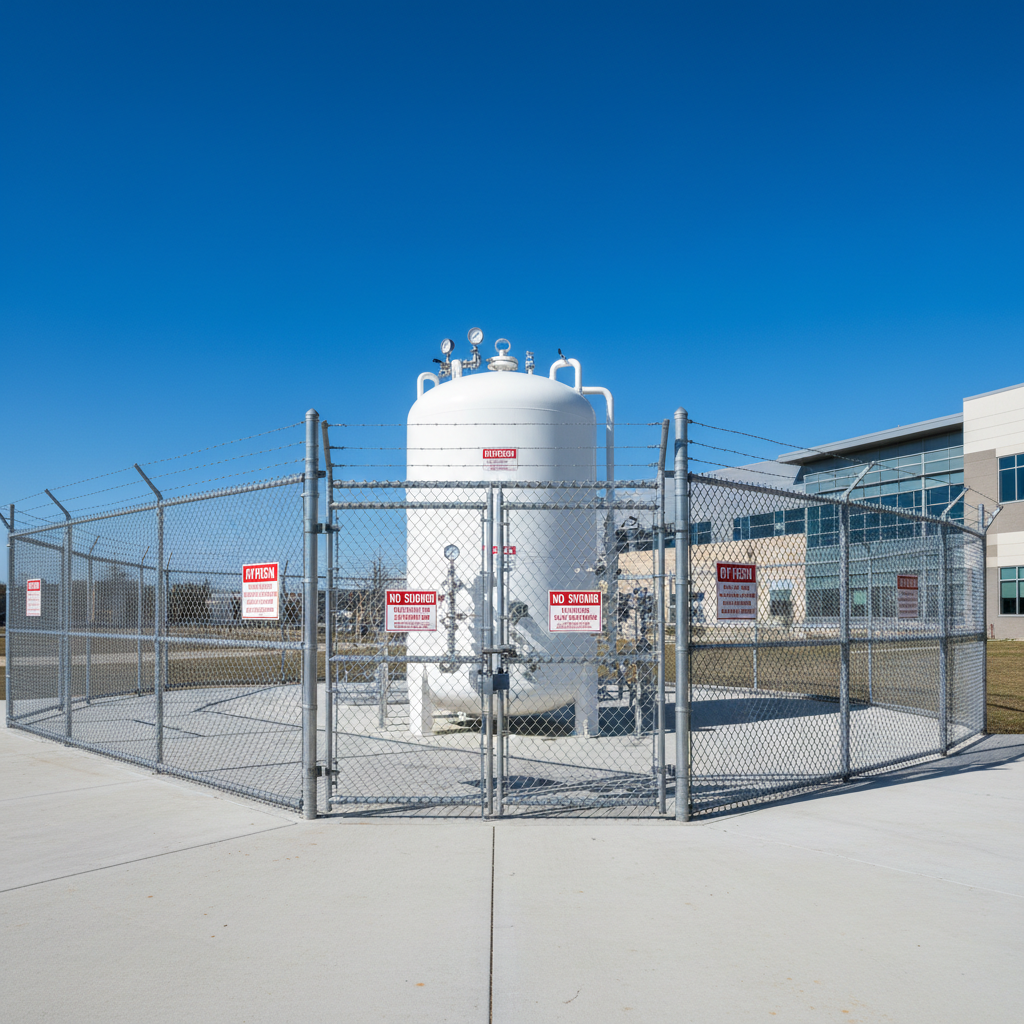
Oxygen Tank Room Inspection in Davie, FL: A Compliance Guide
Medical Testing SolutionsSeptember 17, 20267 min read
Share
Bulk oxygen systems are a lifeblood for many healthcare facilities, from hospitals to outpatient surgery centers. However, the storage and handling of liquid oxygen introduce significant risks if not managed meticulously. For facilities in Davie, Florida, ensuring your oxygen tank room complies with National Fire Protection Association (NFPA) standards is not just a best practice, it's a legal requirement. A compliant oxygen room ensures the safety of patients, staff, and the community, and prevents costly violations or operational shutdowns.
This guide provides a definitive overview of the requirements for an oxygen tank room inspection based on NFPA 99 Health Care Facilities Code. You will learn the specific criteria inspectors evaluate, key safety protocols you must have in place, and how to partner with certified professionals to guarantee compliance. We'll cover ventilation, signage, system components, and the critical standards that apply to your bulk oxygen supply.
What is a Bulk Oxygen System?
According to NFPA 99, a bulk oxygen system is an assembly of equipment, such as oxygen containers, pressure regulators, vaporizers, manifolds, and interconnecting piping, that has a storage capacity of more than 20,000 cubic feet of oxygen (including unconnected reserves) at normal temperature and pressure. These systems are typically located outdoors in a dedicated, secured area, often referred to as the "oxygen tank room" or, more accurately, the bulk oxygen storage location.
These systems are the primary oxygen source for facilities that require a large, continuous supply. They are distinct from smaller cylinder banks, which fall under different sections of the code. The focus of an "oxygen tank room inspection" in the context of our target keyword is this bulk storage area, which has the most stringent safety requirements.
Why this matters for compliance: Misclassifying your system can lead to applying the wrong set of standards. An ASSE 6030 certified technician from Medical Testing Solutions can help you verify that your system is correctly categorized and that all corresponding NFPA 99 requirements are being met.
Key NFPA 99 Requirements for Oxygen Storage Locations
The cornerstone of a compliance inspection is NFPA 99, Chapter 5: Gas and Vacuum Systems. Specifically, section 5.1.3.5, "Bulk Supply Systems," outlines the detailed requirements for the location, construction, and security of these areas. An inspector will methodically check against these standards.
Location and Construction
The physical placement and construction of the oxygen storage area are the first lines of defense against catastrophic failure. Inspectors will verify the following:
Outdoor Location: Bulk oxygen systems must be located outdoors, above grade. They cannot be located inside a building.
Clearances: The system must be a minimum distance from buildings, public sidewalks, and adjoining property lines. The exact distance depends on the storage capacity. For example, a system with 25,001 to 50,000 cubic feet requires a minimum distance of 50 feet from buildings of combustible construction.
Concrete Pad: The oxygen tank and associated equipment must be installed on a noncombustible foundation, typically a raised concrete pad.
Security: The area must be secured with a fence or wall to prevent unauthorized access. The enclosure must be at least 8 feet high with a locked gate.
Ventilation and Ignition Source Control
Proper ventilation is critical to prevent the accumulation of an oxygen-enriched atmosphere, which can dramatically increase fire risk. Inspectors will check for:
Unobstructed Airflow: The location must allow for natural ventilation. It cannot be in an area where airflow is restricted.
No Ignition Sources: All potential ignition sources must be eliminated from the vicinity. This includes:
Open flames and smoking (prohibited within 25 feet).
Electrical devices not rated for oxygen-enriched atmospheres.
Combustible materials like wood, weeds, and flammable liquids.
Proper Signage: Warning signs must be conspicuously posted. This includes "Oxygen - No Smoking - No Open Flames" and other signs indicating the presence of high-pressure gas.
System Components and Alarms
The integrity of the physical components is paramount. An inspector will examine:
Pressure Relief Valves: These must be correctly installed and vented to a safe, outdoor location, away from doors, windows, or air intakes.
Piping and Connections: All piping must be cleaned for oxygen service and properly supported. The inspector will look for signs of corrosion, leaks, or physical damage. Medical Testing Solutions provides ASSE 6010 certified installation services that meet these rigorous standards.
Emergency Shutoff Valve (ESOV): A clearly marked and accessible emergency shutoff valve must be present to isolate the bulk supply from the facility's main pipeline.
Master Alarms: The bulk system must be connected to the facility's master alarm system to provide warnings for events like a changeover to the secondary supply or low pressure.
The Inspection Process: What to Expect
When a certified technician arrives to perform an annual medical gas inspection, they will conduct a systematic review of your bulk oxygen system. The process typically involves:
Documentation Review: The inspector will ask for maintenance logs, system drawings, and previous inspection reports.
Visual Inspection: A thorough visual check of the entire site against the NFPA 99 checklist. This covers the security enclosure, signage, component integrity, and clearance distances.
Functional Testing: The inspector may test alarm functions to ensure they report correctly to the master alarm panels.
Leak Testing: Checking for leaks at joints and connections using an oxygen-compatible leak detection solution.
Reporting: You will receive a detailed report outlining any deficiencies, code references for each finding, and recommendations for remediation.
Common Inspection Failures
Facilities in Davie, FL, and beyond often fail inspections for a few common, preventable reasons:
Improper Storage: Combustible materials like trash, landscaping overgrowth, or vehicle parking within the required clearance distances.
Inadequate Signage: Missing, faded, or obstructed warning signs.
Blocked Access: The emergency shutoff valve or the gate to the enclosure is blocked.
Corrosion: Rust or corrosion on the tank, vaporizer, or piping, which compromises system integrity.
Outdated Components: Pressure relief valves that have passed their recommended service life.
Compliance Requirements Comparison Table
Here’s a simplified comparison of requirements for bulk systems versus smaller cylinder storage, as both are common in healthcare settings.
Indoors or outdoors in designated, well-ventilated rooms or enclosures
Clearance (Combustible)
Minimum 25-50 feet, depending on capacity
Minimum 5 feet (or 1-hour fire barrier) from combustibles
Security
8-foot fence with locked gate
Locked room or enclosure to prevent tampering
Fire Protection
Must be located away from combustible materials and ignition sources
If stored indoors, must be in a room with a 1-hour fire rating
Alarms
Required to connect to facility master alarms for pressure and changeover
Generally not required unless it's the primary supply source
Partnering with Certified Professionals
Navigating the complexities of NFPA 99 requires expertise. Partnering with a company like Medical Testing Solutions, which employs a team of ASSE 6030 and 6040 certified technicians, is the most effective way to ensure ongoing compliance and safety. Our experts can perform your annual inspections, conduct necessary medical gas maintenance, and provide detailed reports to keep you audit-ready.
We understand the specific challenges faced by healthcare facilities in Davie and across South Florida. From hurricane preparedness for your outdoor tank to routine maintenance, we provide a single source for all your medical gas needs.
Conclusion: Your Path to Compliance
An oxygen tank room inspection is a critical process for any Davie, FL healthcare facility with a bulk oxygen system. It is a non-negotiable part of ensuring patient and staff safety and maintaining your license to operate. By understanding the core requirements of NFPA 99, covering location, security, ventilation, and system integrity, you can proactively manage your facility and prepare for any inspection.
Don't wait for a deficiency report to take action. Proactive management and regular inspections from certified professionals are the key to a safe and compliant medical gas system.
Ready to ensure your facility is compliant? Contact Medical Testing Solutions today for a comprehensive oxygen tank room inspection. Call us at (754) 315-1078 or request a quote online to schedule your service with our ASSE-certified experts.
Frequently Asked Questions
NFPA 99 requires that all medical gas systems, including bulk oxygen storage, be inspected at least annually. Some jurisdictions or facility policies may require more frequent inspections.
Inspections must be performed by a party technically competent and experienced in the field of medical gas system inspection. This is typically an individual certified to ASSE 6030 (Medical Gas Verifier) or ASSE 6040 (Medical Gas Maintenance Personnel).
Oxygen itself does not burn, but it is an oxidizer that vigorously accelerates combustion. The biggest risks are the presence of an ignition source (like a spark or flame) or combustible materials (like oil, grease, or even asphalt) in an oxygen-enriched atmosphere.
No. The bulk oxygen enclosure must be for oxygen only. Storing other gases, especially flammable gases, in the same enclosure is a serious violation and safety hazard.
ASSE 6010 is for Medical Gas Systems Installers, who are qualified to build and install the systems. ASSE 6030 is for Medical Gas Systems Verifiers, who are qualified to inspect and certify that a new or modified system is compliant with code before it is used for patient care.
Yes, Medical Testing Solutions is headquartered in Fort Lauderdale and provides medical gas services, including oxygen tank room inspections, throughout Davie, Broward County, and all of South Florida.
Request a quote for your facility
Talk with Medical Testing Solutions about your next inspection, repair or equipment request.