An oxygen manifold is the heart of a healthcare facility's medical gas system, ensuring a continuous supply of life-sustaining oxygen from high-pressure cylinders to the pipeline network. A properly designed and installed manifold is not just a matter of operational efficiency; it's a critical component of patient safety and regulatory compliance. Understanding the nuances of manifold sizing, automatic switchover technology, and the stringent requirements of NFPA 99 is essential for any facility manager, engineer, or clinical staff. This guide provides an ASSE-certified perspective on these critical areas, explaining how to properly size your system, how automatic switchovers work, and how to design a fully compliant manifold room.
Medical Gas Products
Compliance & Standards
Buying Guides
Oxygen Manifolds: A Guide to Sizing, Switchovers, & NFPA 99 Compliance
Medical Testing SolutionsJune 19, 20266 min read
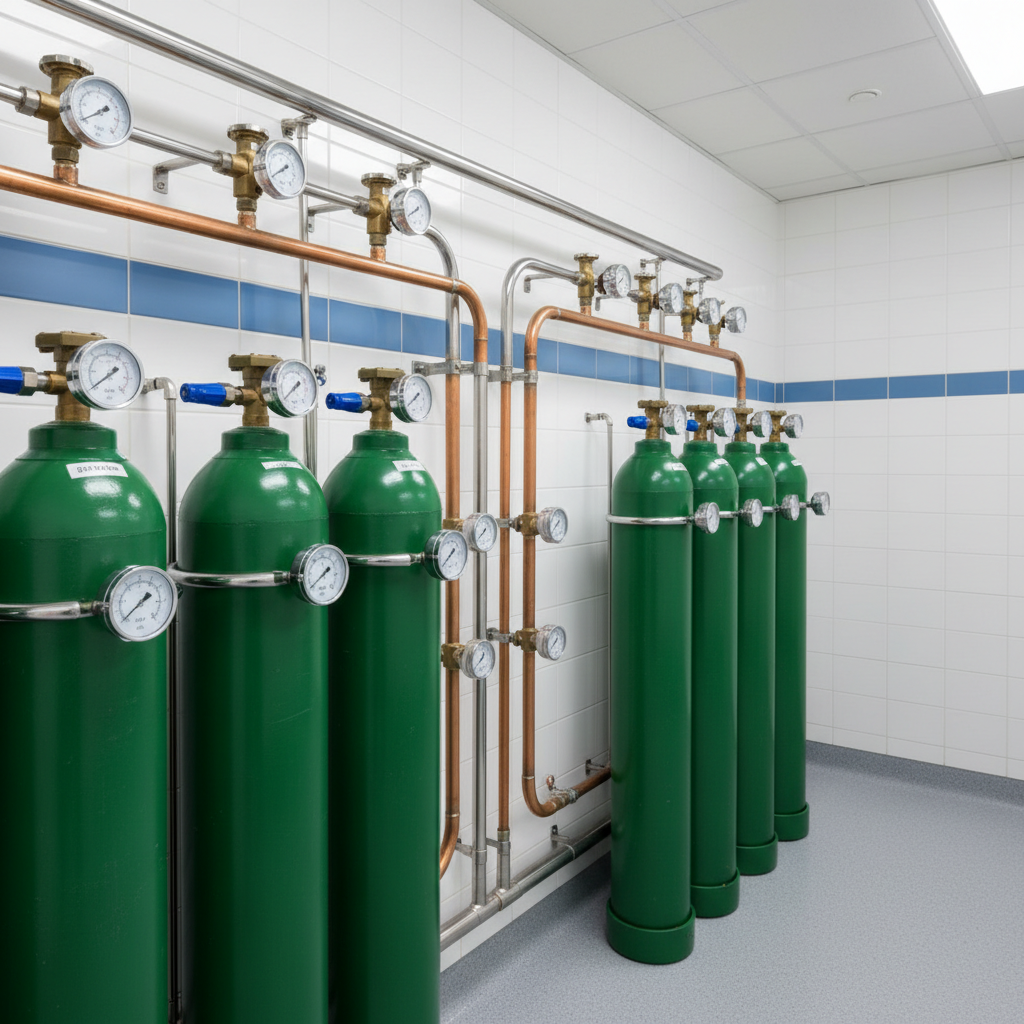
What is a Medical Gas Manifold?
A medical gas manifold is a system designed to connect multiple high-pressure gas cylinders to a facility's central pipeline. It acts as a control center, regulating the pressure and ensuring an uninterrupted flow of gas, even as individual cylinders empty and are replaced. For oxygen systems, which are classified as a Category 1 gas system under NFPA 99, this supply must be uninterruptible. Manifolds consist of a primary cylinder bank, a secondary (or reserve) bank, pressure regulators, valves, and monitoring equipment. The system automatically switches from the primary to the secondary bank when the pressure in the primary bank drops, triggering an alarm to alert staff that a cylinder change is needed.
At Medical Testing Solutions, we frequently assist facilities in selecting and installing manifolds that are perfectly matched to their specific needs, from large hospitals to small surgical centers.
Sizing an Oxygen Manifold: Getting It Right
Correctly sizing an oxygen manifold is crucial. An undersized system can lead to pressure drops during peak demand, jeopardizing patient care. An oversized system results in unnecessary capital expenditure and inefficient use of space. Sizing calculations should be based on the facility's peak calculated demand, not just average use.
Factors Influencing Oxygen Demand:
- Number and Type of Outlets: How many oxygen outlets (wall connections, ceiling drops) does the facility have? Are they in patient rooms, operating rooms, ICUs, or recovery areas?
- Simultaneous Use Factor: Not all outlets will be used at once. NFPA 99 provides guidance on estimating the diversity factor, or the percentage of outlets likely to be in use simultaneously.
- Flow Rates: Different medical procedures require different oxygen flow rates. Ventilators, high-flow nasal cannulas, and anesthesia machines have high-demand profiles.
- Future Expansion: Always plan for the future. Consider any planned expansions, new wings, or additional operating rooms when sizing the manifold.
Calculation Steps:
- List all oxygen outlets by location and type.
- Assign a typical flow rate (in Liters Per Minute, LPM) to each outlet type.
- Apply the simultaneous use factor from NFPA 99 (Annex A) to each group of outlets.
- Sum the demands to find the total peak calculated demand for the facility.
- Select a manifold with a flow capacity that exceeds this peak demand.
Consulting with an ASSE 6010 certified installer is critical during this phase. Professionals like the team at Medical Testing Solutions can ensure your sizing is accurate and compliant, preventing costly errors.
The Critical Role of the Automatic Switchover Manifold
The defining feature of a modern medical gas manifold is its automatic switchover capability. This is a non-negotiable requirement under NFPA 99 for any primary oxygen supply. The system is designed with two separate banks of cylinders: a "primary" bank and a "secondary" bank.
- The primary bank supplies the facility under normal operation.
- As cylinders in the primary bank are depleted, the pressure drops to a pre-set point.
- The manifold controller automatically closes the valves to the primary bank and opens the valves to the secondary bank, which becomes the new primary supply.
- Crucially, this switchover happens instantaneously and without any interruption in gas flow.
- Simultaneously, a local and a remote alarm (e.g., at the nurse's station and engineering office) are activated, signaling that the "empty" bank needs to be replenished.
This ensures a continuous, reliable source of oxygen. After replacing the empty cylinders, staff can reset the manifold, designating the replenished bank as the new secondary reserve.
NFPA 99 Manifold Room Requirements
NFPA 99, the Health Care Facilities Code, dedicates significant attention to the location and construction of rooms containing medical gas manifolds. These rules are designed to protect the system from damage, ensure it can be serviced safely, and prevent hazards like fire.
Why this matters for compliance: Failure to meet NFPA 99 requirements for your manifold room can result in deficiencies during a CMS or Joint Commission survey, potentially jeopardizing your facility's accreditation and reimbursement. It is a critical life safety issue.
Key requirements for the manifold room (often called the "source equipment room") are outlined in NFPA 99, Chapter 5.
Manifold Location & Construction Summary
| Requirement | NFPA 99 Specification (Summary) |
|---|---|
| Location | Outdoors in an enclosure, or indoors in a dedicated room. Cannot be in an operating room, electrical closet, or combustible storage area. Must be located to avoid unauthorized access. |
| Construction | Room must be constructed with noncombustible or limited-combustible materials. |
| Security | The room must be secured against unauthorized entry. Doors should be locked. |
| Ventilation | Mechanical ventilation is required to exhaust any potential gas leaks to the outdoors. Air must not be recirculated to other parts of the facility. |
| Signage | Clear signage is required, including a warning sign that reads "Medical Gas Supply - NO SMOKING - NO OPEN FLAMES" or similar. |
| Temperature | Room must be maintained at a temperature that prevents freezing or overheating of the equipment, per manufacturer recommendations. |
| Clearances | Adequate clearance around the manifold must be maintained for service, inspection, and cylinder replacement. |
After a new system is placed, it must be inspected and certified. A comprehensive medical gas verification by an ASSE 6030 credentialed verifier is the final step to ensure the system is safe and compliant before it is used for patient care.
Manifold Maintenance and Inspection
Regular maintenance is key to the long-term reliability of your oxygen manifold. This includes routine checks and more thorough annual inspections.
Daily/Weekly Checks (by facility staff):
- Check the pressure gauges on both cylinder banks.
- Verify the status of the "in-use" and "ready" indicators.
- Ensure no alarms are active.
- Visually inspect for any obvious leaks or damage.
Annual Inspections: An in-depth inspection should be performed by a qualified technician, such as one certified to ASSE 6040 (Medical Gas Maintenance Personnel). This involves:
- Testing the automatic switchover function.
- Verifying alarm set-points and functionality.
- Checking and/or replacing regulator seals and valve seats.
- Leak-testing all connections.
- Certifying that the system meets its original performance specifications.
Regular annual medical gas inspections ensure your system remains compliant and ready to perform when needed most.
Get a Quote for Your Oxygen Manifold Needs
Whether you are designing a new healthcare facility, upgrading an existing system, or in need of an urgent replacement, ensuring your oxygen manifold is compliant and correctly sized is paramount. The expert team at Medical Testing Solutions provides ASSE-certified guidance on equipment selection, installation, and verification.
Contact us today for a no-obligation quote and ensure your facility's medical gas system is safe, reliable, and fully compliant. Call us at +1 (754) 315-1078 or request a quote online to get started. '''
Frequently Asked Questions
A header bar is the pipe assembly with connections (pigtails) for the cylinders. The manifold is the complete system, including the header bars for both primary and secondary banks, plus the pressure regulators, controller, and automatic switchover valve.
This depends on the sizing calculation. The goal is to have enough cylinders on the primary bank to last for an average day's use, with the secondary bank holding an identical amount as a reserve.
Yes, but the manifolds are gas-specific. They use different CGA (Compressed Gas Association) connections to prevent cross-connection. You cannot use an oxygen manifold for nitrous oxide, for example.
The reserve alarm indicates that the automatic switchover has occurred and the system is now running on its secondary supply. This is the primary notification for staff to schedule the replacement of the empty cylinders on the main bank.
Most manufacturers recommend rebuilding or replacing pressure regulators every 5 years. This is a crucial step in a preventative medical gas maintenance program.
Request a quote for your facility
Talk with Medical Testing Solutions about your next inspection, repair or equipment request.