Medical Vacuum Regulator Calibration: NFPA 99 Requirements Explained
Medical Testing SolutionsJune 22, 20266 min read
Share
vacuum regulator calibration per NFPA 99">
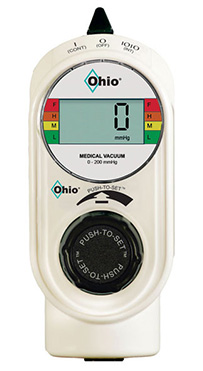
In the high-stakes environment of a hospital or ambulatory surgery center (ASC), the medical vacuum system is often the unsung hero of patient safety. From clearing airways in the Emergency Department to fluid management in the Operating Room, the reliability of suction is non-negotiable. At the center of this functionality is the medical vacuum regulator, a precision instrument tasked with converting a high-flow, high-vacuum source into a safe, controllable pressure for patient care.
However, vacuum regulators are mechanical devices subject to wear, contamination, and drift. Ensuring these devices function within the parameters defined by the manufacturer and safety standards requires a rigorous understanding of NFPA 99 guidelines and periodic calibration. For biomedical engineers (BMETs) and facility managers, establishing a standardized maintenance protocol is not just a regulatory hurdle; it is a critical component of risk management.
Understanding NFPA 99 Requirements for Vacuum Systems
The National Fire Protection Association (NFPA) publishes NFPA 99: Health Care Facilities Code, which serves as the primary standard for medical gas and vacuum systems in the United States. While much of NFPA 99 focuses on the "source" equipment (the pumps and piping), it also provides the framework for the "category" of care and the performance of terminal equipment.
Under NFPA 99, medical vacuum is classified based on the risk to the patient if the system were to fail. Category 1 systems, found in hospitals and surgery centers where failure could lead to major injury or death, require the highest level of redundancy and maintenance. While NFPA 99 does not explicitly dictate a "once-per-year" calibration for every individual regulator, it mandates that the facility establish a preventive maintenance (PM) program based on manufacturer recommendations and the facility’s risk assessment.
Specifically, NFPA 99 requires that vacuum systems must be capable of maintaining a minimum of 12 inches of mercury (Hg) at the station inlet furthest from the source. The regulator’s job is to manage this potential energy safely. If a regulator's gauge is inaccurate, a clinician might unknowingly apply too much or too little suction, leading to tissue trauma or ineffective aspiration.
The Technical Mechanics of Calibration and Verification
Calibration is the process of comparing the reading of the regulator's internal gauge against a "master" or reference gauge that has a documented pedigree of accuracy (often NIST-traceable). For medical vacuum regulators, this process typically involves checking the device at multiple points across its range, usually at low, medium, and high settings.
The internal mechanism of a typical regulator (such as those from Ohmeda or Amvex) relies on a diaphragm and a spring-loaded valve. Over time, the diaphragm can lose elasticity or develop micro-perforations, and the spring can fatigue. Calibration serves as a diagnostic tool: if a regulator cannot be adjusted to match the master gauge, or if it "creeps" (continues to increase vacuum levels even when the knob is not turned), it indicates an internal seal failure or a need for a rebuild kit.
Key Performance Specifications by Regulator Type
Different clinical applications require different vacuum profiles. Understanding the specifications of each helps in determining the appropriate calibration tolerances.
Adult/Continuous Regulators: Generally range from 0 to 300 mmHg or full vacuum. Calibration often focuses on the 100–200 mmHg range where most general suctioning occurs.
Pediatric/Neonatal Regulators: These have much tighter tolerances and lower maximum limits (typically 0-100 mmHg or 0-160 mmHg) to prevent delicate tissue damage. Precision is paramount here.
Intermittent/Surgical Regulators: These include timing mechanisms to cycle suction on and off (useful for nasogastric drainage). Calibration must include timing verification (e.g., 15 seconds on, 8 seconds off).
Feature
Standard (Adult)
Pediatric
Surgical/High Flow
Typical Range
0-300 mmHg
0-100/160 mmHg
0-760 mmHg (Full)
Accuracy Tolerance
+/- 10% of full scale
+/- 5% of full scale
+/- 10% of full scale
Gauge Type
Analog or Digital
Analog or Digital
Analog or Digital
Primary Use
General Suction
Neonatal/NICU
OR Fluid Management
Common Failure Points in Medical Vacuum Regulators
During the calibration and inspection process, biomeds frequently encounter standard failure modes. Identifying these early through a PM program prevents equipment downtime during a procedure.
Gauge Inaccuracy: The most common issue. The needle may not return to zero, or the lens may be cracked, leading to debris entering the movement.
Contamination: Despite the use of hydrophobic filters, fluids and bio-pathogens can enter the regulator if a canister overflows. This causes internal corrosion and sticky valves.
O-Ring Degradation: Dry O-rings lead to "vacuum leaks," where the regulator cannot achieve the desired pressure, or "gas blow-by," where the regulator doesn't shut off completely.
Mode Selector Failure: Many regulators feature a "Regulated / Off / Full" switch. The seals within this switch often wear out, making it impossible to bypass the regulation for emergency full-suction scenarios.
Maintenance Intervals: Best Practices for BMETs
While NFPA 99 leans on the manufacturer’s instructions for specific intervals, the industry standard for a robust PM program is typically an annual inspection and calibration. However, for high-acuity areas like the ICU or OR, a semi-annual check is often preferred.
A standard PM checklist should include:
Visual Inspection: Check for cracks, missing knobs, and illegible labeling.
Cleaning: Wipe down the exterior with approved disinfectants; ensure no internal contamination is visible.
Gauge Calibration: Compare against a calibrated digital mannequin or master gauge.
Performance Testing: Verify the regulator reaches "Full Vacuum" and that the "Off" setting results in zero flow/pressure.
Leak Testing: Ensure the regulator maintains vacuum without significant "leak-down" when the inlet is occluded.
The Importance of ASSE 6030 and 6040 Certification
In the world of medical gas, specialization matters. ASSE 6030 (Medical Gas Systems Verifiers) and ASSE 6040 (Medical Gas Systems Maintenance Personnel) are the gold standards for technicians working on these systems. Having regulators serviced by certified professionals ensures that the work complies with the latest iterations of NFPA 99.
When a regulator is calibrated by an authorized service provider, it should receive a calibration sticker indicating the date of service, the technician, and the next due date. This documentation is vital for Healthcare Facilities Accreditation Program (HFAP), AAAHC, or Joint Commission surveys.
Conclusion and Expert Support
Maintaining a fleet of vacuum regulators is an intensive but necessary task to ensure patient safety and regulatory compliance. Whether you are managing an ASC with twenty regulators or a large hospital system with two thousand, the requirements for accuracy and reliability remain the same.
Medical Testing Solutions is your dedicated partner in medical gas safety. We provide comprehensive sales and expert service for all major brands, including Ohmeda, Amvex, Precision Medical, Allied Healthcare (Chemetron/Oxequip), and Bay Corp. Beyond simple repairs, we offer professional calibration services to keep your facility in strict accordance with NFPA 99 and manufacturer specifications. Our team of certified technicians is ready to assist you with on-site service or a mail-in repair program. For more information, or to schedule your next calibration cycle, visit medicaltestingsolutions.com or call us directly at (754) 315-1078. Moving forward with MTS ensures that when a clinician reaches for suction, the equipment performs exactly as intended.
Frequently Asked Questions
While NFPA 99 recommends following manufacturer guidelines, the industry standard for medical vacuum regulators is an annual (once per year) performance verification and calibration to ensure patient safety and compliance.
Yes. While the regulator may still "suck," an uncalibrated gauge can lead to clinicians applying incorrect vacuum levels. This is especially dangerous in pediatric care or during delicate surgical procedures where tissue damage can occur.
Absolutely. If fluid bypasses the canister filter and enters the regulator, it is considered bio-hazardous. The regulator must be removed from service, deep-cleaned, and rebuilt with a new kit to ensure internal components are not compromised.
Calibration involves comparing the device to a master gauge and potentially adjusting the internal needle or mechanism. Verification is the process of checking the device against a standard to confirm it is still within the allowed tolerance without necessarily making adjustments.
Request a quote for your facility
Talk with Medical Testing Solutions about your next inspection, repair or equipment request.
 vacuum regulator calibration per NFPA 99">