Medical Gas Outlets: A Complete Buyer's Guide for Healthcare Facilities
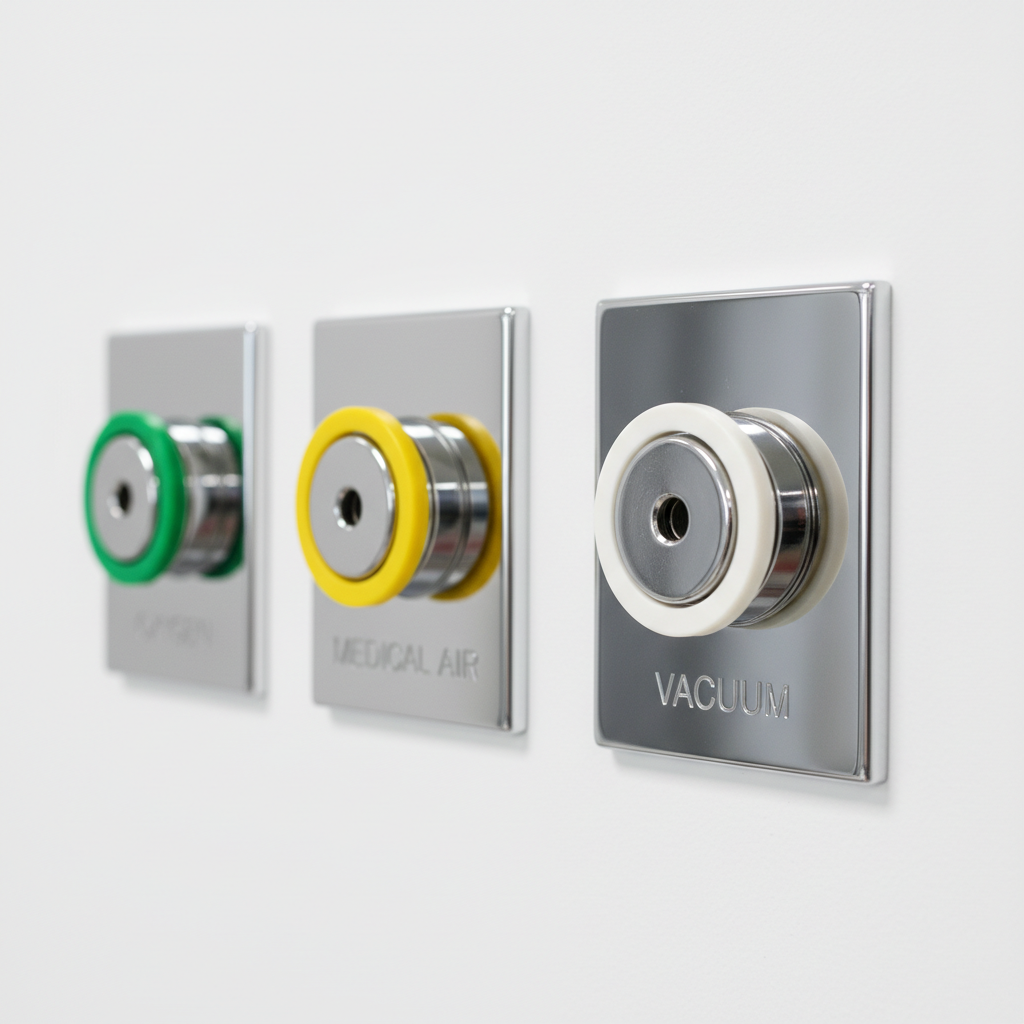
Medical gas outlets are the critical final link in a facility's piped gas system, the point where essential gases like oxygen, medical air, and nitrous oxide are delivered to the patient. These terminal units are more than just simple valves; they are precision-engineered safety devices governed by strict codes to prevent cross-connections and ensure patient safety. Selecting, installing, and maintaining the correct outlets is a fundamental responsibility for any healthcare facility manager or clinical engineer.
This definitive guide covers everything you need to know about medical gas outlets. We'll explore the critical NFPA 99 requirements, compare DISS vs. quick-connect types, analyze the top brands, and provide key considerations for retrofits and new installations. By the end, you'll have the expert knowledge to make informed decisions for your facility's medical gas infrastructure.
What Are Medical Gas Outlets?
In the language of NFPA 99, a medical gas "outlet" is technically called a "station outlet" or "terminal unit." It is the point in a medical gas piping system where the user connects equipment, such as flowmeters or ventilators, to receive the specified gas. Each outlet is designed to be gas-specific, making it physically impossible to connect a device to the wrong gas service. This is a foundational safety principle of medical gas systems.
Outlets are color-coded and labeled for easy identification:
- Oxygen: Green
- Medical Air: Yellow
- Vacuum: White
- Nitrous Oxide: Blue
- WAGD (Waste Anesthetic Gas Disposal): Purple
- Carbon Dioxide: Gray
These outlets are the most visible and frequently used part of the entire gas pipeline, making their durability, reliability, and usability paramount.
NFPA 99 Requirements for Medical Gas Outlets
NFPA 99, Health Care Facilities Code, is the foundational document for medical gas systems in the United States. Chapter 5 specifically outlines the requirements for piped medical gas and vacuum systems, including terminal units. Compliance isn't optional—it's essential for patient safety and accreditation from bodies like The Joint Commission.
Key requirements for outlets include:
- Gas-Specificity: Each station outlet for a specific medical gas must be gas-specific. It must be impossible to accidentally connect a different gas service's adapter.
- Labeling: Each outlet must be clearly labeled with the name or chemical symbol of the gas it provides.
- Pressure and Flow Testing: After installation and before use, every outlet must be tested to ensure it delivers the correct gas at the proper pressure and flow rate.
- Verification: Following any new installation, modification, or repair, a full system verification must be performed by a credentialed ASSE 6030 Certified Verifier to ensure compliance and safety before the outlets are used for patient care.
- Location: The code specifies where outlets can and cannot be placed, considering factors like patient accessibility and potential for physical damage.
Why this matters for compliance: Failure to adhere to NFPA 99 standards for medical gas outlets can result in catastrophic patient harm, significant legal liability, and loss of facility accreditation. Proper installation and verification by certified professionals are non-negotiable legal and ethical obligations.
Connection Types: DISS vs. Quick-Connect
Medical gas outlets generally fall into two categories based on their connection style: DISS and Quick-Connect. The choice between them depends on the use case, clinical preference, and existing infrastructure.
DISS (Diameter Index Safety System)
Standardized by the Compressed Gas Association (CGA), DISS connectors use a non-interchangeable system of varying thread diameters. To make a connection, a user must thread a nut from the equipment (e.g., a flowmeter) onto the outlet.
This threaded connection is extremely robust and secure, making it highly resistant to accidental disconnection and less prone to minor leaks over time. DISS outlets are commonly found in critical care settings, on anesthesia machines, and for high-pressure gas applications where a secure, leak-free connection is paramount.
Quick-Connect Outlets
As the name implies, quick-connect outlets are designed for speed and ease of use. They allow staff to connect equipment with a simple push, which is ideal in fast-paced clinical environments. The gas-specific safety indexing is achieved through proprietary pin configurations. Each gas type has a unique pattern of pins in the outlet that must match the corresponding holes in the equipment adapter or probe.
Several proprietary quick-connect styles have become de facto standards in the industry, including:
- Ohmeda (Diamond Style): One of the most common types in the US.
- Chemetron: Another widely used standard.
- Puritan-Bennett: Less common now but still present in older facilities.
DISS vs. Quick-Connect: A Comparison
| Feature | DISS (Diameter Index Safety System) | Quick-Connect (Ohmeda, Chemetron, etc.) |
|---|---|---|
| Connection | Threaded; requires twisting to secure | Push-to-connect; single-handed operation |
| Standard | CGA V-5 | Manufacturer-specific (proprietary) |
| Security | Highly secure, resistant to accidental disconnect | Secure latching, but can be damaged |
| Use Case | High-pressure connections, anesthesia machines | General patient care areas, headwalls, booms |
| Pros | Robust, universal standard, less prone to leaks | Fast and easy to use, convenient for staff |
| Cons | Slower to connect/disconnect | Proprietary; must match probe to outlet type |
Major Brands Compared: Amico vs. BeaconMedaes vs. Ohmeda
While many manufacturers exist, three brands dominate the US market: Amico, BeaconMedaes, and Ohmeda (now part of GE Healthcare). Each has its own design philosophy and strengths. Medical Testing Solutions has extensive experience with all major brands and can help you source, install, and maintain the ideal solution for your facility from our extensive products catalog.
Amico Corporation
Amico is known for its modular designs, which often allow for easier field serviceability of the latch valve assembly without having to remove the entire rough-in. They offer outlets compatible with all major quick-connect styles as well as DISS.
BeaconMedaes
As a part of Atlas Copco, BeaconMedaes focuses on the "Total System" approach, emphasizing the integrity of the entire pipeline from the source equipment to the outlet. Their Diamond™ series of outlets is well-regarded for its durability.
Ohmeda (GE Healthcare)
Being one of the pioneers of the quick-connect system, the Ohmeda-style outlet is one of the most widely installed types in North America. Its design has become a benchmark for reliability.
Medical Gas Outlet Brand Comparison
| Brand | Common Styles | Key Features | Primary Latching Mechanism |
|---|---|---|---|
| Amico | Ohmeda, Chemetron, Puritan-Bennett, DISS | Modular design, field-serviceable components, wide variety of mounting options. | Pin-indexed with a twist-and-lock or push-button release. |
| BeaconMedaes | Chemetron, Ohmeda, DISS | Focus on "Total System" integrity, robust construction. Diamond™ series is popular. | Positive latching mechanism, often requires a "thumb and forefinger" action. |
| Ohmeda (GE) | Ohmeda (Diamond style) | The "original" and one of the most widely installed quick-connect types in the US. | Push-to-connect with a knurled twist-release collar. |
Key Considerations for Retrofits and New Installations
Whether you're upgrading an existing wing or building a new one, outlet planning is crucial for both clinical workflow and long-term maintenance.
Planning a Retrofit
Upgrading or replacing existing outlets presents unique challenges. The primary consideration is the "rough-in" assembly—the portion of the outlet installed inside the wall. If you are only replacing the front "latch valve" assembly, you must ensure it's compatible with the existing rough-in brand. Mismatched components will lead to leaks and system failure.
In many cases, a full replacement of both the rough-in and latch valve is necessary, which requires shutting down the gas service to that zone and performing wall work. Involving an ASSE 6010 certified technician early in the process is critical. A qualified team can assess your existing infrastructure and create a plan to minimize disruption.
New Construction
For new builds, the choices are wide open, but that requires careful planning based on the FGI (Facility Guidelines Institute) recommendations and the facility's specific needs. Partnering with a specialist in medical gas installation like Medical Testing Solutions ensures that your design meets code, optimizes clinical workflow, and future-proofs your investment.
Maintenance and Annual Testing
Medical gas outlets are high-contact, mechanical devices that experience wear and tear. Seals can become brittle, latches can weaken, and leaks can develop. For this reason, NFPA 99 mandates that "the medical gas and vacuum systems shall be inspected and tested annually."
This includes checking every single outlet for:
- Leaks
- Proper gas identification
- Correct mechanical function of the latching mechanism
- Flow and pressure
These checks are a core part of the annual medical gas inspection process. Proactive maintenance prevents emergencies. Medical Testing Solutions provides comprehensive medical gas maintenance services that include proactive checks and repairs of terminal units to prevent failures before they happen.
FAQs About Medical Gas Outlets
How are medical gas outlets gas-specific?Gas specificity is achieved in two ways. For DISS outlets, each gas type has a unique thread diameter, making it impossible to thread a mismatching connector. For quick-connect outlets, each gas has a unique set of indexing pins that must align with the holes on the male probe.
Can I install or repair a medical gas outlet myself?No. According to NFPA 99, any installation, maintenance, or repair of a medical gas system component, including outlets, must be performed by a qualified and credentialed individual, such as an ASSE 6010 Certified Installer or ASSE 6040 Certified Maintenance Person.
What is a "rough-in" assembly?The rough-in is the part of the outlet installed within the wall and connected directly to the gas pipeline. The "finish" or "latch valve" assembly is the front portion that is visible and contains the connection mechanism for the user.
How often do medical gas outlets need to be tested?All outlets must be tested as part of the facility's comprehensive annual system inspection. Additionally, they must be rigorously tested by an ASSE 6030 verifier after any new installation or modification to that part of the system.
What's the difference between an outlet and a terminal unit?The terms are often used interchangeably in the field. "Terminal unit" is the more technical term used in the text of NFPA 99 and other international standards to describe the final point of delivery in the piped gas system.
Your Partner for Medical Gas Safety and Compliance
Choosing the right medical gas outlets and ensuring their compliant installation and maintenance is one of the most important responsibilities in managing a healthcare facility. From NFPA 99 compliance to selecting the right connection type and brand for your clinical needs, every decision impacts patient safety and operational efficiency. Don't leave it to chance. The ASSE-certified experts at Medical Testing Solutions are ready to assist you at every step. Whether you need a quote for new outlets, an assessment for a retrofit project, or require urgent maintenance, we are your trusted partner.
Ready to ensure your facility is safe and compliant? Contact our team today for a comprehensive quote or to schedule an inspection. Call us at +1 (754) 315-1078 or request a quote online.'''
This article is provided for educational purposes and reflects industry standards as of publication. Always verify against current NFPA 99, CGA, and AHJ requirements. Medical Testing Solutions is ASSE-certified and ready to help — contact us for facility-specific guidance.
Need Medical Gas Services?
Contact our certified team for inspections, verifications, installations, and more.
Get a Free Quote