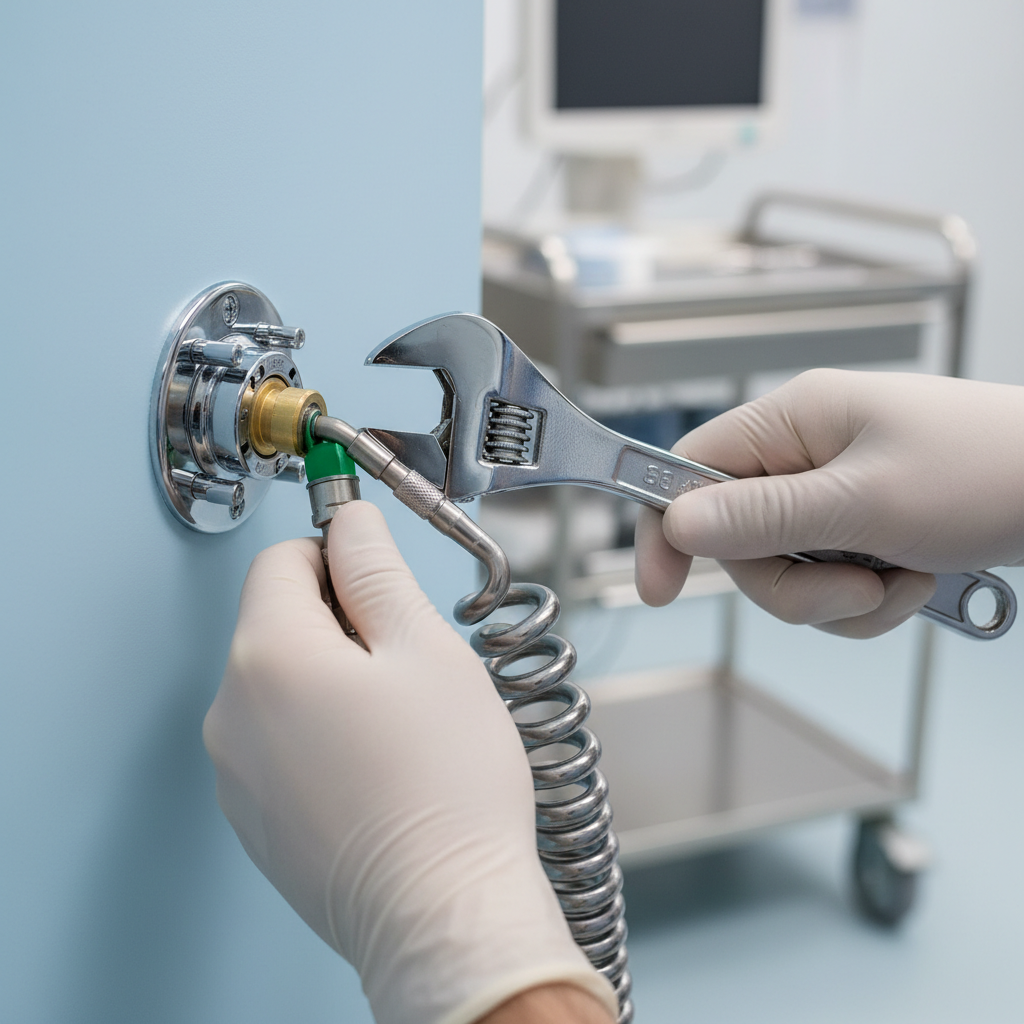
Medical Gas Outlet Repair in Hialeah FL: An ASSE-Certified Guide
Faulty medical gas outlets, inlets, or zone valves aren't just an inconvenience; they are a critical patient safety issue and a compliance risk for any Hialeah healthcare facility. A leaking oxygen outlet, a malfunctioning vacuum inlet, or a seized zone valve can disrupt procedures and compromise the integrity of your entire medical gas system. This guide provides a definitive overview of the repair process for common terminal units, drawing from NFPA 99 and ASSE 6000 standards. You will learn how to identify common problems, understand the specific repair needs for brands like Ohmeda, Chemetron, and Puritan-Bennett, and know when to call for ASSE-certified professional service.
Identifying Common Medical Gas Outlet & Valve Failures
Before any repair can begin, proper identification of the failure is crucial. Outlets and valves can fail for numerous reasons, including wear and tear, physical damage, or improper use. Here are the most common issues we see in Hialeah facilities:
Leaks & Connection Problems
- Leaks from the front body: Often caused by worn O-rings, damaged seals, or a cracked faceplate. You might hear a hissing sound when an adapter is engaged or notice a pressure drop in the system.
- Failure to lock the adapter: The outlet's latching mechanism may be worn or broken, preventing a secure connection with the flowmeter or other equipment. This is a serious hazard, as the adapter could disconnect under pressure.
- Leaks from the wall: This indicates a problem with the piping connection behind the outlet, often at the back body or the drop from the mainline. This requires immediate attention.
Zone Valve Box Issues
- Stuck or "frozen" valves: Valves that haven't been operated in years can seize due to lack of lubrication or internal corrosion. Per NFPA 99, valves should be exercised annually.
- Leaking valve: A leak may occur through the valve itself or at the brazed connections on either side. This can compromise the isolation of a specific zone.
- Inaccurate gauge readings: The pressure gauges on the zone valve box may be out of calibration or broken, providing false information about line pressure.
Inlet Problems (WAGD & Vacuum)
- Low or no suction: For vacuum and WAGD (Waste Anesthetic Gas Disposal) inlets, the most common complaint is a lack of suction. This can be caused by a clog in the line, a failed pump, or a faulty inlet assembly.
- Broken latching mechanism: Similar to outlets, the physical components that hold the adapter in place can break from repeated use or abuse.
Ohmeda vs. Chemetron vs. Puritan-Bennett: Repair Specifics
While all medical gas outlets serve the same function, their internal designs and repair procedures differ significantly by manufacturer. Using incorrect parts is a major code violation and safety risk. Medical Testing Solutions technicians are proficient in servicing all major brands.
| Brand | Common Characteristics | Key Repair Considerations |
|---|---|---|
| Ohmeda (now part of GE) | Diamond-shaped faceplate. Known for a robust, simple design. Often features a two-piece body (front and back). | O-ring and seal replacement is common. The front latching assembly can be replaced as a single cartridge in many models. Requires specific Ohmeda parts. |
| Chemetron | Circular faceplate with unique gas-specific pin indexing. Known for its "quick connect" mechanism. | Repair often involves replacing the entire front body assembly. Attempting to repair individual internal components is often impractical and not recommended by the manufacturer. |
| Puritan-Bennett | Rectangular faceplate. Older models can be complex. | Parts can sometimes be harder to source for legacy models. Repair kits are available but require careful matching to the outlet series. Back body leaks can be more common in certain older installations. |
Why this matters for compliance: NFPA 99 (2021 edition, section 5.1.14.2.3.6) strictly prohibits field modification of terminal units. Repairs must use manufacturer-specific parts and restore the outlet to its original operating condition. Using a Chemetron part in an Ohmeda outlet, for instance, is a serious violation that can lead to cross-connections and patient harm.