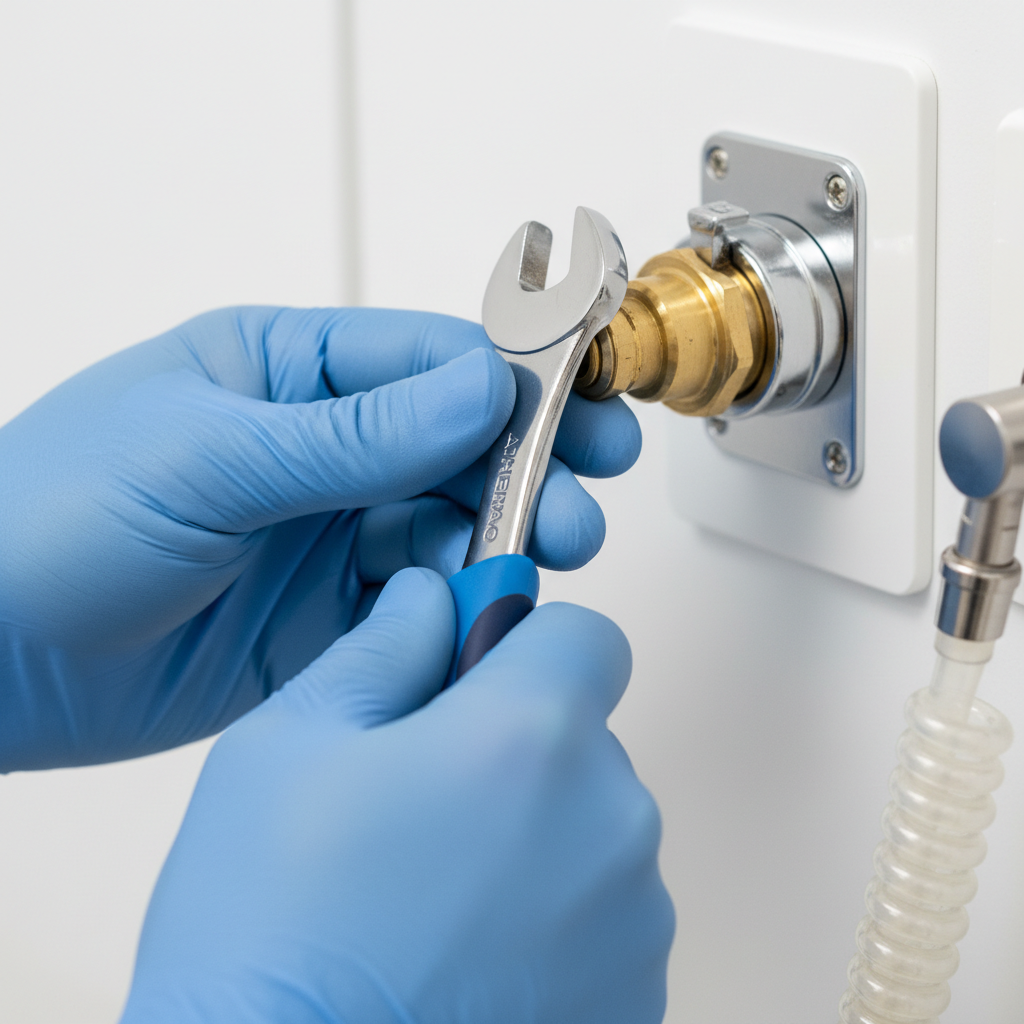
Medical Gas Outlet Repair in Delray Beach, FL: A Complete Guide
Medical gas outlets are the critical final connection point between your facility's gas distribution system and the patient. A leaking, damaged, or malfunctioning outlet for oxygen, medical air, or vacuum is not just an inconvenience, it's a serious risk to patient safety and a compliance violation. Whether you manage a hospital, dental clinic, or surgical center in Delray Beach, understanding the common failure points of major brands like Ohmeda, Chemetron, and Puritan-Bennett is essential for maintaining a safe environment. This guide explains the entire repair process, from identifying leaks and damage to understanding NFPA 99 requirements and knowing when to call for professional medical gas maintenance services. You will learn how to spot common outlet, inlet, and zone valve issues, the steps involved in a compliant repair, and how Medical Testing Solutions ensures your system's integrity.
Anatomy of a Medical Gas Outlet: What Can Go Wrong?
Medical gas outlets may seem simple, but they are precision-engineered devices with several components that can wear out or fail over time. Understanding these parts is the first step in diagnosing a problem.
Key Components of an Outlet Assembly:
- Rough-in Assembly: The body of the outlet mounted within the wall or headwall, connected to the gas pipeline.
- Front Latch Assembly (Faceplate): The visible part of the outlet, containing the gas-specific connection point and release mechanism.
- Seals and O-Rings: Critical rubber or polymer components that prevent gas from leaking. These are the most common points of failure.
- Check Valve: An internal valve that stops gas flow when nothing is plugged in. A secondary check valve allows for maintenance without shutting down the entire zone.
Failures typically manifest as leaks (audible hissing), difficulty connecting or disconnecting equipment, or a complete failure to provide gas flow. These issues often stem from worn-out seals, damaged latching mechanisms, or internal debris.
Common Issues by Brand: Chemetron, Ohmeda, & Puritan-Bennett
While all outlets serve the same function, their designs differ, leading to brand-specific common problems. At Medical Testing Solutions, our ASSE 6040 certified technicians have seen it all.
Chemetron Outlets
- Common Problem: Worn latch-valve O-rings causing leaks around the equipment adapter when plugged in.
- Symptom: A distinct hissing sound that stops when the adapter is wiggled or removed. The faceplate may also feel loose.
Ohmeda (now part of GE Healthcare)
- Common Problem: Damage to the internal "poppet" valve or retaining ring, often from improper equipment removal.
- Symptom: Persistent leak even when nothing is connected, or failure to latch the adapter securely.
Puritan-Bennett
- Common Problem: Faceplate retaining screw issues or worn primary seals.
- Symptom: Leaks originating from behind the faceplate or difficulty getting the gas-specific adapter to "click" in.
| Brand | Common Failure Point | Typical Symptom | Repair Complexity |
|---|---|---|---|
| Chemetron | Latch-valve O-rings | Leaks when adapter is inserted | Low to Moderate |
| Ohmeda | Internal poppet/retaining ring | Constant leak, failure to latch | Moderate |
| Puritan-Bennett | Faceplate seals/screws | Leaks behind faceplate | Low |
Zone Valves and Inlets: The Supporting Cast
Repairs often extend beyond the outlet itself. Zone valve boxes (ZVBs) and system inlets are also critical points of maintenance.
Zone Valve Repair
Zone valves allow you to isolate a specific area or "zone" of the hospital for maintenance or in an emergency. A failing zone valve may not close completely, making outlet repairs impossible without a wider system shutdown. Gauges on the ZVB can also fail, providing inaccurate pressure readings.
Inlet Repair (Source Side)
Inlets are the connection points for alarms, gauges, and other monitoring equipment at the source (e.g., manifolds, vacuum pumps). Like outlets, their seals can degrade, leading to inaccurate system readings or leaks that affect the entire facility.
Why this matters for compliance: NFPA 99 (2021 edition), Section 5.1.14.2.2.8, requires that medical gas systems be maintained in a safe operating condition. This includes regular inspection and immediate repair of leaking or malfunctioning components. A documented maintenance program, performed by ASSE 6040 certified personnel, is your proof of compliance.