Medical Gas Labels Versus Cylinder Paint Colors at Facility Handoff
Medical Testing SolutionsNovember 12, 20269 min read
Share
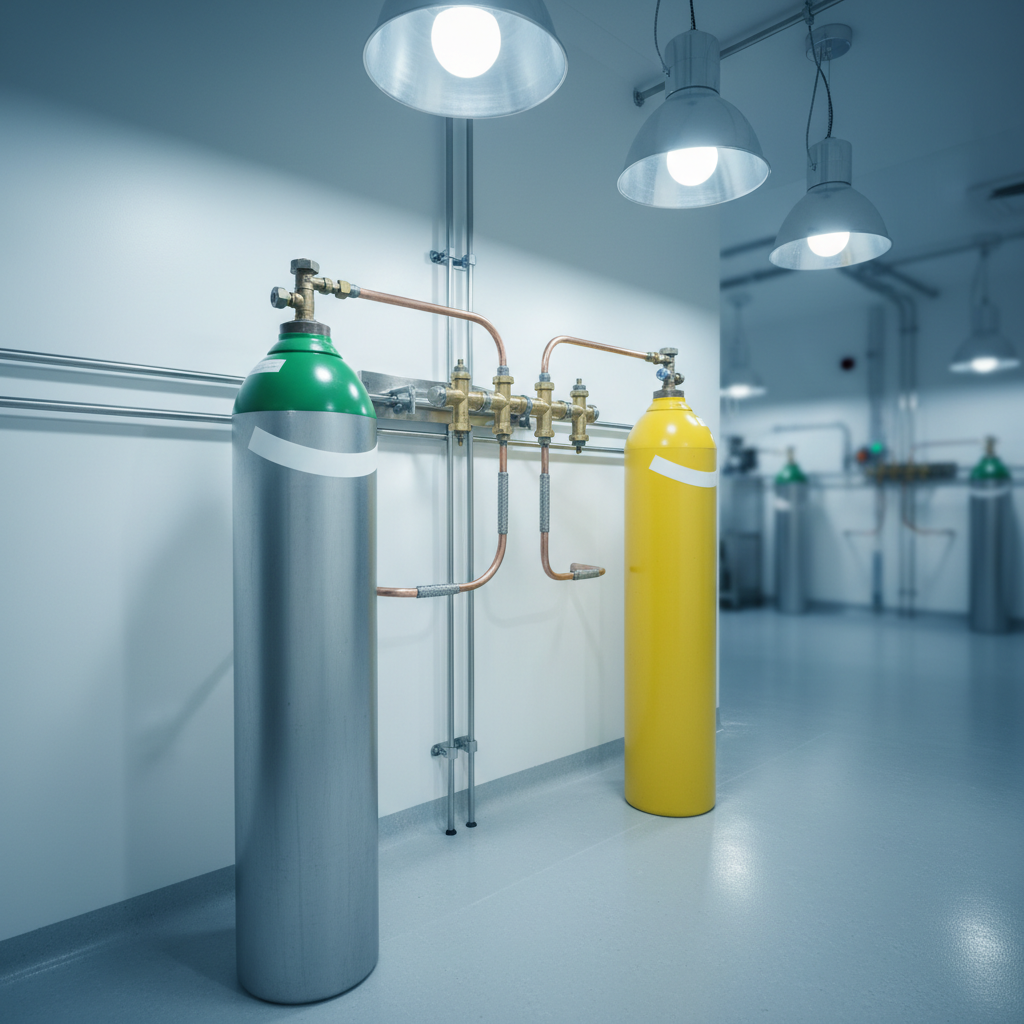
Look inside a busy hospital loading dock or an aging manifold room, and you will eventually spot an unpainted brushed-aluminum cylinder sitting beside a chipped, forest-green H-tank. A facilities technician rushing to swap a depleted reserve bank might reach for that green tank assuming it holds USP oxygen. If that cylinder was imported under ISO color standards or poorly repainted by a regional distributor, relying on the paint color alone turns a routine manifold changeout into a catastrophic cross-connection event.
Understanding the legal and operational hierarchy of medical gas labels versus cylinder paint colors protects your patients and keeps your facility compliant during Joint Commission or state AHCA surveys. While color coding works as a rapid visual sorting tool across loading docks and storage racks, regulatory bodies treat cylinder paint strictly as a secondary indicator. At the point of facility handoff and manifold connection, the written drug label and the mechanical valve connection dictate what is actually inside the vessel.
Why Cylinder Paint Colors Are Only a Secondary Guide
The Compressed Gas Association (CGA) publishes CGA C-9, Standard Color Marking of Compressed Gas Containers Intended for Medical Use. This standard establishes the familiar color palette used across United States healthcare facilities: green for oxygen, yellow for medical air, blue for nitrous oxide, and gray for carbon dioxide. You can review the complete breakdown of these visual indicators in our NFPA 99 and CGA medical gas color chart.
However, CGA C-9 states clearly that color markings serve only as a supplementary aid to help personnel segregate cylinders rapidly. Paint is never the primary means of gas identification. Several physical and supply-chain realities make cylinder paint unreliable on its own:
International color conflicts: Under ISO 32 standards used outside the United States, medical oxygen cylinders carry white shoulders rather than green paint. During national supply shortages or emergency authorizations, white-shouldered oxygen tanks occasionally enter domestic supply chains.
Unpainted aluminum and stainless vessels: Lightweight aluminum E-cylinders and MRI-safe non-magnetic cylinders frequently leave the factory with clear-coated brushed metal bodies, displaying color only on a narrow neck ring or shoulder band.
Environmental wear and oxidation: Chlorine-based hospital disinfectants, sunlight exposure on outdoor delivery docks, and rough mechanical handling strip paint or alter shades over time, making a faded yellow medical air tank look nearly identical to a dirty white or gray cylinder.
Supplier repainting errors: Third-party cylinder requalification shops occasionally apply the wrong shoulder color when refurbishing bulk shells, or use proprietary vendor colors for industrial gases that mimic medical codes.
What FDA 21 CFR Part 201 and NFPA 99 Require for Labels
Because medical gases are classified by the Food and Drug Administration (FDA) as prescription drugs under the Federal Food, Drug, and Cosmetic Act, every filled cylinder must carry an FDA-compliant drug label under 21 CFR Part 201. This shoulder label, often called a banana label due to its curved die-cut shape, is the sole legal identifier of the gas contents.
NFPA 99, Health Care Facilities Code, reinforces this hierarchy across its gas storage, piping, and operational mandates. Under NFPA 99 Chapter 11 (Gas Equipment) and Chapter 5 (Gas and Vacuum Systems), cylinders cannot be accepted, stored, or connected to a patient distribution system unless their contents are positively identified by an attached, legible label bearing the chemical symbol and full gas name. If a cylinder arrives at your facility with pristine green paint but a torn, missing, or illegible drug label, NFPA 99 requires your team to tag that cylinder as unusable and return it to the gas supplier immediately.
Why this matters for compliance: During accreditation surveys, inspectors routinely audit cylinder storage rooms and manifold reserves. A single cylinder missing a legible FDA drug label, regardless of how clearly it is painted, triggers a direct citation under NFPA 99 Chapter 11 and CMS Conditions of Participation.
If your facility is preparing for a state survey or commissioning a new manifold, schedule ASSE 6030 medical gas verification with Medical Testing Solutions to ensure every source valve, manifold pigtail, and pipeline label meets current NFPA 99 code.
Comparing Medical Gas Labels Versus Cylinder Paint Colors
When training materials management staff, respiratory therapists, and plant engineers, contrasting the regulatory weight of the printed label against the painted shell eliminates ambiguity during receiving and hookup.
Feature or Requirement
Medical Gas Cylinder Label (Primary)
Cylinder Paint Color (Secondary)
Governing Standard
FDA 21 CFR Part 201, CGA C-7, NFPA 99
CGA C-9 (US) / ISO 32 (International)
Regulatory Status
Mandatory federal drug labeling requirement
Voluntary industry standard for rapid sorting
Required Information
Official USP/NF gas name, UN number, lot number, net contents, hazard class, manufacturer
Visual color code applied to cylinder shoulder or full body
Action if Missing or Damaged
Reject cylinder immediately; do not connect or administer
Acceptable to use if FDA label and valve connection are intact and verified
Piping System Equivalent
NFPA 99 5.1.11 printed pipe markers with gas name and flow arrows
Background color band on pipe tape and wall outlets
Mechanical Safeguards: CGA Fittings and DISS Connections
Relying on human reading skills alone still leaves a margin for error during high-stress clinical emergencies or dimly lit basement manifold swaps. To back up the printed label, NFPA 99 mandates gas-specific mechanical indexing at every pressure regulator and manifold header.
Small portable cylinders (sizes D and E) utilize the Pin Index Safety System (PISS) mounted on flush-type post valves. Specific drill-hole positions on the valve body mate only with matching steel pins on the yoke regulator. For instance, oxygen uses pin positions 2-5, while nitrous oxide uses positions 3-5. Large bulk cylinders (sizes H, K, and M) connected to central manifold headers rely on threaded CGA valve outlets. An oxygen cylinder uses a CGA 540 thread, whereas medical air uses CGA 346 and nitrogen uses CGA 580.
Unfortunately, mechanical safeguards fail when personnel use illegal thread adapters, remove missing yoke pins, or replace copper manifold leads with the wrong fittings. During ASSE 6010 medical gas installation and subsequent third-party verification testing, verifiers inspect every manifold pigtail to confirm the permanent CGA connection matches the pipeline label and features the required check valves under NFPA 99 Section 5.1.3.5.
Piping Labels vs. Cylinder Labels Under NFPA 99 Section 5.1.11
Once gas leaves the cylinder bank and enters the copper distribution network, identification rules shift from CGA C-7 container labels to NFPA 99 Section 5.1.11 piping labeling standards. While cylinder paint can vary by supplier, facility piping labels must adhere strictly to standardized color backgrounds and text contrasts.
Under NFPA 99 5.1.11.1, positive-pressure gas piping and vacuum lines must be labeled with the chemical symbol or full name of the gas or vacuum system,accompanied by directional flow arrows. If the positive-pressure system operates at a non-standard pressure, such as nitrogen or instrument air running at 160 to 185 psi instead of the standard 50 to 55 psi, the pipe label must also display the operating gauge pressure.
Pipe markers must appear at specific intervals to prevent blind tie-ins during renovations:
Every 20 feet along straight horizontal and vertical pipe runs.
At least once in or above every room and corridor.
On both sides of every wall, floor, or smoke partition penetration.
Immediately adjacent to every shutoff valve, zone valve box, alarm sensor, and source equipment connection.
In outpatient dental suites and oral surgery centers where portable nitrous oxide and oxygen cylinders feed scavenging manifolds and chairside delivery units, keeping labels synchronized with dental flowmeter repair and calibration prevents accidental hypoxic mixtures when swapping reserve tanks.
Five-Point Handoff Protocol for Receiving Medical Gas Cylinders
A breakdown at the loading dock creates a latent hazard that travels straight to the manifold room or anesthesia cart. Facilities teams at Medical Testing Solutions recommend enforcing a strict five-point inspection protocol before signing any vendor delivery manifest or rolling cylinders into indoor storage racks.
Inspect the FDA shoulder label first: Verify the full printed gas name (such as Oxygen USP or Medical Air USP), concentration, and lot number sticker. Reject any vessel with a painted-over, peeling, or illegible label.
Cross-check cylinder paint against CGA C-9: Confirm the tank shoulder matches domestic color expectations. If an unpainted aluminum body or foreign color code is present, flag the tank so clinical staff know to read the neck label carefully.
Verify valve cap and tamper seal integrity: Ensure high-pressure cylinders have thread-protector caps installed and intact thermoplastic shrink wraps over the valve outlets, confirming the tank has not been partially used or contaminated in transit.
Match the CGA valve outlet or PISS holes: Before removing the protective shrink wrap in the manifold room, visually confirm the brass valve threads or pin-index holes match your dedicated pigtail or regulator yoke without forcing the threads.
Segregate full and empty racks immediately: Place accepted cylinders into clearly labeled full storage racks separated by hazard class (oxidizers separated from flammables or inert gases per NFPA 99 Chapter 11), keeping them isolated from empty return shells.
Even when loading dock staff follow strict receiving rules, facility wear and tear slowly degrades system identification inside mechanical rooms. Manifold pigtails get swapped during emergency weekend repairs, zone valve box inserts fade under fluorescent lighting, and ceiling renovations obscure overhead pipe markers.
Scheduling annual medical gas inspections alongside preventative medical gas maintenance services closes these compliance gaps before an accreditation surveyor walks through your doors. During an inspection, an ASSE 6030 verifier or ASSE 6040 maintenance specialist audits cylinder storage signage, verifies that manifold headers have proper CGA fittings and check valves, tests master and area alarm panels, and performs particulate and purity testing at the furthest terminal outlets.
Medical Testing Solutions provides turnkey equipment and ASSE-certified field services across Florida and nationwide. Whether you need replacement NFPA 99 pipe markers, copper manifold pigtails, or full system certification, you can browse our medical gas products catalog or speak directly with our credentialed verification team.
To schedule an NFPA 99 compliance audit, manifold inspection, or ASSE 6030 verification for your facility, request a quote online or call Medical Testing Solutions at (754) 315-1078.
Frequently Asked Questions
Under FDA 21 CFR Part 201 and NFPA 99 Chapter 11, the printed medical gas label attached to the cylinder shoulder is the only legal primary identifier of the cylinder's contents. Cylinder paint color is governed by CGA C-9 and serves strictly as a secondary visual aid for sorting. If a label is missing or illegible, the cylinder must be rejected and returned to the supplier even if the paint color appears correct.
No. NFPA 99 explicitly prohibits using any medical gas cylinder that lacks a legible label identifying its contents. Paint colors can fade, be misapplied during refurbishment, or follow international ISO color schemes (where white represents oxygen instead of green). Unlabeled or illegibly labeled cylinders must be tagged out of service immediately.
In the United States under CGA C-9, medical oxygen cylinders are painted green, medical air is yellow, and nitrous oxide is blue. Under ISO 32 standards used in Europe, Canada, and other international regions, medical oxygen cylinders feature white shoulders, medical air uses black-and-white checkered shoulders, and only nitrous oxide shares the blue designation. This difference makes reading the written label mandatory during supply handoffs.
Under NFPA 99 Section 5.1.11, medical gas and vacuum piping must be labeled at least every 20 feet along straight runs, at least once in or above every room, on both sides of every wall or floor penetration, and immediately adjacent to all shutoff valves, source equipment, and alarm sensors. Labels must display the gas name or chemical symbol, standard color coding, and directional flow arrows.
Besides the printed FDA drug label and secondary CGA C-9 paint colors, medical gas cylinders use mechanical indexing to prevent misconnections. Small portable cylinders (such as E-cylinders) use the Pin Index Safety System (PISS) on the post valve, while large manifold cylinders (such as H-cylinders) use gas-specific threaded CGA valve outlets (like CGA 540 for oxygen) that physically block attachment to the wrong regulator or manifold pigtail.
Request a quote for your facility
Talk with Medical Testing Solutions about your next inspection, repair or equipment request.