Medical Gas Inspection Wellington FL: Your Guide to Annual Compliance
Medical Testing SolutionsJune 21, 20267 min read
Share
An annual medical gas inspection is a comprehensive, systematic evaluation of your healthcare facility's piped medical gas system. This isn't just a quick check-up; it's a deep dive into the critical infrastructure that delivers life-sustaining gases like oxygen, medical air, and vacuum to patient care areas. For healthcare facilities in Wellington, Florida, these inspections are not optional, they are a fundamental requirement for patient safety and regulatory compliance.
Defining the Scope: Beyond a Simple Check-up
Unlike general maintenance, a medical gas inspection is performed by a credentialed professional, an ASSE 6030 Certified Verifier. The inspection covers the entire system, from the source equipment (like oxygen manifolds and medical air compressors) to the patient-facing station outlets in operating rooms, ICUs, and patient rooms. The goal is to verify that the system operates safely, meets the original design intent, and complies with current codes.
Patient Safety: The Ultimate Priority
The primary reason for annual inspections is to protect patients. A malfunctioning medical gas system can have catastrophic consequences. Incorrect gas delivery, pressure fluctuations, or system contamination can lead to severe patient harm or death. Regular, professional verification ensures that every outlet delivers the correct gas at the correct pressure, every time.
Regulatory Compliance: The Joint Commission, CMS, and NFPA 99
Accrediting organizations like The Joint Commission (TJC) and the Centers for Medicare & Medicaid Services (CMS) mandate that healthcare facilities adhere to the standards set by the National Fire Protection Association (NFPA). Specifically, NFPA 99, Health Care Facilities Code, is the primary document governing medical gas systems. It explicitly requires periodic inspections to ensure the system's continued integrity. A failed inspection can lead to citations, loss of accreditation, and potential legal liability.
Why this matters for compliance: Failure to produce documented proof of an annual medical gas inspection performed by a certified verifier is a common finding during Joint Commission surveys. This can put your facility's accreditation, and its ability to receive federal funding, at risk.
NFPA 99 Requirements for Annual Medical Gas Inspections
NFPA 99 outlines the minimum requirements for the periodic inspection of existing medical gas systems. While a full system verification is required for new installations, the annual inspection focuses on ensuring the operational integrity and safety of the current system. Key testing requirements found within NFPA 99 (primarily in Chapter 5) include:
Warning Systems: All master, area, and local alarm systems must be tested to ensure they activate at the correct pressure points and are functioning audibly and visually.
Pressure & Flow: Representative station outlets must be tested to verify they provide the specified flow rates and that system pressures remain stable under load.
System Purity: While a full purity test isn't always part of a standard annual inspection (it's critical during initial verification), the verifier will check for any signs of contamination or cross-connection.
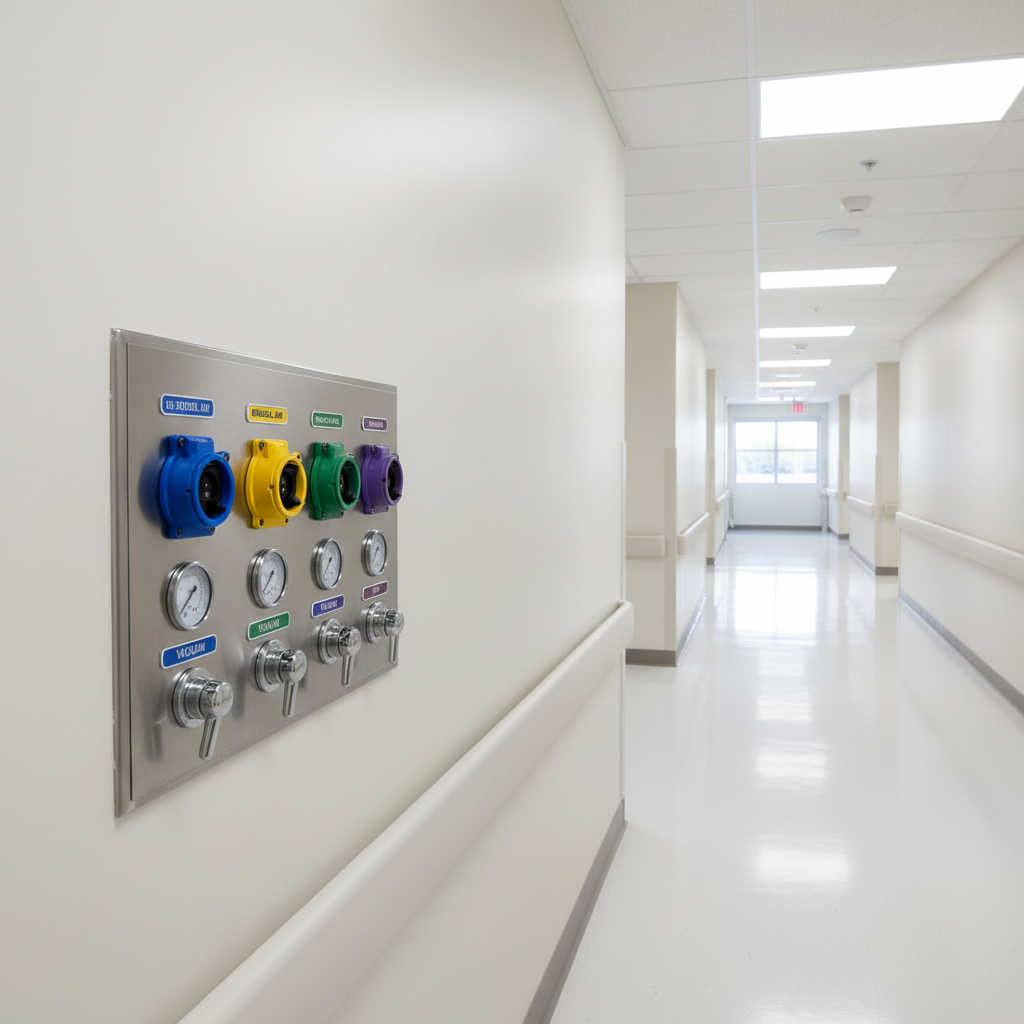
Labeling: All piping, valves, and outlets must be clearly and correctly labeled to prevent life-threatening errors.
Source Equipment: The verifier will inspect the function of compressors, vacuum pumps, manifolds, and automatic switchovers.
At Medical Testing Solutions, our process is built around these NFPA 99 requirements, delivering reports that provide the clear documentation that surveyors demand.
The ASSE 6000 Standard: Who is Qualified to Inspect Your System?
Not just anyone can or should inspect your medical gas system. NFPA 99 is clear that this work must be performed by a qualified individual. The industry standard for this qualification is the ASSE 6000 series of professional certifications.
The Importance of an ASSE 6030 Certified Verifier
An ASSE 6030 Certified Medical Gas Verifier is a professional who has undergone extensive training and passed a rigorous examination on all aspects of medical gas systems, including installation, inspection, testing, and documentation. They possess a deep understanding of NFPA 99, engineering principles, and the clinical application of medical gases. Hiring a verifier with this credential is your best assurance that the inspection is being performed correctly and authoritatively. Our team at Medical Testing Solutions consists of ASSE-certified professionals ready to serve facilities in Wellington and throughout Florida.
The ASSE 6010 certification is for installers, while the ASSE 6030 certification is for verifiers. An annual inspection must be performed by an ASSE 6030 Verifier.
The Annual Medical Gas Inspection Process: A Step-by-Step Overview
While the exact process may vary with facility size, a typical annual inspection follows a structured plan to ensure thoroughness and minimize disruption to your operations.
Scheduling & Documentation Review: The process begins with a review of previous inspection reports and system documentation. The inspection is scheduled to coordinate with your facility's staff and avoid peak hours in sensitive areas.
Source Equipment Inspection: The verifier thoroughly inspects all source equipment, including air compressors, vacuum pumps, and gas manifolds. This includes checking run times, switchover functions, and overall condition.
Alarm System Testing: Every master and area alarm is tested. This is a critical step that requires coordination with clinical staff to manage the brief, controlled alarm activations.
Zone Valve Checks: All zone valves are located and checked to ensure they are accessible, correctly labeled, and have not been improperly closed.
Outlet and Inlet Testing: The verifier connects specialized testing equipment to a representative number of station outlets and vacuum inlets in each area. They measure flow and pressure to confirm they are within the specifications outlined in NFPA 99.
Labeling & Signage Verification: The inspector walks the system to ensure that all pipes, valves, and outlets are clearly and accurately labeled per code.
Comprehensive Reporting: Upon completion, the verifier provides a detailed report. This document outlines every test performed, the results, any deficiencies found, and recommendations for correction. This report is your official record for The Joint Commission and other AHJs.
Accessibility, correct labeling, and ensuring they are in the open position
5.1.4.8
Station Outlets
Gas-specific indexing (DISS/latchkey), flow, pressure, and physical condition
5.1.5
System Labeling
Accuracy, visibility, and compliance with color codes and nomenclature
5.1.11
Piping
General condition, support, and absence of damage or unapproved modifications
5.1.10
Our medical gas verification services provide this level of detail, ensuring every aspect of your system is accounted for.
Common Issues Found During Inspections (And How to Prevent Them)
Annual inspections often uncover minor issues that can be corrected before they become major problems. Common findings include:
Worn or Damaged Outlets: Outlet components wear out over time, which can cause leaks or connection problems.
Incorrect Labeling: Staff changes and facility modifications can lead to outdated or incorrect labels on valves and alarms.
Alarm Malfunctions: A master or area alarm may fail to activate at the correct pressure setpoint.
Minor Leaks: Small leaks in the piping system waste gas and can pose a fire hazard with oxygen.
Many of these issues can be avoided with a proactive maintenance plan. Regular maintenance from a qualified provider can identify and fix problems between annual inspections. Investing in preventative medical gas maintenance services is a cost-effective way to ensure compliance and reliability.
Your Partner for Compliance in Wellington, FL
Ensuring your medical gas system is safe and compliant is a significant responsibility. For healthcare facilities in Wellington and across South Florida, partnering with a qualified, certified, and experienced testing company is essential. The ASSE-certified team at Medical Testing Solutions provides thorough, non-disruptive annual inspections that deliver the documentation you need for your next survey.
Ready to ensure your facility is compliant and your patients are safe? Contact the ASSE-certified experts at Medical Testing Solutions today. Call us at +1 (754) 315-1078 or request a quote online for your annual medical gas inspection in Wellington, FL.
'''
Frequently Asked Questions
For most healthcare facilities, a comprehensive inspection by an ASSE 6030 verifier is required annually per NFPA 99 standards.
Only a credentialed ASSE 6030 Certified Medical Gas Verifier is qualified. A general plumber, HVAC technician, or facility maintenance person without this specific certification cannot perform this work.
You will receive a detailed, multi-page report that is "Joint Commission ready." It documents all tests performed, the pass/fail results for each, and any deficiencies found, providing a clear record of compliance.
The duration depends on the size and complexity of your facility. A small clinic might take a day, while a large hospital in Wellington could take several days to a week. We work efficiently to minimize any disruption to patient care.
Yes. An *annual inspection* is a periodic check of a live, operational system to ensure it continues to function safely. A full [medical gas certification](/medical-gas-certification) is a much more intensive process performed on newly installed or modified systems before they are placed into service to care for patients.
Request a quote for your facility
Talk with Medical Testing Solutions about your next inspection, repair or equipment request.