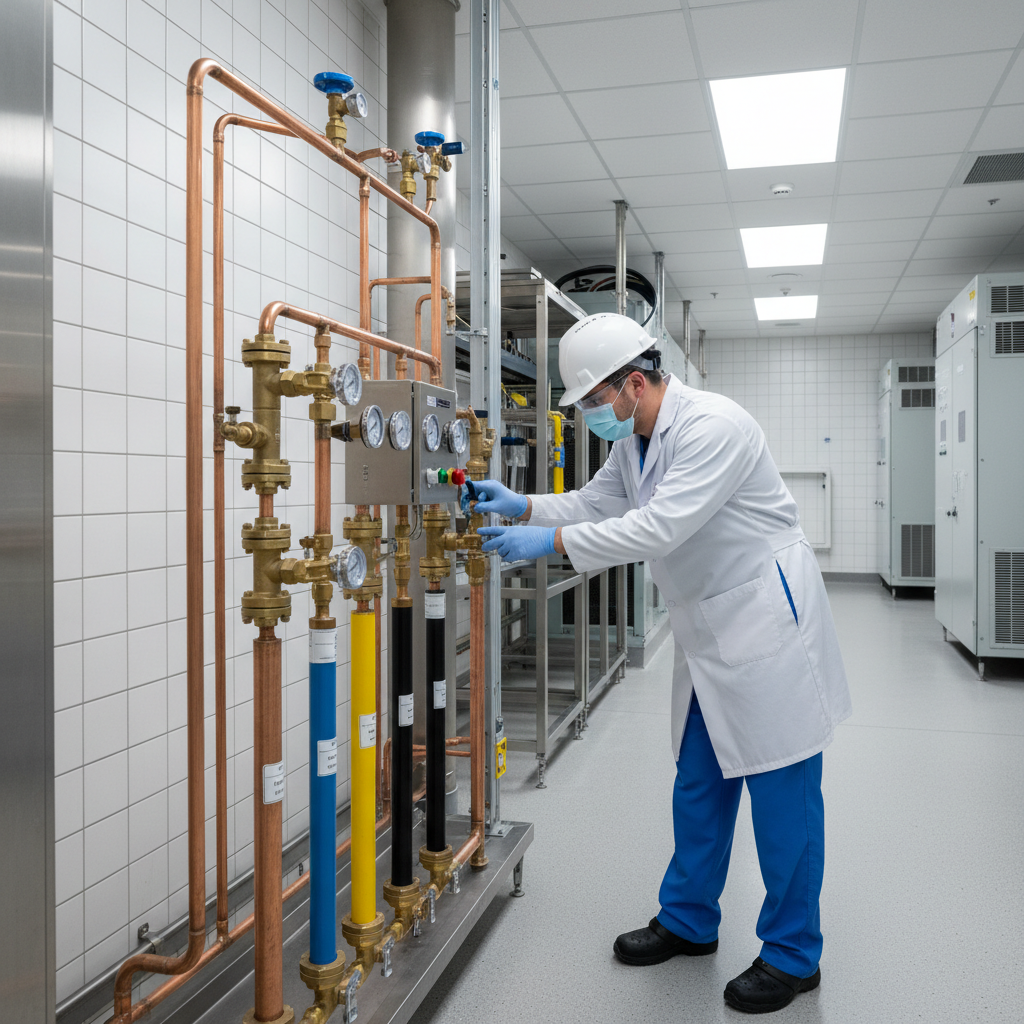
Medical Gas Inspection in St Augustine, FL: A Guide to NFPA 99 Compliance
Medical Testing SolutionsJune 21, 20268 min read
Share
Medical gas systems are a critical life support utility in any healthcare facility, from hospitals and surgery centers to dental offices. Ensuring these systems are safe, reliable, and compliant is not just a best practice, it's a requirement mandated by law and accrediting bodies. For facility managers in St. Augustine, Florida, this means navigating the complexities of annual inspections to ensure the safety of patients and staff. An annual medical gas inspection by an ASSE-certified professional is the cornerstone of a compliant medical gas management program.
This definitive guide will walk you through everything you need to know about medical gas inspections in the St. Augustine area. We will explore the specific code requirements under NFPA 99, detail what a proper inspection entails, and explain how to choose a qualified service provider. By understanding this process, you can ensure your facility is prepared, compliant, and always ready for a Joint Commission survey.
Why Annual Medical Gas Inspections are Non-Negotiable
Patient safety is the absolute priority. A medical gas system that delivers the wrong gas, incorrect pressure, or a contaminated product can have catastrophic consequences. Annual inspections are a primary preventative measure designed to identify and correct potential hazards before they can cause harm. These inspections verify the operational integrity of the entire system, from the source equipment to the patient-use station outlets.
Beyond the ethical imperative for safety, there is a strict regulatory framework. In Florida, healthcare facilities are surveyed by organizations like The Joint Commission (TJC), DNV GL, and the Agency for Health Care Administration (AHCA). These bodies enforce the standards outlined in the National Fire Protection Association's NFPA 99, Health Care Facilities Code. An annual inspection provides the necessary documentation to prove compliance and avoid costly findings or, in worst-case scenarios, loss of accreditation.
Why this matters for compliance: The Joint Commission and other accrediting organizations (AOs) survey directly against NFPA 99. Failure to provide documentation of an annual inspection by a certified professional (per ASSE 6000 series) can lead to findings, citations, and potential risks to your accreditation status. A detailed report from a company like Medical Testing Solutions serves as your objective evidence of compliance.
Understanding the Codes: NFPA 99 and ASSE 6000 Series
A compliant medical gas inspection program is built on a foundation of industry codes and personnel qualifications. Two main standards govern this process: NFPA 99 for system requirements and the ASSE 6000 series for personnel certification.
NFPA 99's Role in Annual Inspections
NFPA 99 is the core document that dictates the requirements for medical gas systems in the United States. Specifically, Chapter 5, "Gas and Vacuum Systems," outlines the criteria for inspection, testing, and maintenance. For existing facilities, the code requires a routine inspection schedule to ensure the system continues to perform as originally designed and verified.
Key requirements subject to annual inspection include:
Source Equipment: Functionality and alarm testing of medical air compressors, vacuum pumps, and manifolds.
Warning Systems: Testing of all master, area, and local alarm panels to ensure they activate at the correct setpoints.
Valves: Confirmation of zone valve accessibility, labeling, and proper operation.
Station Outlets: Testing for flow, pressure, and mechanical function of every outlet and inlet.
Labeling: Verification that all piping is correctly labeled with the gas name and direction of flow.
The Importance of ASSE 6000 Certified Personnel
NFPA 99 mandates that the individuals who inspect, maintain, or verify medical gas systems must be qualified. The American Society of Sanitary Engineering (ASSE) 6000 series provides the national standard for this qualification.
ASSE 6030 Verifier: The credential required to perform system verification after new installation or modification. They have a deep, technical understanding of all system components and testing procedures.
ASSE 6040 Maintenance Personnel: This certification qualifies an individual to perform maintenance and, importantly, conduct the annual inspections of medical gas systems.
When you hire a company for your medical gas inspection in St Augustine FL, you must ensure their technicians hold, at a minimum, the ASSE 6040 certification. The technicians at Medical Testing Solutions hold these credentials, ensuring that your inspection is performed by a competent and qualified professional who understands the nuances of the codes.
What to Expect During a Medical Gas Inspection
A thorough inspection is a systematic, multi-point process. While the exact duration depends on the size of your facility, the steps are consistent.
Initial Review: The inspector will start by reviewing your facility's previous reports and system documentation.
Source Equipment Analysis: The inspection begins at the source, evaluating compressors, vacuum pumps, WAGD pumps, and manifolds.
Alarm Testing: The verifier will test every alarm panel by simulating fault conditions (e.g., high/low pressure) to ensure they trigger audible and visual warnings as required.
Zone Valve Inspection: The inspector will walk the facility to locate and operate a percentage of zone valves, confirming they are accessible, correctly labeled, and function properly.
Outlet and Inlet Testing: Every medical gas outlet and vacuum inlet in patient care areas is tested for proper pressure, flow, and gas specificity. This step is critical for ensuring patient safety at the point of use.
Reporting: Upon completion, you should receive a comprehensive digital report detailing all procedures performed, the results of each test, any deficiencies found, and specific, actionable recommendations for remediation. This report is your proof of compliance for surveyors.
Key Components Inspected in Your St. Augustine Facility
A proper annual inspection covers dozens of individual checks across multiple system components. The table below outlines some of the most critical areas of focus during an inspection.
Leaks from worn seals, low flow, physical damage, failed latching
Piping & Labeling
Correct gas-specific labels, physical integrity, proper support
Faded or incorrect labels, signs of corrosion, unsecured piping
Choosing the Right Medical Gas Inspection Provider in St. Augustine
Selecting a qualified partner for your medical gas services is a critical decision. Not all providers offer the same level of expertise or thoroughness.
Look for ASSE 6030 and 6040 Certification
This is the most important factor. Always ask for proof of ASSE certification for the technicians who will be on-site at your facility. This ensures they have passed a rigorous exam and are competent to work on your life-support systems. An inspection performed by uncertified personnel is invalid and will be rejected by AOs.
A cheap inspection often comes with a simple, one-page "pass/fail" checklist. This is insufficient for a surveyor. A professional provider like Medical Testing Solutions will give you a detailed, multi-page digital report with photos, readings, and clear explanations of any issues. This level of detail demonstrates a commitment to quality and gives you a clear path forward for any necessary repairs.
Breadth of Service
Ideally, your inspection provider should also be able to assist with remedying any deficiencies they find. A full-service company can offer medical gas maintenance services, repairs, and parts. This saves you the time and hassle of coordinating between multiple vendors. Furthermore, if your facility is planning a renovation or expansion, a company that also performs medical gas verification can be a valuable partner from start to finish.
Preparing for Your Annual Inspection
To ensure a smooth and efficient inspection process, facility managers can take a few preparatory steps:
Gather Documentation: Have previous inspection reports and any existing schematics of your medical gas system available for the inspector.
Ensure Access: Make sure all mechanical rooms, medical gas closets, and areas with zone valves or alarms are unlocked and accessible.
Notify Clinical Staff: Inform department heads and clinical staff about the scheduled inspection. While patient care is never interrupted, testing alarms and outlets can create noise and brief, coordinated downtime for a specific room or zone.
List Known Issues: If your staff has reported any problems, such as a leaking outlet or a recurring alarm, have a list ready for the inspector. This helps them target known issues efficiently.
Your Partner for Compliance in St. Augustine
Ensuring your medical gas systems are safe and compliant is a year-round responsibility that culminates in the annual inspection. By understanding the requirements of NFPA 99 and partnering with a certified, reputable provider, you can protect your patients, satisfy accrediting bodies, and maintain a safe healthcare environment.
Ready to ensure your facility is safe and compliant? The expert team at Medical Testing Solutions is here to help. We provide Joint Commission-ready reports and the peace of mind that comes from working with ASSE-certified professionals.
Contact us today for a free quote on your annual medical gas inspection. Call us at +1 (754) 315-1078 or request an inspection online to get started.
'''
Frequently Asked Questions
Medical gas systems must be inspected annually (every 12 months) to comply with NFPA 99 and The Joint Commission requirements.
Inspections must be performed by a qualified individual holding an ASSE 6040 Medical Gas Maintenance Personnel or ASSE 6030 Medical Gas Verifier certification.
An inspection is a periodic check of an existing, operational system. A medical gas verification is a much more comprehensive series of tests performed on a new system or following any modification or addition to an existing system, before it is used for patient care.
The duration varies with the size and complexity of the facility. A small dental clinic may take a few hours, while a large hospital can take several days. A good provider will give you an accurate time estimate beforehand.
The inspection company will provide a detailed report listing all deficiencies. Your facility is then responsible for arranging repairs. The same company can often provide a quote and perform the necessary repairs to bring the system back into compliance.
Yes. Medical Testing Solutions, headquartered in South Florida, provides ASSE-certified medical gas inspections, maintenance, and verification services throughout the state, including St. Augustine and all of St. Johns County.
Request a quote for your facility
Talk with Medical Testing Solutions about your next inspection, repair or equipment request.