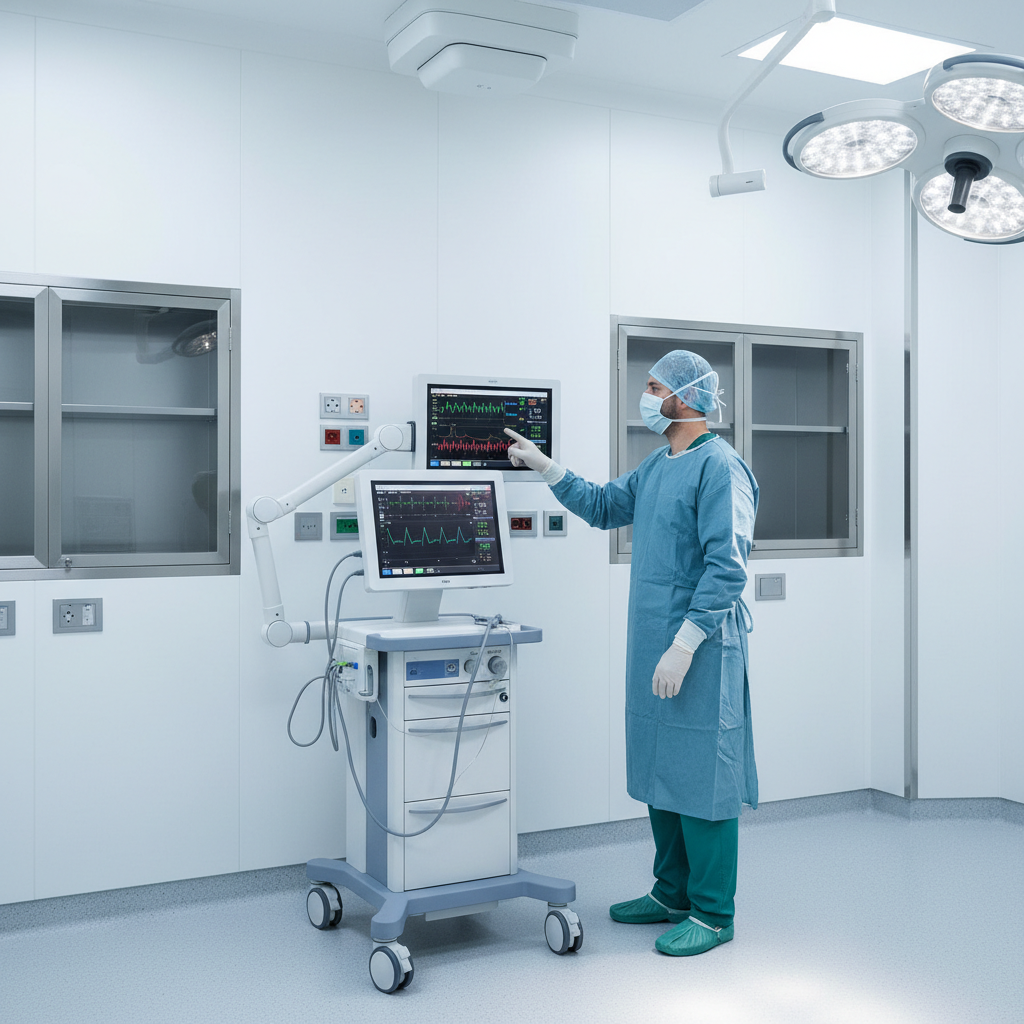
Operating rooms, intensive care units, and cardiac catheterization suites in Southern California rely on isolated power systems (IPS) to protect patients and clinical staff from microshock, electrocution, and power interruptions. The central component governing these systems is the line isolation monitor (LIM). Regular line isolation monitor inspection in San Diego, CA ensures health systems, ambulatory surgery centers (ASCs), and specialized clinics remain compliant with NFPA 99 Chapter 6 and California Department of Public Health (CDPH) standards.
In this guide, facility managers, biomedical engineering directors, and hospital safety officers will learn:
- The electrical physics and clinical function of isolated power systems and LIMs
- The specific testing protocols mandated by NFPA 99-2024 and NFPA 70 (NEC Article 517)
- Common failure modes uncovered during routine LIM testing
- How Medical Testing Solutions deploys ASSE-certified technicians to conduct comprehensive inspections across San Diego County
The Role of Isolated Power Systems & LIMs in Wet Procedure Locations
Standard grounded commercial electrical distribution systems deliberately connect the neutral wire to the earth ground. In everyday environments, if a hot wire faults to an enclosure, current surges to ground, tripping an overcurrent protection device (circuit breaker) to eliminate fire and shock hazards.
In a healthcare environment, particularly a designated wet procedure location like an operating room, interrupted power is catastrophic. If a breaker trips during an active open-heart bypass or laparoscopic procedure, life-sustaining monitors, cardiopulmonary bypass machines, and electrosurgical units immediately shut down.
Isolated power systems solve this dilemma. Through an ungrounded isolation transformer, electrical power is distributed with neither conductor bonded to ground. If one conductor faults to a conductive chassis or fluid enters a surgical outlet, there is no direct conductive loop back to the source. The circuit breaker does not trip, and life-critical equipment continues operating without interruption.
| Diagram text |
|, |
| Standard Grounded System: |
| Line 1 (Hot) - → Equipment - → Neutral (Grounded to Earth) |
| Fault to Earth = Immediate Breaker Trip & Blackout |
| Isolated Power System (IPS): |
| Line 1 (Ungrounded) → -> Line 2 (Ungrounded) |
| Separation via Isolation Transformer |
| Single Fault to Earth = Current Continues Flowing Safely |
However, once that first fault occurs, the system effectively reverts to a conventional grounded circuit. A subsequent fault on the opposite conductor would trigger a dead short, tripping the circuit and exposing surgical staff or catheterized patients to lethal microshock currents (which can induce ventricular fibrillation at levels as low as 10 to 50 microamperes).
This is where the line isolation monitor serves its critical purpose. The LIM continuously monitors the impedance from each ungrounded conductor to ground. It calculates what total hazard current would flow if an individual were to come into contact with the isolated conductors and ground simultaneously. When this calculated Total Hazard Current (THC) exceeds a defined threshold (typically 5 milliamperes or 2 milliamperes for older installations), the LIM activates audible and visual alarms.
Why this matters for compliance: The Joint Commission (TJC), DNV Healthcare, and CDPH inspectors scrutinize isolated power system logs. Under NFPA 99 § 6.3.2.9, failure to verify LIM alarm thresholds, response times, and system impedance can lead to immediate condition-level citations and operational halts in surgical suites.
To ensure your facilities meet every code requirement, schedule scheduled line isolation monitor testing with an accredited partner.
NFPA 99 Chapter 6 and California Regulatory Framework
Inspecting and testing line isolation monitors in San Diego requires adherence to national codes adapted to California's strict regulatory oversight.
Key Regulatory Standards
- NFPA 99: Health Care Facilities Code (Chapter 6 - Electrical Systems):
- § 6.3.2.6: Outlines requirements for isolated power systems in Category 1 (critical care) spaces.
- § 6.3.2.9: Mandates regular operational testing of the LIM.
- § 6.3.4: Details record-keeping requirements, requiring documented test results to be maintained permanently for accreditation auditing.
- NFPA 70: National Electrical Code (NEC Article 517):
- Governs health care facility wiring, defining wet procedure locations and prescribing the installation of isolated power panels.
- California Building Standards Code (Title 24, Part 3 - California Electrical Code):
- Enforces specific seismic anchoring and distribution mandates that affect isolated power panel installations across seismic zones in San Diego County.
- Department of Health Care Access and Information (HCAI / formerly OSHPD):
- HCAI oversees hospital physical plant compliance in California. Any physical modification, replacement, or testing protocol must align with approved HCAI field requirements.
Testing Intervals: Automated vs. Manual LIMs
NFPA 99 differentiates between older analog units and modern digital microprocessing units:
- Analog / Conventional LIMs: Must be tested monthly using the external test switch to verify alarm actuation, with comprehensive annual testing using external calibrated fault-injection instruments.
- Microprocessor-Based / Self-Testing LIMs: Units equipped with automated internal self-testing features may be inspected at extended intervals, typically annually, provided the self-test records internal faults and system operations without external manipulation.
Facility managers should pair these electrical evaluations with broader compliance protocols, such as annual medical gas inspections and periodic medical gas verification under ASSE 6030 guidelines, providing integrated safety across mechanical and electrical clinical utilities.
Step-by-Step Field Testing Procedure for LIMs
Technicians from Medical Testing Solutions adhere to strict engineering methodologies when conducting field evaluations in operating theaters and procedure rooms.
1. Pre-Testing Facility Coordination
- Coordinate with surgical scheduling directors to access empty operating suites between case turnovers or during scheduled maintenance windows.
- Notify biomedical engineering and facilities staff to prevent erroneous responses to audible alarm trips.
2. Physical & Visual Inspection
- Inspect the isolated power panel enclosure, verifying clean seals, lack of dust buildup, and secure seismic anchors as mandated by California Title 24.
- Check panel circuit directories, ensuring clear identification of surgical receptacles, operating lights, and imaging outlets.
- Inspect the LIM display faceplate for mechanical damage, cracked meter glass, degraded LEDs, or broken selector switches.
3. Verification of System Voltage & Ground Integrity
- Measure nominal phase-to-phase and phase-to-ground line voltages using a True-RMS digital multimeter.
- Inspect the system's reference grounding bus. The resistance between the isolated power system ground bus and the room reference grounding point must not exceed standard tolerances (typically under 0.1 ohm).
4. Controlled Dynamic Fault Injection
- The built-in push-to-test button on a LIM only verifies that the internal circuit activates under an engineered internal short; it does not prove calibration accuracy or external line impedance measurement.
- Connect a calibrated LIM Analyzer (e.g., Dale, Fluke, or Bender field testing standard) to Line 1, Line 2, and ground.
- Introduce calibrated resistive and capacitive leakage currents in step increments (microamperes) until the alarm threshold trips.
5. Alarm Threshold & Meter Accuracy Documentation
- Record the exact point of actuation. Under NFPA 99, the alarm must trip when the Total Hazard Current reaches 5.0 mA (or 2.0 mA on specific legacy systems).
- Validate the accuracy of the LIM’s integrated analog meter or digital readout against the external analyzer’s calibrated measurement. Reading errors exceeding ±10% indicate aging components or calibration drift.
6. Acoustic & Visual Annunciation Verification
- Confirm that the green "SAFE" LED illuminates during nominal conditions.
- Confirm that the red "HAZARD" LED illuminates instantly when the fault threshold is crossed.
- Verify that the audible alarm triggers simultaneously and that the alarm silence switch functions correctly while leaving the visual alert active until the fault clears.
LIM Technical Specifications & Testing Comparison
The following table contrasts the operational parameters, codes, and maintenance considerations across different generations of line isolation monitors found in San Diego hospitals:
| Feature / Parameter | Legacy Analog LIMs (e.g., Early Square D, Federal Pacific) | Modern Microprocessor LIMs (e.g., Bender, PG LifeLink, Schneider) |
|---|
| Code Standard | NFPA 99 (Pre-1996 editions) | NFPA 99 (2012, 2018, 2021, 2024 editions) |
| Alarm Threshold | 2.0 mA or 5.0 mA THC | 5.0 mA THC (Standard); Adjustable down to 2.0 mA |
| Meter Response | Analog D'Arsonval movement | High-resolution digital LCD/LED display |
| Testing Frequency | Monthly physical actuation; Annual calibrated injection | Self-testing internal circuit; Annual calibrated testing |
| Fault Detection Type | Predominantly resistive leakage; poor capacitive differentiation | True RMS measurement; monitors both resistive & capacitive leakage |
| Internal Impedance | Minimum 100,000 ohms | > 1,000,000 ohms (substantially lower hazard contribution) |
| Communication / BMS | Dry contact relays only | Modbus, BACnet, Ethernet, remote nurse station displays |
| Common Failure Modes | Needle stick, resistor drift, dried electrolytic capacitors | Sensor calibration drift, digital board power supply failure |
Critical Clinical Spaces Requiring Isolated Power in San Diego
San Diego County hosts world-class clinical research hospitals, military medical centers, and outpatient surgical networks. Facility directors must identify which specific spaces require isolated power systems under NFPA 99 Category 1 designations:
| Diagram text |
|, |
| Mandatory Category 1 Isolated Power / LIM Locations |
| • Inpatient Operating Rooms (General, Cardiac, Neuro) |
| • Ambulatory Outpatient Surgery Centers (ASCs) |
| • Cardiac Catheterization & Interventional Radiology Suites |
| • Labor & Delivery Cesarean Section Operating Suites |
| • Intensive Care Units (Designated wet procedure beds) |
| • Neonatal Intensive Care Units (Wet procedure procedure bays) |
| • Trauma Resuscitation Bays (Emergency Departments) |
Operating Rooms and Outpatient Surgical Suites
In standard ORs, conductive fluids (saline, blood, irrigation solutions) pool on surgical floors around power cables and foot pedals. These areas are classified as wet procedure locations under NFPA 70 § 517.20, unless the facility demonstrates an operating protocol that prevents fluid pooling. Isolated power with active LIM protection eliminates the hazard of macroshock while preventing nuisance tripping during surgery.
Cardiac Catheterization and Electrophysiology Labs
During cardiac catheterization, conductive catheters are inserted directly into the patient's heart chambers. In this state, the patient's skin resistance is completely bypassed. Leakage currents as low as 10 microamperes can trigger ventricular fibrillation. The high internal impedance of modern LIMs ensures that baseline leakage added by the monitoring equipment itself remains negligible.
Maintaining total facility compliance also means ensuring that life-support systems have uninterrupted medical gases. If your team is updating or retrofitting surgical suites, integrate electrical testing with medical gas installation and planned medical gas maintenance services to streamline regulatory documentation.
Common Causes of LIM Alarms in Operating Theaters
When a line isolation monitor goes into alarm during a procedure, clinical staff often assume the monitor itself is broken. In most cases, the LIM is doing exactly what it was engineered to do: alerting staff to an electrical hazard. Our technicians frequently isolate the following root causes:
1. Cumulative Equipment Leakage
Every piece of line-powered equipment plugged into the isolated power panel contributes a minute amount of capacitive and resistive leakage. If an OR panel powers five monitors, two electrosurgical generators, a fluid warmer, and an endoscopic tower, the sum of their individual leakages may surpass the 5.0 mA threshold without any single device failing.
2. Defective Line Cords and Fluid Intrusion
- Crushed, kinked, or aged power cords running across surgical floors allow current to track to ground.
- Saline or cleaning solutions entering floor boxes or multi-outlet assemblies create direct conductive paths across ungrounded conductors and the metal conduit.
3. Aging Transformer Insulation
The isolation transformer isolating the panel can degrade over decades of thermal cycling. As transformer winding insulation breaks down, leakage to the core (ground) increases, triggering persistent high baseline readings on the LIM even when all branch circuit breakers are turned off.
4. Calibration Drift in Legacy Monitors
Analog monitors rely on internal precision resistors, zener diodes, and mechanical meter movements. Over 15 to 25 years of continuous energization, these components drift out of tolerance, causing false-positive alarms or, far more dangerously, failing to alarm during genuine high-hazard conditions.
Why Choose Medical Testing Solutions in San Diego, CA
Medical Testing Solutions provides specialized health system testing across the San Diego metropolitan area, from La Jolla and Hillcrest to Chula Vista, Escondido, and Oceanside.
ASSE-Certified Technical Expertise
Our service team does not just test isolated power panels as general electricians; we approach healthcare facilities through the lens of patient safety and clinical compliance. Our technicians hold credentials across ASSE 6000 standards, including ASSE 6030 verification and ASSE 6010 installation, giving our team an understanding of the mechanical and electrical environments inside surgical suites. We also provide full medical gas certification alongside electrical testing.
Turnkey Reporting for HCAI, CDPH, and Accreditation Audits
When TJC or the California Department of Public Health audits your facility, paperwork matters as much as operational function. MTS provides:
- Comprehensive digital test sheets detailing baseline microamp readings for every monitored circuit
- Documented trip points (mA) compared against national tolerances
- Audio/visual operational verification
- Pass/Fail certifications signed by qualified field engineers
- Asset tracking and historical trending for multi-year capital replacement planning
Comprehensive Facility Solutions
Beyond LIM testing, Medical Testing Solutions is an authorized distributor and service provider for healthcare infrastructure. We provide medical gas testing, equipment sales via our products catalog, and multi-system verification, eliminating the need to coordinate with multiple vendors to maintain regulatory readiness.
Actionable Preparation Checklist for Facility Managers
To minimize surgical disruption and guarantee a smooth inspection, facility directors should complete these items before the inspection team arrives on site:
- Review Room Availability: Block off target ORs or cath labs in the surgical scheduling software at least two weeks in advance.
- Locate Remote Annunciator Panels: Verify the location of remote LIM alarms situated at nurse stations or control desks; these must be verified in tandem with the primary panel.
- Notify Surgical & Clinical Staff: Inform surgical nurse managers that brief audible alarms will be triggered during testing procedures.
- Gather Historical Test Logs: Have previous years' testing records ready so technicians can benchmark baseline impedance and identify deteriorating trends.
- Ensure Unobstructed Access: Clear mobile carts, surgical tables, and sterilizing trays away from isolated power panels and emergency disconnect switches.
Schedule Your San Diego LIM Inspection Today
Ensure your facility maintains uncompromised patient safety and complete compliance with NFPA 99, California Title 24, and HCAI standards. Medical Testing Solutions dispatches certified technicians throughout San Diego County to provide thorough, non-disruptive line isolation monitor testing, complete documentation, and remediation support.
Contact our medical electrical and gas engineering team today: