In any hospital operating room or critical care area, the stability of the electrical supply is paramount. Isolated power systems are the safety backbone in these "wet procedure locations," designed to protect patients and staff from electric shock. The line isolation monitor, or LIM, is the vigilant watchdog of this system. However, a LIM is only effective if it's working correctly. That's where regular, professional inspection and testing become critical for Pittsburgh-area healthcare facilities. This guide will walk you through the NFPA 99 requirements for LIM testing, the inspection process, and how choosing the right certified partner ensures patient safety and regulatory compliance.
Medical Gas Service
Compliance & Standards
Line Isolation Monitor Inspection Pittsburgh PA: A Guide to NFPA 99 Compliance
Medical Testing SolutionsJune 25, 20266 min read
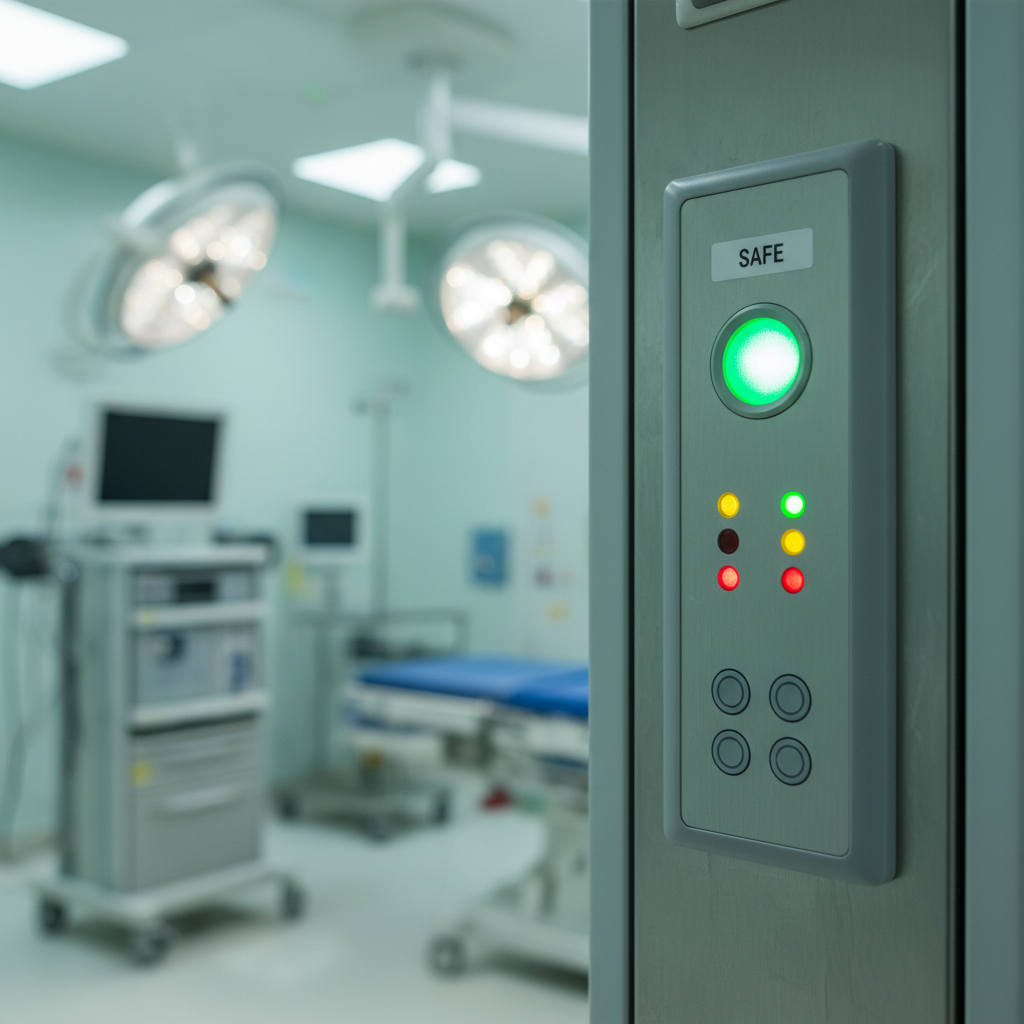
What is a Line Isolation Monitor (LIM)?
A Line Isolation Monitor is a device that continuously monitors the integrity of an ungrounded isolated power system. Per NFPA 99, Health Care Facilities Code, these systems are required in all "wet procedure locations" (Chapter 6.3.2.2.8.4) like operating rooms, ICUs, and cardiac cath labs.
Unlike a standard grounded system where a fault would trip a circuit breaker and cut power, an isolated power system is designed to contain the first fault, preventing power loss to life-support equipment. The LIM’s job is to detect that first fault and alert staff through audible and visual alarms, indicating that the system is no longer isolated and has become grounded. This gives personnel time to address the issue without a sudden, critical interruption of power. Essentially, the LIM measures the potential for current to flow from the isolated conductors to ground, gauging what's known as the "total hazard current."
Unpacking NFPA 99 LIM Inspection Requirements
The National Fire Protection Association (NFPA) sets the standard for healthcare safety. For LIMs, NFPA 99 (2021 Edition) is unambiguous about the need for consistent testing.
Monthly and Post-Procedure Testing
NFPA 99, Section 6.3.3.3.2, mandates that LIM test switches be operated to verify the alarm functionality. This test should occur:
- After installation: Before the system is put into service.
- Periodically: At intervals defined by the facility's risk assessment, but not exceeding 1 month.
- After any repair or renovation: To ensure the system is still functioning as designed.
A permanent record of these tests, including the date, time, and personnel conducting the test, must be maintained.
Annual Quantitative Testing by a Certified Technician
While monthly tests are functional checks, a more rigorous quantitative test must be performed by a qualified individual. This is where a company like Medical Testing Solutions comes in. Our ASSE 6040 Certified technicians perform annual inspections that go beyond the simple button-push test. This includes verifying the LIM’s accuracy at its alarm threshold (typically 5 mA for modern systems) and ensuring all indicators and remote alarm panels function correctly. This detailed inspection is a critical component of your facility's overall annual medical gas inspections.
Why this matters for compliance: Failure to document regular LIM testing is a common citation during Joint Commission and CMS surveys. Maintaining meticulous records demonstrates a proactive approach to patient safety and facility-wide compliance, preventing costly findings and potential disruptions to operations.
The LIM Inspection Process: A Step-by-Step Guide
When you partner with a certified testing agency, the process is straightforward and designed to minimize disruption to your clinical teams.
- Scheduling & Coordination: The inspection is scheduled at a time that is least disruptive to patient care, often during off-peak hours or scheduled downtime.
- Initial Assessment: The technician identifies all isolated power panel locations throughout your Pittsburgh facility.
- Physical Inspection: The technician visually inspects the LIM unit for any signs of damage, loose connections, or environmental wear.
- Functional "Go/No-Go" Test: The technician operates the LIM's internal test button to confirm the audible and visual alarms activate as expected. This satisfies the monthly NFPA 99 requirement.
- Quantitative Performance Test: This is the most critical step. The technician uses specialized equipment to simulate fault conditions and measure the exact hazard current at which the LIM alarms. They verify this matches the required setpoint (e.g., 5.0 mA).
- Documentation & Reporting: All findings are documented in a comprehensive report. This includes the location of the LIM, the date of the test, the results of the functional and quantitative tests, and the technician's certification credentials. This report becomes part of your permanent compliance record.
This rigorous process is essential not just after a new medical gas installation, but as part of a recurring maintenance strategy to ensure ongoing safety.
Comparing LIM Compliance Standards
Understanding the different requirements can help facility managers ensure all bases are covered. While NFPA 99 provides the baseline, manufacturer specifications can also play a role.
| Requirement | NFPA 99 (2021) Standard | Common Manufacturer Spec | MTS Best Practice |
|---|---|---|---|
| Alarm Setpoint | 5 mA for new systems | 5 mA | Verify & Calibrate to 5 mA |
| Monthly Test | Required (functional test switch) | Recommended | Performed & Documented |
| Annual Test | Implied via risk assessment; qualitative | Required (quantitative test) | Full Quantitative Test & Reporting |
| Record Keeping | Permanent written record required | Log results | Comprehensive Digital & Physical Reports |
| Technician | "Qualified personnel" | Factory-trained or certified | ASSE 6040 Certified Technicians |
Why ASSE 6040 Certification is Non-Negotiable
NFPA 99 uses the term "qualified personnel," but what does that mean in practice? The American Society of Sanitary Engineering (ASSE) provides a clear answer with its 6000 series certifications. An ASSE 6040 Certified Medical Gas Systems Maintenance specialist has demonstrated expertise in the ongoing maintenance of these critical systems, including isolated power.
Choosing a provider with ASSE 6040 certified staff means you are entrusting your facility to technicians who have passed a rigorous written and practical exam on the technical and safety aspects of medical gas and related electrical systems. They are fluent in the language of NFPA 99. The team at Medical Testing Solutions holds these credentials, bringing a level of expertise that general electricians or uncertified personnel simply cannot match.
For hospitals in Pittsburgh and across the country, insisting on ASSE 6040 certification is the single best way to guarantee that your LIM inspections are done right. This expertise is a core part of our comprehensive portfolio, which includes everything from initial medical gas certification to ongoing maintenance.
Nationwide Service with a Pittsburgh Focus
While Medical Testing Solutions is a nationwide company, we provide dedicated local service to healthcare facilities throughout the Greater Pittsburgh area. Our certified technicians are available to dispatch to your hospital, surgical center, or clinic, ensuring you receive prompt, expert service that understands local needs while being backed by a national quality standard. Whether you need an emergency repair or want to schedule your annual inspection, our team is ready to help ensure your facility is safe and compliant.
For a complete solution, our line isolation monitor testing services can be bundled with other essential compliance services, including our complete medical gas maintenance services.
Take the Next Step Towards Compliance
Don't let a failed line isolation monitor compromise patient safety or lead to a finding on your next compliance survey. Proactive, professional testing is the key to managing risk in your facility's most sensitive environments.
If you're a facility manager or biomedical engineer in the Pittsburgh, PA area, contact Medical Testing Solutions today to ensure your isolated power systems are inspected by ASSE 6040 certified experts.
Request a quote online or call us at +1 (754) 315-1078 to discuss your inspection needs.
Frequently Asked Questions
A wet procedure location is an area in a healthcare facility, such as an operating room, where procedures involving liquids are common. These areas pose a higher risk of electrical shock, which is why they require isolated power systems.
According to NFPA 99, the built-in test function must be used at least monthly and after any repairs. A full quantitative inspection performed by a certified technician is recommended annually as part of a comprehensive preventative maintenance program.
NFPA 99 specifies 'qualified personnel.' The industry best practice is to use a technician certified to ASSE 6040, Medical Gas Systems Maintenance Personnel, who has proven expertise in these specific systems.
If a LIM fails, it means the isolated power system may not be providing the intended level of protection. The unit should be repaired or replaced by a qualified technician as soon as possible to restore safety and compliance.
Facility staff can and should perform the monthly functional test using the LIM's test button. However, the annual quantitative test requires specialized equipment and knowledge to measure the alarm trip point accurately. This should be left to a certified third-party testing agency.
Request a quote for your facility
Talk with Medical Testing Solutions about your next inspection, repair or equipment request.