Line Isolation Monitor Inspection Oklahoma City OK: NFPA 99 Guide
Medical Testing SolutionsJune 25, 20267 min read
Share
In the high-stakes environment of a modern hospital operating room or intensive care unit, electrical safety is paramount. Isolated Power Systems are the unseen guardians in these critical spaces, and the Line Isolation Monitor (LIM) is their vigilant watchdog. But what is this device, and why is its regular, certified inspection a non-negotiable requirement for healthcare facilities in Oklahoma City? For facility managers and biomedical engineers, understanding LIMs isn't just about checking a box, it's about ensuring the safety of both patients and clinical staff from the devastating risk of electric shock.
This definitive guide explains the critical function of Line Isolation Monitors within the framework of NFPA 99. We will detail the specific inspection and testing requirements, outline the step-by-step process performed by certified professionals, and clarify why ASSE-certified expertise is essential for defensible compliance. By the end, you'll have a comprehensive understanding of how to maintain these life-saving systems in your Oklahoma City healthcare facility.
Understanding Isolated Power Systems and Line Isolation Monitors
Before diving into inspection requirements, it's essential to understand the system the LIM is designed to protect. Unlike the standard grounded power found in most of a hospital, critical patient care areas require a specialized approach to electrical distribution.
What is an Isolated Power System?
An Isolated Power System (IPS) is a specialized electrical system required by NFPA 99 in all "Wet Procedure Locations." These are areas like operating rooms, cardiac cath labs, and ICUs where liquids are often present, increasing the risk of electrical shock.
An IPS has no direct connection between its power-carrying conductors and the ground. By "isolating" the electrical supply from the ground, the system dramatically reduces the danger of macroshock (the type of shock that can stop the heart) if a person simultaneously touches a live conductor and a grounded surface. It provides a safer environment for both patients and staff, especially during invasive procedures where a patient may be particularly vulnerable to electrical current.
The Role of the Line Isolation Monitor (LIM)
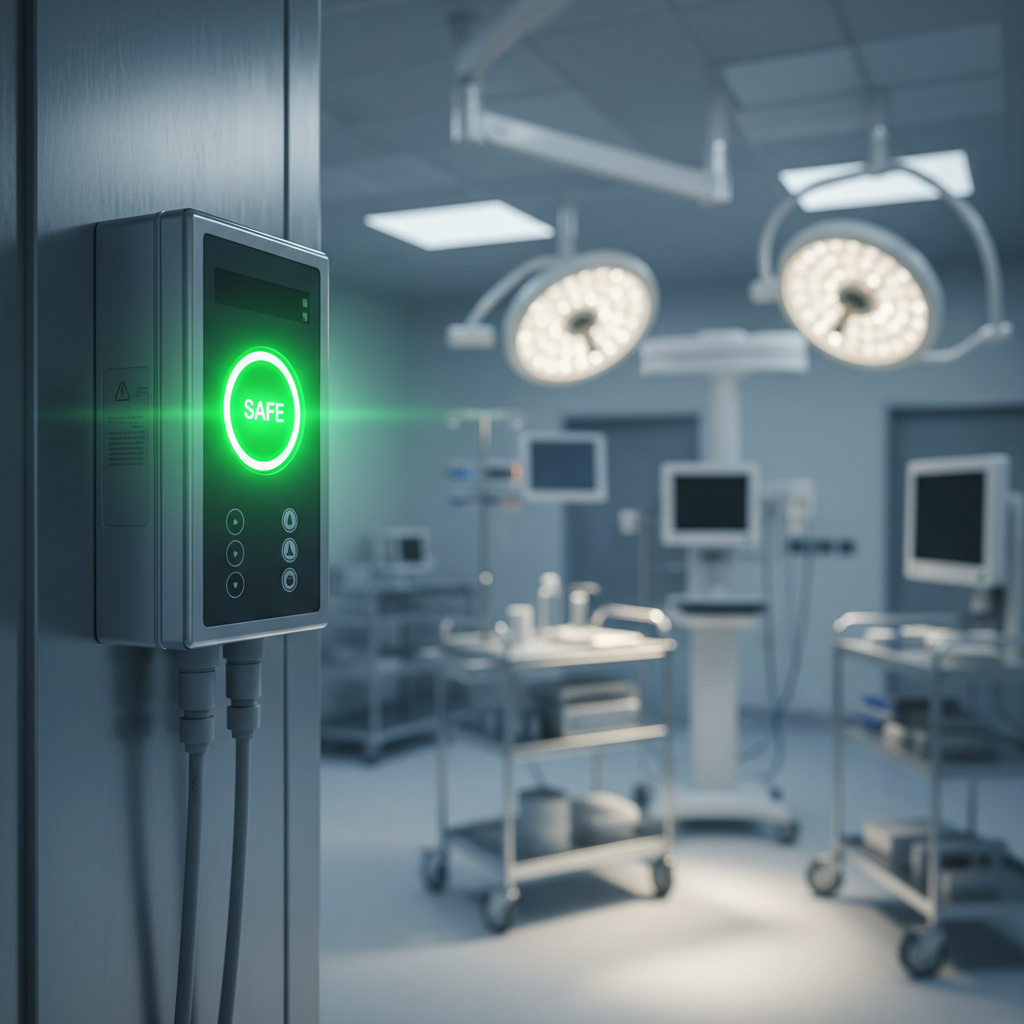
The Line Isolation Monitor is the brain of the Isolated Power System. Its sole job is to continuously monitor the "Total Hazard Current" (THC) of the entire system. THC, also known as leakage current, is the tiny amount of electrical current that naturally "leaks" from electrical equipment to ground.
A LIM will trigger audible and visual alarms if this total leakage current exceeds a predetermined safety limit, which NFPA 99 sets at 5 milliamperes (mA). Crucially, the LIM does not interrupt power when it alarms; it simply warns clinical staff that the system's safety margin has been compromised and that they should identify and remove the faulty piece of equipment if possible. This ensures that life-support equipment remains operational while alerting staff to a potential hazard.
NFPA 99 Requirements for LIM Inspection and Testing
The National Fire Protection Association (NFPA) standard 99, "Health Care Facilities Code," is the governing document for medical gas and electrical systems. It provides explicit requirements for the maintenance and testing of Line Isolation Monitors.
Testing Frequency and Documentation
According to NFPA 99 (2018 Edition), Section 6.3.4.1.4, all line isolation monitors must be tested using a method that includes the entire system. This testing must occur:
After installation is complete.
At least every 12 months (annually).
After any repairs or renovations to the system.
A detailed, written record of these tests must be maintained and available for inspectors from regulatory bodies like The Joint Commission, DNV, or the Centers for Medicare & Medicaid Services (CMS).
Why this matters for compliance: Failure to perform and document annual LIM inspections can result in citations, potential loss of accreditation, and significant liability. In Oklahoma, where NFPA 99 is adopted as a key safety standard, maintaining these records is mandatory proof that you are taking the necessary steps to protect against electrical hazards in critical care areas.
The "Self-Test" vs. Certified Inspection
Every LIM unit includes a "push-to-test" or "self-test" button. While useful, pressing this button only performs a qualitative check; it confirms that the alarm lights and buzzers are working. It does not verify the accuracy of the monitor's trip point.
A true, quantitative inspection, as required for compliance, must be performed by a qualified technician using specialized test equipment. This test validates that the LIM alarms at the correct milliamp threshold (5 mA). Only this quantitative test can certify that the device will perform as designed during an actual fault condition. This is why a third-party, ASSE 6030 certified inspection is the industry best practice.
The Line Isolation Monitor Inspection Process: A Step-by-Step Guide
When a certified technician from Medical Testing Solutions arrives to perform your line isolation monitor inspection in Oklahoma City OK, they follow a precise, multi-step process to ensure thoroughness and accuracy.
Visual Inspection: The technician first examines the LIM unit for any signs of physical damage, ensures it is securely mounted, and verifies that all instructional labeling is clear and legible.
Functional Test (Qualitative): The technician presses the LIM's "test" button to confirm that both the amber and red visual alarms, as well as the audible alarm, activate correctly.
Quantitative Trip-Point Verification: This is the most critical step. Using a calibrated LIM test set, the technician introduces a known, variable fault current onto the isolated circuit. They carefully increase the current to precisely measure the point at which the LIM alarms.
Accuracy Check: The measured trip point is compared against the NFPA 99 standard. The LIM must alarm at or before 5 mA of total hazard current. The technician will also check other specified alarm points if the LIM has multiple settings.
Alarm Confirmation: Throughout the quantitative test, the technician verifies that all remote alarm indicators connected to that LIM (e.g., at the nurse's station) are functioning in sync with the main unit.
Comprehensive Documentation: All readings, pass/fail status, location, date, and technician credentials are recorded on a detailed inspection report. This report is your defensible proof of compliance for any audit.
While all compliant LIMs perform the same basic function, different manufacturers offer various features. Understanding the landscape can be helpful for new installations or replacements.
Feature / Manufacturer
Bender
Post Glover (Powervar)
Schneider Electric
Model Series
LIM2010
PG-LIM
Iso-Gard
Key Technology
Advanced digital monitoring, network connectivity options
Reliable, widely installed base
Integrated solutions, often part of larger panel systems
Alarm Setpoint
Typically 5 mA (adjustable for specific needs)
Fixed at 5 mA per NFPA 99
Fixed at 5 mA per NFPA 99
Network Integration
Yes, Ethernet/BMS capable
Often requires separate modules
Yes, Modbus and other protocols available
Compliance
UL 1022, IEC 61557-8, NFPA 99
UL 1022, NFPA 99
UL 1022, NFPA 99
Best For
New construction, facilities wanting advanced analytics
Retrofits, standard OR/ICU compliance
Facilities standardized on Schneider Electric equipment
Why Choose ASSE-Certified Technicians for LIM Inspections in Oklahoma City?
Choosing a qualified vendor is just as important as performing the test itself. The American Society of Sanitary Engineering (ASSE) 6000 series provides the most respected credentials for medical gas and related systems personnel.
Expertise in NFPA Standards
An ASSE 6030 Certified Medical Gas Verifier has undergone rigorous training and passed a comprehensive exam covering NFPA 99, including the intricacies of electrical systems in Chapter 6. They don't just perform a test; they understand the code requirements behind it.
Specialized Testing Equipment
Proper LIM testing cannot be done with a standard multimeter. It requires purpose-built, calibrated test instruments that can safely introduce fault currents and provide precise readings. Certified technicians from Medical Testing Solutions are equipped with this specialized gear.
Comprehensive and Defensible Reporting
The documentation you receive from a certified third party is your primary evidence of compliance. Our reports are detailed, accurate, and structured to meet the stringent requirements of The Joint Commission and other authorities. This is a key part of our annual medical gas inspections program.
Medical Testing Solutions: Your Partner for Compliance in Oklahoma City
While our headquarters are in Florida, Medical Testing Solutions proudly serves a nationwide client base, including hospitals and healthcare facilities throughout Oklahoma City and the surrounding region. Our team of ASSE-certified technicians is your trusted resource for ensuring NFPA 99 compliance and, most importantly, patient safety.
Beyond LIM testing, we provide a full suite of services, including medical gas verification for new construction and renovations, installation support, and routine maintenance. We are your single source for medical gas and electrical system safety and compliance.
Frequently Asked Questions
A line isolation monitor (LIM) is a safety device that continuously monitors the leakage current in an isolated power system, used in hospital operating rooms and other wet procedure locations to protect against electric shock. It alarms when leakage current exceeds a safe level.
NFPA 99 requires LIMs to be tested after installation and at least annually (every 12 months). A facility's own risk assessment may also require more frequent testing. These tests must be performed by qualified personnel and fully documented.
While internal staff can and should press the LIM's "test" button as part of their rounds, a formal, quantitative inspection requires specialized test equipment and knowledge of ASSE 6000 standards. Using a certified third-party vendor like MTS is the best practice to ensure unbiased, defensible compliance.
If a Line Isolation Monitor fails its quantitative inspection, it must be repaired or replaced to ensure the safety of that electrical system. An ASSE-certified technician can help diagnose the cause, whether it's the LIM unit itself, faulty wiring, or a piece of equipment on the circuit with excessive leakage current.
Yes. While we provide dedicated `line isolation monitor inspection in Oklahoma City OK`, Medical Testing Solutions has a nationwide network of ASSE-certified technicians. We are dispatched from our headquarters in Fort Lauderdale, FL, to serve healthcare facilities across the entire United States.
Normal power systems have a direct connection to ground, creating a path for electricity that can cause severe shock. Isolated power systems, used in critical care areas, have ungrounded conductors, which significantly reduces the risk of shock if a person contacts one live wire and a grounded object.
Request a quote for your facility
Talk with Medical Testing Solutions about your next inspection, repair or equipment request.