Line Isolation Monitor Inspection Milwaukee WI: A Guide to NFPA 99 Compliance
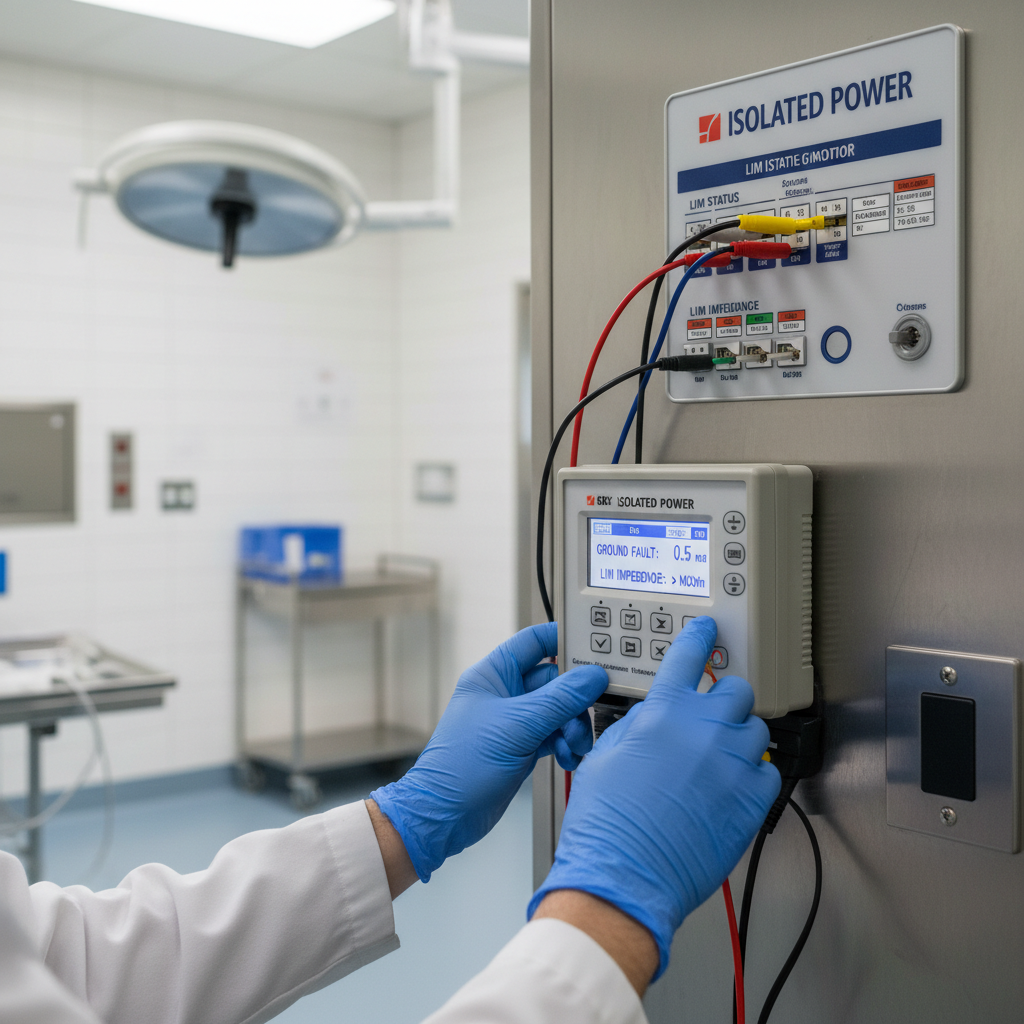
In any hospital, patient safety is paramount. For facilities in Milwaukee and across Wisconsin, ensuring the electrical safety of operating rooms and other wet procedure locations is a critical, non-negotiable aspect of patient care and regulatory compliance. This is the role of the Isolated Power System and its watchdog: the Line Isolation Monitor (LIM). An improperly functioning LIM can expose patients and staff to the risk of electric shock and compromise the very systems designed to protect them. This guide provides a definitive overview of LIM technology, the NFPA 99 inspection requirements, and how to ensure your facility remains compliant through certified testing.
You will learn what a line isolation monitor is, the specific testing requirements mandated by NFPA 99, the step-by-step inspection process, and how to choose a qualified, ASSE-certified provider for your Milwaukee hospital.
What is a Line Isolation Monitor (LIM)?
A Line Isolation Monitor is a safety device that continuously monitors the integrity of an Ungrounded Electrical System, also known as an Isolated Power System (IPS). These systems are required by NFPA 99, Chapter 6, in all "wet procedure locations" such as operating rooms, ICUs, and cardiac catheterization labs.
The Role of Isolated Power Systems (IPS) in Hospitals
Unlike the grounded power you have in your home, an IPS has no direct connection to ground. The power is supplied through an isolation transformer. This creates a system where the first accidental contact between an energized conductor and a grounded object (like a person or a piece of equipment) does not cause a large fault current or a shock. Instead, the LIM detects this first fault, alerts staff via audible and visual alarms, and allows the procedure to continue safely while the issue is addressed.
This is critical in a medical setting where a sudden power outage from a tripped circuit breaker could have catastrophic consequences for a patient undergoing a life-sustaining procedure. The IPS provides an uninterrupted, safer power supply.
How LIMs Protect Patients and Staff in Wet Locations
The "wet procedure location" designation is key. In these environments, the presence of saline, irrigation fluids, and other conductive liquids increases the risk of electrical shock. The human body's resistance to electricity drops significantly when wet, making even small amounts of current dangerous.
The LIM continuously monitors the "Total Hazard Current" (THC) of the Isolated Power System. The THC is the sum of all leakage currents from the equipment plugged into the system. If the THC exceeds a pre-determined threshold (typically 5 mA as per NFPA 99), the LIM will alarm, signaling that a potential hazard exists.
NFPA 99 Requirements for LIM Inspection
The National Fire Protection Association (NFPA) sets the standards for healthcare facilities in the United States. NFPA 99, the Health Care Facilities Code, is the primary document governing medical gas and electrical systems. When it comes to LIMs, the requirements are strict and unambiguous.
Chapter 6: Electrical Systems Explained
NFPA 99, Chapter 6, "Electrical Systems," mandates that line isolation monitors be tested and documented to ensure they are functioning correctly. Specifically, section 6.3.3.3.2 states that each LIM circuit must be tested at regular intervals. This is not a suggestion; it's a requirement for accreditation and patient safety.
The code requires that LIMs be tested after installation and then on a periodic basis. This periodic testing is defined by the facility's risk assessment but is widely accepted as an annual requirement.
Why this matters for compliance: Failure to perform and document annual LIM testing can result in a finding during a Joint Commission survey. More importantly, it represents a failure to ensure the safety of your electrical systems, putting patients and staff at unnecessary risk. Proper documentation is your proof of compliance and due diligence.
The Importance of Correct Documentation
Every inspection must be documented. The records should include:
- Date of the test
- The room or area where the LIM is located
- The readings of the hazard current at which the monitor alarms
- The name and signature of the person who performed the test
These records are crucial for demonstrating compliance to regulatory bodies and for tracking the performance of your equipment over time. As an ASSE-certified provider, Medical Testing Solutions provides detailed, audit-ready reports for every inspection.
The LIM Inspection Process: A Step-by-Step Guide
A proper LIM inspection must be performed by a qualified technician, ideally one holding an ASSE 6030 Medical Gas Systems Verifier certification. The process involves more than just pushing the "test" button on the unit.
- Visual Inspection: The technician will inspect the LIM for any physical damage, loose connections, or incorrect installation.
- Functional Self-Test: The technician will activate the monitor’s internal self-test function to ensure the audible and visual alarms are working correctly.
- Meter and Lead Test: The technician will use a specialized, calibrated meter to simulate fault conditions and measure the LIM's trip point. This verifies that the monitor alarms at the correct hazard current level (e.g., 5 mA).
- Alarm Verification: The test confirms that both the red "Alarm" light and the audible tone activate when the fault threshold is crossed.
- Documentation: The technician records all findings, including the "as-found" and "as-left" trip values, on a detailed inspection report for the facility's records.
For facilities looking to standardize this process, our team offers comprehensive line isolation monitor testing services that cover every aspect of NFPA 99 compliance.
Choosing a Certified Provider for LIM Testing in Milwaukee
Not all testing providers are created equal. When selecting a company for your line isolation monitor inspection in Milwaukee, WI, you need to ensure they have the right credentials and experience.
The Importance of ASSE 6000 Certification
The American Society of Sanitary Engineering (ASSE) 6000 series provides professional qualifications for individuals working with medical gas and vacuum systems. An ASSE 6030 Verifier has demonstrated expertise in testing and verifying that these critical systems, including the electrical components they interact with, are installed correctly and are safe for use. While an electrician can install the system, an ASSE 6030 Verifier is specially trained to certify its compliance with NFPA 99. Partnering with a company like Medical Testing Solutions, whose technicians are ASSE 6030 certified, ensures the highest level of expertise.
LIM Testing Equipment Comparison
Different LIM manufacturers have different features, but the testing principles remain the same. A certified technician will be familiar with all major brands.
| Feature | Bender | PG LifeLink | Square D |
|---|---|---|---|
| Technology | Advanced digital monitoring | Digital with network capability | Traditional analog/digital |
| Networkability | Yes, extensive | Yes, integrated | Limited |
| Common Models | LIM2010 | LIM-2020 | Series G, M, L |
| NFPA 99 Compliant | Yes | Yes | Yes |
Regardless of the brand installed in your facility, the requirement for periodic testing as part of your annual medical gas inspections remains the same. This testing should be considered a vital part of your facility's overall medical gas maintenance services.
Why Milwaukee Hospitals Trust Medical Testing Solutions
With a nationwide dispatch network and a strong presence in the Midwest, Medical Testing Solutions is a trusted partner for hospitals in the Milwaukee area. We understand the unique challenges faced by healthcare facilities, from legacy infrastructure to the pressures of maintaining accreditation.
Our approach is simple: provide authoritative, expert service that ensures compliance and patient safety. Our ASSE-certified technicians perform not only LIM testing but also comprehensive medical gas verification and certification services. We ensure that issues stemming from initial medical gas installation are identified and that your systems are fully compliant.
Get Your Quote for Line Isolation Monitor Inspection
Don't leave the safety of your patients and the compliance of your facility to chance. Ensure your operating rooms and wet locations are protected by fully functional, regularly tested line isolation monitors. The expert technicians at Medical Testing Solutions are ready to provide certified LIM inspections for your Milwaukee hospital.
To protect your patients and ensure NFPA 99 compliance, request a quote online or call us today at +1 (754) 315-1078 to schedule your service.
Frequently Asked Questions (FAQs)
What is a Line Isolation Monitor (LIM)?A Line Isolation Monitor, or LIM, is a safety device required by NFPA 99 in hospital operating rooms and other wet procedure locations. It continuously monitors the Isolated Power System and alarms if it detects an electrical fault, protecting patients and staff from electric shock without interrupting power.
How often do LIMs need to be tested?According to NFPA 99 (Chapter 6), LIMs must be tested after installation and periodically thereafter. The standard industry practice, followed to ensure Joint Commission compliance, is to perform and document these tests at least once every 12 months.
Who is qualified to perform LIM inspections?LIM inspections should be performed by a qualified individual with a deep understanding of NFPA 99 and electrical safety. The most recognized credential for this work is an ASSE 6030 Medical Gas Systems Verifier certification, which ensures the technician is an expert in healthcare-specific systems.
What happens if a Line Isolation Monitor fails inspection?If a LIM fails inspection, it means the device is not functioning correctly and may not provide the intended protection. The unit should be repaired or replaced immediately by a qualified technician to restore safety and compliance to the area it serves. Our medical gas certification program ensures all components are working correctly.
'''
This article is provided for educational purposes and reflects industry standards as of publication. Always verify against current NFPA 99, CGA, and AHJ requirements. Medical Testing Solutions is ASSE-certified and ready to help — contact us for facility-specific guidance.
Need Medical Gas Services?
Contact our certified team for inspections, verifications, installations, and more.
Get a Free Quote