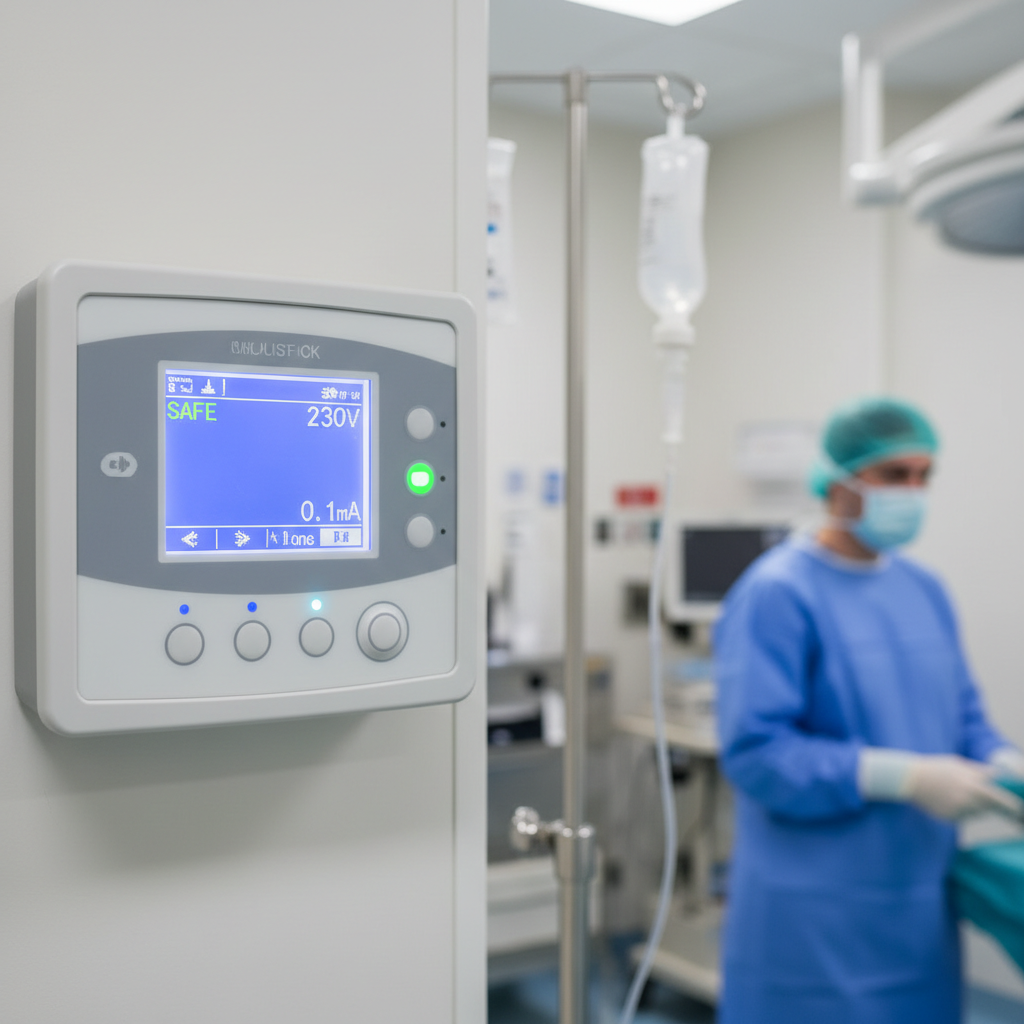
Line Isolation Monitor Inspection Louisville KY: NFPA 99 Guide
Medical Testing SolutionsJune 25, 20269 min read
Share
In any Louisville hospital, patient safety is the absolute priority. Within critical care areas like operating rooms, ICUs, and other "wet procedure locations," that safety relies on a piece of equipment many people never see: the Line Isolation Monitor, or LIM. This device is the vigilant guardian of your isolated power system, providing crucial protection against electric shock hazards. But for a LIM to be effective, it must be regularly and correctly inspected according to strict national standards. This is not just a best practice; it is a federal requirement.
This definitive guide is written for hospital facility managers, biomedical engineers, and compliance officers in the Louisville, Kentucky area. You will learn the specific NFPA 99 requirements for LIM inspection, what a proper inspection entails, who is qualified to perform this critical task, and how to ensure your facility remains compliant and, most importantly, safe. We will cover the technical details in plain English, providing the authoritative information you need to manage your facility's electrical systems with confidence.
What is a Line Isolation Monitor and Why Is It Critical?
A Line Isolation Monitor is a device that continuously monitors the integrity of an Isolated Power System (IPS). These specialized electrical systems are required by the National Fire Protection Association (NFPA) in any location where patients might be more susceptible to electric shock due to invasive procedures.
Understanding Isolated Power Systems (IPS)
Unlike the conventional grounded power systems in your home or office, a hospital's isolated power system is ungrounded. It uses an isolation transformer to separate the electrical supply from the building's ground. This means that if a person comes into contact with one of the live conductors and a grounded surface simultaneously, a dangerous level of current will not flow through their body. This is a critical safety feature in environments where patients may have a compromised skin barrier and are connected to various electronic monitoring and life-support devices.
An IPS is designed to prevent a single fault from tripping a breaker and cutting power to life-sustaining equipment. Instead of an outage, the system contains the fault and triggers an alarm, giving clinical staff time to address the issue without losing power to the room.
The Role of the LIM in Patient Safety
The Line Isolation Monitor is the brain of the IPS. Its job is to continuously measure the "impedance" or electrical resistance between the isolated conductors and the ground. If this impedance drops below a certain level, indicating a potential fault or current leak, the LIM does not shut off the power. Instead, it triggers both an audible and a visual alarm to alert staff to the hazardous condition. The total hazard current is displayed on the LIM's meter. This allows staff to identify and replace the faulty piece of equipment at the earliest safe opportunity without interrupting a critical procedure.
For facilities in Louisville, ensuring these systems are functioning perfectly is a core component of patient safety and regulatory compliance. A faulty LIM is a silent failure waiting to happen, which is why rigorous, professional Line Isolation Monitor testing is non-negotiable.
NFPA 99 Requirements for Line Isolation Monitor Inspection
The benchmark standard for healthcare facilities in the United States is NFPA 99, the Health Care Facilities Code. This code provides the legal and technical framework for the safe installation, operation, and maintenance of all medical gas and electrical systems.
For LIMs, the key requirements are found in Chapter 6, "Electrical Systems."
NFPA 99, Section 6.3.4.1.4: This section mandates that Line Isolation Monitors shall be tested at regular intervals. Specifically, it states that LIM circuits shall be tested after installation and on a periodic basis by a competent person.
NFPA 99, Section 6.3.2.6.3.4: This details the specific testing criteria. The LIM must be tested to ensure it alarms when the total hazard current (the sum of capacitive and resistive leakage currents) reaches a threshold of 5 milliamperes (mA) under normal line voltage conditions. The test must also verify the alarm activation and meter accuracy.
While the code uses the term "periodic," the industry-standard interpretation, and the one required by accrediting bodies like The Joint Commission, is at least every 12 months or whenever the isolated power system is modified.
Why this matters for compliance: Failure to document annual LIM inspections by a qualified person can result in significant findings during a Joint Commission survey or an inspection by the Kentucky Office of Inspector General. It can jeopardize your facility's accreditation and, more critically, compromise the safety of patients and staff in your most sensitive care areas.
The LIM Inspection & Testing Process (Step-by-Step)
A proper LIM inspection is more than just pushing the "test" button. It's a systematic process conducted by an ASSE 6040 certified Medical Gas Systems Verifier. At Medical Testing Solutions, our technicians follow a strict protocol to ensure every aspect of the system is evaluated.
Here’s what you can expect during a professional LIM inspection:
1. Initial Visual Inspection: The technician will first inspect the physical condition of the LIM panel, checking for any signs of damage, loose connections, or improper installation. They will verify that the correct labeling is in place, identifying the location and circuits served by the IPS.
2. Device Self-Test and Alarm Verification: The technician will activate the LIM’s internal self-test function. This confirms the functionality of the alarm lights (amber/orange for caution, red for hazard) and the audible alarm. The volume and clarity of the alarm are checked to ensure it can be heard over the background noise of a busy clinical setting.
3. Meter Calibration and Accuracy Check: Using specialized test equipment, the technician will verify the accuracy of the LIM's meter. They will simulate various fault levels (e.g., 2 mA, 3.5 mA, 5 mA) and confirm that the meter on the LIM displays the correct total hazard current reading within the tolerances specified by the manufacturer and NFPA 99.
4. Simulated Fault Condition Test: This is the most critical step. The technician will introduce a calibrated fault to the system to ensure the LIM alarms at the correct threshold (typically 5 mA). This verifies that the monitor will perform its life-saving function in a real-world fault scenario.
5. Record Keeping and Documentation: Upon completion, you will receive a detailed report for each LIM tested. This report includes the date of inspection, the location of the LIM, the test results, pass/fail status, and the technician’s name and certification number. This documentation is essential for demonstrating compliance during audits and surveys.
Who is Qualified to Perform LIM Inspections in Louisville?
NFPA 99 states that testing must be done by a "competent person," but the ASSE 6000 series of standards provides a more precise definition. Specifically, ASSE 6040 certification (Medical Gas Systems Verifier) is the nationally recognized credential for individuals qualified to test complex medical gas and related electrical systems, including Line Isolation Monitors.
An ASSE 6040 Verifier has undergone extensive training and passed a rigorous examination on all aspects of NFPA 99, including the intricacies of isolated power. They are not simply electricians; they are specialists in healthcare facility safety systems. When you hire a company like Medical Testing Solutions, you are getting the assurance that our technicians carry this vital certification, ensuring the job is done right.
This expertise is crucial for accurate diagnosis and troubleshooting, separating a true hazard from a nuisance alarm and keeping your facility’s most critical areas operational. It's a key part of our comprehensive support, which also includes annual medical gas inspections and full system maintenance.
Common LIM Issues vs. NFPA Requirements
Properly functioning LIMs are crucial. Here’s a look at common problems and how they stack up against NFPA 99 requirements.
Issue / Observation
Potential Cause(s)
NFPA 99 Requirement
Recommended Action
Nuisance Alarms (Alarm at <5mA)
Faulty equipment, excessive number of devices plugged in, high humidity, aging wiring.
The system should alarm at 5mA, not significantly below.
Identify and remove the faulty device. If the problem persists, schedule a full system evaluation to check for wiring issues.
Meter Inaccuracy
Component drift, age of the LIM, physical damage.
The LIM meter must accurately reflect the total hazard current.
The LIM must be recalibrated or replaced by a qualified technician.
The system is not safe. The LIM requires immediate replacement. An investigation of the IPS is warranted.
Choosing Your ASSE-Certified Partner for LIM Testing in Louisville
When selecting a vendor for your Louisville facility, you need a partner who understands the high stakes of healthcare compliance and patient safety. Here’s what to look for:
ASSE 6040 Certification: This is non-negotiable. Always ask for proof of certification for the technicians who will be on-site.
Hospital Environment Experience: Your partner should be experienced in working in active hospital environments, including sterile ORs and ICUs, with minimal disruption to your operations.
Comprehensive Reporting: Demand detailed, digital, and easily accessible documentation that will satisfy any auditor. The reports should clearly state what was tested and whether it passed or failed.
Nationwide Coverage, Local Focus: While Medical Testing Solutions operates nationwide, we provide dedicated service to the Louisville, KY, area. We can dispatch technicians quickly to address your testing and service needs.
Ensure Compliance and Safety with Expert LIM Inspections
Your Line Isolation Monitors are a silent but essential component of patient safety. Ensuring they are tested annually by qualified, ASSE-certified professionals is a fundamental requirement for any Louisville healthcare facility. Don't leave compliance to chance.
Protect your patients, your staff, and your facility's accreditation. Contact Medical Testing Solutions today to speak with an expert about your inspection needs and to ensure your facility is fully compliant with NFPA 99.
Request a quote online or call us at +1 (754) 315-1078 to schedule your line isolation monitor inspection.
'''
Frequently Asked Questions
A LIM is a safety device that continuously monitors the isolated power systems used in hospital operating rooms and other wet procedure locations. It alerts staff to potential electrical leakage that could cause a microshock, without cutting power to essential equipment.
Following NFPA 99 guidelines, LIMs must be tested at least once every 12 months or any time the system has been worked on. This is the standard required by accrediting organizations like The Joint Commission.
If a LIM fails, it indicates a critical safety system is not functioning correctly. The technician will document the failure, and the facility must take immediate action to have the unit repaired or replaced to remain in compliance and ensure patient safety.
Isolated power systems are used in critical care areas where patients may be vulnerable to electric shock (microshock). Unlike standard grounded systems, they are designed to prevent a single point of failure from causing a power outage or a dangerous electrical fault.
Only if they hold a current ASSE 6040 Medical Gas Systems Verifier certification. Due to the specialized knowledge and equipment required, most healthcare facilities in Louisville opt to use a certified third-party testing company like Medical Testing Solutions.
Request a quote for your facility
Talk with Medical Testing Solutions about your next inspection, repair or equipment request.