Line Isolation Monitor Inspection in Los Angeles CA: A Guide to NFPA 99 Compliance
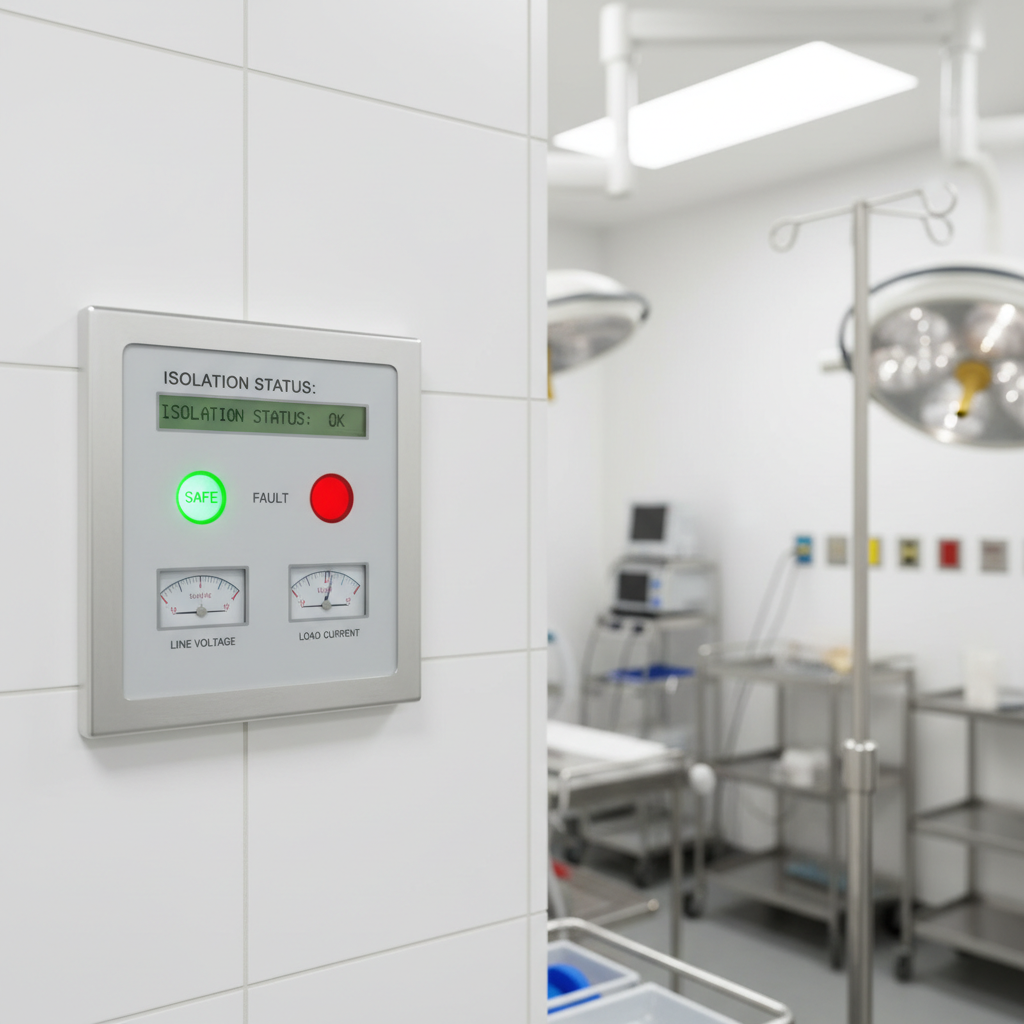
In the high-stakes environment of a hospital operating room or intensive care unit, the constant hum of electronic medical equipment is the sound of life support, diagnostics, and monitoring. But every powered device also introduces a potential risk of electric shock. For patients and staff in "wet procedure locations," this risk is magnified. This is where Isolated Power Systems (IPS) and their vigilant watchdogs, Line Isolation Monitors (LIMs), become one of the most critical safety systems in your facility. Ensuring they function perfectly is not just a matter of best practice—it's a strict requirement of federal code.
This definitive guide provides Los Angeles hospital facility managers, biomedical engineers, and compliance officers with a comprehensive overview of line isolation monitor inspection. We will explore the technical requirements dictated by NFPA 99, outline the inspection process, and detail how to select a qualified, ASSE-certified vendor to ensure the electrical safety of your most critical care areas.
What is a Line Isolation Monitor (LIM)?
A Line Isolation Monitor is a device that continuously monitors the integrity of an Isolated Power System. Its sole purpose is to detect and alarm on the very first fault from line to ground, giving clinical staff and facility managers an advance warning of a potential electrical hazard before it can cause harm. Unlike a standard circuit breaker, which trips and cuts power after a dangerous condition occurs, a LIM alerts you to a problem without interrupting the power supply to life-sustaining equipment.
The Isolated Power System: A Critical Safety Layer
To understand the LIM, you must first understand the Isolated Power System (IPS). Found in operating rooms, ICUs, and other areas designated as "wet procedure locations" under NFPA 99, an IPS is an ungrounded electrical service. It is electrically isolated from the main facility ground by a special isolation transformer. This separation means that a person touching a live conductor and a grounded surface simultaneously will not complete a circuit, dramatically reducing the risk of macroshock (high-current electric shock).
How LIMs Protect Patients and Staff
The LIM acts as the safety sentinel for this ungrounded system. It constantly measures the "total hazard current," which is the sum of all leakage currents from the various pieces of equipment plugged into the IPS. If this total current exceeds a predetermined threshold (typically 5 milliamperes for ORs, as specified by NFPA 99), the LIM triggers both an audible and a visual alarm. This first fault does not pose an immediate shock hazard, but it signals that the system is now compromised and a second fault could be dangerous. This early warning allows staff to identify and replace the faulty equipment without a critical loss of power.
NFPA 99 Requirements for Line Isolation Monitor Inspection
Compliance with the National Fire Protection Association (NFPA) 99, "Health Care Facilities Code," is mandatory for hospitals in the United States. This code sets the minimum criteria for the installation, performance, and maintenance of various systems, including electrical, to ensure the safety of patients and staff.
Decoding NFPA 99, Chapter 6: Electrical Systems
Chapter 6 of NFPA 99 is the authoritative source for requirements related to electrical systems in healthcare environments. Specifically, Section 6.3.3, "Isolated Power System," provides detailed mandates for LIM testing and maintenance. The code requires that LIM circuits be tested at regular intervals to verify that they are functioning correctly.
Why this matters for compliance: Failure to perform and document regular LIM inspections is a direct violation of NFPA 99. This can lead to citations during Joint Commission surveys, potential loss of accreditation, and, most critically, an unacceptably high risk of electrical-related incidents in your most sensitive patient care areas. Proper medical gas certification and electrical system maintenance are foundational to patient safety.
Test Frequencies: When is LIM Testing Required?
According to NFPA 99, Line Isolation Monitors must be tested and inspected after installation and on a routine, periodic basis. The code (6.3.4.1.4) states that LIM test switches shall be tested at least monthly by clinical staff, simply by pressing the "test" or "push-to-test" button on the monitor.
More importantly, a comprehensive quantitative inspection must be performed by a qualified individual. While the code specifies testing "periodically," industry best practice and common interpretation for regulatory bodies point to a full, documented inspection as part of annual medical gas inspections. This annual inspection ensures the monitor will alarm at the correct hazard current level.
The Role of ASSE 6000 Certification for Technicians
NFPA 99 requires that individuals who inspect, test, and maintain these critical systems be "qualified persons." The American Society of Sanitary Engineering (ASSE) 6000 series of professional qualifications provides a clear, verifiable standard for this expertise. An ASSE 6030 Medical Gas Systems Verifier is a professional who has undergone extensive training and examination on all aspects of medical gas and vacuum systems, including the critical electrical safety components outlined in NFPA 99. When seeking a partner for line isolation monitor testing, insisting on ASSE 6030 certification is your assurance of competence and compliance.
The LIM Inspection and Testing Process
A proper LIM inspection performed by a certified technician from a reputable firm like Medical Testing Solutions is a multi-step process that goes far beyond simply pushing the test button. It's a quantitative analysis to ensure the monitor is performing precisely as designed.
- Visual Inspection: The technician will first inspect the physical condition of the LIM unit, its wiring, and its installation to ensure it meets code requirements.
- Meter Function Test: The meter on the LIM is verified for accuracy against a calibrated external measurement device.
- Alarm Point Verification: This is the most critical test. The technician uses specialized equipment to simulate leakage current on the Isolated Power System. They will slowly increase the fault current to determine the exact point at which the LIM's audible and visual alarms trigger, ensuring it meets the NFPA 99 threshold (e.g., 5.0 mA for operating rooms).
- Documentation and Reporting: Every step of the inspection, including the readings, alarm points, and pass/fail status for each LIM, is meticulously documented. This report is a crucial part of your facility's compliance records for Joint Commission and other regulatory audits.
Common Causes of LIM Alarms and Failures
When a LIM alarms, it's doing its job. The cause is rarely the monitor itself, but rather an issue with one or more devices plugged into the circuit.
- Defective Medical Equipment: The most common cause is a single piece of equipment with an internal fault, causing excessive electrical leakage to ground.
- Cumulative Leakage Currents: Modern operating rooms are filled with complex electronic devices. Even if each piece of equipment has a very small, acceptable leakage current, the sum of all these currents can be enough to exceed the LIM's alarm threshold. This can make troubleshooting a challenge.
- Aging Wiring and Infrastructure: In older facilities, degradation of wiring or improper modifications to the electrical system can introduce faults that trigger LIM alarms.
Choosing a Certified LIM Inspection Provider in Los Angeles
Selecting the right partner for LIM testing is a critical decision for any Los Angeles healthcare facility. Your choice impacts patient safety, compliance, and operational uptime. The single most important credential to look for is ASSE 6030 certification.
Why ASSE 6030 Certification is Non-Negotiable
An ASSE 6030 certified technician has proven their expertise in the complex interplay of a hospital's life support systems. They understand not just how to test a device, but why it's being tested and how it fits into the broader context of NFPA 99 compliance and patient safety. Hiring an uncertified "electrician" to perform this specialized work is a significant risk and can leave your facility exposed to liability. Medical Testing Solutions ensures all its field technicians performing medical gas verification and LIM testing are ASSE 6030 certified.
Key Questions to Ask a Potential Testing Agency
- Are your technicians ASSE 6030 certified? Can you provide proof?
- What is your testing methodology and does it comply with NFPA 99, Chapter 6?
- What type of documentation and reporting will I receive?
- Can you provide references from other hospitals in the Los Angeles area?
- Do you have the liability insurance and bonding necessary to work in a hospital environment?
Comparing LIM Service Providers: Certified vs. Unqualified
The choice between a certified, professional organization and a general contractor can have significant consequences. The following table illustrates the difference:
| Feature | Certified Provider (e.g., Medical Testing Solutions) | Unqualified Provider |
|---|---|---|
| Technician Certification | ASSE 6030 Certified | Uncertified or basic electrician's license |
| Compliance Guarantee | Reports are guaranteed to meet Joint Commission/NFPA 99 standards. | No guarantee; reports may be rejected by auditors. |
| Reporting & Documentation | Detailed, digital reports showing all measurements and alarm points. | Basic invoice or handwritten, non-compliant report. |
| Expertise | Deep understanding of hospital environments and clinical impact. | Limited to general electrical knowledge; no clinical context. |
| Insurance | Carries appropriate liability insurance for healthcare facilities. | May have inadequate or inappropriate insurance coverage. |
| Service Scope | Offers comprehensive medical gas maintenance services and testing. | Limited to a single, narrow task. |
Medical Testing Solutions: Your Partner for LIM Compliance in LA
For over 40 years, Medical Testing Solutions has been the trusted partner for healthcare facilities across the nation, including the greater Los Angeles area. Our team of ASSE 6030 certified technicians provides definitive, compliant line isolation monitor inspection services that facility managers can depend on. We understand the unique demands of the hospital environment, and our nationwide dispatch means we can provide service wherever and whenever it's needed. From new construction medical gas installation to annual inspections and emergency service, we are your one-stop source for medical gas and electrical system compliance.
Frequently Asked Questions (FAQs)
What is a Line Isolation Monitor (LIM)?A LIM is a safety device required by NFPA 99 in wet procedure locations like operating rooms. It continuously monitors the ungrounded Isolated Power System and provides an early warning alarm if a potential electrical hazard from a piece of equipment exists, without shutting off power.
How often does NFPA 99 require LIMs to be tested?NFPA 99 requires that staff perform a qualitative test (pushing the test button) at least monthly. A comprehensive, quantitative inspection by a qualified technician should be performed periodically, which is widely interpreted and enforced as annually.
Who is qualified to perform line isolation monitor inspections?NFPA 99 specifies a "qualified person." The industry standard for this qualification is the ASSE 6030 Medical Gas Systems Verifier certification, which demonstrates expertise in NFPA codes and hospital life safety systems.
What happens if a LIM fails inspection?If a LIM fails its inspection, it must be repaired or replaced immediately to maintain the safety of the area. This often involves troubleshooting the connected medical equipment to find the source of the electrical leakage. The area should not be used for patient care until the system is fully compliant.
Does MTS serve hospitals outside of Los Angeles?Yes. While we provide dedicated local service to our Los Angeles clients, Medical Testing Solutions is a nationwide company with certified technicians strategically located to serve healthcare facilities across the United States.
Ensure Your Facility is Safe and Compliant
The integrity of your Isolated Power Systems is fundamental to patient and staff safety. Don't leave compliance to chance. Partner with an expert, ASSE-certified provider who understands the nuances of NFPA 99 and the critical nature of your work.
To schedule a line isolation monitor inspection for your Los Angeles facility or to get a comprehensive assessment of your medical gas systems, request a quote online or contact our team directly. Call us today to speak with a compliance specialist at +1 (754) 315-1078.
'''
This article is provided for educational purposes and reflects industry standards as of publication. Always verify against current NFPA 99, CGA, and AHJ requirements. Medical Testing Solutions is ASSE-certified and ready to help — contact us for facility-specific guidance.
Need Medical Gas Services?
Contact our certified team for inspections, verifications, installations, and more.
Get a Free Quote