In any modern healthcare facility, patient safety is paramount. While many focus on infection control and surgical procedures, the very electrical systems that power life-saving equipment can pose a significant, often invisible, risk. This is particularly true in "wet procedure locations" like operating rooms, ICUs, and cardiac catheterization labs. This guide provides a definitive overview of line isolation monitor (LIM) inspection requirements for hospitals in Indianapolis, IN. We will explore the NFPA 99 standards that govern these systems, detail the inspection process, and explain what facility managers must know to ensure compliance and, most importantly, patient safety.
Medical Gas Service
Compliance & Standards
Line Isolation Monitor Inspection in Indianapolis, IN: A Guide
Medical Testing SolutionsJune 25, 20267 min read
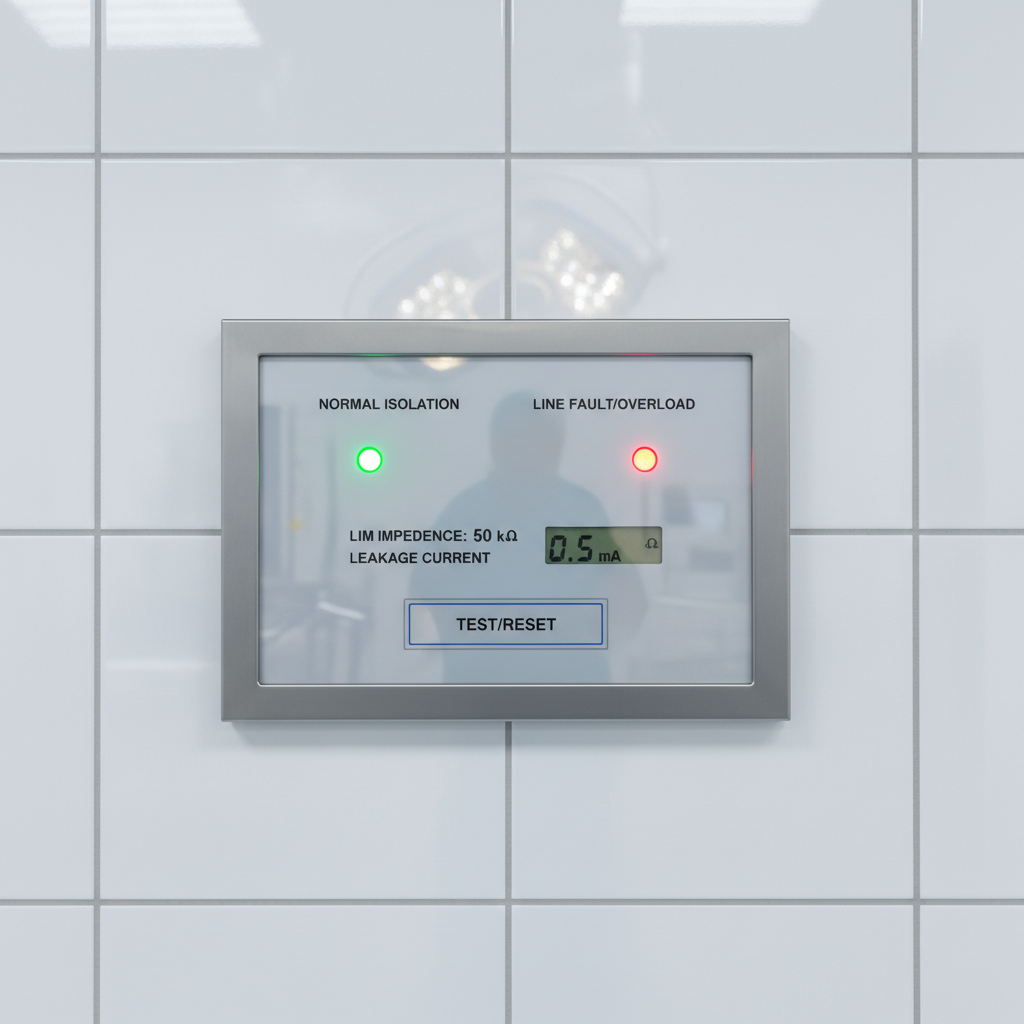
What is a Line Isolation Monitor (LIM) and Why is it Critical?
A Line Isolation Monitor, or LIM, is the central component of an Isolated Power System (IPS). An IPS is a special electrical setup required by the National Fire Protection Association (NFPA) in critical care areas where a patient could be simultaneously connected to medical equipment and exposed to conductive fluids.
Unlike a standard grounded system that uses a circuit breaker or GFCI to shut off power during a fault, which would be catastrophic for a patient on life support, an Isolated Power System does not. Instead, it isolates the electrical supply from the ground. The LIM continuously monitors the integrity of this isolation. If it detects a potential fault or a degradation in the isolation, it triggers an audible and visual alarm to alert staff without interrupting the power. This gives staff time to address the issue without compromising patient care.
The Role of Isolated Power Systems in Patient Safety
The primary function of an IPS is to protect patients from microshock and macroshock hazards. In wet procedure locations, the risk of electrical shock is magnified because the patient's natural skin resistance is bypassed by catheters, probes, and conductive fluids. An IPS, monitored by a LIM, provides a safe, uninterrupted power source, which is essential for procedures where equipment failure is not an option. These systems are the unsung heroes of electrical safety in healthcare, working silently in the background to protect both patients and staff.
Defining "Wet Procedure Locations" under NFPA 99
NFPA 99, the Health Care Facilities Code, officially defines a "wet procedure location" as "the area in a patient care space where a procedure is performed that is normally subject to wet conditions while patients are present." This includes the splashing or spilling of cleaning fluids, blood, or irrigation solutions. NFPA 99 mandates the use of Isolated Power Systems, and therefore LIMs, in all operating rooms designated as wet procedure locations. Many facilities extend this best practice to other critical areas like ICUs, NICUs, and trauma bays to provide the highest level of safety.
NFPA 99 Requirements for Line Isolation Monitor Testing
Compliance isn't optional. Regulatory bodies like The Joint Commission (TJC) and the Centers for Medicare & Medicaid Services (CMS) strictly enforce NFPA 99 standards. For LIMs, the code is explicit.
NFPA 99, Chapter 6: Electrical Systems Explained
Chapter 6 of NFPA 99 is the authoritative source for electrical systems in healthcare facilities. It outlines the specific requirements for LIM installation, function, and, critically, testing. Section 6.3.3.3.2 states that Line Isolation Monitors must be tested at regular intervals to ensure they are functioning correctly.
Specifically, the testing must be performed:
- After installation.
- Periodically, as determined by a risk-based assessment, but not less than annually.
- After any repairs or alterations to the system.
The code requires that these tests be performed by qualified personnel who understand the unique complexities of hospital electrical systems. A standard electrician is often not equipped with the specific knowledge of NFPA 99 or the ASSE 6000 series standards required for this work.
Why This Matters for Compliance Proper documentation of LIM testing is a critical component of any facility's compliance strategy. During an audit by The Joint Commission or another authority, inspectors will demand to see detailed records proving that annual medical gas inspections and LIM tests have been performed by qualified individuals. Failure to produce these records can result in costly fines, citations, and a loss of accreditation.
The LIM Inspection and Testing Process: Step-by-Step
At Medical Testing Solutions, our ASSE 6040 Certified technicians follow a rigorous, field-proven process for LIM testing that meets and exceeds NFPA 99 requirements. While the specifics can vary by device brand (e.g., Bender, Square D, Post Glover), the core procedure includes:
- Visual Inspection: Checking the physical condition of the LIM panel, ensuring all indicators and displays are functional and that the unit is free from damage.
- Alarm Activation Test: Simulating a fault to verify that both the audible and visual alarms on the LIM and any remote annunciators activate at the correct mA threshold (typically 5 mA).
- Meter Accuracy Check: Verifying that the LIM’s monitor is providing an accurate reading of the system’s isolation level.
- Self-Test/Calibration Verification: Confirming that the LIM’s internal self-test and calibration features are functioning as intended.
- Documentation: Recording all test results, including the date, technician, location, and pass/fail status for each LIM, in a detailed report suitable for auditors.
Comparing LIM Testing Providers: What to Look For
Choosing a partner for your facility's compliance testing is a critical decision. Not all providers are created equal. When evaluating options for line isolation monitor testing in Indianapolis, it’s essential to look beyond the price tag and consider qualifications.
| Feature | Unqualified "Electrician" | ASSE 6040 Certified Specialist |
|---|---|---|
| Credentials | Basic electrical license | ASSE 6040, Deep NFPA 99 expertise |
| Scope Focus | May only test the LIM device | Understands the entire Isolated Power System |
| Compliance Risk | High risk of non-compliance/missed details | Guaranteed NFPA 99 compliance & audit support |
| Reporting | Basic pass/fail checklist | Detailed reports for The Joint Commission |
| Insurance | General liability | Specialized liability for medical facilities |
Using an unqualified vendor not only risks non-compliance but can also create a false sense of security, potentially jeopardizing patient safety.
Line Isolation Monitor Services in the Indianapolis Area
While headquartered in Florida, Medical Testing Solutions serves a nationwide client base, with dedicated ASSE-certified teams ready to dispatch to major metropolitan areas, including Indianapolis, IN. We understand the unique needs of healthcare facilities in the region and provide comprehensive services that go beyond a simple "pass/fail."
Our technicians are not just testers; they are consultants who help facility managers understand their systems, interpret test results, and plan for future maintenance. We offer a full suite of services, including not just LIM testing but also medical gas verification and maintenance for all your critical infrastructure.
Common LIM Faults and How to Address Them
During our inspections, we often encounter a few common issues. Early detection and remediation are key to preventing power disruptions.
- Nuisance Alarms: Often caused by too many pieces of equipment plugged into a single IPS, or by equipment with inherent leakage currents. Careful load management is crucial.
- Actual Faults: A true alarm indicates a potentially hazardous condition, such as a piece of equipment with faulty wiring or moisture ingress into a receptacle.
- Device Failure: LIMs themselves can age and fail. If a LIM fails its self-test or calibration check, it must be replaced. Medical Testing Solutions can source and a arrange for the installation a replacement LIM to ensure your ORs are not down for long.
Ensure Compliance and Patient Safety with MTS
Ensuring your facility's Line Isolation Monitors are functioning correctly is a non-negotiable aspect of patient safety and regulatory compliance. Don't leave this critical task to a generalist. Trust the certified experts at Medical Testing Solutions to provide the thorough, documented inspections you need to pass audits and protect your patients.
Ready to ensure your Indianapolis facility is safe and compliant? Contact Medical Testing Solutions today for a free quote on your line isolation monitor inspection needs. Call us at +1 (754) 315-1078 or [request a quote online](/request-a-quote) to speak with a specialist.
'''
Frequently Asked Questions
According to NFPA 99, LIMs must be tested at least once every 12 months, after installation, and after any repairs are made to the Isolated Power System.
NFPA 99 mandates that testing be performed by qualified personnel. The industry best practice and gold standard is an ASSE 6040 Certified Medical Gas Systems Verifier, who has specialized training in healthcare electrical systems.
If a LIM fails, it indicates a problem with the monitor itself or a fault within the Isolated Power System. The issue must be investigated immediately by a qualified technician and corrective action must be taken. The room should not be used for patient care until the system is deemed safe.
Yes. Medical Testing Solutions provides LIM testing and other medical gas services to healthcare facilities across the United States. We have a nationwide network of ASSE-certified technicians to serve you.
A Ground-Fault Circuit Interrupter (GFCI) protects people by interrupting the flow of electricity when a fault is detected. A Line Isolation Monitor (LIM) protects patients in critical care by alarming when a fault is detected, without interrupting the power supply to life-sustaining equipment.
Request a quote for your facility
Talk with Medical Testing Solutions about your next inspection, repair or equipment request.