Line Isolation Monitor Inspection Chicago IL: NFPA 99 Guide
Medical Testing SolutionsJune 25, 20266 min read
Share
A Line Isolation Monitor (LIM) is a cornerstone of electrical safety in a hospital's most critical areas. For healthcare facilities in Chicago, ensuring these devices are functioning correctly isn't just a best practice, it's a mandate for NFPA 99 compliance and patient safety. An unexpected electrical fault in a "wet procedure location" like an operating room or ICU can have catastrophic consequences. This guide provides a definitive overview of the requirements for line isolation monitor inspection in Chicago, IL, explaining the process, the standards, and what it takes to keep your facility safe and compliant.
This article will walk you through the specifics of NFPA 99 as it applies to LIMs, detail the inspection and testing process performed by ASSE-certified technicians, and provide actionable steps for selecting a qualified service partner. We will cover the technical requirements, the importance of proper documentation, and how regular maintenance protects your patients, staff, and facility.
What is a Line Isolation Monitor (LIM)?
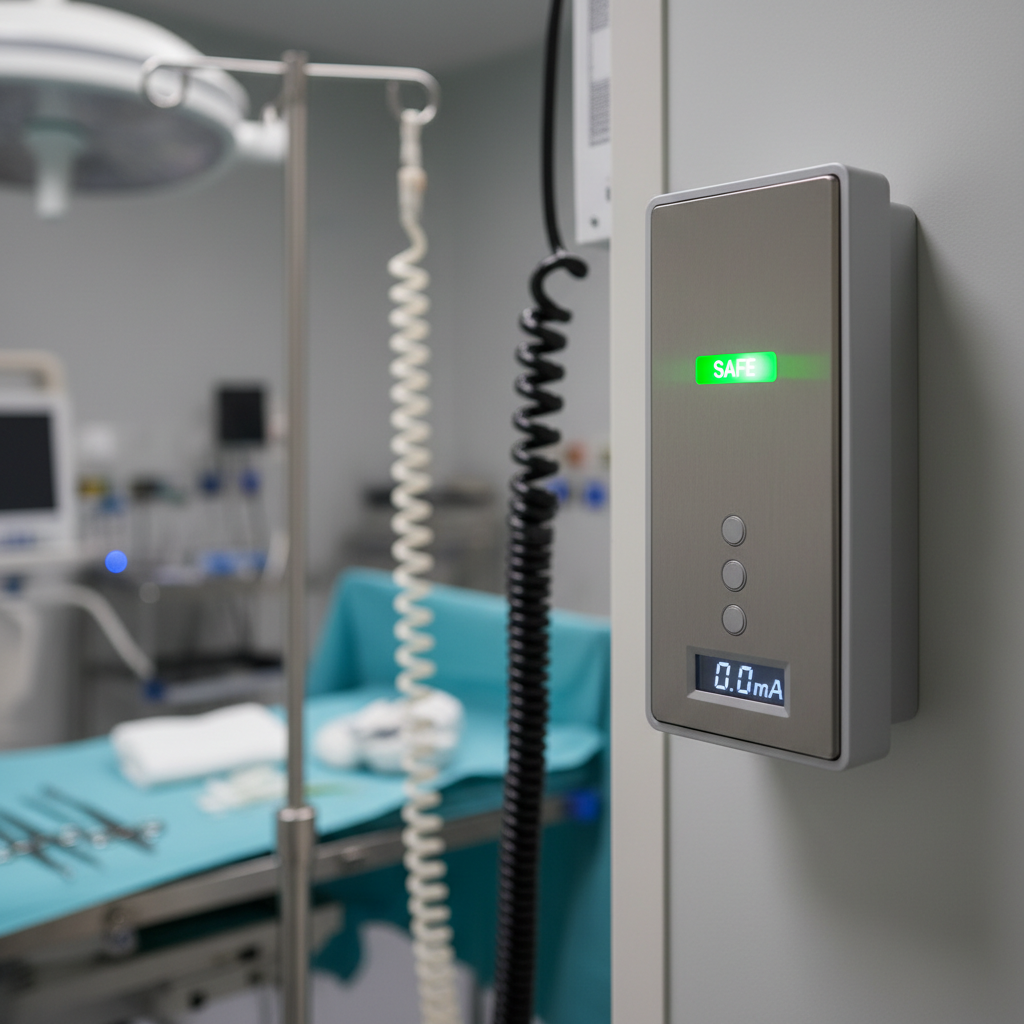
A Line Isolation Monitor is a predictive device that continuously monitors the integrity of an Isolated Power System (IPS). These specialized electrical systems are required in all "wet procedure locations" as defined by NFPA 99. Unlike a standard grounded system where a fault immediately trips a breaker (GFCI), an isolated power system is designed to continue supplying power on the first fault. This is critical in a life-support scenario where a sudden loss of power to essential equipment would be disastrous.
The LIM's job is to detect the potential for a dangerous electrical shock before it can happen. It measures the "total hazard current" (THC), which is the cumulative leakage current from all connected equipment. If the THC exceeds a preset, safe threshold (typically 5 mA), the LIM triggers an audible and visual alarm, alerting staff to a potential fault without interrupting power. This gives personnel time to identify and replace the faulty equipment before a second fault could create a shock hazard.
NFPA 99 Requirements for LIM Inspection in Chicago
Compliance with the National Fire Protection Association (NFPA) 99, Health Care Facilities Code, is non-negotiable for hospitals in Chicago and across the country. Chapter 6, "Electrical Systems," outlines the stringent requirements for installing, maintaining, and testing isolated power systems and their line isolation monitors.
Key requirements from NFPA 99 include:
Regular Testing: LIM circuits must be tested after installation and on a recurring, periodic basis. The standard dictates testing at least every 12 months, or more frequently if specified by the manufacturer or a risk assessment.
Functional Test: During this test, a fault is simulated to ensure the LIM alarms at the correct threshold. The test must verify that the monitor triggers an alarm when the total hazard current reaches the 5 mA trip level.
Documentation: Every test and its results must be documented. This log is a critical component of your facility's compliance records and must be available for review by regulatory bodies like The Joint Commission.
Why This Matters for Compliance: Failure to perform and document annual LIM testing is a direct violation of NFPA 99. This can lead to citations during surveys, jeopardize hospital accreditation, and, most importantly, create an unsafe environment for patients and staff in critical care areas.
The LIM Inspection and Testing Process
When you partner with a certified organization like Medical Testing Solutions, our ASSE 6030 Certified technicians follow a rigorous, multi-point procedure for Line Isolation Monitor testing. The process is designed to be thorough and minimally disruptive.
What to Expect:
System Identification: The technician identifies and logs all isolated power panels and the specific LIMs associated with them.
Visual Inspection: The LIM unit is visually checked for signs of damage, proper installation, and clear labeling.
Functional Testing: The technician uses specialized equipment to introduce a calibrated fault current onto the system. They verify:
The monitor's meter is reading accurately.
The audible and visual alarms activate when the total hazard current reaches the NFPA-mandated 5 mA threshold.
The monitor is clear of alarms in its resting state.
Documentation & Reporting: All readings, pass/fail results, and any recommended corrective actions are recorded. A detailed report is provided for each LIM, creating the necessary documentation for your compliance records.
Understanding LIM Alarm Thresholds
The Total Hazard Current (THC) reading on a LIM provides insight into the health of your isolated power system. Understanding these values is key to proactive maintenance. Our technicians use this data to not only pass or fail a unit but to advise on the overall condition of your electrical equipment.
Total Hazard Current (THC)
Status
NFPA 99 Requirement
Recommended Action
< 2.0 mA
Green / Safe
Normal operating condition.
No action needed; continue to monitor.
2.0 mA - 5.0 mA
Yellow / Advisory
A fault condition exists.
Schedule maintenance to identify the source of leakage current.
> 5.0 mA
Red / Alarm
Critical fault condition.
Immediate action required to locate and remove faulty equipment.
Choosing a Qualified LIM Inspection Provider in Chicago
Not all vendors are qualified to test and certify these critical life-safety systems. When selecting a partner for your Chicago hospital, it is imperative to verify their credentials and expertise.
Look for a provider with:
ASSE 6030 Certification: Technicians must be certified to the ASSE Standard 6030, Medical Gas Systems Verifiers. This is the industry's benchmark for proficiency in testing and verifying medical gas and related electrical systems.
Specialized Experience: The provider should have extensive experience working within active hospital environments and a deep understanding of NFPA 99.
Comprehensive Reporting: Ask for sample reports. The documentation should be clear, detailed, and suitable for audit by The Joint Commission or other authorities having jurisdiction (AHJ).
Nationwide Capability: While your hospital is in Chicago, a provider with a national footprint demonstrates a level of scale and professionalism that ensures they can meet diverse needs. Medical Testing Solutions, though headquartered in Florida, proudly serves healthcare facilities nationwide, including the entire Chicago metropolitan area.
Ensuring the electrical safety of your operating rooms and critical care areas is a profound responsibility. The line isolation monitors in your facility are a vital component of that safety net. Medical Testing Solutions provides the expert, ASSE-certified inspection services that Chicago-area hospitals trust to maintain NFPA 99 compliance.
If you need to schedule a line isolation monitor inspection or want to discuss your facility's compliance requirements, contact our team today. Call us at +1 (754) 315-1078 or request a quote online to get started.
'''
Frequently Asked Questions
According to NFPA 99, LIMs must be tested after installation and at least every 12 months thereafter. Some facilities may opt for more frequent testing based on their own risk assessments.
NFPA 99 defines this as an area in a healthcare facility where procedures are performed that are normally subject to wet conditions while patients are present, including the use of water or other liquids for douching, cleaning, or flushing. This includes most operating rooms, cardiac cath labs, and dialysis locations.
Only if they are properly trained and ASSE certified. NFPA 99 requires testing to be performed by qualified individuals. Using a certified third-party organization like MTS ensures unbiased, expert medical gas system certification.
If a LIM fails, it indicates a problem with either the monitor itself or significant leakage from equipment on the isolated power circuit. The faulty component must be identified and corrected immediately, and the system re-tested to ensure it operates safely. All actions must be documented.
Yes. We are a nationwide service provider with ASSE-certified technicians who can be dispatched to facilities across the United States. We provide medical gas verification, testing, and maintenance services to hospitals from coast to coast.
A GFCI (Ground Fault Circuit Interrupter) is designed to immediately trip and de-energize a circuit when it detects a small ground fault. A LIM, used with an isolated power system, is designed to *alarm* on the first fault *without* interrupting power, allowing critical procedures to continue safely while alerting staff to the issue.
Request a quote for your facility
Talk with Medical Testing Solutions about your next inspection, repair or equipment request.