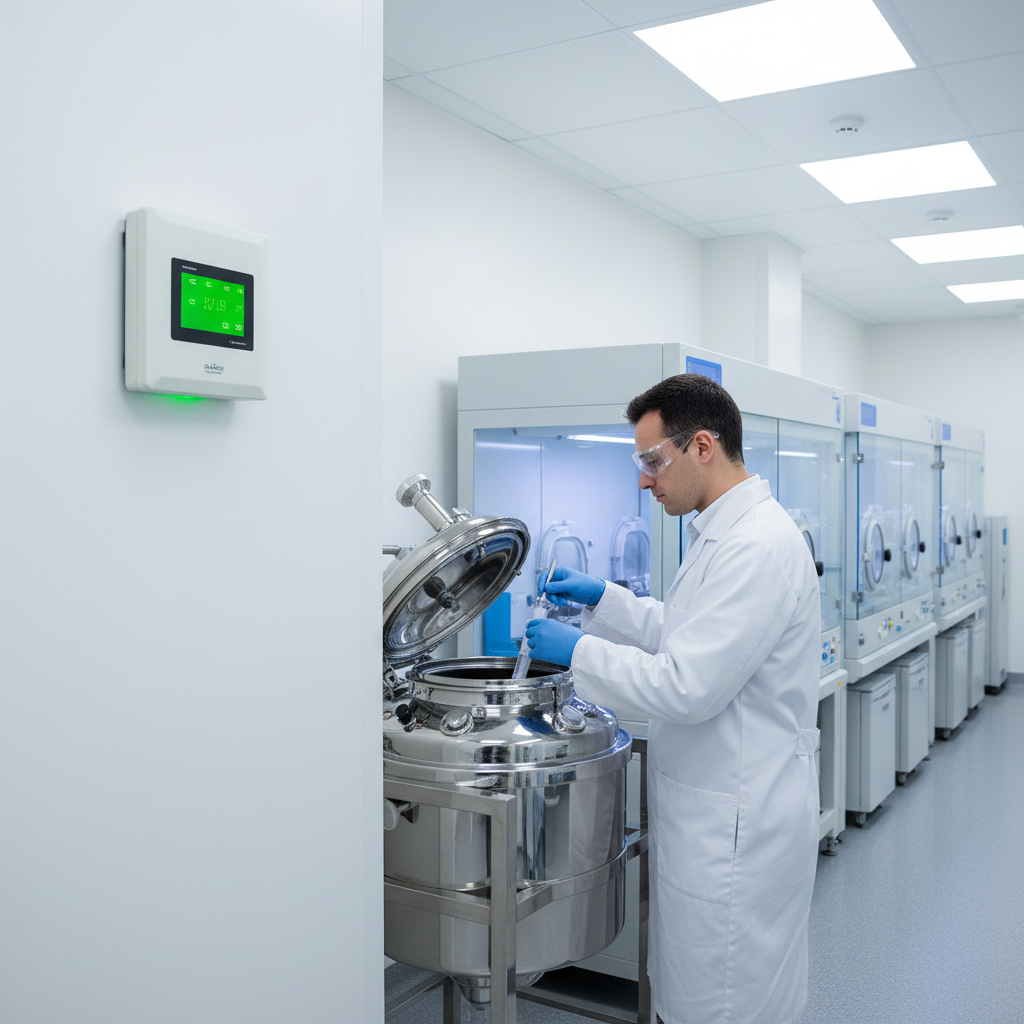
IVF Lab And Cryostorage Oxygen Monitoring Requirements: A Complete Guide
In Vitro Fertilization (IVF) labs and cryostorage facilities handle liquid nitrogen (LN2) daily, a substance critical for preserving biological specimens. However, LN2 presents a significant, often underestimated, risk: oxygen depletion. A leak can rapidly displace ambient oxygen, creating an invisible, odorless hazard that can lead to asphyxiation in minutes. This guide provides a definitive overview of the oxygen monitoring requirements for IVF labs and cryopreservation rooms. You will learn the specific risks associated with LN2, the governing standards from bodies like NFPA and CGA, and the practical steps needed to create a safe, compliant environment for your staff and the irreplaceable materials you protect.
The Science of the Hazard: Liquid Nitrogen and Oxygen Displacement
Liquid nitrogen is inert and non-toxic, but its danger lies in its physical properties. When LN2 vaporizes, it expands at a ratio of approximately 1:700. This means one liter of liquid nitrogen will turn into about 700 liters of nitrogen gas at room temperature. In an enclosed space like a cryostorage room or IVF lab, this rapid expansion can quickly displace the breathable oxygen in the air.
Normal ambient air contains about 20.9% oxygen. The Occupational Safety and Health Administration (OSHA) defines an oxygen-deficient atmosphere as one containing less than 19.5% oxygen. Below this level, individuals may experience impaired judgment and coordination. As the oxygen level drops further, symptoms become severe:
15-19%: Impaired coordination, early fatigue, emotional upset.
12-15%: Poor judgment, faulty coordination, abnormal fatigue upon exertion.
10-12%: Very poor judgment and coordination, impaired respiration that may cause permanent heart damage.
<10%: Inability to move, loss of consciousness, convulsions, and death.
The insidious nature of this hazard is that it is colorless, odorless, and its effects can impair a person's ability to recognize the danger and self-rescue.
Why This Matters for Compliance: Regulators and accreditation bodies (like the College of American Pathologists, CAP) are increasingly focused on documented risk assessments for cryogen use. Simply stating you use LN2 is not enough; you must demonstrate that you have calculated the risk and implemented appropriate engineering controls, like continuous oxygen monitoring.
Calculating the Risk: Room Size vs. Liquid Nitrogen Volume
A critical first step is performing a risk assessment to determine if your facility requires continuous oxygen monitoring. The Compressed Gas Association (CGA) provides guidance in publications like CGA P-63, “Disposal of Gases.” The core of the assessment involves a worst-case scenario calculation: what would happen if the entire contents of your largest LN2 dewar were to vaporize instantly?
The Calculation Steps:
Determine the Volume of Your Room: Calculate the volume of your cryostorage area in cubic feet (Length x Width x Height).
Determine the Volume of LN2: Identify the size of the largest LN2 container used in the space (e.g., a 180-liter dewar).
Calculate the Gaseous Nitrogen Volume: Convert the LN2 volume to its gaseous state.
1 liter of LN2 ≈ 24.6 cubic feet of nitrogen gas at standard temperature and pressure.
Example: A 180-liter dewar contains 180 L * 24.6 ft³/L = 4,428 cubic feet of nitrogen gas.
Calculate the Final Oxygen Concentration: Use the following formula:
%O2 final = 20.9% * (Room Volume - Gas Volume) / Room Volume
Example Scenario:
Room Volume: 15 ft x 10 ft x 8 ft = 1,200 cubic feet
%O2 final = 20.9% * (1,200 ft³ - 4,428 ft³) / 1,200 ft³ = A negative number, indicating oxygen is completely displaced.
In this scenario, a full release would be catastrophic. Any situation where the final oxygen concentration could drop below 19.5% mandates the use of continuous oxygen deficiency monitors.
Key Standards and Regulations: NFPA 99 and ASSE/CGA Guidance
While OSHA sets the 19.5% threshold, other codes provide more specific guidance for healthcare and laboratory environments.
NFPA 99 (Health Care Facilities Code): Chapter 7, "Gas and Vacuum Systems," outlines requirements for the storage, use, and handling of nonflammable medical gases. It emphasizes the need for a thorough risk assessment for all medical gas systems, including inert gases used for cryopreservation.
ASSE 6000 Series: The American Society of Sanitary Engineering (ASSE) 6000 series provides professional qualifications standards for medical gas systems personnel. Having work performed by an ASSE 6010 certified installer or an ASSE 6030 certified verifier ensures that your systems are installed and inspected to the highest safety standards. Medical Testing Solutions provides ASSE-certified medical gas installation and verification services.
CGA P-12: "Safe Handling of Cryogenic Liquids" provides extensive guidance on engineering controls, personal protective equipment (PPE), and emergency procedures.
CGA P-63: As mentioned, this is key for risk assessment calculations.
Oxygen Monitor Placement and Configuration
Once the need for monitors is established, proper installation is crucial.
Sensor Location: Since nitrogen gas is slightly lighter than air at very cold temperatures but becomes heavier as it warms, optimal sensor placement is typically 3-5 feet off the floor. This "breathing zone" placement ensures the monitor accurately reflects the air an employee is breathing.
Alarm Setpoints: A two-stage alarm system is standard:
Low Alarm (Caution): 19.5% Oxygen
High Alarm (Danger): 18.0% Oxygen
Audiovisual Alarms: Alarms must be both audible and visual. Strobe lights should be placed both inside and outside the room entrance to warn potential entrants of a hazardous condition before they open the door.
For expert guidance on system design and installation, consult a qualified provider like Medical Testing Solutions. Our environmental monitoring solutions are designed to meet these stringent requirements.
Comparison of Oxygen Monitoring Technologies
There are several types of oxygen sensors available, each with pros and cons. The most common for this application is the electrochemical sensor.
Sensor Type
Pros
Cons
Typical Lifespan
Electrochemical
Cost-effective, good for ambient monitoring
Consumable (sensor depletes over time), cross-sensitivity to other gases
1-3 years
Zirconium Oxide
Long lifespan, fast response time
Higher initial cost, requires high temperatures to operate
5-10 years
Optical (Fluorescence)
Long lifespan, no sensor depletion
Higher initial cost, can be sensitive to pressure changes
5-7 years
For most IVF and cryostorage applications, a modern electrochemical sensor-based system provides a reliable and cost-effective solution. The key is to have a documented maintenance plan for sensor replacement, which is a service offered by Medical Testing Solutions.
Best Practices for a Comprehensive Safety Program
Technology is only one part of the solution. A robust safety program must include:
Clear Signage: Post clear warning signs at the entrance to any room where LN2 is stored or used, indicating the risk of asphyxiation and the requirement for authorized entry.
Employee Training: All personnel working in or near these areas must be trained on the risks of nitrogen, the function of the oxygen monitors, and emergency procedures.
Emergency Procedures: Have a documented plan for what to do if the alarm activates. The primary rule is never enter an area while it is in alarm. Procedures should include immediate evacuation and contacting emergency services.
Ventilation: While monitors are essential, adequate ventilation is a primary engineering control that can help prevent a hazardous condition from occurring in the first place.
System Maintenance and Calibration: Oxygen monitors are life-safety devices. They must be regularly inspected, tested, and calibrated according to the manufacturer's instructions. This is a core component of our comprehensive oxygen deficiency monitoring services.
Secure Your Facility and Ensure Compliance
Protecting your personnel and the priceless biological materials in your care is paramount. Understanding and implementing oxygen monitoring systems is not just a best practice, it is a critical safety requirement based on clear scientific principles and regulatory guidance. From initial risk calculations to the installation and ongoing maintenance of monitoring systems, every step is crucial.
Don't leave safety to chance. If your IVF lab or cryostorage facility uses liquid nitrogen, ensure you have a compliant and effective oxygen monitoring system in place. Contact the experts at Medical Testing Solutions today for a comprehensive evaluation and quote. Call us at +1 (754) 315-1078 or request a quote online to get started.
Frequently Asked Questions
A two-stage alarm is recommended. The first, a low-level cautionary alarm, should be set at 19.5% oxygen, in line with OSHA's definition of an oxygen-deficient atmosphere. A second, high-level danger alarm should be set at 18% or lower.
The sensor should be mounted in the "breathing zone," typically 3 to 5 feet from the floor. This ensures it measures the oxygen concentration that a person in the room would be breathing. A second sensor near the ceiling can provide additional protection.
Yes. While ventilation is a primary control, it may not be sufficient to handle a large, rapid LN2 leak. A formal risk assessment is the only way to be certain, but continuous monitors provide the direct life-safety protection that ventilation alone cannot guarantee. They are your last line of defense.
It depends on the technology. Most electrochemical sensors, common in these applications, have a lifespan of 1-3 years and must be replaced periodically. A documented maintenance and replacement plan is essential for compliance.
While you can perform the basic calculations, it is highly recommended to have your assessment and system design validated by a certified expert. Companies like Medical Testing Solutions have ASSE 6030 verifiers who can provide medical gas verification and ensure your calculations, equipment choices, and installation plans meet all applicable codes and best practices.
Request a quote for your facility
Talk with Medical Testing Solutions about your next inspection, repair or equipment request.