The safe and accurate delivery of medical gases is non-negotiable in a healthcare environment. A single error, such as connecting a patient to the wrong gas, can have catastrophic consequences. This is why the Diameter Index Safety System (DISS) was developed. Mandated by the National Fire Protection Association (NFPA), DISS provides a standardized, physically-indexed connection system that makes it impossible to connect medical gas equipment to the wrong source outlet. For facility managers, hospital administrators, and clinical staff, understanding DISS is fundamental to ensuring patient safety and maintaining regulatory compliance. This comprehensive guide explains the DISS standard, how it differs from other connection types, its relationship with NFPA 99, and the critical processes for proper installation, verification, and maintenance.
DISS Medical Gas Outlets: A Complete Guide for Facility Managers
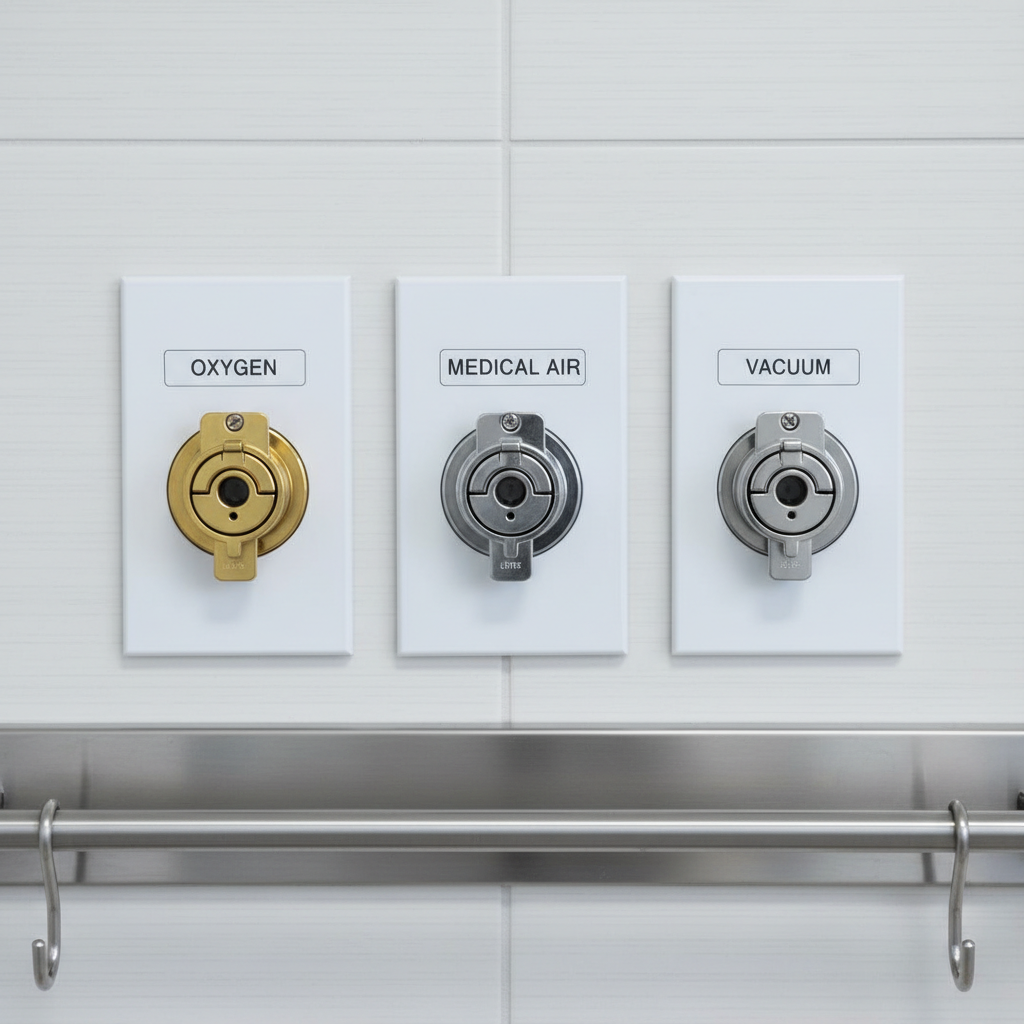
What is a DISS Connection? The Basics of the Diameter Index Safety System
The Diameter Index Safety System is a family of non-interchangeable connections for medical gas lines. Each connection is designed for a specific gas service. This is achieved by using a unique combination of two concentric, different-sized bores on the body and mating nipple of the connection. Unless the diameters of both bores align perfectly, the connection cannot be made.
History and Purpose: Preventing Medical Gas Mix-ups
Developed by the Compressed Gas Association (CGA), the DISS standard (CGA V-5) was created to address the dangerous problem of accidental cross-connection of medical gases. Before these standards were widely adopted, different manufacturers used proprietary connections, leading to a confusing and hazardous landscape of fittings. DISS, along with the Pin Index Safety System (PISS) for small cylinders, created a universal standard that physically prevents a hose for, say, oxygen from being connected to a medical air outlet. This simple mechanical solution is one of the most important safety features in any medical gas pipeline system (MGPS).
How DISS Works: Gas-Specific Indexing
The genius of the DISS system is its simplicity. Each DISS fitting consists of a body, a nipple, and a nut. The body (the outlet on the wall or headwall) has two concentric bores. The nipple (the fitting on the hose or device) has two corresponding shoulders. Only when the nipple for a specific gas is inserted into the matching body will the shoulders fit correctly, allowing the nut to be threaded and tightened. This ensures a secure, leak-proof seal and, most importantly, confirms that the correct gas is being delivered.
DISS vs. Other Medical Gas Connections
While DISS is the standard for threaded connections at the wall outlet, you may encounter other proprietary "quick-connect" fittings, especially in older facilities. These systems, like DISS, are gas-specific but are not interchangeable with each other.
It is crucial to know which types of outlets are installed in your facility to ensure you have the correct compatible equipment. Here is a comparison of the most common types:
| Connection Type | Indexing Method | Manufacturer / Common Name | Interchangeable? |
|---|---|---|---|
| DISS | Two different, concentric bore diameters | N/A (CGA Standard) | No (Only with DISS) |
| Ohmeda | Different latching pin configurations and faceplate shapes | Ohio Medical / Ohmeda / Diamond | No (Only with Ohmeda) |
| Chemetron | Different number and position of latching pins | Chemetron / NCGA | No (Only with Chemetron) |
| Puritan-Bennett | Square-bodied connector with different face shapes | Puritan-Bennett | No (Only with PB) |
Understanding DISS Outlet and Inlet Connections
DISS connections are used throughout the medical gas pipeline, not just at the final wall outlet where patient equipment is connected. They are used on zone valve boxes, manifold headers, and inlet connections for medical-grade machinery. All these applications rely on the same principle of diameter indexing to ensure the integrity of the gas system from the source to the patient.
Gas-Specific DISS Standards (CGA V-5)
The CGA assigns a unique number to each gas-specific DISS connection. This helps standardize the parts across all manufacturers. Some of the most common DISS numbers you will encounter in a healthcare setting include:
- Oxygen: CGA-1240
- Medical Air: CGA-1160
- Nitrous Oxide: CGA-1040
- Vacuum/Suction: CGA-1220
- WAGD/EVAC: CGA-2220
Knowing these numbers is essential when ordering parts or new equipment to ensure compatibility with your existing infrastructure.
NFPA 99 Compliance for DISS Medical Gas Outlets
NFPA 99, Health Care Facilities Code, is the primary code that governs the installation and operation of medical gas systems in the United States. It explicitly mandates the use of non-interchangeable connections like DISS to prevent patient harm.
Why this matters for compliance: According to NFPA 99 (Chapter 5), every medical gas outlet must be gas-specific and clearly labeled. Using a DISS connection is the primary way to achieve this. Failure to have properly installed, verified, and labeled outlets is a significant finding during any environmental or regulatory survey (e.g., by The Joint Commission) and poses an immediate threat to life. It is a foundational requirement for a safe patient care environment.
Proper medical gas verification by an ASSE 6030 certified verifier is required for all new installations or modifications to a medical gas system. This process ensures that the outlets not only deliver the correct gas but also meet pressure, flow, and purity requirements.
Installation and Verification: The ASSE 6010 & 6030 Process
Installing and testing DISS outlets is not a job for a standard plumber or contractor. It requires specialized knowledge and certification.
Installation (ASSE 6010): Only personnel with an ASSE 6010 Medical Gas Systems Installer certification should perform the work of brazing, fitting, and installing medical gas pipelines and outlets. They understand the specific requirements for cleanliness, joint quality, and pressure testing needed for a medical-grade system. If your facility is planning a renovation or expansion, trust a firm like Medical Testing Solutions that provides certified medical gas installation services.
Verification (ASSE 6030): After installation or any modification, an independent, ASSE 6030 Certified Medical Gas Verifier must inspect and test the entire system. This includes verifying that each DISS outlet is connected to the correct source, is free of cross-connections, and delivers the specified gas at the correct pressure. This is the final step in ensuring the system is safe for patient use.
Common Problems and Maintenance
Even with their robust design, DISS outlets can experience wear and tear over time. Common issues include:
- Bent or damaged nipples on hoses
- Worn or missing O-rings, leading to leaks
- Debris in the outlet body preventing a proper connection
- Cracked or damaged faceplates
Regular annual medical gas inspections are critical for catching these issues before they become a problem. An ASSE 6040 certified maintenance technician can perform leak testing, check pressures, and ensure all outlets are in good working order. Medical Testing Solutions offers comprehensive medical gas maintenance services to keep your facility safe and compliant.
Frequently Asked Questions
Request a quote for your facility
Talk with Medical Testing Solutions about your next inspection, repair or equipment request.