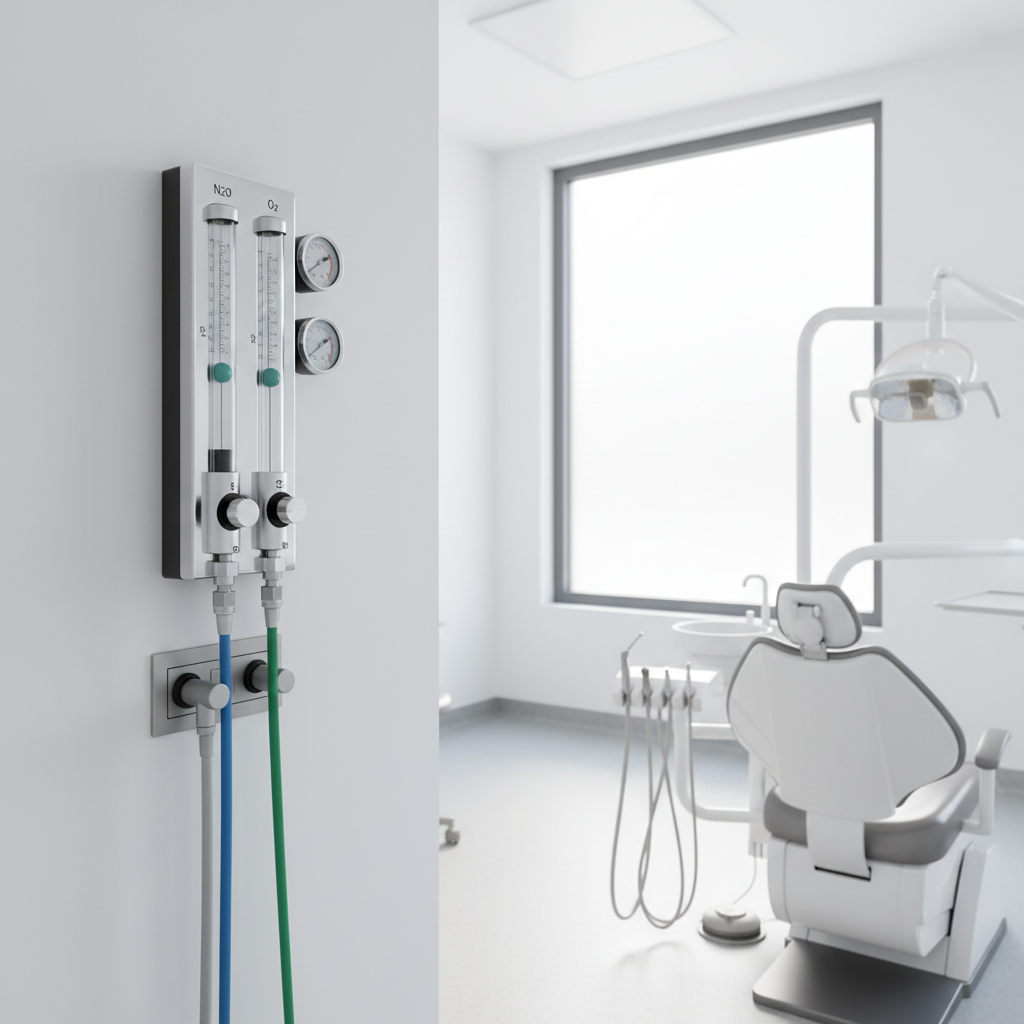
Understanding the Essentials of Nitrous Oxide/Oxygen Systems
A properly installed nitrous oxide and oxygen (N2O/O2) system is a cornerstone of modern dental practices, enabling safe and effective minimal sedation. For a dental office in Wilmington, NC, a new installation isn't just about connecting pipes; it's a comprehensive process governed by strict safety codes to protect patients and staff. This guide explains the critical components, design considerations, and regulatory requirements for a turnkey N2O/O2 system installation, from the gas source to the patient delivery and scavenging.
Core Components of a Dental Gas System
A compliant dental nitrous oxide system consists of several integrated parts:
- Central Gas Source: Typically high-pressure cylinders of nitrous oxide and oxygen stored in a secure, well-ventilated room or exterior enclosure.
- Manifold: A control system that automatically switches from the primary cylinder bank to a secondary one, ensuring an uninterrupted gas supply. It also regulates the pressure from the high-pressure cylinders down to a usable line pressure (typically 50-55 psi).
- Piping Network: Medical-grade copper piping (ASTM B819) that delivers the gases from the source to the operatories.
- Zone Valve Boxes: Placed strategically to allow individual zones or rooms to be shut off in an emergency or for maintenance without affecting the entire facility.
- Alarms: Master and area alarm panels that provide audible and visual warnings for critical system changes, such as high/low line pressure or a changeover in the manifold.
- Outlets/Terminals: Gas-specific connection points in the operatories where flowmeters are attached.
- Flowmeters: Devices like the Porter MXR-D or Belmed PC7 that mix N2O and O2 and deliver it to the patient. These require regular calibration, a service MTS provides through our dental flowmeter repair and calibration program.
- Scavenging System: A critical component that removes exhaled nitrous oxide from the operatory to protect staff from chronic exposure. This is typically integrated with the office's high-volume suction system.
Designing a Compliant System: NFPA 99 and Local Codes
Designing a medical gas system for a dental office requires deep expertise in national and local building codes. The primary governing standard is the NFPA 99, Health Care Facilities Code.
Key NFPA 99 Requirements for Dental Offices
For a typical dental office, the system falls under a "Category 3" classification per NFPA 99, as the failure of the system is unlikely to cause major injury or death. However, the requirements are still stringent:
- Source Equipment (NFPA 99, 5.3): The location and setup of cylinders and manifolds must prevent tampering and exposure to weather or physical damage. Ventilation is critical to prevent the buildup of gases.
- Piping (NFPA 99, 5.1.10): Only seamless copper tubing (Type K or L) cleaned for oxygen service can be used. Joints must be brazed by a qualified technician holding an ASSE 6010 credential.
- Warning Systems (NFPA 99, 5.1.9): An area alarm is required for each space where patients are sedated to monitor line pressure. A master alarm panel must be located in an area of continuous surveillance.
Why This Matters for Compliance: Adhering to NFPA 99 isn't optional. It is the law in North Carolina. Failure to comply can result in project delays, failed inspections, and significant liability. Working with an ASSE 6010 certified installer like Medical Testing Solutions ensures every joint is brazed and every component is installed according to these exacting standards.
Scavenging System Design: Protecting Your Staff
OSHA and the National Institute for Occupational Safety and Health (NIOSH) have set recommended exposure limits (RELs) for nitrous oxide in the workplace. An effective scavenging system is essential for compliance and staff safety. A properly designed system should:
- Use a scavenging mask with a good facial seal.
- Connect to a vacuum system capable of drawing at the rate recommended by the manufacturer (typically around 45 L/min).
- Vent the exhausted gas to the exterior of the building, away from fresh air intakes.
Regular WAG (Waste Anesthetic Gas) monitoring is recommended to verify the effectiveness of your scavenging system.
The Installation Process: A Step-by-Step Overview
A turnkey dental office nitrous oxide installation follows a precise sequence to ensure safety and code compliance. While every project is unique, the core steps remain consistent.
- System Design & Engineering: An initial consultation to determine the office's needs, number of operatories, and optimal source location. MTS creates detailed drawings that specify the piping layout, component placement, and alarm integration.
- Material Procurement: All materials, from copper piping to alarms and manifolds, must be certified for medical gas use.
- Piping Installation: Our ASSE 6010 certified technicians run the brazed copper lines from the source location to each operatory. This is often done in phases with other construction trades.
- Component Mounting: Manifolds, alarms, zone valves, and outlet stations are installed and secured.
- System Integration: Alarms are wired, and the scavenging system is connected to the central vacuum.
- Post-Install Verification: This is arguably the most critical step. Before any gas is introduced, the system must be rigorously tested by a separate, qualified party.
For a seamless project in Wilmington, NC, engaging a single provider like Medical Testing Solutions who handles both the medical gas installation and final verification simplifies coordination and accountability.