Nitrous oxide/oxygen sedation is a staple of modern dentistry, prized for its safety and efficacy in managing patient anxiety. However, installing a compliant, safe, and reliable nitrous oxide system in a Washington D.C. dental practice is a complex undertaking governed by stringent codes. This guide provides a definitive overview for dentists and practice managers on the process, covering everything from system design and component selection to final verification and ongoing maintenance. You will learn the critical steps for ensuring your installation is not only safe for patients and staff but also fully compliant with all relevant regulations, including NFPA 99 and ASSE standards.
Medical Gas Service
Medical Gas Installation
Compliance & Standards
Dental Office Nitrous Oxide Installation in Washington DC: A Complete Guide
Medical Testing SolutionsOctober 5, 20267 min read
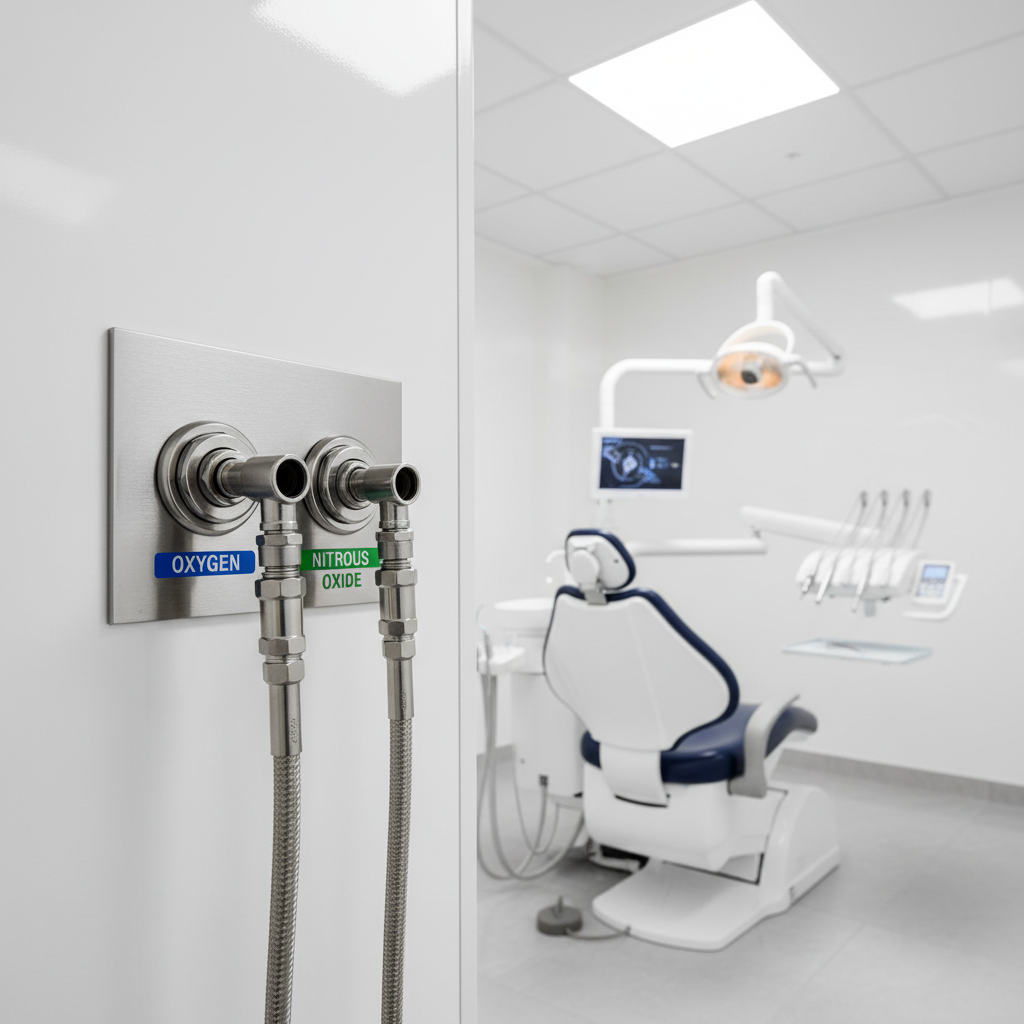
Understanding the Core Components of a Dental N2O/O2 System
A complete nitrous oxide system is more than just the flowmeter on the wall. A compliant installation involves a centralized source, a distribution network, and critical safety components. Understanding these parts is the first step in planning a successful installation.
Source Equipment: Manifolds and Cylinders
- Cylinders: The system starts with high-pressure cylinders of nitrous oxide (N2O) and oxygen (O2), typically size H.
- Manifold: A central manifold is the heart of the system. It connects multiple cylinders to ensure a continuous, uninterrupted gas supply. A primary bank of cylinders is in use while a secondary (reserve) bank is ready to switch over automatically when the primary is depleted. This prevents interruptions during a procedure. Manifolds must be compliant with NFPA 99, Section 5.1.3.
Distribution Network: Piping and Zone Valves
- Piping: Medical-grade copper piping (ASTM B819) is used to transport the gases from the central manifold to the operatories. All joints must be brazed by an installer credentialed to ASSE 6010, which is a mandatory standard for medical gas system installers.
- Zone Valves: Each operatory or group of operatories is designated as a "zone." A zone valve box is installed to allow for the immediate shutdown of gas flow to a specific area in an emergency or for maintenance, without affecting the rest of the facility. This is a critical safety and operational requirement under NFPA 99.
Operatory Equipment: Outlets, Hoses, and Flowmeters
- Terminal Units (Outlets): Quick-connect outlets in each operatory are gas-specific (e.g., DISS, Latch-Valve) to prevent accidental cross-connection of gases.
- Hoses: Flexible, color-coded hoses connect the wall outlets to the sedation unit.
- Flowmeters: The sedation unit, often called a flowmeter (from brands like Porter, Belmed, Accutron), controls the precise mixture of N2O and O2 delivered to the patient. Regular calibration and maintenance are crucial for patient safety. For service on these units, see our dental flowmeter repair and calibration services.
The Critical Role of Scavenging and WAG Management
Properly managing Waste Anesthetic Gas (WAG) is not just a best practice; it's a regulatory requirement and a critical staff safety issue. Chronic exposure to unscavenged nitrous oxide has been linked to various health issues.
Components of an Active Scavenging System
- Nasal Hood/Mask: A dual-mask system with a proper seal is the first line of defense, capturing exhaled gas at the source.
- Vacuum System: The captured gas is then actively evacuated by a dedicated medical vacuum system, designed to handle the specific flow rate required by the scavenging mask.
- Exhaust: The WAG must be exhausted to a safe location outside the building, away from windows or air intakes.
Why this matters for compliance: OSHA and NIOSH have guidelines for occupational exposure to waste nitrous oxide. An improperly designed or failing scavenging system can create a hazardous environment for your dental staff. Regular WAG monitoring is essential to ensure airborne concentrations remain below permissible exposure limits.
Alarm Systems: Your First Line of Defense
NFPA 99 (2021 Edition, Chapter 5) mandates the use of master and area alarm panels to monitor the status of your medical gas system in real-time. These are not optional.
- Master Alarms: Located in an area of continuous surveillance (e.g., reception), the master alarm monitors the entire facility's system, providing warnings for issues like a changeover to the secondary gas supply or high/low line pressure.
- Area Alarms: These are installed downstream of the zone valves, in the area they serve. They provide immediate visual and audible alerts to staff in a specific zone (e.g., the sedation suite) if the pressure of either N2O or O2 deviates from the normal operating range.
As a leading provider, Medical Testing Solutions can design and install a fully compliant alarm system tailored to your facility's layout.
The Installation Process: From Design to Verification
A turnkey installation process ensures all components work together seamlessly and meet all code requirements. This process is best handled by a single, qualified vendor to ensure accountability.
Step 1: Planning and Design
- A certified expert assesses your floor plan, number of operatories, and clinical needs.
- A full system design is created, mapping out the location of the manifold, piping routes, zone valves, alarms, and terminal units.
Step 2: Installation by ASSE 6010 Certified Technicians
- All piping is installed and brazed by technicians holding an ASSE 6010 Medical Gas Systems Installer credential. This is a non-negotiable requirement.
- All components, manifolds, alarms, outlets, are physically installed according to the design and manufacturer specifications.
Step 3: ASSE 6030 System Verification
- This is the final and most critical step before the system can be used for patient care.
- A third-party verifier, credentialed to ASSE 6030 Medical Gas Systems Verifier, performs a series of rigorous tests.
- These tests confirm the identity and purity of the gas, check for leaks, verify correct pressures, and test all alarm functions.
- Only after a successful medical gas verification can the system be certified for use.
Medical Testing Solutions provides a complete turnkey service, from initial design and ASSE 6010 installation to the final ASSE 6030 verification, ensuring a smooth and compliant process from start to finish.
NFPA 99 vs. ASSE 6000 Series: A Comparison
Understanding the key codes and standards is essential for any dental practice in Washington D.C.
| Standard | Governs | Key Requirement for Dental N2O Systems |
|---|---|---|
| NFPA 99 | The overall system | Sets the foundational safety requirements for Health Care Facilities, including criteria for storage, piping, installation, and testing of medical gas systems (Chapter 5). |
| ASSE 6010 | The Installer | Standard for Medical Gas Systems Installers. Requires installers to be certified, ensuring they are competent to braze, install, and work with the system components. |
| ASSE 6030 | The Verifier | Standard for Medical Gas Systems Verifiers. Requires a qualified, unbiased third party to test and certify that the newly installed system is safe and ready for patient use. |
| CGA | The Gas | Compressed Gas Association standards (e.g., CGA P-2) provide guidelines for the safe handling, storage, and use of compressed gas cylinders. |
Ongoing Maintenance and Inspections
Your responsibility doesn't end after the installation is certified. Regular maintenance is required to ensure long-term safety and reliability.
- Annual Inspections: NFPA 99 requires periodic inspection of all medical gas system components, including outlets, alarms, and source equipment. Learn more about annual medical gas inspections.
- Flowmeter Calibration: Sedation units should be checked and calibrated regularly according to manufacturer recommendations.
- WAG Monitoring: Periodic testing should be performed to ensure scavenging systems are functioning correctly and staff are not being overexposed.
Medical Testing Solutions offers comprehensive medical gas maintenance services to help Washington D.C. dental practices stay compliant and safe year after year.
Get Your Turnkey Nitrous Oxide System in Washington D.C.
Ensuring your dental practice's nitrous oxide system is installed correctly is one of the most important investments you can make in patient safety and regulatory compliance. The team at Medical Testing Solutions has the ASSE-certified expertise to manage your project from start to finish.
Contact us today to discuss your project. Call us at (754) 315-1078 or request a quote online for a fully compliant, turnkey dental office nitrous oxide installation in the Washington D.C. area.
Frequently Asked Questions
Absolutely. Installation must be performed by an ASSE 6010 certified installer, and the system must be tested by an ASSE 6030 certified verifier before use. This is not a DIY project and is mandated by code for patient and staff safety.
The cost varies significantly based on the size of the practice, number of operatories, and existing infrastructure. A simple one-operatory setup might cost a few thousand dollars, while a large, multi-operatory clinic could be tens of thousands. The only way to get an accurate number is to request a quote.
A full ASSE 6030 verification is required upon initial installation or if the system undergoes any modification. After that, components of the system must be inspected periodically as part of your facility's risk assessment, typically an annual process. Line pressure, alarms, and outlet function are key checkpoints.
A scavenging system uses its own dedicated vacuum producer sized specifically for WAG removal at the patient mask. It is a separate system from the practice's main dental vacuum/suction system, which is used for fluids and solids. The two should never be combined.
While portable systems are used in some settings, a central, manifold-based system is the standard for modern, multi-operatory practices. It provides a more reliable, continuous gas supply, is safer by storing cylinders in a secure location, and is generally required to meet the demands of a busy practice.
Request a quote for your facility
Talk with Medical Testing Solutions about your next inspection, repair or equipment request.