Skip to content
    New: Medical Gas Outlet Retrofit & Rebuild Matrix — cross-reference legacy Chemetron, Ohio Diamond, Puritan-Bennett & more →
    ASSE Certified 24/7
    Medical Gas Service
    Medical Gas Products
    Compliance & Standards

    Dental Office Nitrous Oxide Installation in Rock Hill, SC: A Complete Guide

    Medical Testing SolutionsOctober 2, 20267 min read
    Share
    Dental Office Nitrous Oxide Installation in Rock Hill, SC: A Complete Guide

    What is a Turnkey Dental Nitrous Oxide System?

    A turnkey dental nitrous oxide (N2O) and oxygen (O2) system is a complete, ready-to-use solution for providing conscious sedation in a dental practice. Unlike piecemeal approaches, a turnkey installation from a certified provider like Medical Testing Solutions covers every aspect of the project: system design, equipment sourcing, physical installation of all components, and final verification. The goal is to deliver a system that is not only functional but also fully compliant with all relevant safety standards, primarily NFPA 99 (Health Care Facilities Code) and the ASSE 6000 series.

    For a dental office in Rock Hill, South Carolina, this means your N2O/O2 plumbing, scavenging system, and alarm panels are installed correctly the first time. The process concludes with a rigorous ASSE 6030 verification, which is the official confirmation that your new system is safe for patient use. This guide will walk you through the key considerations for a successful and compliant installation.

    Why this matters for compliance: NFPA 99 is not just a set of recommendations; it is the law in most jurisdictions, including South Carolina. Non-compliance can result in failed inspections, costly rework, and significant safety risks. A turnkey installation by an ASSE 6010 certified installer is the most reliable way to meet these stringent requirements.

    Designing Your N2O/O2 System for Compliance and Workflow

    The design phase is the most critical part of the installation. A well-designed system ensures safety, efficiency, and scalability. Key decisions at this stage include the type of gas source, the layout of the piping, and the placement of key components.

    Manifold vs. Bulk Storage

    Most dental practices use high-pressure cylinders connected to a manifold. A manifold is a device that connects multiple cylinders to the piping system, automatically switching from the primary bank to the secondary bank when the pressure drops. This ensures an uninterrupted gas supply.

    • Automatic Changeover Manifold: This is the standard for dental offices. It eliminates the need for manual cylinder changes during procedures, enhancing safety and convenience. The manifold control panel provides a clear indication of which cylinder bank is in use and which needs replacement.

    Piping Layout and Sizing

    Proper pipe sizing is crucial for maintaining adequate gas flow and pressure to all operatories. The pipe network must be designed by a qualified individual who can calculate the total flow requirements of your practice.

    • Materials: Per NFPA 99, all N2O/O2 piping must be ASTM B819 seamless medical-grade copper, cleaned and brazed by an ASSE 6010 certified installer.
    • Shut-off Valves: Zone valves must be installed to isolate specific areas of the practice (e.g., each operatory, a group of operatories) for maintenance or in case of an emergency without shutting down the entire facility.

    Essential Equipment for a Dental Nitrous System

    Beyond the pipes and cylinders, a compliant system requires several key components working in concert. These components ensure the safe delivery of gases and the protection of both patients and staff.

    1. The Gas Manifold and Source Equipment

    This is the heart of your system. It typically includes the manifold itself, pressure regulators to step down the high pressure from the cylinders to the nominal 50-55 psi line pressure, and pressure relief valves as a safety precaution.

    2. The Alarm System

    NFPA 99 mandates a warning system for all medical gas systems. For a dental office, this typically involves a master alarm panel located in an area of continuous surveillance (like the reception desk or sterilization area).

    • Master Alarms: Monitor the primary gas supply for high/low pressure and changeover status.
    • Area Alarms: While more common in hospitals, these may be required in larger dental clinics to monitor pressure in specific zones.

    3. Flowmeters and Scavenging Systems

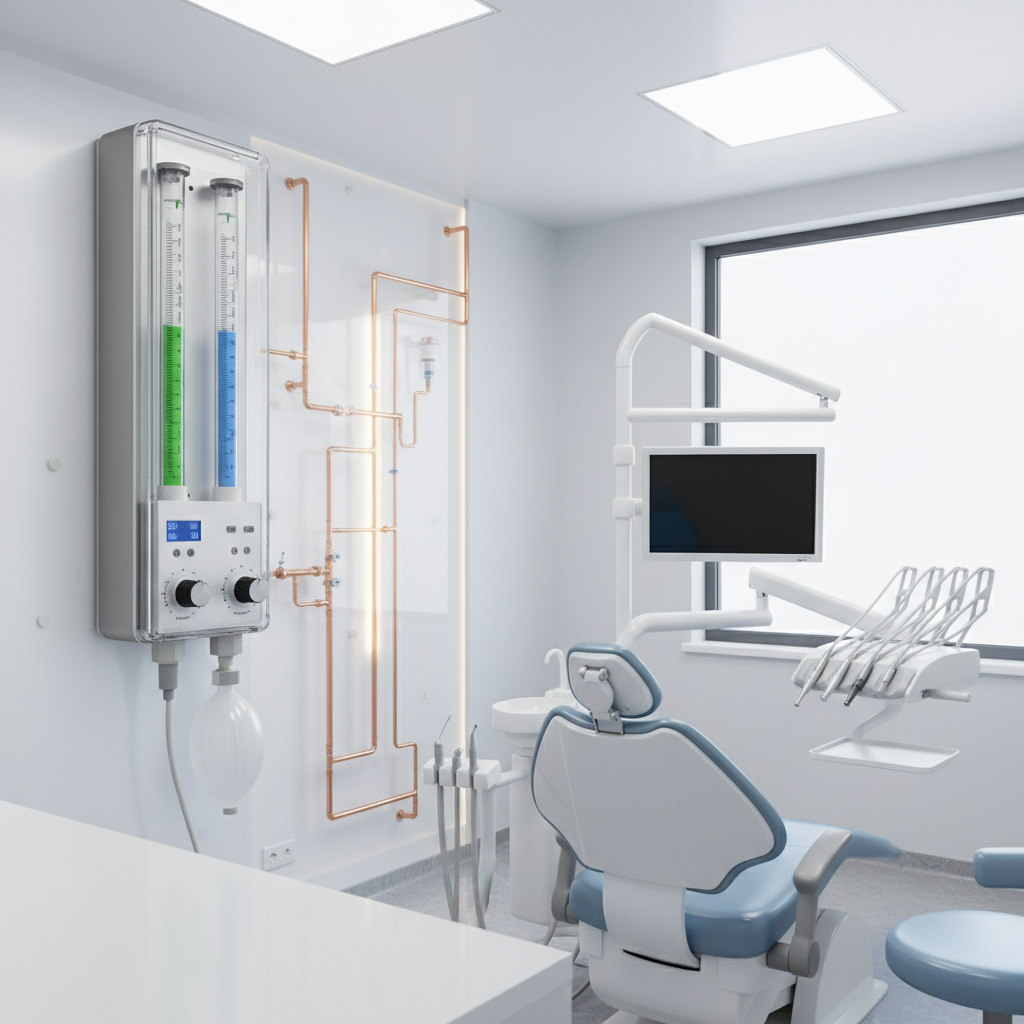
    In each operatory, a flowmeter is used to control the mix and flow rate of N2O and O2 delivered to the patient. Leading brands include Porter, Belmed, Accutron, and Matrx.

    A critical, and often overlooked, component is the scavenging system. Its purpose is to remove exhaled waste anesthetic gas (WAG) from the room, protecting your staff from chronic exposure. The system must be connected to a dedicated vacuum source and properly balanced to ensure it captures waste gas effectively without compromising the patient's breathing.

    Regular flowmeter calibration and repair is essential for accuracy and patient safety. Furthermore, OSHA requires monitoring of employee exposure to WAGs, a service MTS provides through WAG chemical vapor monitoring.

    The Installation Process: What to Expect

    An installation by an ASSE 6010 certified technician follows a strict protocol to ensure quality and compliance. The process is much more than simply running copper pipe.

    1. Pre-Installation Review: The installer will review the approved design plans and coordinate with other trades (electricians, plumbers) on-site.
    2. Brazing and Assembly: Using a nitrogen purge, the technician brazes all joints to prevent the formation of copper oxides inside the pipe, which could otherwise be delivered to the patient. This is a critical step that requires ASSE 6010 certification.
    3. Initial Pressure Test: Once the piping is complete, it is pressurized (typically with nitrogen) to test for leaks before walls and ceilings are closed up.
    4. Component Installation: Manifolds, alarm panels, and terminal outlets are installed and connected to the piping network.

    Comparison of Key Compliance Standards

    StandardArea of FocusKey Requirement for Dental N2O Systems
    NFPA 99, Ch. 5Piped Medical Gas & Vacuum SystemsGoverns all aspects of system design, installation, materials, and testing. Mandates specific pipe materials (ASTM B819), brazing procedures, and alarm requirements.
    ASSE 6010Medical Gas Systems InstallersRequires the technician performing the installation to be certified. They must demonstrate expertise in brazing, system layout, and NFPA 99 requirements.
    ASSE 6030Medical Gas Systems VerifiersRequires a third-party, independent verifier to test the entire system after installation is complete. This is the final check before the system can be used on patients.
    CGA P-2Medical Gas Cylinder HandlingProvides guidelines for the safe handling, storage, and transport of high-pressure gas cylinders, which is the responsibility of the dental office staff.

    Final Verification: The ASSE 6030 Process

    Before a new or modified nitrous oxide system can be put into service, it must undergo a final verification by an ASSE 6030 certified verifier. This is a non-negotiable step required by NFPA 99. The verifier must be independent of the installer.

    Medical Testing Solutions is one of the few companies certified to both install (ASSE 6010) and verify (ASSE 6030) medical gas systems. The verification process is exhaustive and includes:

    • Purity & Particulate Tests: Ensuring the gas delivered at each outlet is the correct gas and free of contaminants.
    • Pressure & Flow Tests: Confirming that all outlets provide the specified pressure and flow rate.
    • Valve & Alarm Tests: Systematically checking every shut-off valve and ensuring all alarm panels function correctly.
    • Labeling & Component Checks: Verifying that all pipes, outlets, and source equipment are labeled correctly.

    Upon successful completion, the verifier provides a comprehensive report, and the system is officially certified for patient use. This medical gas verification is your ultimate assurance of safety and compliance.

    Maintaining Your System Post-Installation

    Your responsibility doesn't end after the verification report is signed. Ongoing maintenance and inspection are crucial for long-term safety and compliance. NFPA 99 requires, at a minimum, an annual inspection of your medical gas system.

    • Annual Inspections: Check for leaks, verify pressures, and test alarm functions. Annual medical gas inspections are a core service offered by MTS.
    • Preventative Maintenance: Regular service of components like manifold regulators and flowmeters prevents failures and ensures accuracy.
    • Staff Training: Ensure your staff knows how to handle cylinders, respond to alarms, and operate the emergency shut-off valves.

    Your Partner for Compliant Nitrous Oxide Systems in Rock Hill, SC

    Installing a dental nitrous oxide and oxygen system is a complex project with zero margin for error. From initial design to final ASSE 6030 verification, every step must adhere to the stringent requirements of NFPA 99. Medical Testing Solutions provides turnkey installations for dental practices throughout Rock Hill, SC, and the surrounding region.

    Our ASSE-certified technicians ensure your system is designed for your workflow, installed correctly, and verified to be 100% compliant and patient-ready. Don't risk the safety of your patients and staff.

    Ready to get started? Contact Medical Testing Solutions today for a comprehensive quote or call us at (754) 315-1078 to discuss your dental office nitrous oxide installation project.


    Frequently Asked Questions

    For a typical dental office in Rock Hill, the physical installation can take 3-5 days, depending on the number of operatories and the complexity of the building's construction. The entire project, from design to final verification, may span several weeks.

    Absolutely not. NFPA 99 strictly requires the use of ASTM B819 seamless medical-grade copper pipe. It is specially cleaned and prepared to be free of interior contaminants that could harm a patient.

    Only an ASSE 6010 certified installer is qualified and legally permitted to install medical gas piping. This certification ensures the individual has been trained and tested on the specific procedures, like brazing with a nitrogen purge, required by NFPA 99.

    Installation (ASSE 6010) is the physical act of building the system. Verification (ASSE 6030) is the independent, third-party testing that proves the newly installed system is safe and compliant. The verifier cannot be the same person or company that performed the installation without a proper documented process.

    Yes. A scavenging system is mandatory. It is designed to protect your dental staff from the health risks associated with long-term exposure to waste nitrous oxide gas, as required by OSHA and recommended by the NIOSH.

    This article is provided for educational purposes and reflects industry standards as of publication. Always verify against current NFPA 99, CGA, and AHJ requirements. Medical Testing Solutions is ASSE-certified and ready to help — contact us for facility-specific guidance.

    Request a quote for your facility

    Talk with Medical Testing Solutions about your next inspection, repair or equipment request.

    Get a quote in 1 business day

    I agree to receive text messages from Medical Testing Solutions, L.L.C. at the phone number provided, including informational and marketing messages. Consent is not a condition of purchase. Message frequency varies. Message & data rates may apply. Reply STOP to opt out or HELP for help. See our Privacy Policy and Messaging Terms.

    Prefer to talk? Call (754) 315-1078

    Related articles