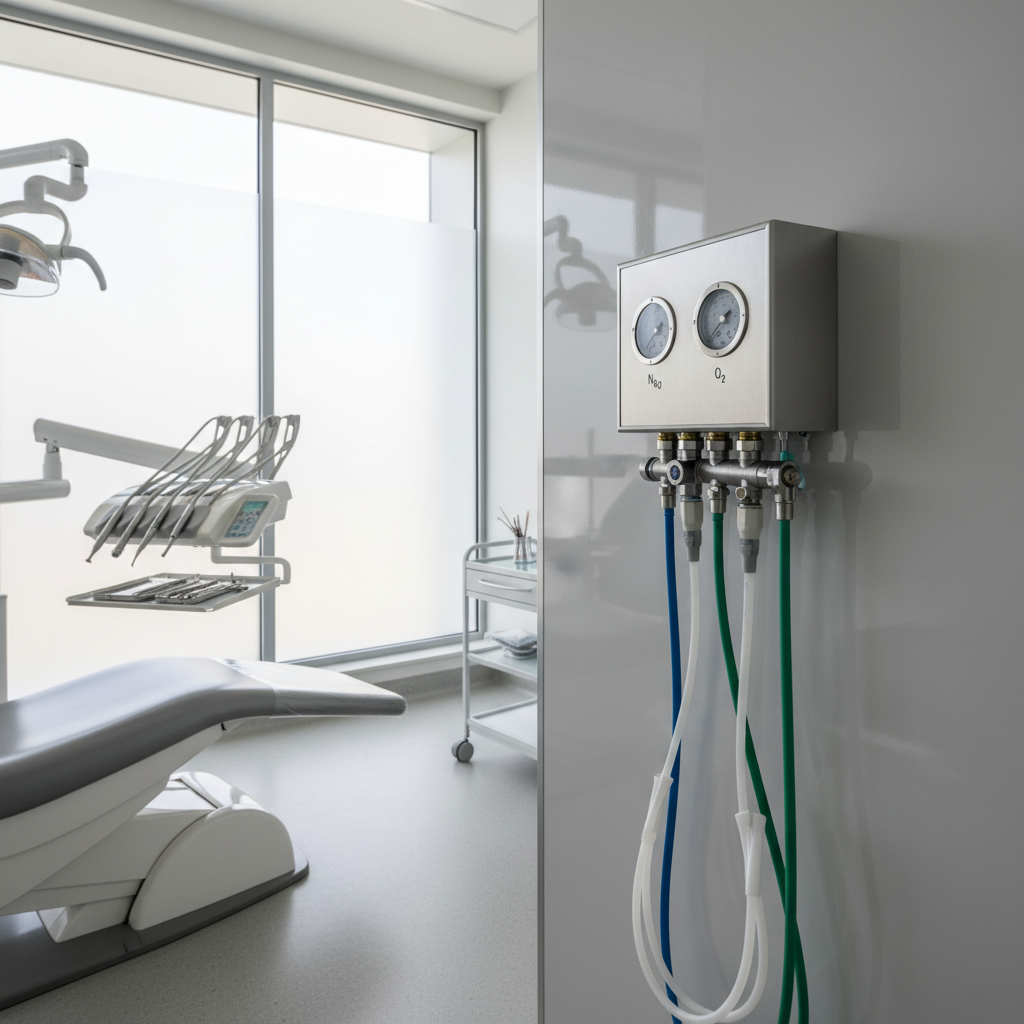
Turnkey Nitrous Oxide & Oxygen Systems for Roanoke Dental Practices
A properly installed and maintained nitrous oxide/oxygen (N2O/O2) sedation system is a cornerstone of modern patient comfort and anxiety management in dentistry. For dental offices in Roanoke, Virginia, ensuring these systems are installed correctly isn'''t just about functionality, it'''s a critical matter of patient safety, staff protection, and regulatory compliance. This guide provides a definitive overview of the turnkey installation process for dental N2O/O2 systems, covering everything from initial design and component selection to final verification and ongoing maintenance.
Whether you are building a new practice, renovating an existing one, or upgrading an outdated system, this article details the essential steps, standards, and considerations for a successful installation. You will learn about the roles of NFPA 99 and ASSE 6000 standards, the components of a complete system, and the importance of post-installation verification by a qualified third party.
Designing Your Dental Gas System: Key Considerations
Before any pipe is run or equipment is ordered, a comprehensive design phase is crucial. A well-designed system ensures efficiency, safety, and compliance from the ground up.
Room Layout & Operatory Requirements
- Number of Operatories: How many rooms will be equipped for N2O/O2 sedation now and in the future? Planning for future expansion is more cost-effective than retrofitting later.
- Gas Delivery Method: Will you use portable E-cylinders on a mobile stand, or a central gas closet with gas lines plumbed to each operatory? Central systems are the standard for multi-operatory practices for safety and efficiency.
- Scavenging System: A proper scavenging system is non-negotiable for removing exhaled waste anesthetic gas (WAG). The design must incorporate an appropriate vacuum source and flow rate as specified by the equipment manufacturer and NFPA 99.
Sizing the System: Manifolds and Piping
- Manifold Sizing: The central gas manifold must be sized to accommodate the number of cylinders required for your practice'''s patient load. A typical setup includes a primary and secondary bank for both nitrous oxide and oxygen, ensuring an uninterrupted supply. The manifold automatically switches from the primary to the secondary bank when pressure drops, sending a signal to the master alarm.
- Pipe Sizing: Pipe diameter is calculated based on the total flow rate demand of the system and the distance from the source to the furthest outlet. This is a critical calculation performed by an ASSE 6010 certified installer to ensure adequate pressure and flow at every station.
Why this matters for compliance: NFPA 99 (Health Care Facilities Code) outlines specific requirements for the design and installation of Level 3 piped gas systems, which are common in dental offices. Failure to adhere to these standards, such as those for pipe sizing and material selection, can result in a non-compliant system and pose significant safety risks.
Core Components of a Compliant N2O/O2 Installation
A turnkey nitrous oxide installation involves more than just flowmeters. It'''s an integrated system of source equipment, distribution piping, and safety components.
1. Gas Source Equipment
- Cylinders: High-pressure cylinders of Nitrous Oxide (blue) and Oxygen (green).
- Central Manifold: The control hub for your gas supply. Modern manifolds, like those from Porter or Belmed, are automatic crossover types that ensure continuous gas flow. Medical Testing Solutions can help you select and source a manifold appropriate for your practice size.
2. Piping and Distribution
- Piping: All piping must be medical-grade, cleaned, and brazed by a certified ASSE 6010 credentialed installer. Per NFPA 99, the piping must be Type K or L copper, cleaned for oxygen service.
- Zone Valves: Each operatory or group of operatories should be isolated with a zone valve box. This allows for gas flow to be shut off to one area for maintenance or in an emergency without affecting the entire facility. These are a key part of any annual medical gas inspection.
3. In-Operatory Equipment
- Outlets: Quick-connect or Diameter Index Safety System (DISS) outlets specific to each gas (N2O and O2) are installed in each operatory.
- Flowmeters: The control center for sedation. Modern dental flowmeters from brands like Porter, Belmed, Accutron, and Matrx have critical safety features, such as a minimum 30% oxygen flow and a failsafe that shuts off N2O if the oxygen supply is lost. Regular service is essential; for more information, see our guide on dental flowmeter repair and calibration.
- Scavenging System: This includes the nasal hood (mask), vacuum control block, and tubing that connects to the facility'''s dedicated WAG vacuum source.
4. Alarms and Monitoring
- Master Alarms: Located in an area of continuous surveillance (e.g., reception), the master alarm panel monitors the entire gas system. It will indicate when the manifold has switched to the secondary bank, signaling that cylinders need to be changed.
- Area Alarms: Installed in specific locations, these alarms monitor the pressure within a "zone" of the facility and will alarm if the pressure deviates from the normal operating range.
The Installation Process: An ASSE 6010 Certified Approach
Installing a medical gas system is not a standard plumbing job. It requires a specialized skill set and certification to ensure safety and compliance. The entire process is overseen by individuals holding an ASSE 6010 Medical Gas Systems Installer credential.
- Pre-Installation Review: The certified installer reviews the system design and architectural plans.
- Piping Installation: All piping is brazed using a nitrogen purge technique to prevent internal oxidation, which could otherwise contaminate the gas stream. All joints are meticulously cleaned and inspected.
- Component Installation: Manifolds, alarm panels, zone valves, and outlets are installed according to manufacturer specifications and NFPA 99 requirements.
- Initial Pressure Testing: The system is pressurized with nitrogen to test for leaks before any fixtures are installed.
Medical Testing Solutions provides end-to-end medical gas installation services, utilizing only ASSE 6010 certified technicians to ensure your Roanoke dental office project is completed to the highest standard.