Understanding the Essentials of Nitrous Oxide System Installation
A properly installed nitrous oxide and oxygen (N2O/O2) delivery system is a cornerstone of modern dental practices, enabling safe and effective minimal sedation. For dental offices in Owensboro, Kentucky, a turnkey installation isn't just about connecting pipes; it's a comprehensive process involving meticulous design, adherence to strict safety codes, and rigorous post-installation verification. This guide will walk you through the critical steps, from initial planning and equipment selection to final certification, ensuring your system is safe, reliable, and fully compliant with national standards.
System Design and Planning: The Foundation of a Safe Installation
Before any equipment is ordered or wrenches are turned, a comprehensive plan is essential. A successful dental office nitrous oxide installation begins with a design that considers your practice's specific needs, physical layout, and future growth.
Sizing Your System: Manifolds and Cylinder Storage
The heart of your system is the gas manifold, which controls the switchover from the primary to the secondary bank of cylinders. Proper sizing is crucial to avoid service interruptions. For a typical dental office, a digital, fully automatic changeover manifold is the standard of care. Your storage location must be secure, well-ventilated, and meet NFPA 99 requirements for medical gas storage.
Piping Layout and Material Selection
Medical gas piping requires specific materials and installation techniques. Per NFPA 99, all piping for N2O/O2 systems must be ACR Type L or K copper, cleaned for oxygen service. An ASSE 6010 certified installer, like the team at Medical Testing Solutions, will meticulously plan the piping route to ensure efficiency and minimize potential points of failure. The layout must account for the location of zone valves, which allow sections of the office to be isolated for maintenance without shutting down the entire system.
Core Components of a Dental N2O/O2 System
A compliant nitrous oxide system is more than just a tank and a mask. It's an integrated network of components designed for safety and precise delivery.
- Source Equipment: High-pressure cylinders (typically G or H size) for both nitrous oxide and oxygen.
- Central Manifold: The brain of the system, automatically switching from empty to full cylinders. We recommend digital manifolds for their accuracy and alarm capabilities.
- Line Pressure Alarms: These master alarms are critical safety devices. They monitor gas pressure in the main lines and provide audible and visual warnings of any deviation from the normal operating range, as mandated by NFPA 99.
- Zone Valves: Placed in valve boxes, these allow for the isolation of specific areas (e.g., an operatory wing) for service or in an emergency.
- Outlets and Risers: Wall-mounted outlets in each operatory with gas-specific connections (DISS) to prevent accidental cross-connection.
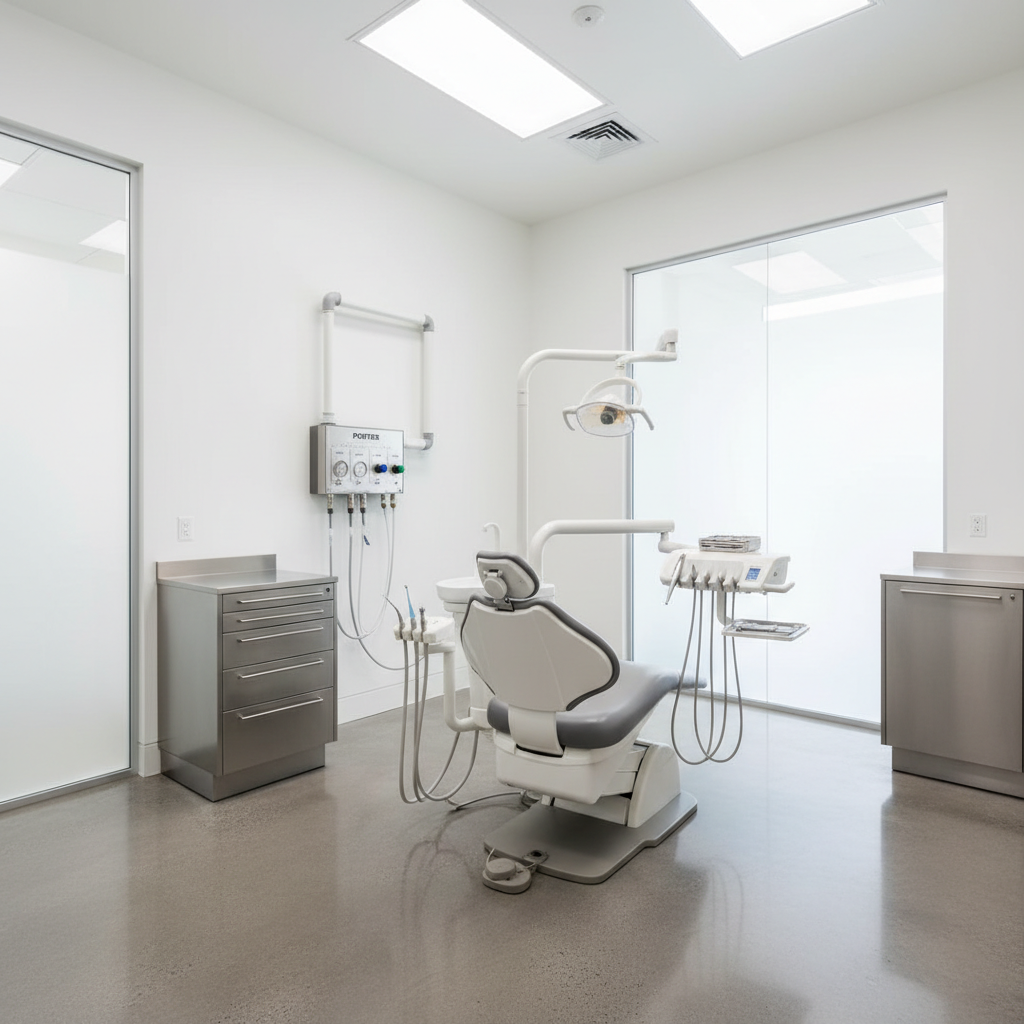
- Flowmeters: The final delivery point. Modern dental flowmeters from brands like Porter, Belmed, and Accutron have built-in safety features, such as a minimum 30% oxygen flow and a failsafe that shuts off N2O if the O2 supply is interrupted.
- Scavenging System: A vacuum system that actively removes exhaled waste anesthetic gas (WAG) from the operatory to protect staff.
Why this matters for compliance: NFPA 99 (Health Care Facilities Code) is not a suggestion; it's the law in most jurisdictions. Proper component selection and installation are fundamental to preventing fires, explosions, and patient harm. Failure to comply can result in project delays, costly rework, and significant liability.
The Installation Process: An ASSE 6010 Certified Approach
Once the design is finalized and equipment is on site, the installation begins. This process must be performed by an ASSE 6010 certified installer who is credentialed to work on medical gas systems. This isn't a job for a standard plumber.
- Piping Rough-In: The certified installer runs the ACR copper piping from the manifold location to each operatory.
- Brazing: All joints are brazed, not soldered, using a specific silver alloy (BCuP) while purging the interior of the pipe with nitrogen to prevent oxidation. This crucial step maintains the purity of the gas pathway.
- Component Installation: The manifold, alarms, zone valves, and outlets are mounted and connected.
- Initial Pressure Test: The system is pressurized with nitrogen to check for leaks before any walls are closed up.
Medical Testing Solutions provides end-to-end medical gas installation services, ensuring every step is performed by ASSE 6010 certified professionals and meticulously documented.