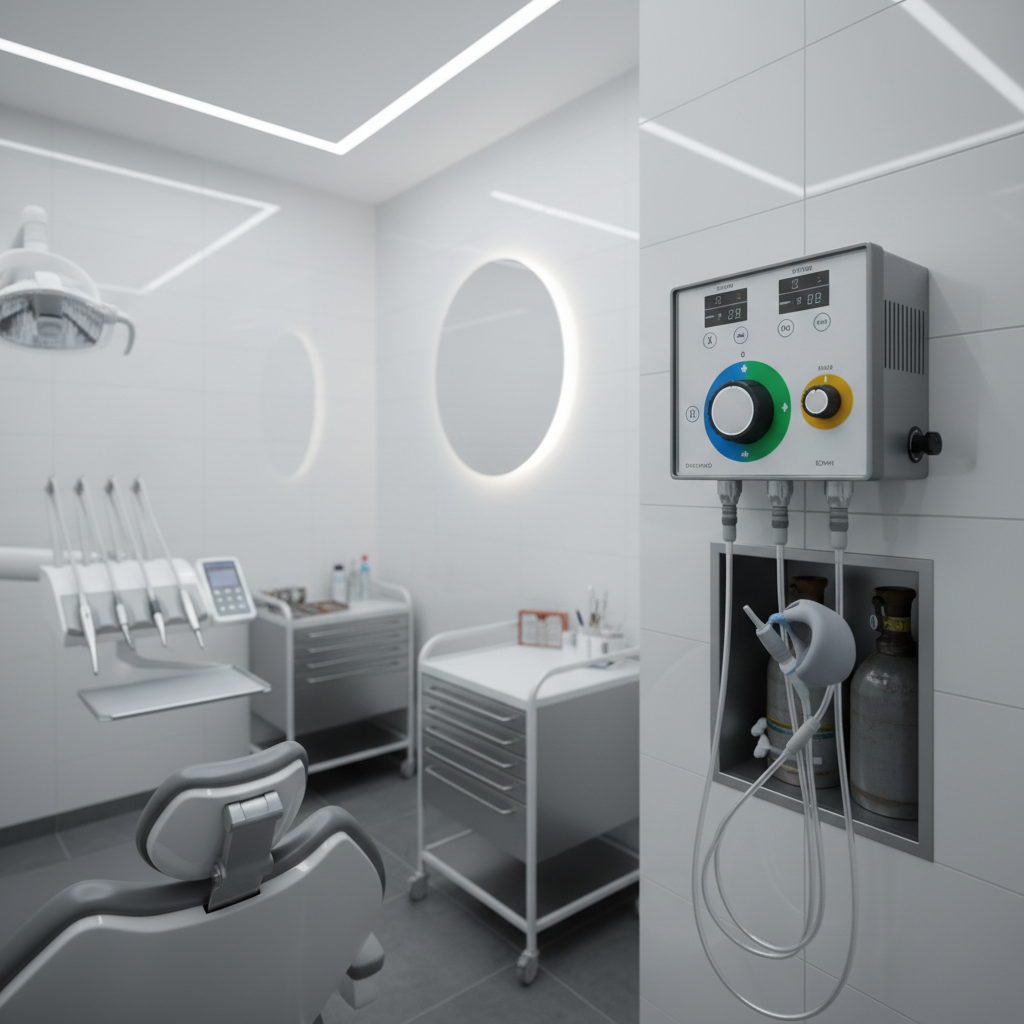
Dental Office Nitrous Oxide Installation in Newport News, VA: A Complete Guide
Medical Testing SolutionsOctober 3, 20268 min read
Share
Installing a nitrous oxide and oxygen (N2O/O2) system in a dental office is a significant infrastructure project that directly impacts patient safety and regulatory compliance. For dentists in Newport News, Virginia, a properly engineered and installed system is not just a clinical asset for anxiolysis and sedation, it's a requirement governed by stringent national codes and standards. This guide provides a definitive overview of the entire process, from initial design and equipment selection to the final verification and certification, ensuring your practice meets all necessary safety and performance benchmarks.
Here, you will learn the critical components of a compliant dental gas installation, including the central supply system, piping distribution network, scavenging systems, alarm requirements, and the essential post-install verification process performed by an ASSE 6030 credentialed verifier.
Understanding the Core Components of a Dental N2O/O2 System
A compliant dental nitrous oxide and oxygen system is more than just the flowmeter in the operatory. It's a complete, integrated network of components designed to deliver medical gases safely from a central source to the point of use. Understanding these parts is the first step toward a successful installation.
Central Gas Supply: Manifolds and Cylinders
The system begins at the central supply source, typically located in a secure, well-ventilated room. For a dental office, this usually consists of:
Oxygen (O2) Source: Often a high-pressure cylinder manifold. The manifold automatically switches from the primary bank of cylinders to the secondary bank when the pressure drops, ensuring an uninterrupted supply. A signal is sent to the master alarm panel to alert staff to change the empty cylinders.
Nitrous Oxide (N2O) Source: Similar to oxygen, N2O is supplied via a high-pressure cylinder manifold. Due to the nature of N2O (a liquid under pressure), these manifolds may include heaters to prevent freeze-ups during high-demand usage.
All source equipment must be secured with brackets and chains as specified by NFPA 99, Chapter 5, to prevent tipping.
Why This Matters for Compliance: NFPA 99 (Health Care Facilities Code) dictates the requirements for the location, construction, and security of medical gas central supply systems. Failure to house the system in a compliant room can result in immediate red-tagging during an inspection and puts the facility at risk.
The Piping Distribution Network
From the central supply, medical-grade copper piping (ASTM B819) is run throughout the facility to each operatory where gas will be used. Key considerations for this network include:
Pipe Sizing: Pipes must be appropriately sized by a qualified engineer to handle the calculated flow demands of the practice, ensuring adequate pressure and volume at the furthest outlet.
Brazing: All joints must be brazed by an ASSE 6010 certified installer. Brazing with a nitrogen purge prevents the formation of carbonaceous residue inside the pipe, which could otherwise be delivered to a patient.
Zone Valves: Each operatory or group of operatories must be isolated with a zone valve box. This allows staff to shut off gas flow to a specific area in an emergency or for maintenance without affecting the rest of the facility. These valves must be clearly labeled and accessible at all times.
Medical Testing Solutions provides ASSE 6010 certified professionals who specialize in the design and installation of these critical piping networks, ensuring they meet all code requirements.
Effective scavenging is one of the most critical, and often overlooked, aspects of a nitrous oxide system. A scavenging system actively removes exhaled N2O from the operatory environment to protect dentists and staff from the health risks of chronic exposure to Waste Anesthetic Gas (WAG).
Modern dental flowmeters incorporate a scavenging nasal hood (mask) system. The vacuum source for this system MUST be separate from the facility's main dental/surgical vacuum to prevent contamination and ensure proper performance. The vacuum pump must be sized correctly and vented to the exterior of the building, away from any air intakes.
Comparison of Scavenging Vacuum Sources
Vacuum Source Type
Pros
Cons
Best For
Dedicated WAG Pump
Meets NFPA 99/CGA standards. High efficiency. Prevents cross-contamination.
Higher initial cost. Requires dedicated space.
All new installations; best practice for safety and compliance.
Venturi System (uses compressed air)
Lower initial cost.
High operational cost (consumes compressed air). Can be noisy. May not provide consistent vacuum.
Not recommended for new builds or full-system installations.
Tying into Dental/Surgical Vacuum
Lowest initial cost.
Non-compliant with NFPA 99. High risk of cross-contamination. Degrades surgical vacuum performance.
NEVER recommended. Poses a significant compliance and safety risk.
For practices concerned about WAG exposure, MTS offers comprehensive WAG chemical vapor monitoring to test and validate the effectiveness of your scavenging system.
Alarms and Monitoring: The System's Warning Signs
NFPA 99 mandates a robust alarm system to monitor the status of the medical gas system. For a typical dental installation in Newport News, this includes:
Master Alarms: Located in an area of continuous surveillance (e.g., reception or sterilization), the master alarm panel monitors the central supply system. It will indicate when a manifold has switched to its secondary bank or if a high/low pressure condition occurs.
Area Alarms: These are located in the treatment areas and monitor the pressure in the pipes serving that specific zone. They provide an immediate warning of a pressure issue directly to the clinical staff.
These alarms are not optional; they are a fundamental safety requirement. They provide the earliest possible warning of a potential problem, allowing for intervention before it affects patient care.
Operatory Equipment: The Point of Delivery
Inside the operatory, the system terminates at the wall outlets. From there, hoses connect to the sedation equipment itself.
Outlets: Outlets must be gas-specific (DISS or similar) to prevent accidental cross-connection of hoses. They should be installed at a convenient height and location for easy access.
Hoses: Hoses must also be gas-specific and pressure-rated. Regular inspection for cracks, leaks, and damage is crucial.
Flowmeters: The sedation unit (e.g., Porter, Belmed, Accutron) is the final control point. It mixes N2O and O2 and delivers it to the patient. These units have built-in safety features, such as a minimum oxygen flow (typically 30%) and an oxygen flush button. Regular calibration and maintenance are essential. If you suspect issues with your unit, seeking professional dental flowmeter repair and calibration is critical.
The ASSE 6030 Verification Process: The Final Step to Compliance
After the physical installation is complete, the entire system, from the cylinders to the flowmeter, cannot be used until it has been thoroughly tested and verified by an independent, ASSE 6030 Certified Medical Gas Verifier.
This is not a self-check or a task for the installer. The verifier acts as a third-party quality assurance agent, ensuring the system is safe, compliant, and ready for patient use.
What Verification Entails
The verification process is exhaustive and includes:
Piping Purity: Testing to ensure the inside of the pipes is clean.
Cross-Connection Test: Confirming that only oxygen flows from oxygen outlets and only N2O from nitrous oxide outlets.
Pressure and Flow Tests: Ensuring the system can deliver the required pressure and flow rate to every outlet.
Alarm Testing: Verifying that all master and area alarms function correctly.
Scavenging System Performance: Testing the vacuum flow rate at each scavenging mask connection.
Labeling and Documentation Review: Ensuring all components are labeled correctly and the installer has provided the necessary documentation.
Only after every test is passed will the verifier issue a certificate, allowing the dental practice to place the system in service. Medical Testing Solutions has a team of ASSE 6030 verifiers ready to perform this critical medical gas verification for your Newport News facility.
Maintaining Your System Post-Installation
Compliance doesn't end with the initial verification. Regular maintenance and inspections are required to keep the system safe and operational.
Daily Checks: Staff should perform a quick check of cylinder pressures and the manifold status.
Annual Inspections: A comprehensive annual medical gas inspection by a qualified professional is required by many jurisdictions and is a best practice for identifying potential issues before they become critical failures.
Preventive Maintenance: Hoses, flowmeters, and vacuum pumps all require periodic maintenance as per the manufacturer's recommendations.
Your Partner for Compliant Dental Gas Systems in Newport News
Installing a dental nitrous oxide and oxygen system is a complex undertaking with zero margin for error. From initial design to final verification and ongoing maintenance, every step must adhere to strict safety standards.
At Medical Testing Solutions, we provide turnkey solutions for dental practices in Newport News and across Virginia. Our ASSE 6010 certified installers ensure your system is built correctly, and our ASSE 6030 verifiers provide the independent, third-party certification you need for compliance and peace of mind.
Ready to ensure your practice's sedation system is safe, reliable, and fully compliant? Contact our team today for a comprehensive quote.
The timeline can vary from a few days to over a week, depending on the size of the practice, the complexity of the pipe runs, and whether it's a new build or a retrofit into an existing building. The verification process adds another day once the installation is complete.
Yes, in virtually all cases. Medical gas systems are considered part of the building's plumbing/mechanical infrastructure and require permits from the local building department. The plans are typically reviewed to ensure they meet NFPA 99 and other building codes before a permit is issued.
According to NFPA 99, medical gas systems must be installed by individuals who are certified to the ASSE 6010 standard for Medical Gas Systems Installers. Never allow a standard plumber or HVAC technician without this specific credential to perform the installation.
No. NFPA 99, 5.1.3.6.10, explicitly prohibits using the dental/surgical vacuum for WAG disposal. A dedicated vacuum source is required to prevent contamination and ensure the safety of the system.
The installer (ASSE 6010) physically builds the system. The verifier (ASSE 6030) is an independent third-party who tests and certifies that the installer's work meets all code requirements. The verifier cannot be an employee of the installing company.
Most manufacturers recommend annual or biennial calibration to ensure the accuracy of the gas mixture being delivered. Check with your specific model's service manual and consider this part of your regular medical gas maintenance services.
Request a quote for your facility
Talk with Medical Testing Solutions about your next inspection, repair or equipment request.