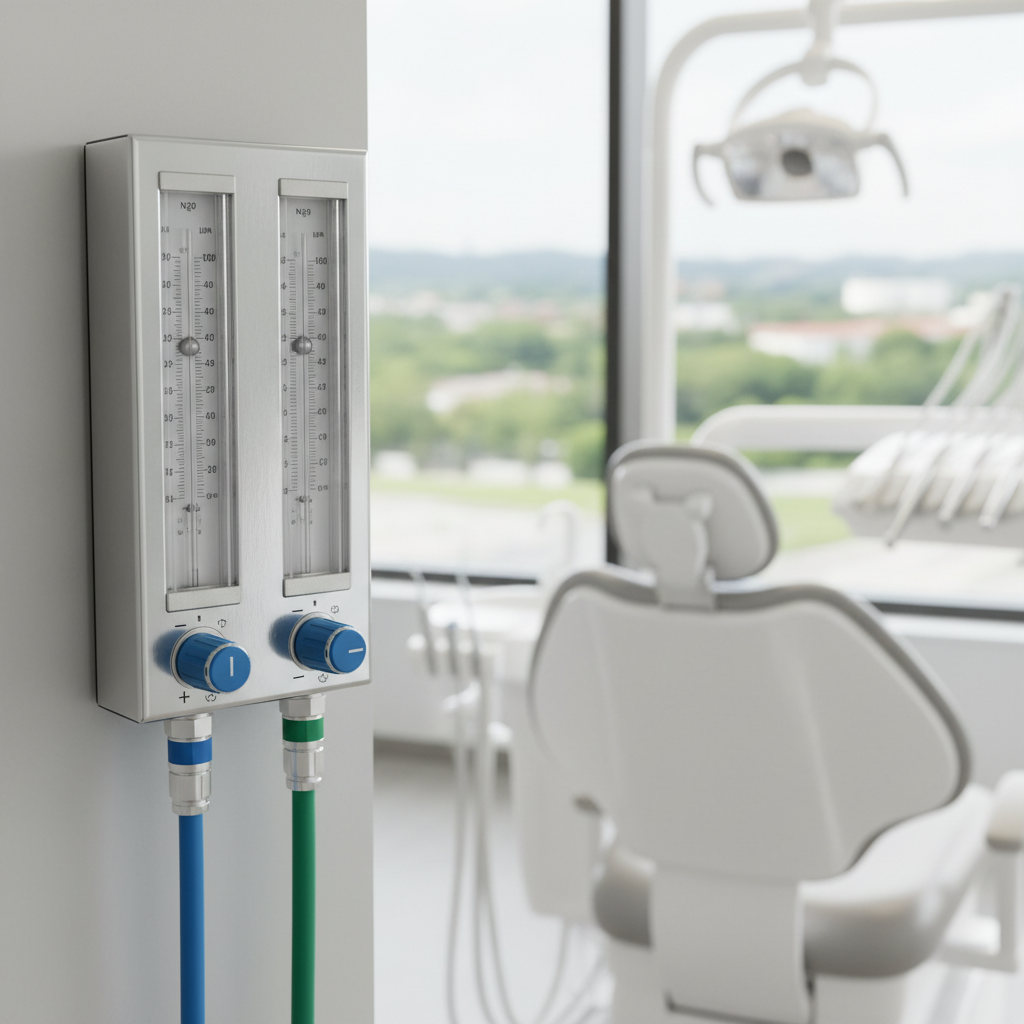
Lynchburg Dental Office Nitrous Oxide Installation: A Turnkey Guide for Clinicians
Installing or upgrading a nitrous oxide and oxygen delivery system is a significant investment for any dental practice in Lynchburg, VA. When done correctly, a centralized N2O/O2 system provides a safe, reliable, and efficient method for administering minimal sedation, enhancing patient comfort and expanding your service offerings. However, the design, installation, and verification of these systems are governed by strict codes and standards to ensure the safety of both patients and staff. This definitive guide explains the entire process for a turnkey dental office nitrous oxide installation, from initial design considerations to final ASSE 6030 verification, ensuring your system is compliant and ready for clinical use.
What is a Turnkey Nitrous Oxide Installation?
A turnkey installation means your medical gas partner, like Medical Testing Solutions, handles every aspect of the project. This includes:
- System Design: Sizing the system based on your number of operatories and expected usage.
- Piping Layout: Designing a safe and efficient piping route from the manifold to the operatories.
- Equipment Sourcing: Providing all necessary components, including manifolds, alarms, zone valves, and outlets.
- Installation: Running the medical-grade copper piping and installing all components to code.
- Scavenging System Integration: Ensuring proper removal of waste anesthetic gas (WAG).
- Final Verification: Performing the required ASSE 6030 tests to certify the system for patient use.
This comprehensive approach ensures that all parts of the system work together seamlessly and meet the stringent requirements of NFPA 99.
Core Components of a Dental N2O/O2 System
A compliant dental sedation system is more than just the flowmeter in the operatory. It's a complete, integrated system with several critical components, each with a specific safety function.
The Manifold: The Heart of Your System
The manifold is the starting point for your gas distribution. Located in a secure, well-ventilated room, it connects the high-pressure gas cylinders (typically H-cylinders) to the pipeline. For a dental office, this is almost always an automatic changeover manifold.
- Function: It automatically switches from the primary "in-use" cylinder bank to the secondary "reserve" bank when pressure drops, ensuring an uninterrupted gas supply. It also sends a signal to the master alarm panel, alerting staff that a cylinder bank is depleted and needs to be replaced.
- NFPA 99 Requirements: Manifold rooms must be properly constructed, vented, and secured to prevent unauthorized access and ensure safety.
Master and Area Alarms: Your Safety Network
Alarm panels are the nervous system of your medical gas installation. They provide audible and visual warnings of system malfunctions.
- Master Alarms: Located in an area of continuous surveillance (e.g., the front desk or main office), they monitor the primary source of gas. They will alarm if the changeover manifold switches to the secondary bank or if main line pressure is too high or low.
- Area Alarms: Installed in the sedation area itself, they monitor the pressure in the specific zone they serve. This provides immediate warning of a pressure issue affecting the operatories.
Why this matters for compliance: NFPA 99, Chapter 5, makes alarm systems mandatory for all Level 1, 2, and 3 medical gas systems. They are a non-negotiable life safety requirement. A system without proper alarms is not compliant.
Zone Valves and Outlets
Zone valve boxes allow you to shut off the gas supply to a specific area or "zone" of your practice without affecting other areas. This is crucial for maintenance or in an emergency.
Pipeline outlets (or terminal units) are the connection points in the operatories where you attach your sedation equipment, such as a Porter or Belmed flowmeter. These outlets are gas-specific, using a unique pin index system (DISS - Diameter Index Safety System) to prevent accidental cross-connection of gases.
The Installation Process: From Plan to Practice
A professional medical gas installation follows a precise, documented process overseen by an ASSE 6010 Certified Installer.
- Initial Consultation & Design: Our team at MTS works with you and your contractor to design a system tailored to your Lynchburg office's layout and clinical needs.
- Piping Installation: All pipeline distribution systems are installed using medical-grade, Type L or K copper tubing, cleaned for oxygen service. All joints are brazed by a qualified technician, and the system undergoes an initial pressure test to check for leaks.
- Component Installation: The manifold, alarm panels, zone valves, and outlets are installed and connected.
- Scavenging System Integration: A critical component for staff safety, the scavenging system connects to your high-volume evacuation (HVE) system to safely remove exhaled nitrous oxide. This must be properly balanced to ensure effective WAG removal without affecting sedation levels.
- Final Verification (ASSE 6030): This is the most critical step before the system can be used. It cannot be performed by the installer; it must be done by a third-party ASSE 6030 Certified Verifier, a service Medical Testing Solutions provides.